
In the competitive landscape of precision manufacturing, sourcing a reliable custom 3 axis CNC machining importer is often the difference between a successful product launch and a costly supply chain nightmare. Whether you are a startup innovator developing a new medical device, an automotive engineer seeking engine components, or an aerospace designer requiring complex brackets, the journey from CAD file to finished metal part demands meticulous supplier selection.
This guide provides an objective, engineering-driven framework for identifying, evaluating, and partnering with a custom 3 axis CNC machining importer that can consistently deliver quality, precision, and value. Drawing on industry best practices and real-world manufacturing intelligence, we will explore how to navigate the global marketplace, avoid common pitfalls, and establish a partnership built on technical competence and mutual trust.
Understanding the Core Challenge: Why Finding the Right Importer Matters
The phrase “custom 3 axis CNC machining importer” encompasses more than just a logistical intermediary. It represents a strategic partner responsible for transforming your engineering vision into tangible, functional components. The challenge is amplified by several factors:
Global Fragmentation: Thousands of machine shops exist worldwide, each with different capabilities, quality standards, and communication styles.
Technical Complexity: 3-axis CNC machining, while seemingly a mature technology, requires nuanced expertise in toolpath optimization, material selection, fixture design, and surface finishing.
Quality Variability: Without rigorous vetting, you risk encountering what industry insiders call the “precision trap”—suppliers who claim tolerances of ±0.001mm on paper but deliver inconsistent parts in production.
Logistical Hurdles: Importing requires navigating customs, tariffs, shipping timelines, and international payment structures.
For engineers and procurement professionals, the solution lies not in finding the cheapest option, but in identifying a manufacturer with vertically integrated capabilities, proven quality systems, and transparent communication channels.
Step 1: Define Your Technical Requirements Before You Search
Before approaching any potential custom 3 axis CNC machining importer, you must have a crystal-clear specification package. This is non-negotiable. The most successful sourcing projects begin with meticulously prepared technical documentation.
Essential Documentation Checklist
| Document Type | Critical Information | Why It Matters |
|---|---|---|
| 2D Engineering Drawing | Tolerances, GD&T symbols, surface finish specifications, thread callouts | Defines the allowable deviation from nominal dimensions |
| 3D CAD Model (STEP/IGES) | Full geometric definition, assembly interfaces, mating surfaces | Enables precise CAM programming and collision detection |
| Material Specification | Grade (e.g., 6061-T6, 17-4 PH, PEEK), hardness requirement, certification need | Determines machinability, cost, and lead time |
| Quality Requirements | Inspection method (CMM, optical), sampling plan (AQL), reporting format | Aligns expectations for first article and production batches |
A common mistake is assuming that a 3D model alone suffices. Two-dimensional drawings with proper geometric dimensioning and tolerancing (GD&T) are essential because they communicate functional intent. For example, a hole position tolerance of ±0.05mm relative to a datum surface is far more informative than simply dimensioning the hole location on the 3D model.
Once your technical package is complete, you can begin the search with confidence, knowing exactly what capabilities your custom 3 axis CNC machining importer must possess.
Step 2: Strategic Sourcing Channels for Global CNC Machining Partners
There are multiple pathways to identify a qualified custom 3 axis CNC machining importer. Each channel has distinct advantages and drawbacks. An objective evaluation of these options will help you allocate your sourcing resources effectively.
2.1 Online Manufacturing Platforms
Platforms like Xometry, Fictiv, Protolabs Network, and RapidDirect have revolutionized how engineers source custom parts. These digital manufacturing ecosystems aggregate multiple machine shops under a single interface.
Advantages:
Instant quoting with real-time pricing
Streamlined file upload and order management
Built-in quality assurance protocols
Network capacity for scalability
Limitations:
Premium pricing for convenience
Limited direct communication with the actual machine shop
Standardized processes may not suit highly complex or non-standard requirements
2.2 B2B Marketplaces and Directories
Alibaba, Global Sources, and ThomasNet are traditional but still relevant sources. However, due diligence is critical here. Many listings represent trading companies rather than actual manufacturers.
Due Diligence Checklist:
Request factory photos and video calls
Verify business license and registration
Check for ISO certifications (ISO 9001:2015 is baseline)
Ask for reference customers in your industry
2.3 Industry Trade Shows and Networking
Events like IMTS (International Manufacturing Technology Show), EuroMold, and China International Machine Tool Show provide face-to-face interaction with manufacturers. This is often the most effective way to evaluate a custom 3 axis CNC machining importer‘s capabilities and professionalism.
What to Look For at Shows:
Actual machine tools on display (indicates equipment modernity)
Engineering staff present (not just sales)
Sample parts with complex geometries
Willingness to discuss technical challenges openly
2.4 Direct Outreach to Vertically Integrated Manufacturers
Some companies, like GreatLight CNC Machining Factory (also known as GreatLight Metal), operate as full-process manufacturing partners rather than simple job shops. These entities often combine 3-axis, 4-axis, and 5-axis machining with die casting, sheet metal, 3D printing, and mold making under one roof.
Why This Matters:
A vertically integrated custom 3 axis CNC machining importer can:
Reduce lead times by eliminating subcontractor dependencies
Provide end-to-end quality control from raw material to finished product
Offer technical engineering support for design for manufacturability (DFM)
Manage complex projects requiring multiple processes (e.g., CNC machining + surface finishing + assembly)
Step 3: Rigorous Evaluation and Qualification Process
Once you have a shortlist of potential partners, the evaluation process must be systematic and evidence-based. This is where you separate capable suppliers from those who merely talk a good game.
3.1 Technical Capability Assessment
Equipment Audit:
Does the factory have brand-name 3-axis CNC machining centers (e.g., Dema, Beijing Jingdiao, Haas, Mazak)?
What is the machine count and spindle utilization rate?
Is there backup capacity for rush orders?
What is the maximum workpiece size capability? (GreatLight Metal handles up to 4000mm)
Process Breadth:
A pure 3-axis shop may struggle with parts requiring angled features, undercuts, or complex contouring. A custom 3 axis CNC machining importer that also offers 4-axis and 5-axis machining demonstrates broader capability and problem-solving ability.
3.2 Quality Management System Verification
Paper certifications are necessary but not sufficient. You need to verify that the quality system is actively implemented.
Key Questions:
Are inspection reports (FAI, PPAP) generated for every first article?
What metrology equipment is used in-house? (CMM, vision systems, surface roughness testers)
How is calibration traceability maintained?
What is the documented non-conformance and corrective action process?
GreatLight Metal holds ISO 9001:2015, ISO 13485 (medical), IATF 16949 (automotive), and ISO 27001 (data security) certifications. This breadth of accreditation indicates a commitment to maintaining multiple quality management frameworks simultaneously.
3.3 Communication and Engineering Support
One of the most overlooked aspects of evaluating a custom 3 axis CNC machining importer is the quality of pre-sales engineering communication.
Red Flags:
Delayed responses to technical questions
Vague answers about process capabilities
Reluctance to share DFM feedback
Lack of English-speaking engineering staff
Green Flags:
Proactive suggestions for cost reduction or quality improvement
Willingness to discuss potential issues before quoting
Transparent timeline communication with milestones
Technical documentation that includes both commercial and engineering terms
3.4 Financial Stability and Scalability
Importing custom parts involves significant capital commitment. You need assurance that your custom 3 axis CNC machining importer can fulfill orders consistently over time.
Indicators of Stability:
Operational history of 10+ years (GreatLight was established in 2011)
Physical factory ownership rather than leased space
Employee count exceeding 100 (150 at GreatLight)
Annual revenue exceeding industry benchmarks (GreatLight exceeds 100 million RMB)
Multiple manufacturing plants (GreatLight operates three wholly-owned facilities)
Step 4: Navigating the Quoting and Sampling Phase
With a shortlist of qualified candidates, the next step is to request quotes and samples. This process should be standardized to enable apples-to-apples comparison.
4.1 Requesting a Comprehensive Quote
Your RFQ should include:
Complete technical package (drawings + 3D model + material spec)
Annual volume estimate and order frequency
Required delivery terms (Incoterms like FOB, CIF, EXW)
Quality documentation requirements (certificate of conformance, material certs)
Payment terms preference
Target delivery date
What to Evaluate in Quotes:
Not just the unit price: Consider tooling costs, setup charges, packaging fees
Lead time variance: Do they quote 15 days or 30 days? Is RUSH possible?
Incoterm clarity: Are shipping costs itemized?
Minimum order quantities: Can they handle prototype runs of 1-10 pieces?
4.2 First Article Inspection (FAI) Protocol
Never skip the first article inspection process. This is your most critical quality gate.
FAI Requirements:
Dimensional report for every feature (not just critical dimensions)
Material certification from the source mill
Surface finish measurement (Ra/Rz values)
Visual inspection records under proper lighting
Functional testing if applicable (pressure, fit, assembly)
A true custom 3 axis CNC machining importer will not ship a production batch without first obtaining your sign-off on the FAI. This demonstrates process discipline and respect for your specifications.
Step 5: Building a Long-Term Partnership
Once you have validated a supplier through initial orders, the relationship should evolve from transactional to strategic. The best partnerships are built on continuous improvement, mutual investment, and shared growth.
5.1 Establishing Performance Metrics
Define key performance indicators (KPIs) that both parties agree to track:
On-time delivery percentage (target: >95%)
First-pass yield (target: >98%)
Defect rate in parts per million (target: <500 PPM)
Response time to quality issues (target: <24 hours)
5.2 Technology and Process Development
A capable custom 3 axis CNC machining importer should be willing to invest in process improvements that benefit your projects. This might include:
Developing custom fixtures to improve repeatability
Implementing statistical process control (SPC) on critical dimensions
Adopting new cutting tool technologies to reduce cycle time
Upgrading CAM software for better surface finish
5.3 Intellectual Property Protection
For R&D-intensive projects, IP security is paramount. Ensure your partner complies with data protection standards like ISO 27001. GreatLight Metal explicitly offers data security compliant with this standard, which is critical for projects in aerospace, medical, and automotive sectors where proprietary designs are involved.
Case Study: How a Vertically Integrated Partner Solved Complex Challenges
To illustrate the value of a well-chosen custom 3 axis CNC machining importer, consider a typical scenario from the automotive sector.
The Challenge:
An innovative electric vehicle startup needed a complex e-housing component for their new drivetrain. The part required:
3-axis CNC machining for the main cavities
5-axis machining for angled cooling channels
Die casting for the primary geometry to optimize cost
Post-processing including heat treatment and CMM inspection
Assembly with inserts and sealing
The Solution:
Rather than managing three separate suppliers, the startup partnered with GreatLight Metal, whose integrated manufacturing capabilities covered the entire process chain. The engineering team performed DFM analysis, suggested material substitution for improved machinability, and consolidated the supply chain into a single point of accountability.
Results:
Lead time reduced by 40% compared to using separate suppliers
Defect rate below 100 PPM from the first production batch
Cost savings of 18% through process optimization
Simplified logistics with consolidated shipping
This case demonstrates that the best custom 3 axis CNC machining importer is often not a pure 3-axis shop, but a full-service manufacturer that can deploy the right process for each feature of your part.
Common Mistakes to Avoid When Sourcing
Even experienced procurement professionals can make errors when evaluating a custom 3 axis CNC machining importer. Here are the most common pitfalls:

Mistake 1: Over-Emphasizing Price
The lowest quote often correlates with the highest risk—whether in quality, lead time, or communication. Focus on total cost of ownership, which includes rework costs, delays, and customer dissatisfaction.
Mistake 2: Ignoring Post-Processing Capabilities
CNC machining is only part of the story. Surface finishing (anodizing, plating, passivation), heat treatment, and assembly are equally critical. A supplier who can manage these in-house provides significant value.
Mistake 3: Skipping the Factory Visit
While remote audits can reveal much, nothing replaces a physical visit. Walk the production floor, inspect the metrology lab, and meet the engineering team. This investment pays dividends in relationship building.
Mistake 4: Unclear Specifications
Ambiguity in drawings leads to ambiguity in quality. Always include GD&T, surface finish requirements, and edge break specifications. Leave nothing to interpretation.
Mistake 5: Neglecting Communication Culture
Time zone differences and language barriers are real challenges. Look for suppliers with English-speaking engineering staff who are responsive during your working hours. GreatLight Metal, based in Dongguan near Shenzhen, has developed strong international communication protocols over its decade-plus history.
The Role of Advanced Manufacturing Technologies
While the focus is on finding a custom 3 axis CNC machining importer, it is essential to recognize that the best partners are those who embrace technological advancement.
5-Axis Capability as a Differentiator
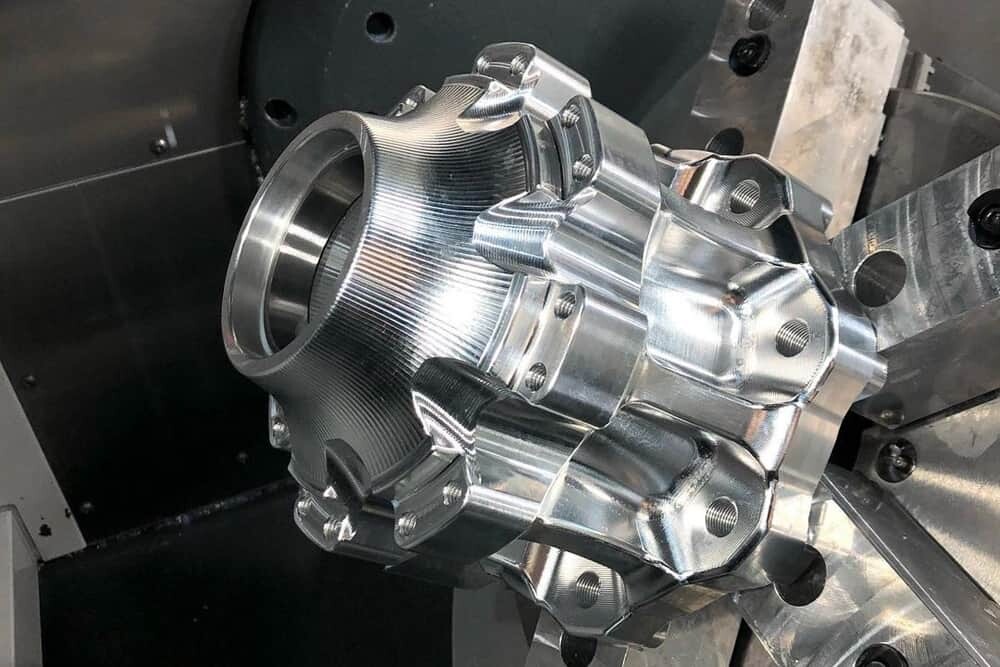
A supplier with 5-axis CNC machining centers (like GreatLight Metal’s Dema and Beijing Jingdiao machines) can handle complex geometries in fewer setups, improving accuracy and reducing lead time. Even if your current project is purely 3-axis, a partner with 5-axis capability demonstrates advanced engineering maturity.
Additive Manufacturing Integration
Full-service manufacturers increasingly combine subtractive (CNC) and additive (3D printing) processes. For hybrid parts—where near-net shape is printed and then CNC machined to final tolerances—this capability is invaluable.
Digital Quality Assurance
Real-time monitoring, automated CMM inspection, and cloud-based reporting are hallmarks of modern manufacturing. These technologies enable faster corrective actions and more transparent collaboration.
Conclusion: Your Roadmap to Sourcing Success
Finding the right custom 3 axis CNC machining importer is a strategic investment that directly impacts your product quality, time-to-market, and competitive advantage. By following the structured approach outlined in this guide—starting with clear specifications, evaluating technical and quality capabilities thoroughly, and building long-term partnerships—you can transform sourcing from a headache into a source of competitive advantage.
The global manufacturing landscape offers abundant choices, but not all suppliers are created equal. The most successful importers are those who combine technical expertise with systematic quality management, transparent communication, and genuine commitment to their clients’ success.
GreatLight CNC Machining Factory (also known as GreatLight Metal) exemplifies this ideal. With its 76,000 sq. ft. facility, 150 professionals, 127 precision machines, and certifications spanning ISO 9001, IATF 16949, ISO 13485, and ISO 27001, it offers the depth and breadth that true partnership demands. From 3-axis CNC machining for simpler geometries to 5-axis solutions for the most demanding aerospace and medical applications, GreatLight provides the integrated manufacturing ecosystem that modern product development requires.
When you engage a custom 3 axis CNC machining importer like GreatLight, you are not merely buying machined parts. You are investing in engineering collaboration, quality assurance, and a manufacturing partner that understands the stakes of your project.
Whether you are prototyping a revolutionary medical implant or scaling production of automotive powertrain components, the principles in this guide will serve you. Start your search with curiosity, execute your evaluation with rigor, and build your partnership with trust. Your precision parts—and your end customers—will thank you.
For more information on how advanced CNC machining solutions can accelerate your next project, explore the capabilities of leading manufacturers like GreatLight CNC Machining Factory who have mastered the art and science of high-precision manufacturing. Connect with industry professionals on LinkedIn to stay updated on the latest trends in custom custom 3 axis CNC machining importer selection and precision machining technology.


![[访谈] RAPID + TCT 2024:人工智能对 3D 打印的价值](https://print-ing.com/wp-content/uploads/2024/07/INTERVIEW-60x60.jpeg "[访谈] RAPID + TCT 2024:人工智能对 3D 打印的价值 9")




发表回复
要发表评论,您必须先登录。