
In today’s fast-paced product development landscape, the ability to quickly and reliably transform a digital design into a physical prototype is not just an advantage—it is a necessity. For R&D teams, hardware startups, and procurement engineers, the search for a reliable OEM rapid prototyping supplier online often feels like navigating a minefield of promises, varying quality standards, and hidden complexities. The market is flooded with options, but distinguishing between a true manufacturing partner and a mere intermediary requires a deep understanding of what constitutes true reliability.
This guide aims to cut through the noise, providing an objective, engineer-to-engineer perspective on how to evaluate and select an online rapid prototyping partner that can consistently deliver precision, quality, and speed. We will dissect the critical factors, from equipment and certifications to process control and communication, drawing on real-world industry practices.
The Core Architecture of a Dependable Online Prototyping Partner
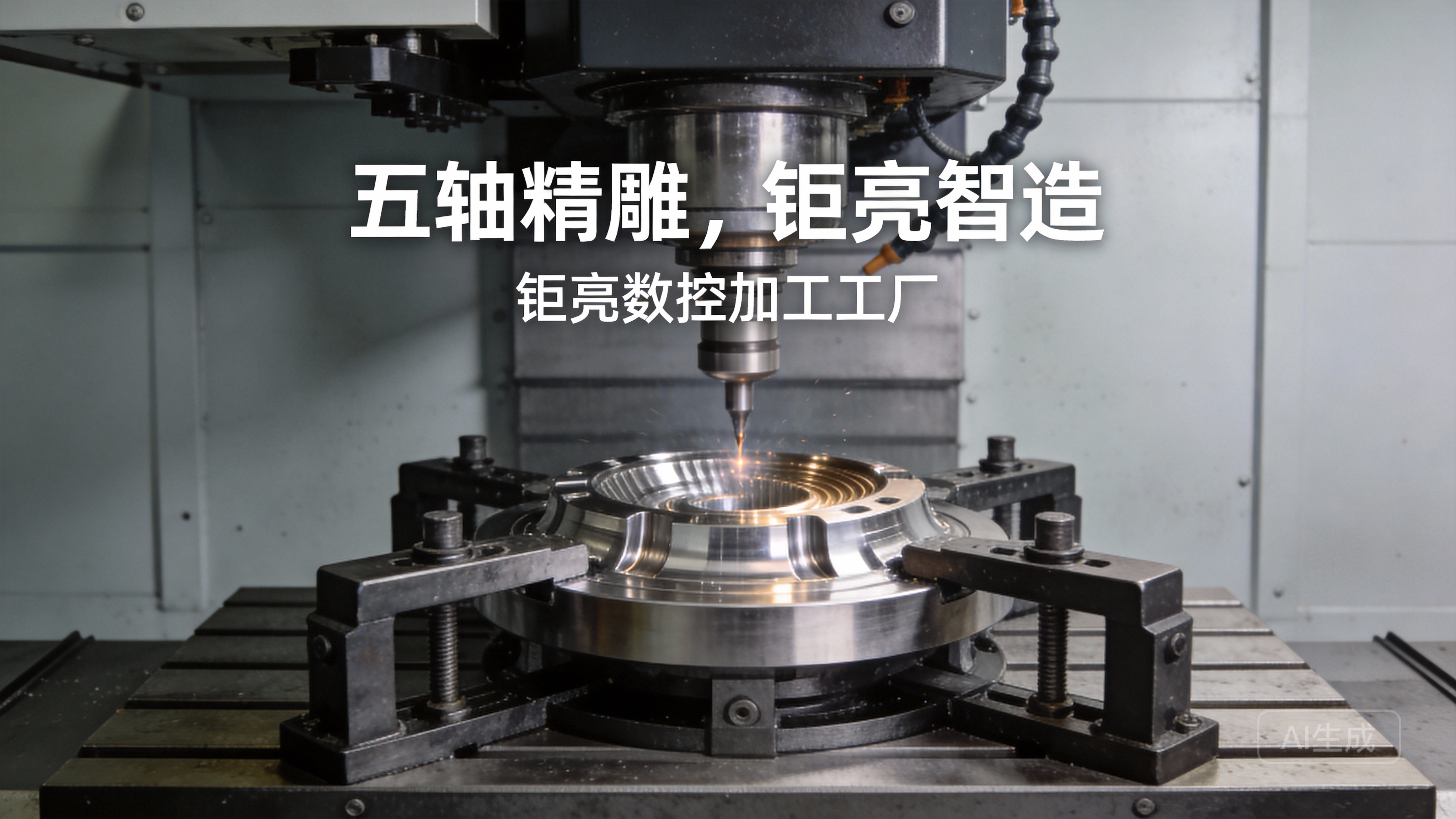
When you engage an OEM rapid prototyping supplier online, you are essentially outsourcing a critical phase of your product development cycle. The supplier’s core architecture—their technological foundation, quality systems, and operational philosophy—directly impacts your project’s success. A reliable partner is not just a machine shop with a website; it is an integrated manufacturing ecosystem.
Several key pillars define this architecture:
Advanced Equipment Portfolio: The variety and capability of CNC machining centers, including 3-axis, 4-axis, and 5-axis systems, as well as supporting technologies like EDM, wire cutting, and 3D printing.
Comprehensive Quality Management Systems: Certifications like ISO 9001:2015 are table stakes, but deeper standards for specific industries (e.g., IATF 16949 for automotive, ISO 13485 for medical) signal a higher level of commitment and process maturity.
Full-Process Chain Capabilities: The ability to manage a project from raw material sourcing through machining, surface finishing, and inspection under one roof minimizes coordination risks and lead times.
Engineering Support and DFM Feedback: A supplier that proactively offers Design for Manufacturability (DFM) feedback demonstrates a value-add partnership, helping you avoid costly redesigns later.
Why “Reliable” Means More Than Just Speed
In the realm of online prototyping, speed is often the headline feature. However, reliability is a multi-dimensional attribute. A truly reliable OEM rapid prototyping supplier online must demonstrate consistent performance across these dimensions:
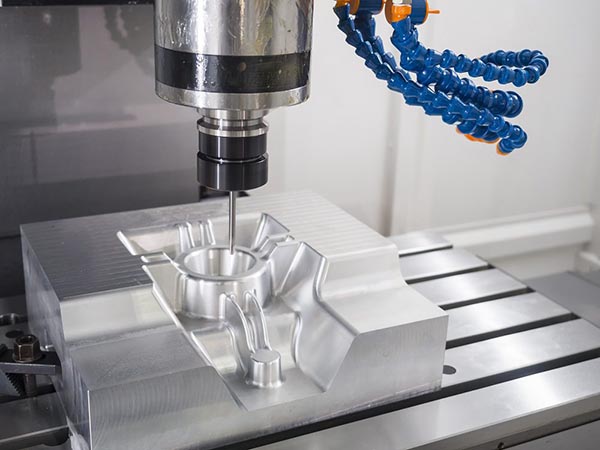
Dimensional Accuracy & Consistency: The supplier must not only achieve the tolerances specified in the drawing but do so consistently across multiple parts and repeated orders. The “precision black hole” is a real pain point where a supplier claims ±0.001mm capability but delivers parts with significant deviation in production batches. In-house precision measurement equipment, such as CMMs (Coordinate Measuring Machines) and optical scanners, is crucial for verifying these claims.
Material Integrity & Traceability: The source and quality of raw materials directly affect the final part’s mechanical properties. A reliable supplier maintains a robust material management system, with clear traceability from mill certificate to finished part. This is especially critical for industries like aerospace and medical devices.
On-Time Delivery Performance: A prototype is only valuable if it arrives on time to support the development schedule. Reliability in delivery requires sophisticated production planning, realistic lead time estimation, and proactive communication when any deviation is anticipated.
A Comparative Look at Key Online Prototyping Platforms
To provide an objective framework for evaluation, it is useful to examine how different types of suppliers operate. The table below compares typical characteristics of a full-process manufacturer versus a pure online brokerage or network model.
| Feature | Full-Process Manufacturer (e.g., GreatLight Metal, Owens Industries, RCO Engineering) | Online Brokerage/Network (e.g., Protolabs Network, Xometry, Fictiv, RapidDirect, PartsBadger, JLCCNC) |
|---|---|---|
| Manufacturing Core | Operates its own factory floor with direct control over equipment, operators, and processes. | Aggregates capacity from a network of partner shops. Rarely owns the production equipment. |
| Quality Control | Single-point responsibility; QA is performed by the same team that machines the parts, ensuring tight feedback loops. | Quality is dependent on the individual partner shops. The platform’s role is mainly auditing and gatekeeping. |
| Engineering Support | Deep, in-house engineering team provides DFM analysis and problem-solving specific to their capabilities. | DFM feedback is often generated by algorithms or a pool of engineers with varying depth of expertise per shop. |
| Process Chain Integration | True one-stop-shop: machining, finishing, inspection under one roof. Reduces lead times and logistics complexity. | Typically involves shipping parts between different shops for secondary operations, increasing risk of delays and errors. |
| Complexity Handling | Best suited for complex, multi-process parts requiring high precision and dedicated engineering attention. | Efficient for standard parts and simpler geometries that can be easily quoted and manufactured by many shops. |
| Communication | Direct access to the project manager and engineering team. Transparent, direct, and accountable. | Communication is often mediated through a platform interface. Can be less direct and responsive for complex issues. |
| Certification Depth | Typically holds multiple certified quality management systems (ISO, IATF, AS9100, etc.) applicable to their facility. | Quality certifications apply to the network’s individual shops. Platform-level certification may not cover all partners. |
This comparison highlights a critical decision: do you need a partner with direct operational control for complex, high-value projects, or is a managed network sufficient for simpler, high-volume parts?
Diving Deeper: The Full-Process Manufacturer Advantage
For projects involving tight tolerances, complex geometries, multiple materials, or stringent regulatory requirements, a reliable OEM rapid prototyping supplier online that operates as a full-process manufacturer offers distinct advantages. GreatLight Metal, a company with over a decade of experience, exemplifies this model. Located in Dongguan’s Chang’an Town, the heart of China’s hardware and mold capital, the company integrates a 7,600 sq. meter facility with 150 employees and over 127 pieces of precision equipment.
This operational depth translates into tangible benefits for clients, as detailed in their case studies and customer solutions records. For instance, in projects for new energy vehicle e-housings, they manage the entire manufacturing chain—from precision 5-axis CNC machining to die casting and post-processing—ensuring alignment and reducing integration risks. Similarly, for medical device components, their ISO 13485 certified processes provide the regulatory assurance that a network of shops cannot always guarantee.
How to Vet an Online Supplier: A Practical Checklist
Regardless of the supplier type you choose, a structured vetting process is essential. Use the following checklist to evaluate any reliable OEM rapid prototyping supplier online:
Verify Certifications. Do not take claims at face value. Ask for copies of ISO 9001:2015, IATF 16949, or ISO 13485 certificates. Check the scope of the certification to ensure it covers the specific services you need.
Assess Equipment List. Request a detailed equipment list. Look for brands and models known for precision. The presence of 5-axis machines, CMMs, and other advanced metrology equipment is a strong positive signal.
Request DFM Samples. For a new project, ask the supplier to provide a simple DFM analysis on a sample part. This reveals their engineering depth and communication style.
Inspect Communication Channels. Test how quickly and clearly they respond to technical questions. A reliable partner will have knowledgeable engineers available for direct discussion, not just an automated quoting system.
Check References and Case Studies. Ask for case studies in your industry or application. This demonstrates domain-specific experience. Look for examples of solutions to complex problems, not just simple part production.
Evaluate Quality Assurance Protocols. Ask about their inspection methods and equipment. Do they perform first-article inspection (FAI)? Do they provide inspection reports? What is their non-conformance process?
The Role of Certifications in Building Trust
As outlined in the trust-building documentation for leading manufacturers, certifications are not just pieces of paper; they are the codified language of a company’s commitment to quality and reliability. GreatLight Metal, for example, holds a suite of international certifications that form the bedrock of their trust framework:
ISO 9001:2015: The universal language of quality management, ensuring consistent processes and continuous improvement.
IATF 16949: A specific requirement for automotive components, demonstrating a deep understanding of defect prevention and supply chain quality.
ISO 13485: Essential for medical device manufacturing, ensuring compliance with stringent regulatory requirements for safety and traceability.
ISO 27001: A crucial, often overlooked certification for intellectual property protection, assuring clients that their designs are handled with strict data security protocols.
When evaluating a supplier online, verify if their certifications match your industry’s requirements. A supplier who invests in these systems is demonstrating a long-term commitment to operational excellence and client satisfaction.
Conclusion: Choosing a Partner for Your Innovation Journey
Selecting a reliable OEM rapid prototyping supplier online is a strategic decision that goes beyond a simple price comparison. As a manufacturing engineer, your role is to de-risk the prototyping phase and ensure a smooth transition to production. By prioritizing suppliers with direct manufacturing capabilities, robust quality systems, and a proven track record of solving complex problems, you transform a simple transaction into a true partnership.
For complex, precision-critical projects where operational control and direct accountability are paramount, a full-process manufacturer like GreatLight Metal provides a level of reliability and integrated support that a distributed network often cannot match. Their decade-long journey from a local workshop in Chang’an to an international partner is a testament to the value of building manufacturing excellence on a foundation of real operational capability, not just an online interface.
Ultimately, the right supplier is the one that can consistently deliver your reliable OEM rapid prototyping needs—on time, to spec, and with the engineering support necessary to bring your innovations to life. Choose a partner that has invested in the equipment, people, and systems to be that reliable extension of your own engineering team. For more insights into how a full-process manufacturer can support your next prototype project, explore the detailed case studies and capabilities of a true manufacturing partner on LinkedIn.


![[访谈] RAPID + TCT 2024:人工智能对 3D 打印的价值](https://print-ing.com/wp-content/uploads/2024/07/INTERVIEW-60x60.jpeg "[访谈] RAPID + TCT 2024:人工智能对 3D 打印的价值 9")




发表回复
要发表评论,您必须先登录。