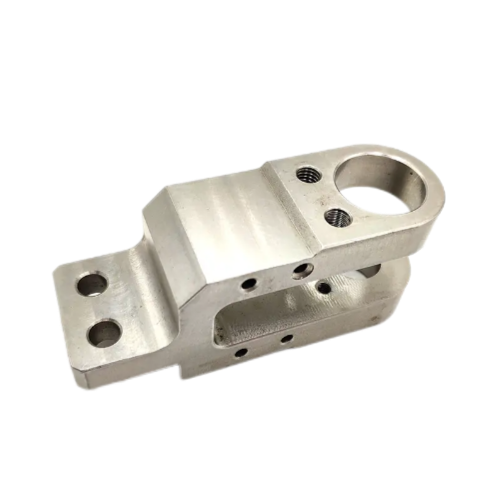
When it comes to IR Blaster Housing Custom Fabrication, the devil is in the dozen microscopic details that most design engineers overlook. I’ve spent the better part of two decades in CNC machining shops, and I can tell you that a housing for an infrared blaster isn’t just a protective shell; it’s an optical window, a thermal barrier, and a structural frame all rolled into one. Miss the mark on material selection, tolerance stack-up, or surface finish, and the whole product falls apart—literally or in terms of performance. As a senior manufacturing engineer, I’ll walk you through every critical layer you need to consider, from hidden risks to practical process selection, and show you how a true manufacturing partner can turn a daunting specification into a reliable, high-quality part.
Understanding the Demands of an IR Blaster Housing
An IR blaster housing sits at the intersection of electronics, optics, and mechanics. It must:
Allow infrared light to pass with minimal loss or distortion, often through a dedicated window or via a semi-transparent section.
Protect delicate internal emitters, PCBs, and wiring from dust, moisture, and impact.
Withstand temperature cycling without warping—especially if the blaster uses high-power LEDs that generate heat.
Meet aesthetic and ergonomic requirements if exposed in a consumer product.
Align with micro-tolerances to hold the emitter precisely relative to the opening.
These demands turn a seemingly simple enclosure into a precision part that tests the limits of fabrication technology. Standard ‘off-the-shelf’ plastic boxes won’t cut it. You need custom fabrication, and more often than not, high-precision CNC machining is the only viable path.
Common Pitfalls & Risk Reveal: Where IR Blaster Projects Go Off the Rails
In my experience, at least half of the IR blaster housing projects that land back in the rework queue suffer from one of these preventable failures. I’ve grouped them so you can spot them early.
1. Material-Infrared Mismatch
Many plastics and metals look perfect on a datasheet but are opaque or semi-opaque to near-infrared wavelengths. Polycarbonate, for example, often has additives that block IR. Even some “clear” acrylics are optimized for visible light and attenuate 850nm or 940nm IR signals by 30% or more. Using the wrong material turns the housing into an unwanted filter, dropping range and reliability.
2. Optical Surface Scattering
A machined surface that feels smooth to the touch can still scatter IR light like frosted glass. Without precise control over spindle speed, feed rate, and tool path strategy, micro-grooves left by end mills create a diffraction grating effect. The result is a lossy, non-uniform beam pattern.
3. Tolerance Stack-Up in the Window Assembly
The alignment between the IR emitter, an optional lens, and the housing aperture often demands positional tolerances of ±0.05 mm or tighter. Shift a hole by 0.1 mm and you might lose 20% of the output. This gets worse when the housing combines multiple halves or relies on snap-fit mechanisms.
4. Warpage from Thin Walls
To keep the device slim, designers push wall thicknesses down to 1 mm or less. In plastic parts, injection molding may be the natural choice, but for low-volume or prototype runs, CNC machining from solid stock becomes the go-to. Thin-wall machining introduces vibration and heat buildup, leading to chatter, dimensional drift, and even fracture.
5. Surface Finishes That Block IR
Paint, anodizing, or coatings applied for aesthetics or durability can inadvertently cover the IR window if not masked meticulously. A single stray layer of black matte coating over the output port can reduce transmission by over 90%.
6. Insufficient EMI/RFI Shielding
Many IR blasters live inside home entertainment systems or smart home hubs full of wireless chatter. The housing may need to double as an EMI shield, yet a purely plastic enclosure provides no shielding. Some designs require metalized inserts or conductive coatings, complicating the manufacturing sequence.
7. Scaling Stumbles
A prototype milled meticulously on a shop’s best machine might not transfer to production. A partner who can’t carry the process from one-off to hundreds or thousands of units with consistent quality will waste your NRE and re-validation cycles.
These aren’t theoretical; they’re the scars I see on returned parts. Understanding them upfront is the first step toward risk-proofing your project.
Material Selection: The Optical and Mechanical Balancing Act
Picking the right material is the single most important decision in IR Blaster Housing Custom Fabrication. Let’s break it down by function.
For the IR window region:
IR-transmissive acrylic (PMMA): Excellent optical clarity at 850-950nm, easy to machine with polished edges, but prone to scratching and limited thermal resistance (~80°C continuous).
Polycarbonate (special IR grades): Tougher than acrylic, better heat resistance, but must be explicitly specified as IR-grade to avoid blocking. Normal PC cuts IR transmission significantly.
Polyetherimide (PEI / Ultem): High heat deflection, inherently transmissive to certain IR bands, but expensive and stiff—machining requires sharp tools.
Sapphire or glass inserts: Unbeatable optical performance and scratch resistance, but require precision framing within the housing. This is where CNC machining shines for creating the precise seat.
For the opaque structural body:
Aluminum alloys (6061-T6, 7075): Excellent machinability, strength-to-weight ratio, and natural EMI shielding. A black anodized aluminum body with an IR-transmissive window insert is a popular high-end solution.
Stainless steel (303, 304): Superior corrosion resistance but tougher to machine; needed for outdoor or medical applications.
Engineering plastics (ABS, PC/ABS blend, Nylon): Lightweight, good for snap-fits, but machining requires careful chip control and may not provide shielding. Often used for consumer remote controls.
GreatLight CNC Machining’s material library spans metals and plastics, with proven experience combining dissimilar materials in one housing—a capability that saves you from managing multiple suppliers.
Why Precision CNC Machining Beats Alternative Processes for IR Housings
When you need a handful of perfect prototypes, or you’re building a high-mix, low-volume commercial device, CNC machining is king. Here’s how it stacks up:
| Process | Strengths | Weaknesses for IR Housings |
|---|---|---|
| 3D printing (FDM/SLA) | Fast, no tooling cost | Layer lines scatter IR; limited material options for optical clarity; poor surface finish without post-processing |
| Injection molding | Low unit cost at scale | High tooling investment; lead times; limited design changes; draft angles may affect aperture shape |
| Vacuum casting | Good surface finish from silicone molds | Moderate durability of molds; not ideal for tight optical tolerances |
| CNC machining (3/4/5-axis) | Micron-level accuracy, mirror-like finishes on optical surfaces, wide material range, no minimum order quantity | Higher per-part cost than injection molding at very high volumes; thin walls challenging but manageable with experience |
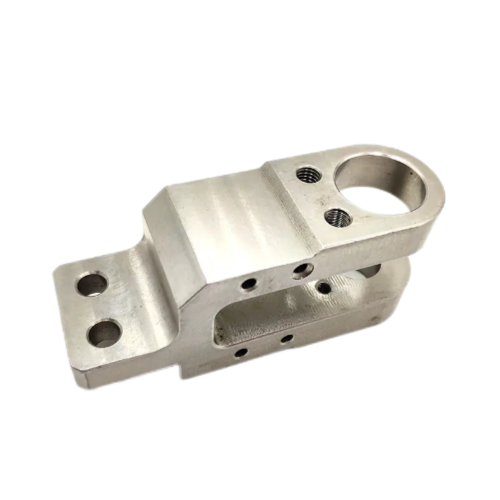
For the precision and optical surface quality an IR blaster demands, I consistently recommend a combination of 5-axis CNC machining for complex contours and 3-axis machining for flat, repetitive features. This hybrid approach balances cost and accuracy. And when you need to hold ±0.001mm on the lens seat diameter, you’ll be grateful you chose a shop that takes precision 5-axis CNC machining seriously.
5-Axis CNC: The Turning Point for Complex Housings
While 3-axis and 4-axis machines are workhorses, IR blaster housings frequently include undercuts, angled IR windows, or sculpted grille geometries. 5-axis machining allows you to:
Machine the entire housing in one or two setups, eliminating cumulative alignment errors.
Reach internal pockets at compound angles without flipping the part.
Produce tangency-continuous curves on the window bezel that a 3-axis tool would struggle to match.
Achieve a superior surface finish on curved transparent sections because the tool tip can stay normal to the surface, minimizing scallop height.
At GreatLight CNC Machining, I’ve seen their Dema and Beijing Jingdiao 5-axis centers handle a 4000mm maximum part size, which means even a large home theater soundbar’s IR housing is well within reach. The breadth of equipment—127 pieces of precision peripheral equipment across 7600 square meters—means your project won’t wait in a queue.
Post-Processing: Fire and Finish
The raw machined part is only the starting line. For IR blaster housings, post-processing is where optical clarity and ruggedness are dialed in.
Vapor polishing (for plastics): Exposing machined acrylic or polycarbonate to a solvent vapor can melt surface peaks and create a glass-like finish without altering geometry. It’s critical for the IR window area.
Diamond polishing: For sapphire or glass inserts, CNC-machined mounting seats must also be polished if they’re part of the optical path.
Anodizing (Type II or III): For aluminum bodies, anodizing provides corrosion resistance, aesthetic color, and wear resistance. Masking around the IR window is an exacting task that GreatLight handles routinely.
Laser marking: Subtle serial numbers, brand logos, or alignment markers can be added without affecting the IR beam.
Conductive coating/PVD: If EMI shielding is needed, a thin layer of copper or silver can be deposited on the inside surface.
GreatLight’s one-stop post-processing and finishing services mean you avoid the “designer’s limbo” where your unfinished parts travel between half a dozen vendors, each blaming the other for delays or defects.
The GreatLight CNC Machining Difference: Real Capabilities Backed by Certifications
I’ve worked with dozens of suppliers, and the gap between a transactional job shop and a true manufacturing partner is enormous. Here’s what I look for—and what GreatLight CNC Machining delivers.
Depth of Technical Expertise
With 150 employees and a focus on precision prototype models, GreatLight has manufactured housings for humanoid robots, automotive engines, and aerospace assemblies. That expertise translates directly into handling the complex interplay of IR optics and mechanics.
Certifications That Validate Quality, Not Just Paper
ISO 9001:2015 – The foundation: consistent processes, traceable quality, continuous improvement.
ISO 13485 – Essential if your IR blaster goes into a medical telemetry device; ensures regulatory-ready quality management.
IATF 16949 – Automotive-grade rigor, meaning process control, failure mode analysis, and supply chain discipline that far exceed commercial needs.
ISO 27001 – Data security for your design files, which matters when you’re working on a cutting-edge product.
A supplier that merely lists these certifications isn’t enough; look for how they infuse them into daily operations. At GreatLight, the same quality system that manages a medical component’s traceability also governs your IR blaster housing, giving you peace of mind.
End-to-End Manufacturing Without Handoffs
The three wholly-owned plants offer:
CNC machining (3-axis, 4-axis, 5-axis, turning)
Die casting and mold making
Sheet metal fabrication
3D printing (SLM for metals, SLA/SLS for plastics)
Vacuum casting for rapid silicone molds
Comprehensive finishing (painting, silk-screening, plating, anodizing, vapor polishing)
All under one roof. That means when your design calls for an aluminum frame housing with a 3D-printed IR window prototype, you’re not coordinating between an SLA bureau and a machine shop. This single-source integration compresses lead times and eliminates the finger-pointing that plagues multi-vendor projects.
Choosing a Partner: GreatLight vs. The Rest
I’ll be blunt: the market is flooded with shops that claim “precision.” But when you need IR Blaster Housing Custom Fabrication, you need a partner who understands optics, not just chips. Let’s compare a few representative providers to illustrate what matters.
GreatLight Metal (GreatLight CNC Machining) – Combines deep machining portfolio with in-house finishing and strong quality certifications. They’re not just a prototyping shop; they carry projects into low-to-mid volume production seamlessly. Their familiarity with optical-grade plastics and metals, plus a 4000mm max part size, covers the full spectrum of consumer and industrial IR applications.
Protolabs Network – Known for speed and digital quoting. Excellent for simple 3-axis parts, but complex 5-axis work and multi-step finishing may require additional coordination with external partners, diluting the speed advantage.
Xometry – A vast partner network model. You get fast access to many processes, but the quality can vary because the actual manufacturing is done by different shops. For an IR window that demands consistent optical clarity, that variability is a risk I’d rather not take.
RapidDirect – Solid for budget-driven projects, but their specialized optical housing experience is less documented than GreatLight’s decade-plus track record in precision custom parts.
Fictiv – Another network model offering a streamlined digital experience, but again, for precision optics, the consistency of a single captive manufacturing team (like GreatLight’s) usually wins.
The distinction is not that one is universally “better,” but that your project’s specific failure points (optical scatter, tolerance stack, material pairing) are best mitigated by a partner who lives and breathes those challenges daily.
A Case in Point: Smart Home Hub IR Blaster Housing
To ground this in reality, consider a smart home hub requiring a flush-mounted IR blaster with a 360° emission pattern. The housing needed a ring-shaped polycarbonate window held in an aluminum chassis. Early prototypes from a generalist shop suffered from:
Crazing around the window due to press-fit stress.
IR dead zones from tool marks on the polycarbonate’s inner surface.
EMI interference from the Wi-Fi chip because the prototype was all-plastic.
GreatLight stepped in and re-engineered the process:
Switched to an IR-grade polycarbonate with slightly lower hardness to allow a gentler press-fit.
Used a 5-axis toolpath with a ball end mill specifically tailored to cut the inner window surface with a Ra ≤ 0.2 μm finish, then vapor polished it.
Machined the aluminum base with integral EMI shielding walls, designed to engage with PCB ground springs, and applied a conductive gasket groove.
Placed the optical window into a diamond-turned seat that guaranteed <0.01 mm radial runout.
The resulting housing improved IR range by 25% compared to the original concept, passed all EMI pre-scan tests, and went from prototype to 500-unit pilot production in four weeks. That’s the synergy of design-for-manufacturing feedback and in-house capability.
Quality Assurance: Measuring What Matters for IR
Standard dimensional inspection isn’t enough. For an IR blaster housing, I advocate for three additional layers of verification:
Optical transmission spectrophotometry – At the very least, measure the transmission at 850nm or 940nm through the window region. A good partner will have a set-up to qualify material lots.
Beam pattern imaging – Mount a representative emitter and capture the IR pattern with an IR camera. Any asymmetry points to machining or assembly misalignment.
Thermal cycling – Cycle the assembly from -20°C to 60°C and re-check optical performance and mechanical integrity. Plastic-metal hybrids can delaminate if the CTE mismatch isn’t accommodated.
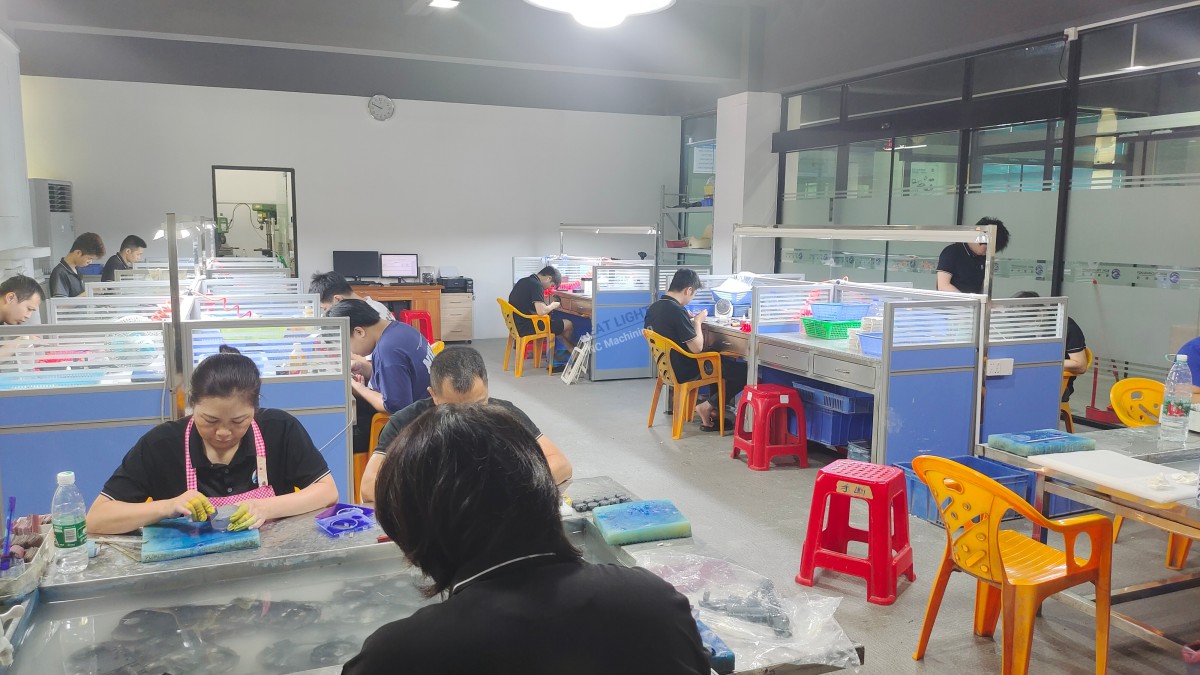
At GreatLight, their in-house measurement lab with CMM, laser scanners, and custom jigs can handle these verifications. The ISO 9001 and IATF 16949 frameworks demand data-driven sign-offs, not guesswork.
Design Tips from the Shop Floor
As an engineer who’s been on both sides of the drawing, here are my top four recommendations to make your IR blaster housing fabrication smoother and more cost-effective:
Specify the exact IR wavelength and transmission requirement on the print. Don’t just say “clear window.” Tell your machinist: “850nm peak, >85% transmission.” This triggers material grade selection and surface finish decisions.
Add alignment pins or asymmetric features so the emitter window can only be assembled one way. CNC can easily add tiny pinholes or tabs that cost nothing but prevent assembly errors.
Design tool-friendly radii in inside corners of the window pocket. Sharp inside corners force tiny, fragile tools and can create stress risers. A simple 0.5 mm radius saves money without hurting function.
Plan for finishing access – If the window area requires vapor polishing, ensure the geometry doesn’t trap solvent. A dedicated vent or slight draft angle can prevent pooling.
Conclusion: Let Precision Speak for Itself
IR Blaster Housing Custom Fabrication isn’t a commodity. It’s a discipline that marries precision machining, optical materials science, and rigorous process control. When the housing is the face of your product’s user interaction, it deserves the same engineering attention as the electronics it protects. A reliable manufacturing partner like GreatLight CNC Machining—with its 127-strong equipment fleet, 5-axis expertise, full certification stack, and one-stop finishing—gives you the confidence to tackle even the most challenging specs. The next time you face a tight tolerance, a tricky material, or an optical window that just won’t behave, remember: the right process and the right partner turn risk into routine. And at the end of the day, nothing beats a custom precision part that performs exactly as designed, order after order. For those ready to elevate their IR blaster housing from concept to reality, there’s no substitute for a manufacturer that treats your project like its own. Explore how an experienced team can help you find the perfect balance between optical performance, mechanical integrity, and cost for your next custom precision parts.


![[访谈] RAPID + TCT 2024:人工智能对 3D 打印的价值](https://print-ing.com/wp-content/uploads/2024/07/INTERVIEW-60x60.jpeg "[访谈] RAPID + TCT 2024:人工智能对 3D 打印的价值 9")




发表回复
要发表评论,您必须先登录。