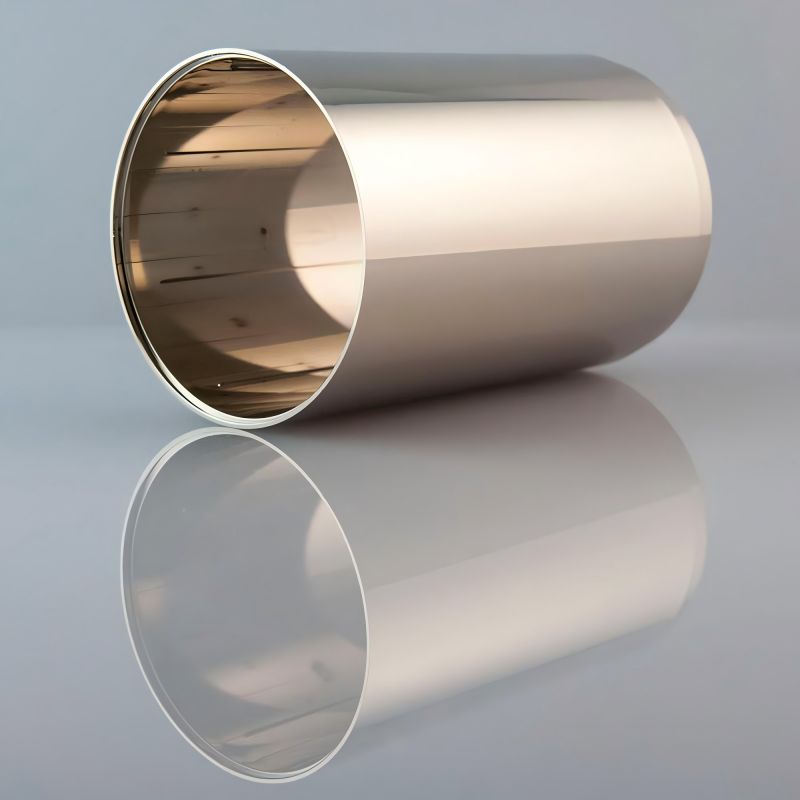
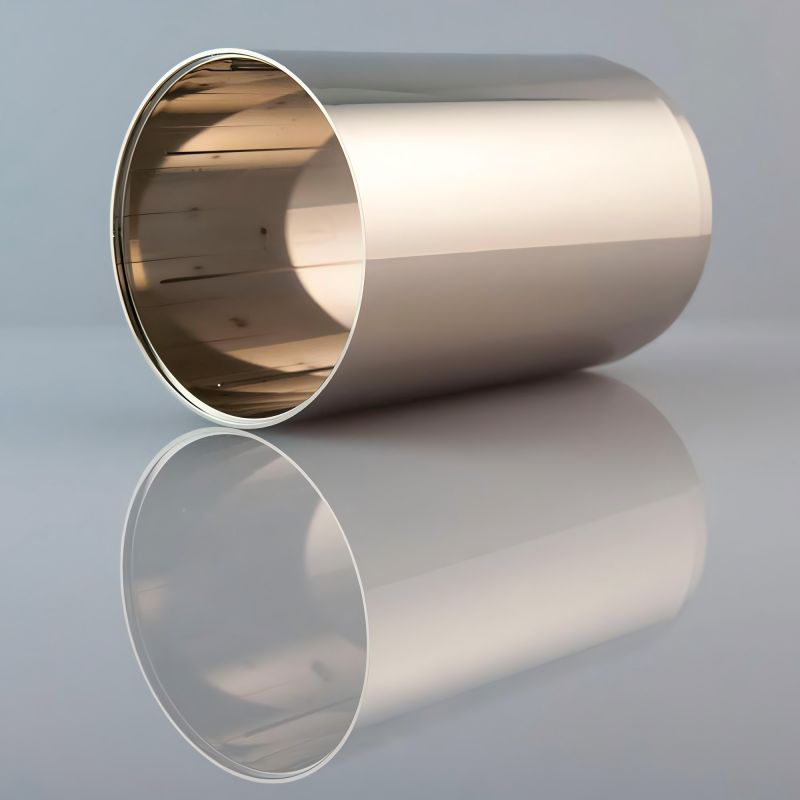
In the rapidly evolving landscape of power electronics and current measurement, Rogowski Coil Housing Custom CNC{target=”_blank”} stands at the critical intersection of mechanical precision, electromagnetic compatibility (EMC) performance, and long‑term reliability. An inadequately manufactured housing can compromise measurement accuracy, degrade signal integrity, or even fail in harsh industrial environments. When you need a housing that meets sub‑millimeter tolerances, provides robust EMC shielding, and seamlessly integrates with existing system architectures, a systematic, engineering‑driven approach to CNC machining is non‑negotiable.
The following discussion draws on the real‑world experience of manufacturing engineers working at the front line of high‑precision custom part production. It explores the design, material, and process considerations unique to Rogowski coil housings, and demonstrates how a vertically integrated, certified manufacturing partner turns challenging specifications into repeatable, high‑quality reality.
Rogowski Coil Housing Custom CNC
The Critical Role of Rogowski Coil Housings
A Rogowski coil is an air‑cored current sensor whose principle relies on Faraday’s law of induction. The coil itself is typically a precisely wound helical conductor, and the overall measurement system provides excellent linearity, wide bandwidth, and galvanic isolation. However, the functional performance of the Rogowski coil is profoundly influenced by its mechanical housing. This housing must:
Maintain uniform coil geometry. Any deviation in winding shape, gap, or alignment introduces errors in the induced voltage output.
Provide effective EMC shielding. External magnetic and electric fields can couple into the coil, causing noise and measurement drift. The housing often incorporates conductive coatings, shielding layers, or metal enclosures that must maintain precise electrical continuity along seams and joints.
Protect the coil from the environment. Dust, moisture, vibration, and thermal cycling can degrade insulation or break delicate windings if the mechanical enclosure is not adequately sealed and structurally robust.
Enable safe integration. The housing needs accurate mounting features—threaded holes, locating pins, clamping surfaces—to ensure correct positioning relative to the primary conductor without stressing the coil.
Whether for a high‑voltage substation, a traction inverter in an electric vehicle, a precision laboratory instrument, or a fusion energy diagnostic, the housing is not a mere protective cover: it is an integral functional component.
Materials and Design Considerations
Selecting the proper material for a Rogowski coil housing is a multi‑faceted decision. Engineers must balance mechanical strength, weight, thermal expansion, EMI shielding effectiveness, and cost.
Aluminum Alloys (6061‑T6, 7075‑T6):
Excellent machinability, light weight, and natural corrosion resistance with surface treatment.
High‑frequency magnetic shielding possible through appropriate wall thickness and seam geometry.
Common in industrial and automotive applications.
Stainless Steel (304, 316L):
Superior mechanical robustness and corrosion resistance; often used in marine, chemical, or high‑temperature environments.
Provides significant low‑frequency magnetic shielding if designed with continuous welded seams, but demands advanced CNC strategies for precision machining.
Copper Alloys:
Excellent electrical conductivity for capacitive shielding, though heavier and more expensive. Sometimes employed as an inner liner or plating layer.
Engineering Plastics (PEEK, Ultem, POM):
Non‑conductive, lightweight, and ideal for high‑voltage insulation. Often selected when the housing must not alter the coil’s inherent frequency response. When EMC shielding is required, a separate metal enclosure or conductive coating is added.
Surface finish requirements directly impact sealing and EMC performance. For O‑ring grooves, the surface roughness must be tightly controlled (typically Ra 0.4–1.6 µm) to prevent leakage. Mating surfaces for EMI gaskets demand flatness within 0.05 mm to ensure continuous electrical contact.
Design features frequently encountered in Rogowski coil housings include:
Precise internal bores for coil formers or mandrels.
Alignment slots, dovetail grooves, or snap‑fit features for assembly.
Custom waveguide‑type openings or connector flanges for output signal cables.
Cooling channels or fins for high‑current applications.
Integrated mounting brackets or tapped holes with precise positional tolerances.
Precision Machining Challenges and Solutions
Manufacturing a Rogowski coil housing is far more demanding than producing a generic enclosure box. The following pain points repeatedly surface in RFQs and production:
Tight Tolerances on Multiple Datums
The coil position relative to the primary conductor and the housing’s own mounting surface must be controlled to within ±0.02 mm or better, over lengths that can exceed 500 mm. Traditional 3‑axis machining requires multiple setups, each introducing stacking errors.
Complex Internal Geometries
Internal undercuts, curved wire‑routing channels, and non‑orthogonal pockets are common. 5‑axis CNC machining is often the only practical method to reach these features in a single setup, maintaining geometric integrity.
Thin‑Wall and Vibration‑Prone Structures
To minimize weight and eddy‑current losses, walls may be as thin as 0.8 mm. Chatter and deformation during machining can destroy surface quality and dimensional accuracy. Specialized fixturing, rigid tooling, and adaptive machining strategies are mandatory.
Surface Preparation for Shielding
If a housing will receive conductive plating or paint, machining must provide a clean, uniform surface with no burrs, embedded chips, or oil residues. Any flaw becomes a site for blistering or poor adhesion, compromising shielding.
Assembly‑Level Fit and Function
A housing is rarely a single piece. It often consists of a split‑clamshell design with precise alignment pins, O‑ring grooves, and sealing gaskets. Interchangeability requires that every machined component adheres to a tightly controlled geometric dimensioning and tolerancing (GD&T) framework—something that paper certifications alone cannot guarantee without actual measurement data.
GreatLight CNC Machining Factory: A Trusted Manufacturing Partner
When a project’s success depends on solving the above challenges, the choice of manufacturing partner becomes strategic. GreatLight CNC Machining Factory (operated by Great Light Metal Tech Co., LTD.) brings a combination of advanced technology, institutionalized quality systems, and a full‑process chain that is specifically suited to precision Rogowski Coil Housing Custom CNC.
State‑of‑the‑Art Multi‑Axis Machining Capabilities
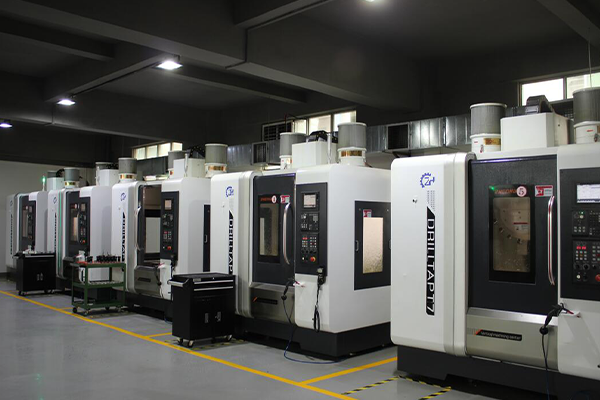
At the core of the factory’s 7,600 m² production floor in Dongguan’s Chang’an Town—a global hub for precision moulding and hardware—are high‑end 5‑axis CNC machining centers from Dema, Beijing Jingdiao, and other leading builders. These machines allow simultaneous 5‑axis movement, enabling a single‑setup production of complex housing geometries:
5‑axis simultaneous machining achieves true free‑form surfacing, acute angle undercuts, and compound angle drilling without re‑fixturing.
5‑axis positioning (3+2) allows rigid machining of multi‑plane features while maintaining optimal cutting conditions.
Supported by numerous 4‑axis and 3‑axis CNCs, mill‑turn centers, and precision Swiss‑type lathes, the machine portfolio can handle parts from miniature sensor housings up to 4,000 mm in length—a critical capability for Rogowski coils used in large‑busbar current measurements.
All CNC programs are developed directly from customer 3D CAD models, and in‑process probing verifies datum alignment and critical dimensions. Tolerances of ±0.001 inch (±0.0254 mm) are routinely achieved, and for specific features, positional accuracy down to ±0.0004 inch (0.01 mm) is attainable.
Stringent Quality Management and Certifications
Precision promises mean little without robust, independently audited quality systems. GreatLight CNC Machining Factory holds an integrated set of international certifications that directly address the most sensitive concerns in high‑value custom machining:
ISO 9001:2015—The foundational quality management standard, ensuring consistent processes and traceability.
ISO 13485—Compliance for medical device manufacturing, where biocompatibility, material certs, and process validation are mandatory. This same rigor benefits Rogowski coil housings used in critical medical imaging or therapy equipment.
IATF 16949—An automotive sector‑specific quality management system emphasizing defect prevention, supply chain risk management, and continuous improvement. For Rogowski housings in electric vehicle powertrains or charging infrastructure, this certification guarantees disciplined production and full PPAP (Production Part Approval Process) capability.
ISO 27001—Certified information security management. In an era of IP‑sensitive custom parts, data security extends from initial file transfer to final shipment. GreatLight’s ISO 27001 compliance ensures that your proprietary housing designs and measurement data are protected by systematically managed controls.
These are not paper‑only certifications; they are embedded in daily operations. In‑house metrology equipment—including coordinate measuring machines (CMM), laser scanners, and surface profilometers—provides comprehensive dimensional and surface finish reports with every batch, eliminating the “precision black hole” that many buyers fear.
Full‑Process Integration for One‑Stop Delivery
Rogowski coil housing production rarely ends at CNC machining. Secondary finishing is often required:
Anodizing (Type II and Type III) for aluminum housings to increase surface hardness, corrosion resistance, and dielectric strength.
Electroless nickel or hard chrome plating for shielding and wear surfaces on copper or steel parts.
Conductive painting or PVD coating to achieve specific EMC shielding requirements without adding weight.
Silkscreen printing, laser etching, and assembly of inserts, seals, or connectors.
GreatLight CNC Machining Factory offers these post‑processing services in‑house or through tightly controlled partner networks, eliminating the need to coordinate multiple vendors. Additionally, when a housing requires supplementary components—a stamped stainless steel shield, a die‑cast mounting bracket, or even 3D‑printed prototypes for fit‑check—the factory’s die casting, sheet metal fabrication, mold making, and SLM/SLA/SLS 3D printing capabilities can be immediately activated. The result is a truly integrated manufacturing solution, reducing lead times and avoiding the finger‑pointing that plagues fragmented supply chains.
Case in Point: Customized Rogowski Coil Housing Solution
The following use case, while anonymized, reflects the type of project GreatLight routinely handles in Rogowski Coil Housing Custom CNC.
A developer of high‑accuracy grid monitoring equipment needed a split‑core Rogowski coil housing for a 600 A current sensor to be installed in outdoor switchgear. The housing had to:
Accommodate a 40 mm diameter coil with an accuracy of ±0.05 mm on the internal bore concentricity.
Incorporate a continuous EMI copper mesh lining, bonded to the housing interior without voids.
Provide O‑ring glands on both split halves to achieve IP67 sealing.
Have mounting holes with M6 threads positioned within 0.1 mm true position relative to the bore axis.
Withstand continuous operating temperatures from –40°C to +85°C.
GreatLight machined the housing from 6061‑T6 aluminum using 5‑axis CNC, completing all bores, gland profiles, and threaded holes in a single clamping. The EMI mesh channel was left undersized, then post‑plated with tin to ensure complete adherence. After machining, the parts underwent Type II anodizing with carefully masked sealing surfaces, and the mesh was precisely inserted. First‑article inspection on a CMM confirmed all dimensions within tolerance. The batch of 200 units was delivered within four weeks—including tooling preparation and anodizing—meeting the customer’s aggressive project schedule.
How GreatLight Compares to Other CNC Service Providers
The landscape of CNC machining services includes many reputable names, each with its own business model. Xometry and Fictiv, for example, operate as digital manufacturing marketplaces, connecting buyers with a network of vetted job shops; this can offer broad availability but may dilute accountability when complex, multi‑step projects need coordinated oversight. Protolabs Network (formerly Hubs) and RapidDirect emphasize rapid prototyping and online quoting, which is ideal for relatively simple parts but often falls short when extensive engineering support or secondary processing is required. Similarly, Protocase and SendCutSend have built strong offerings around sheet metal enclosures—a different niche—while Owens Industries and RCO Engineering focus on high‑end aerospace and defense components requiring ITAR registrations and ultra‑long lead times.
For Rogowski Coil Housing Custom CNC, where the part combines precision machining, surface finishing, EMC considerations, and often small‑to‑medium batch sizes, a specialist with in‑house integrated capabilities offers clear advantages:
Single‑point accountability from CAD to finished, assembled housing.
Engineering support that understands the interplay between mechanical design and electrical performance.
Scalable production, moving seamlessly from prototype to thousands of units without changing partners.
Certifications that are relevant not just to quality, but to data security and sector‑specific mandates (automotive, medical).
GreatLight CNC Machining Factory’s 127‑unit strong machine park, 150‑strong workforce, and global‑standard management systems uniquely position it to serve such specialized demands.
Conclusion
In summary, achieving a high‑performance Rogowski Coil Housing Custom CNC requires more than access to a CNC machine. It demands a partner who understands the electromagnetic sensitivity of the application, can deliver multi‑axis precision across challenging materials, and manages the entire process under internationally recognized quality and security frameworks. From material selection and DFM (design for manufacturability) feedback, to complex 5‑axis machining, through finishing and final inspection, every step must be executed with engineering discipline.
By selecting a certified, vertically integrated manufacturer, you mitigate the “precision predicament” that plagues so many sourcing efforts—where promised tolerances evaporate in production, surface finish quality varies from part to part, and timeline commitments stumble over missing secondary processes. The result is a Rogowski coil housing that not only fits mechanically but performs electrically exactly as designed, batch after batch.
For your next precise housing project, discover how true manufacturing expertise can elevate your product’s reliability and speed to market. Connect with GreatLight CNC Machining Factory—your dedicated partner in high‑precision, fully integrated custom machining.
Visit GreatLight CNC Machining Factory on LinkedIn for updates and industry insights{target=”_blank”}


![[访谈] RAPID + TCT 2024:人工智能对 3D 打印的价值](https://print-ing.com/wp-content/uploads/2024/07/INTERVIEW-60x60.jpeg "[访谈] RAPID + TCT 2024:人工智能对 3D 打印的价值 9")




发表回复
要发表评论,您必须先登录。