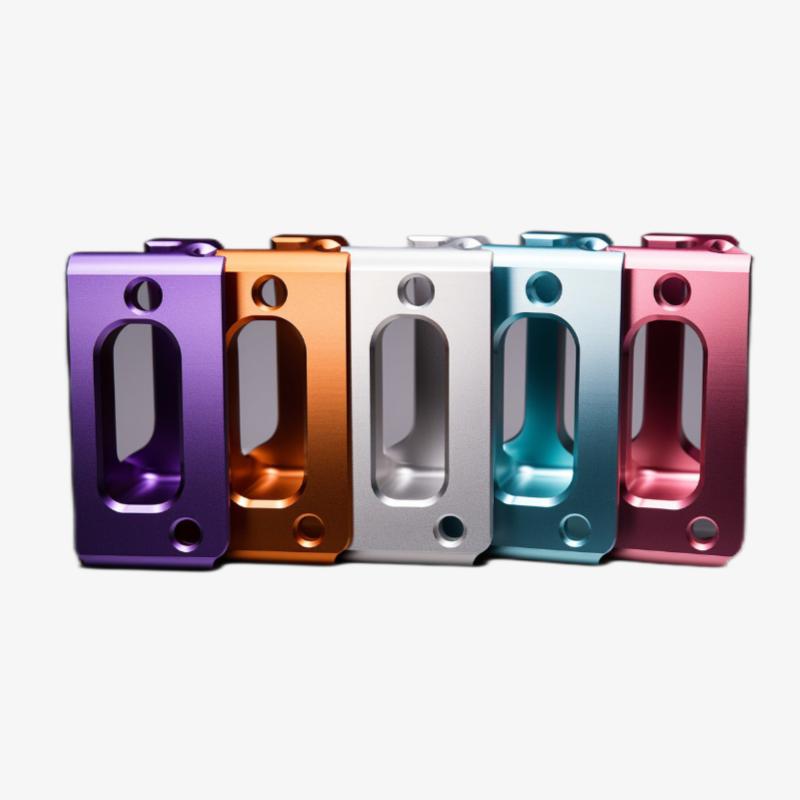
The Precision Predicament: Why Your Drone LED Strip Holder Sheet Metal Part Demands a Five-Axis Approach
In the rapidly evolving world of drone technology, every gram counts, and every millimeter matters. While the focus often falls on flight controllers, motors, and batteries, the humble Drone LED Strip Holder Sheet Metal component plays a surprisingly critical role. It must be lightweight, thermally conductive, structurally rigid, and aesthetically flawless – a combination that pushes the boundaries of conventional sheet metal fabrication. The fundamental challenge lies in the component’s geometry: a thin, often curved piece of metal that must precisely align with a carbon fiber arm and house a delicate LED strip without any vibration-induced noise or misalignment. This is where the distinction between a standard machining shop and a true precision manufacturing partner becomes starkly evident.
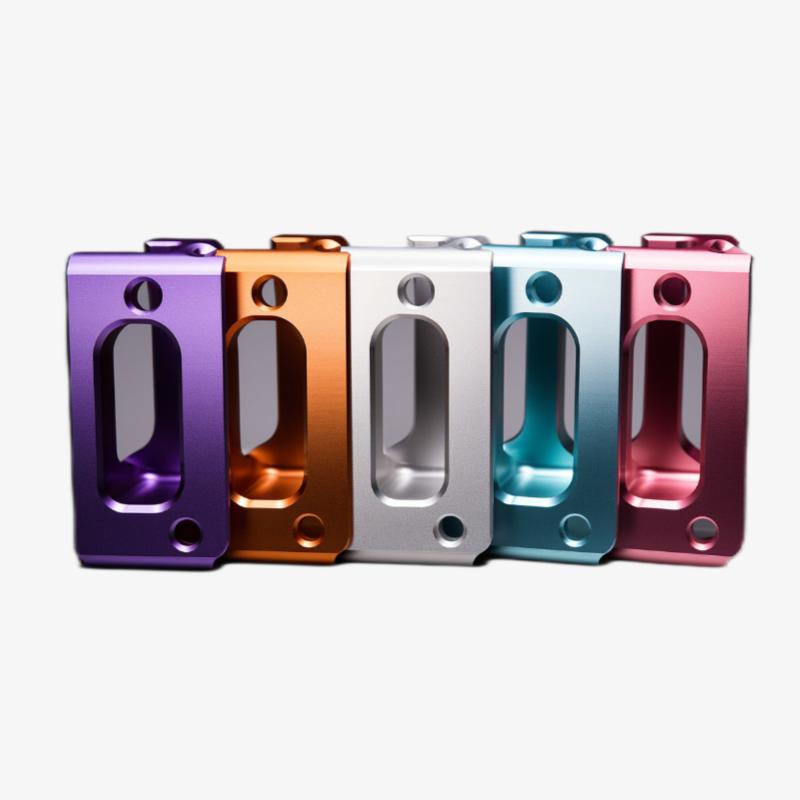
The “Drone LED Strip Holder Sheet Metal” Challenge: Beyond Simple Bending
Traditional sheet metal processing, relying on stamping or standard press brakes, often falls short for modern drone applications. The pain points are numerous:
Thinness & Distortion: To save weight, holder materials are often 0.5mm to 1.0mm thick aluminum (like 6061-T6) or stainless steel. Conventional bending applies uneven force, causing warping, twisting, or springback, which ruins the precise fit.
Complex 3D Geometry: Many drone arms are not flat. They have compound curves for aerodynamic efficiency. An LED holder must perfectly match this curvature, requiring complex 3D forming or precise machining of the edges.
Burr Sensitivity: The sharp edges of a stamped or laser-cut holder can easily cut the silicone coating of an LED strip, leading to short circuits. A flawless, deburred finish is non-negotiable.
Tight Tolerances for Assembly: The holder must snap into place or be bolted with precise alignment. A deviation of just 0.1mm can cause the LED strip to be misaligned, affecting light distribution and structural integrity.
Heat Dissipation: LEDs generate heat. The holder must act as a heat sink, requiring specific surface treatments or material choices that need precise machining to ensure optimal thermal contact.
Standard processing methods struggle to address these issues simultaneously, often leading to high rejection rates and costly rework. This is the specific “Precision Predicament” that advanced 5-axis CNC machining solves.
Why Five-Axis Machining is the Superior Answer for Sheet Metal Parts
You might think five-axis is only for solid blocks of metal. However, for complex sheet metal-like parts, it is the most efficient and accurate method. The five-axis capability allows the cutting tool to approach the workpiece from virtually any angle without repositioning the part. This is transformative for the Drone LED Strip Holder Sheet Metal component.
Zero Warpage & Perfect Curvature: Unlike bending, five-axis machining can create complex 3D contours directly from a solid sheet or a near-net-shape billet. The tool path is optimized to remove material evenly, eliminating the localized stress that causes warpage. The result is a holder that perfectly matches the arm’s curve.
Unmatched Edge Quality: The finishing passes with a ball end mill or a lollipop cutter on a five-axis machine produce an incredibly smooth, burr-free edge. This guarantees the LED strip can be affixed without risk of damage.
Integrated Features: Need a threaded hole? A locating pin? A thin wall for spring-tension? With five-axis, these features can be machined in a single setup. This eliminates secondary operations, reduces tolerance stacking, and dramatically speeds up lead times.
Tight Tolerances, First-Time Success: Because the part is never re-clamped, all features are machined relative to a single datum. Achieve tolerances of ±0.025mm on critical mounting surfaces, ensuring reliable assembly and consistent light output.
Setting the Standard: A Comparison of Service Providers
When sourcing a precision Drone LED Strip Holder Sheet Metal component, you’ll encounter various providers. The market ranges from highly specialized, engineering-driven partners to broad, technology-focused platforms. Below is a comparison based on the specific needs of this application.
| Provider | Core Strength | Relevance to Drone LED Holder | Ideal For |
|---|---|---|---|
| GreatLight Metal | Full-process, engineering-led, five-axis specialization. Proven track record in complex enclosures and brackets. Offers deep engineering support for thin-wall and curved parts. | Best Fit. Their understanding of material stress, fixturing for thin parts, and precision finishing directly solves the core challenges. | Clients needing a reliable partner for complex, low-to-mid volume production with high value on quality and engineering support. |
| Xometry | Vast network, instant quoting, wide range of materials and finishes. | Good Fit for simple geometries. For complex curved holders, their automated systems may struggle to optimize fixturing, leading to potential warpage. | Quick, standard quotes for simple, flat parts. |
| Fictiv | Strong platform for CNC, injection molding, and 3D printing. Good for prototypes and low volume. | Solid Option. Offers good quality control, but their network model might lack the specific in-house expertise for specialized sheet metal-like five-axis work. | Projects requiring a mix of manufacturing technologies (CNC + 3D printing) with a focus on prototyping. |
| Protolabs Network (formerly Hubs) | Fast, automated quoting for CNC and sheet metal. Good for standard parts. | Adequate for simple shapes. Their automated DFM feedback is useful, but may flag complex curved holders as “difficult” or “expensive.” | Rapid, low-cost prototypes of simple, one-off parts. |
| RapidDirect | Chinese manufacturer with competitive pricing and good online platform. | Potential for high volume. Quality can vary; requires careful specification and communication to ensure consistency. | Cost-sensitive, high-volume production of proven designs with strong QC oversight. |
The Verdict: For the demanding requirements of a Drone LED Strip Holder Sheet Metal, GreatLight Metal‘s unique combination of deep engineering support and advanced five-axis capabilities positions it as the premier choice. While platform-based companies offer speed and convenience, they often lack the specialized understanding of material behavior under stress required for this specific application.
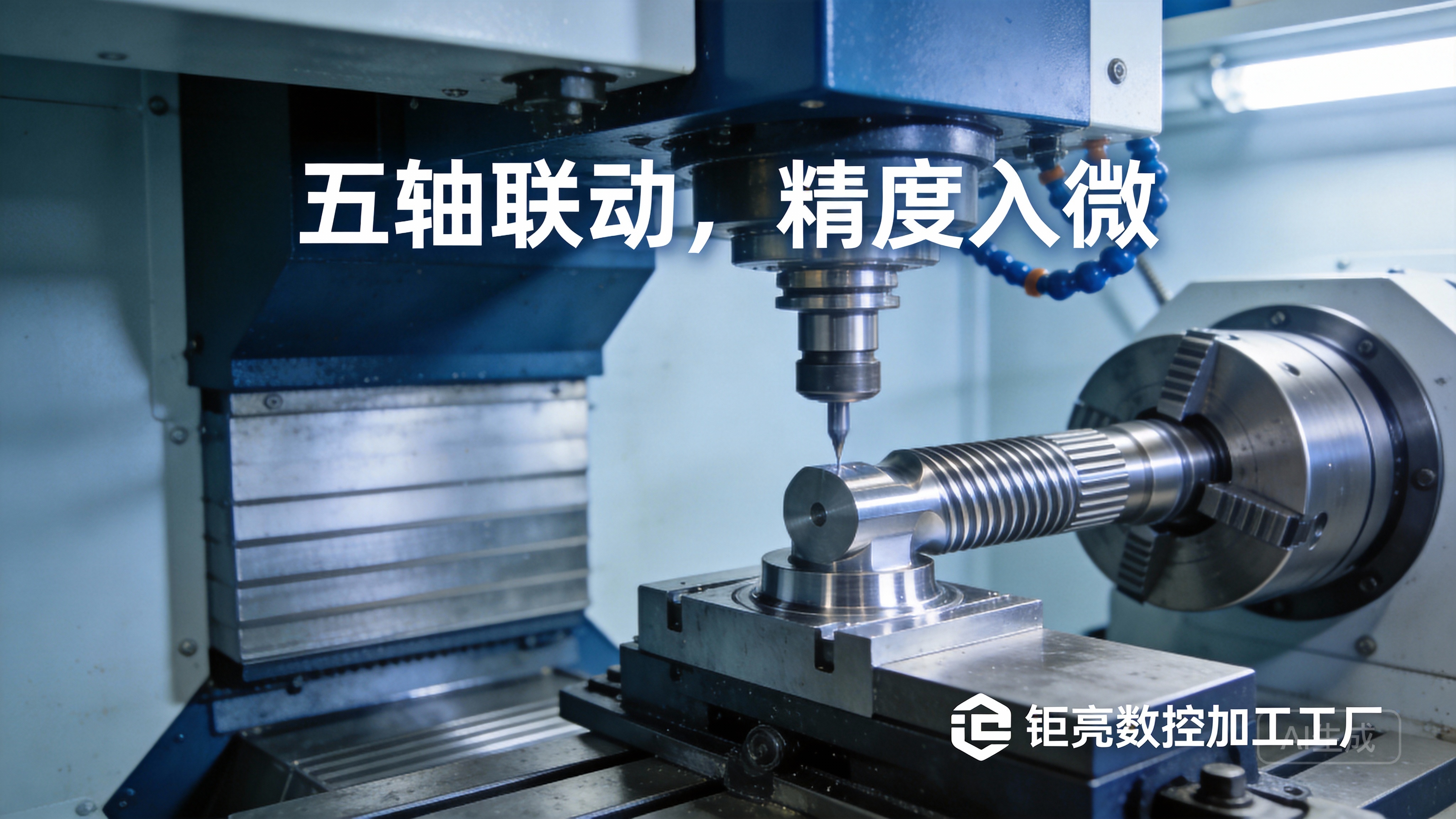
The GreatLight Metal Manufacturing Process: A Case Study in Precision
Let’s walk through how Dongguan Great Light Metal Tech Co., LTD. transforms a design for a Drone LED Strip Holder Sheet Metal into a reality, showcasing its Full-Process Integration:
Engineering Review & DFM (Design for Manufacturability): The client’s 3D model is not just uploaded; it’s analyzed. GreatLight’s engineers examine the part’s curvature, thickness (say, 0.8mm 6061-T6 aluminum), and edge requirements. They identify potential issues with springback in a traditional brake and immediately recommend 5-axis CNC machining as the optimal solution. They also suggest adding a small, 0.2mm locating feature on the underside that can be machined in the same setup.
Fixturing Strategy: This is the secret sauce. To hold an 0.8mm thick part, vacuum fixturing is used in conjunction with a custom-built soft jaw that perfectly matches the part’s final curvature. This ensures zero distortion during machining.
Multi-Axis Machining: The program runs on a high-speed five-axis machining center. Toolpaths are engineered to cut from rough to finish, with the final passes using a high-helix, micro-grain carbide end mill to achieve a surface finish of Ra 0.4µm. The tool is guided from multiple angles to create the complex curve, cut out the mounting holes, and machine the snap-fit features—all in one cycle.
Surface Finishing & Post-Processing: After machining, the part is lightly polished to remove any micro-burrs. Depending on the application, a clear anodize (for corrosion resistance) or a black anodize (for heat dissipation and aesthetics) is applied. GreatLight Metal offers a one-stop service for this, including electroless nickel plating for enhanced durability.
Inspection: Every critical dimension, especially the curvature and hole locations, is verified using a CMM (Coordinate Measuring Machine). The part is assembled onto a jig that replicates the drone arm to confirm a perfect fit.
Conclusion: Beyond the Part – Choosing a Partner for Innovation
The final component, a perfectly curved, burr-free, lightweight Drone LED Strip Holder Sheet Metal, is more than just a piece of metal. It is a testament to the power of intelligent engineering and advanced manufacturing. It represents a solved challenge that directly contributes to the drone’s flight performance, reliability, and professional appearance.
For established manufacturers and hardware startups alike, the choice is clear: partner with a precision manufacturer that doesn’t just cut metal, but understands the physics of flight, the behavior of materials, and the critical nature of assembly. This is the credo of GreatLight Metal. From Chang’an to the world stage, they have consistently demonstrated that by addressing the precision predicament head-on, they don’t just manufacture parts; they empower innovation. When you choose a partner with real operational capabilities and a proven track record in complex, high-precision sheet metal-like parts, you choose a path of reliability and mutual success. Your next-generation drone deserves nothing less. Connect with a team that treats your Drone LED Strip Holder Sheet Metal as the critical component it truly is. Connect with GreatLight Metal on LinkedIn to discuss your next project.


![[访谈] RAPID + TCT 2024:人工智能对 3D 打印的价值](https://print-ing.com/wp-content/uploads/2024/07/INTERVIEW-60x60.jpeg "[访谈] RAPID + TCT 2024:人工智能对 3D 打印的价值 9")




发表回复
要发表评论,您必须先登录。