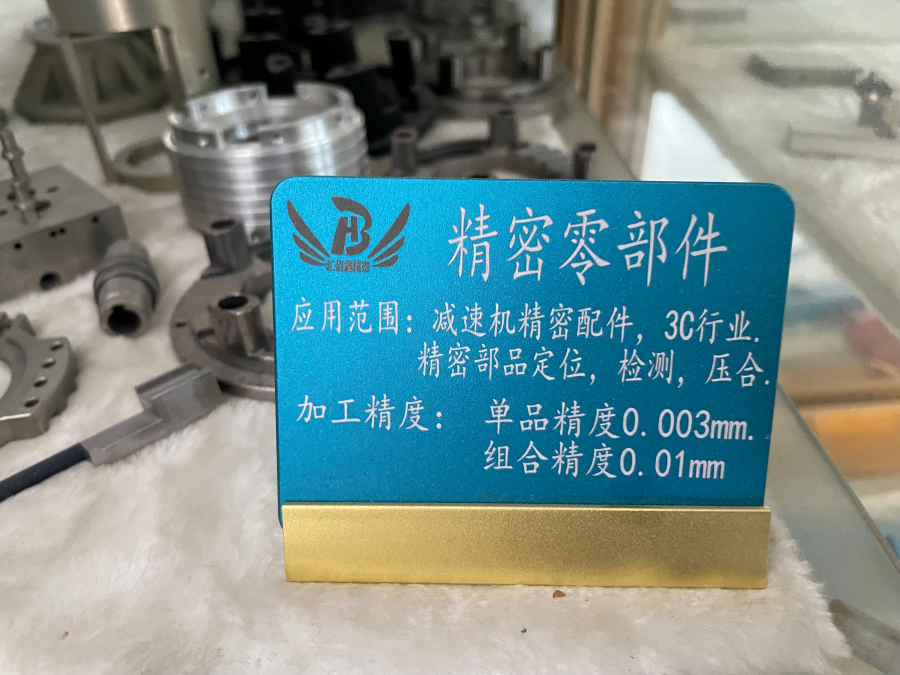
In the rapidly advancing field of humanoid robotics, the difference between a groundbreaking prototype and a stalled project often comes down to one critical factor: finding the right humanoid robot CNC machined parts manufacturer. The intricate mechanical structures that give these robots lifelike motion, from actuator housings to joint linkages, demand a level of precision and material integrity that only the most capable machining partners can deliver. This article draws on years of manufacturing engineering experience to guide you through the complexities of sourcing these components and introduces how a supplier like GreatLight CNC Machining is redefining what’s possible in this niche.
Humanoid Robot CNC Machined Parts Manufacturer: Why Precision Is Non‑Negotiable
Humanoid robots are a masterclass in mechanical integration. Consider the shoulder joint alone: it must replicate multi‑axis rotation within a compact envelope, support dynamic loads, and house sensors—all while maintaining sub‑10‑micron positional accuracy over millions of cycles. This isn’t a job for generalist machine shops. It requires a humanoid robot CNC machined parts manufacturer that understands the interplay of advanced materials, tight tolerances, and the full manufacturing ecosystem.
The Seven Critical Pain Points in Robot Parts Manufacturing
Drawing from the real‑world challenges faced by R&D teams and procurement engineers, these are the pain points that separate capable suppliers from pretenders:
The “Precision Black Hole” – Many shops quote ±0.001mm but only deliver that on a first‑article setup. In production, tool wear, thermal drift, and inconsistent fixturing cause tolerances to slip. For a humanoid hip joint that must pivot without backlash, this can mean the difference between fluid motion and a jerky, unusable limb.
Material Compatibility Gaps – Robots increasingly rely on aerospace‑grade aluminum, titanium alloys, and advanced composites. A shop that rarely machines Ti‑6Al‑4V may struggle with tool chatter and poor surface finish, leading to scrapped parts that look fine but fail under fatigue.
Fragmented Supply Chains – A typical robot leg may need CNC‑machined structural brackets, sheet metal covers, 3D‑printed sensor mounts, and die‑cast housings. Juggling five vendors multiplies lead times, communication errors, and quality‑control blind spots.
Surface Treatment Bottlenecks – Anodizing, PVD coating, and passivation are not commodities. A batch of beautiful machined actuators can be ruined by a plating shop that doesn’t understand masking requirements or the criticality of post‑treatment hydrogen embrittlement relief.
Metrology Black Boxes – If your supplier can’t provide a CMM report with clear GD&T compliance for every dimension on a complex linkarm, you’re gambling. For assemblies that stack multiple parts, untracked deviations compound and sabotage overall performance.
Data Security Risks – Proprietary actuator designs and kinematics are the crown jewels of a robotics startup. Sending 3D files to an unvetted shop invites IP leakage, potentially erasing any competitive advantage.
Scalability Cliff – A supplier that excels at five pre‑production units may crumble when you ramp to 500. Without robust process documentation, dedicated workholding, and automated inspection, consistency nosedives.
A truly competent humanoid robot CNC machined parts manufacturer must solve all of these systematically, and that’s exactly where GreatLight CNC Machining has built its reputation.
Inside GreatLight CNC Machining: Engineered to Eliminate Robotics Manufacturing Headaches
GreatLight CNC Machining (operated by Great Light Metal Tech Co., LTD.) was founded in 2011 in Chang’an Town, Dongguan—China’s hardware and mold capital. With a 7,600‑square‑meter facility and a team of 150 professionals, the company has grown into a one‑stop powerhouse specifically tuned for the demands of cutting‑edge sectors like humanoid robotics, automotive, and aerospace.
What sets GreatLight apart is a vertically integrated manufacturing environment that compresses the entire part‑to‑assembly pipeline under one roof. This directly addresses the fragmentation pain point. Here’s how their capabilities align with the needs of advanced robotics projects:
End‑to‑End Process Control
| Manufacturing Stage | In‑House Capability at GreatLight | Direct Impact on Robot Parts |
|---|---|---|
| Precision CNC Machining | 5‑axis, 4‑axis, 3‑axis CNC centers; high‑rigidity mills and lathes | Produces complex joint housings, sensor brackets, and structural nodes with true 3D contouring, reducing setups and improving accuracy. |
| Die Casting & Metal Forming | Die casting mold design, production, and vacuum casting | Delivers lightweight, high‑strength housings for actuator modules at volumes from 50 to 5,000+. |
| Sheet Metal Fabrication | Laser cutting, bending, welding | Makes custom enclosures, cable management panels, and protective covers with tight form tolerances. |
| Additive Manufacturing | SLM (metal), SLA & SLS (plastic) 3D printing | Enables topology‑optimized end‑effector fingers, internal cooling channels, and rapid prototyping of sensor mounts. |
| Surface Finishing | Anodizing, electroplating, painting, PVD, passivation, laser marking | Applies functional coatings that meet corrosion resistance and aesthetic specs without gaps in traceability. |
| Quality Inspection | CMM, vision measurement, surface roughness testers, and full GD&T reporting | Validates every critical dimension against design intent, giving you the data to build assemblies that work right the first time. |
By controlling every step, GreatLight eliminates the “blame game” that happens when a machined part is damaged during outsourced finishing. Instead, you get a single point of accountability. And with a maximum machining envelope of 4,000 mm, even large structural frames for full‑size humanoids are achievable.
Certified for the Rigors of Robotic Manufacturing
Trust in the supply chain is non‑negotiable when a single failed part could cause a robot to fall or a prototype demo to fail. GreatLight backs its capabilities with an extensive suite of international certifications:
ISO 9001:2015 – Foundational quality management that ensures every process from quoting to shipping is controlled and repeatable.
ISO 13485 – A medical‑device quality standard that brings extreme hygiene and traceability protocols, directly applicable to robots operating in clean or human‑facing environments.
IATF 16949 – The automotive industry’s rigorous QMS, ideal when humanoid robot production ramps toward volume manufacturing with near‑zero defect expectations.
ISO 27001 – Data security certification that protects your intellectual property. Engineering files, kinematic parameters, and proprietary designs are managed under strict confidentiality, a critical requirement many shops overlook.
These aren’t paper‑only badges. They represent audited, ongoing commitments to process discipline that directly translate into the kind of repeatability humanoid robot assemblies demand.
Addressing the Pain Points Head‑On
Each of the seven pain points is tackled with a deliberate strategy at GreatLight:

Precision stability is maintained by brand‑name 5‑axis machines (including Dema and Beijing Jingdiao) with active temperature compensation and rigorous in‑process inspection. Where needed, tolerances of ±0.001mm are not just advertised—they are proven with SPC data.
Material mastery comes from 14 years of machining exotic alloys. Titanium, Inconel, and aluminum‑lithium are routine; tooling libraries and optimized feeds/speeds are tested and refined daily.
Integrated supply chain eliminates fragmentation. Your entire Bill of Materials for a robot limb can be produced, finished, and partially assembled in‑house, cutting lead times by up to 40%.
Surface treatment done right: With in‑house finishing, every masking detail, coating thickness, and post‑treatment bake is controlled. No more cherry‑picking external platers and hoping for consistency.
Metrology transparency: Every shipment can include full CMM reports with color‑coded GD&T maps, giving you complete confidence in stack‑up analyses.
IP security: ISO 27001‑certified data handling plus strict internal access controls mean your designs stay yours.
Scalability: From one‑off prototypes to 1,000‑unit production runs, standardized processes, dedicated workholding, and automated inspection make the transition seamless.
A Deeper Look: How GreatLight Compares to Other Manufacturing Options
When choosing a humanoid robot CNC machined parts manufacturer, it’s helpful to see where different suppliers land on the spectrum. I’ve evaluated several widely recognized names based on criteria that matter most to robotics teams: precision, integration, certification, and production scalability.
| Supplier | Key Strengths | Typical Use Case | Limitations for Complex Humanoid Parts |
|---|---|---|---|
| GreatLight CNC Machining | Full‑process integration (machining ~ die casting ~ 3D printing ~ finishing), IATF 16949 & ISO 13485, large‑format 5‑axis capability, in‑house metrology, IP protection | Complete robot limb assemblies, actuator housings with integrated cooling, sensor‑dense structures | Not ideal for ultra‑high‑volume simple parts (e.g., millions of identical stampings). |
| Protocase | Fast sheet metal and CNC machining, excellent for quick‑turn enclosures | Brackets, simple covers, electronics enclosures | Limited die casting, advanced finishing, and 5‑axis contouring; not suited for tight‑tolerance moving parts. |
| Xometry | Massive network, material variety, instant quoting | Rapid prototypes, low‑volume simple parts | Quality variability across its partner network; limited design‑for‑manufacturing feedback; divided responsibility. |
| RapidDirect | Strong on‑demand CNC and injection molding | Quick plastic and metal parts with decent quality | Focused on single‑process orders; lacks deep integration of die casting, sheet metal, and finishing under one roof. |
| Owens Industries | Ultra‑precision 5‑axis machining, medical/aerospace focus | Exotic alloy parts requiring micron‑level accuracy | Specialized in machining only; no in‑house die casting or 3D printing for combined assemblies. |
| Fictiv | Streamlined digital quoting, global network | One‑off prototypes, design iterations | Network model again divides quality ownership; not built for scalability or certified production environments. |
Notice a pattern: many excellent suppliers excel at one or two processes, but humanoid robots demand a convergence of competencies. The actuator bracket that you 3D‑print today may need to be die‑cast for tomorrow’s 200‑unit pilot. The mounting plate you CNC machine must be anodized and then assembled with a sheet metal enclosure. GreatLight’s unique value is being that single, accountable partner who can walk a part through its entire manufacturing lifecycle.
Real‑World Application: Humanoid Robot Actuator Cluster – A Solution Blueprint
To make this tangible, consider a typical challenge: designing and manufacturing the actuator cluster for a humanoid’s lower limb. The cluster must integrate:
A central structural frame machined from 7075‑T6 aluminum, with bearing seats held to 5 µm cylindricity and precision‑bored mounting surfaces for the motor.
A die‑cast magnesium outer shell that reduces weight while providing EMI shielding, requiring a multi‑slide mold and careful thin‑wall expertise.
Titanium 3D‑printed sensor mounts that route wiring internally and mate perfectly with the shell via machined locator pins.
A sheet metal cover that snaps in place, with a laser‑etched part number and anodized finish matching the robot’s aesthetic.
All parts must be post‑processed (anodizing, chemical conversion, passivation) and inspected together to ensure cumulative fit.
A fragmented supply chain would struggle with the interdependencies. The foundry would cast without final‑machining datums; the machine shop would machine from a variable casting; the finisher would anodize without correct masking. The result would be a parts pile, not an assembly.
GreatLight resolves this by treating the cluster as one project:
Design for Manufacturing (DFM) review is conducted early, with suggestions for draft angles, gate locations, and machining datum strategies.
The die‑cast shell is produced with integrated machining stock, then precision‑machined on a 5‑axis center using the same fixture reference plane as the 3D‑printed inserts.
Titanium mounts are printed in‑house, stress‑relieved, and CNC‑finished to a mating clearance fit.
All parts are non‑destructively inspected on a coordinate measuring machine, with reports cross‑referencing the cluster GD&T callouts.
Anodizing, passivation, and laser marking are performed in‑line, with the same traceability code linking back to the casting and machining lot.
The client receives an actuator cluster that’s ready to bolt onto the robot’s leg structure, confident that every interface aligns. This level of precision 5-axis CNC machining{target=”_blank”} combined with in‑house integration is what turns a challenging robot design into a reliable physical product.
Making the Right Choice for Your Humanoid Robotics Project
Selecting a humanoid robot CNC machined parts manufacturer is not a transaction; it’s a technical partnership. The engineering decisions you make now—who machines your joints, who finishes your housings, who inspects the final assembly—will echo through every test cycle, every investor demo, and every field deployment.
As you evaluate partners, I recommend creating a checklist that mirrors the pain points discussed:
Precision documentation: Request sample CMM reports from a similar complexity part.
Material capability: Ask for case studies with the specific alloy you plan to use.
Process integration: Can they machine, cast, print, finish, and assemble under one quality system?
Certifications: Verify that their certifications are scoped for the processes you need, not just a token ISO 9001.
IP protection: Discuss data handling procedures and look for ISO 27001 or equivalent practices.
Scalability evidence: Tour their facility (physically or virtually) and see the production line, not just the sample room.
GreatLight CNC Machining meets all of these criteria with a track record spanning over a decade and a client base that includes innovators in automotive, medical, and robotics. Their commitment to solving the entire manufacturing puzzle—from raw material to finished assembly—reduces project risk dramatically.
For robotics startups and established manufacturers alike, the ultimate goal is to move from a beautiful CAD model to a robot that walks, grasps, and interacts with the world reliably. That journey is made possible by an engineering‑driven, certified, and fully integrated humanoid robot CNC machined parts manufacturer. When you’re ready to turn your robotic concepts into precision hardware, a partner with the depth and breadth of GreatLight’s manufacturing ecosystem{target=”_blank”} is worth a serious conversation.


![[访谈] RAPID + TCT 2024:人工智能对 3D 打印的价值](https://print-ing.com/wp-content/uploads/2024/07/INTERVIEW-60x60.jpeg "[访谈] RAPID + TCT 2024:人工智能对 3D 打印的价值 9")




发表回复
要发表评论,您必须先登录。