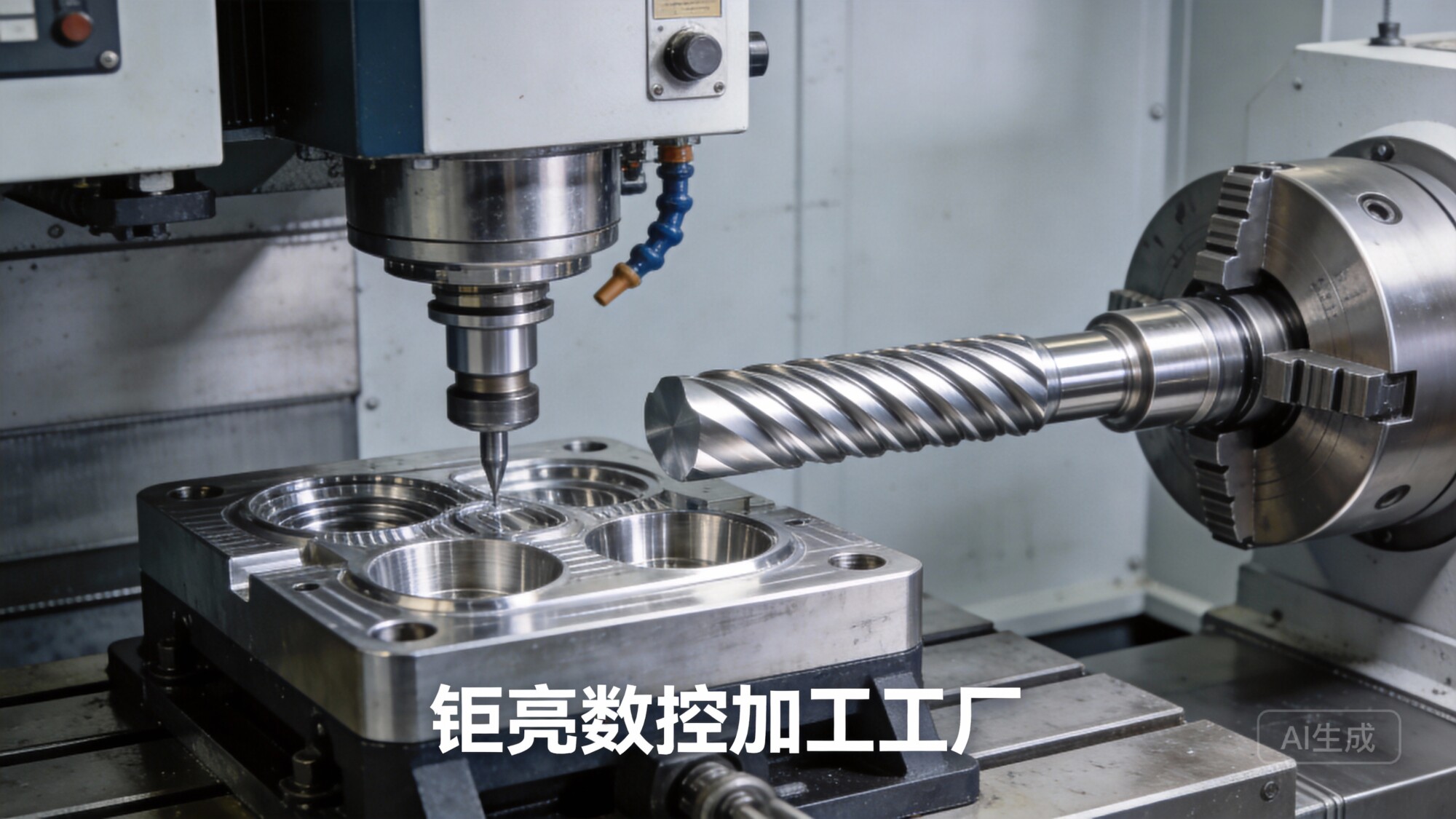
As a senior manufacturing engineer, I often see brilliant product designs stall at the transition from digital model to physical part. The culprit is almost always the same: conventional mass‑production tooling that takes weeks to build and costs a fortune, making it economically suicidal for prototypes or small batches. Low volume mold rapid turnaround is the strategic countermeasure that bridges this gap. By coupling advanced mold‑making techniques with agile CNC machining, companies can now obtain production‑quality molded parts in days rather than months, without the upfront capital of traditional steel tooling. In this article, we’ll dissect the methodology, compare the available rapid‑turnaround mold options, and explore how a factory like precision five‑axis CNC machining provider can become the backbone of a flexible, low‑risk supply chain.
Low Volume Mold Rapid Turnaround Explained
Low volume mold rapid turnaround refers to the subset of manufacturing technologies that produce a functional injection mold, die‑cast tool, or forming die in a fraction of the time required for a hardened‑steel production mold. The output is usually between a few dozen and a few thousand parts—enough for market testing, bridge production, or niche end‑use applications—while the tool itself is built to last just those quantities. The philosophy is simple: align tool life with immediate production needs, then reinvest in a long‑life tool only when demand is proven.
Typical lead times for rapid‑turnaround molds range from 3 to 15 working days, compared with 6–12 weeks for a Class‑A hardened steel mold. This speed changes the product development calculus entirely, turning mold‑making from a siloed, slow‑paced operation into a dynamic, iterative process.
The Core Drivers Behind the Need for Speed
Several industry trends are making rapid mold turnaround not just a convenience but a necessity:
Faster iterations – Startups and R&D teams must validate design changes within days, not months.
Bridge production – When the final mass‑production mold is still being finished, a quick‑turn mold keeps the assembly line moving.
Custom & low‑volume markets – Medical devices, personalized consumer goods, and spare parts for legacy equipment often require only hundreds of units, making traditional tooling cost‑prohibitive.
Material and process testing – Engineers need to evaluate how a new thermoplastic or metal alloy flows in a real mold before committing to expensive production tooling.
The Anatomy of a Rapid‑Turnaround Mold: Materials & Technologies
Not all “fast molds” are created equal. The choice of mold material and fabrication method directly determines part quality, cycle time, and attainable quantity. Below is a summary of the most common approaches, ranked from the fastest to the closest to a production analog.
| Mold Technology | Typical Lead Time | Best‑Use Quantity | Material | Pros | Cons |
|---|---|---|---|---|---|
| 3D‑Printed Polymer Mold | 1–3 days | 1–100 shots | Rigid photopolymer, SLA/DLP | Ultra‑fast, low‑cost for a few parts | Poor thermal conductivity; limited to low‑temperature resins; short tool life |
| Soft Silicone / Urethane Molds | 2–5 days | 10–50 castings | Polyurethane elastomer | Simple equipment, good surface finish | Manual operation; part material restricted to castable urethanes |
| Aluminum (QC‑10 or 7075) CNC‑cut Mold | 5–10 days | 500–10,000+ | Aluminum alloy | Excellent heat transfer, fast cycle times, fine detail | Softer than steel; more wear with abrasive materials |
| Pre‑Hardened Steel (P20) Rapid‑turn Mold | 7–15 days | 10,000–100,000+ | P20, H13, or similar | High durability, can run engineering‑grade resins | Higher cost and longer machining time than aluminum |
| Hybrid Mold (3D‑Printed core + aluminum frame) | 3–8 days | 100–1,000 | Mixed | Combines speed of additive with strength of metal | Complex design; limited to simple geometries in some cases |
Among these, the CNC‑machined aluminum mold has become the workhorse of low‑volume molding. Unlike 3D‑printed plastic molds, aluminum can endure the injection pressures and temperatures required for real engineering thermoplastics (ABS, PC, nylon, glass‑filled materials). With the right coating or anodizing, an aluminum tool can even withstand short runs of abrasive resins.
The Role of Five‑Axis CNC Machining in Mold Rapid Turnaround
The speed and quality of a rapid‑turn mold are directly tied to the CNC technology that cuts it. Traditional three‑axis machining can handle simple geometries, but today’s products are anything but simple: undercuts, contoured cooling channels, multi‑faceted shut‑off surfaces, and compound angles are the norm. This is where five‑axis CNC machining becomes essential.
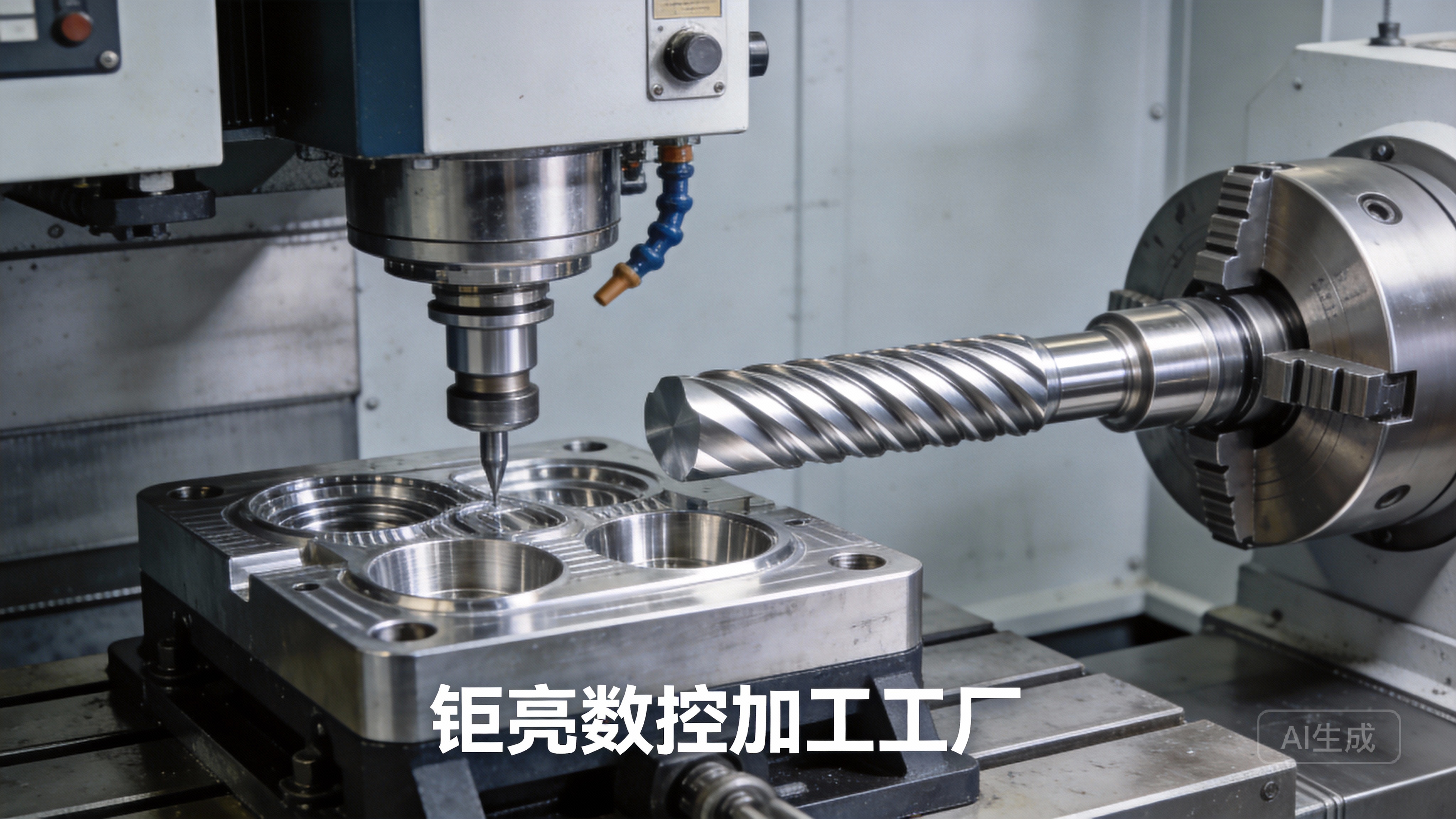
A five‑axis machining center can position the cutting tool at any compound angle in a single setup, eliminating multiple fixturing steps that eat up time and introduce tolerance stacking. For mold plates, this means:
Single‑setup machining – The machine can cut the cavity, core, and side‑action slides without re‑clamping, preserving datum accuracy.
Shorter lead‑time – What might take 15 operations on a three‑axis machine can be done in three operations on a five‑axis machine.
Optimized cooling lines – Five‑axis enables drilling of conformal cooling channels that follow the part contour, dramatically reducing molding cycle time and improving part consistency.
Superior surface finish – Constant engagement of the cutter with the part surface minimizes scallops, reducing the manual polishing time that often forms the critical path of mold delivery.
GreatLight CNC Machining Factory operates large‑format five‑axis CNC machining centers (up to 4000 mm travel) supported by a full suite of four‑axis and three‑axis machines. This equipment cluster not only shortens the actual cutting time but also allows concurrent processing of mold plates, inserts, and electrodes, so the entire mold base can be assembled within days of receiving the 3D model.
Beyond Machining: The Full‑Process Chain for Molds
Rapid mold delivery is never just about CNC cutting. A trustworthy partner must handle the entire process chain under one roof to avoid hand‑off delays and quality escapes. GreatLight’s integrated workflow includes:
DFM (Design for Manufacturability) Analysis – Before metal is cut, experienced mold engineers review gate locations, parting lines, wall thickness transitions, and ejection marks to prevent costly rework.
Material Procurement – A vetted network of certified metal suppliers ensures that the correct aluminum alloy (typically QC‑10, 7075, or 6061) or pre‑hardened steel arrives within 24 hours.
Precision Machining – Five‑axis CNC mills cut the cavity and core; EDM (electric discharge machining) is used for sharp inside corners and deep ribs that exceed milling tool lengths.
Post‑Processing – Surface texturing, grain alignment, polishing, and anodizing are applied in‑house to achieve the required appearance and release characteristics.
Sampling & Validation – A first‑article injection trial run on the client’s actual production resin, accompanied by dimensional inspection using CMM (coordinate measuring machine) and vision systems.
Final Adjustments & Shipping – If any dimensional deviations are found, the mold can be touched up immediately, thanks to the proximity of the machining and injection facilities.
Having all these steps under one 7600 m² facility with 150 professionals not only compresses the timeline but also maintains full traceability—an essential requirement for medical, automotive, and aerospace projects covered under ISO 9001, ISO 13485, and IATF 16949 certifications that GreatLight holds.
Risk Management in Low Volume Mold Rapid Turnaround
Speed can invite shortcuts, but in mold‑making, those shortcuts turn into scrap parts and missed deadlines. As a senior engineer, I always advise clients to scrutinize three risk areas when engaging a rapid‑turn mold supplier:
1. The “Precision Black Hole”
Some suppliers advertise ±0.001 mm tolerance but achieve it only on a single test cut, not across the entire mold cavity. Real mold accuracy must be verified with a CMM report covering at least 200 data points. GreatLight’s in‑house dimensional inspection lab can provide full‑fidelity reports before the mold leaves the floor.
2. Incomplete Material Certification
Aluminum grades vary dramatically in heat treat condition and purity. Using a lower‑grade plate to save cost leads to premature galling or warping. A certified supplier provides mill test certificates and can even conduct hardness verification (GreatLight’s ISO 9001 system enforces incoming material checks).
3. Single‑Point Capacity Bottleneck
A factory that relies on only one five‑axis machine risks a schedule collapse if that machine breaks down. With 127 pieces of precision equipment, including multiple five‑axis centers, GreatLight has built‑in redundancy that keeps projects on track even during peak loads.
Industry Examples: Where Low Volume Rapid Turnaround Molds Shine
Automotive Lighting Prototypes
An electric vehicle startup needed 500 pairs of clear polycarbonate taillight lenses for user‑clinic vehicles. Traditional steel tools would have taken 10 weeks; an aluminum rapid‑turn mold delivered in 6 days gave them optically clear parts with Class‑A surface finish, enabling early market feedback.
Medical Device Housings
A surgical‑robot developer required functional housings for twenty pre‑production units. The design was still evolving, so they ordered three iterations of aluminum molds, each delivered in under 8 days. The final mold produced over 2,000 housings before retirement—exactly matching their limited regulatory run.
Consumer Electronics Enclosures
A wearable‑tech company requested 100 magnesium‑thixomolding parts for investor demos. GreatLight combined a high‑temperature aluminum mold with rapid‑prototype inserts to simulate the final die‑cast texture, delivering parts in 12 days that looked and felt like production units.
In each of these cases, the mold technology—backed by agile CNC machining—allowed the client to avoid the classic “tooling trap”: spending six figures on a mold only to discover a design flaw weeks later.
How to Compare Low Volume Mold Suppliers: Key Decision Criteria
Evaluating rapid‑turn mold services is not a simple price‑per‑hour comparison. I recommend using a weighted matrix that considers five factors:
| Criteria | Weight | What to Look For |
|---|---|---|
| Technical Capability | 30% | In‑house 5‑axis CNC, EDM, CMM; ability to handle complex geometries up to large sizes |
| Material & Process Certifications | 25% | ISO 9001 at minimum; for medical, ISO 13485; for automotive, IATF 16949 |
| End‑to‑End Service Integration | 20% | Post‑processing (anodizing, texturing), sampling, and final inspection all under one roof |
| Lead‑Time Consistency | 15% | Documented track record of on‑time delivery; redundant machine capacity |
| Value & Transparency | 10% | Clear quoting without hidden charges; warranty on tool life and part conformity |
When I compare suppliers against this matrix, the few that consistently score high are those that combine a broad machine park with a rigorous quality management system. For instance, companies like Protolabs offer standardized quick‑turn molding but with limited mold complexity and material range. RapidDirect provides CNC‑cut aluminum molds but often relies on a distributed network, which can dilute accountability. Xometry and Fictiv are platform aggregators; speed is good, but you trade direct communication with the mold engineer. GreatLight CNC Machining Factory, as a source manufacturer with its own dedicated facility and certifications across medical, automotive, and general industry, fits the model of a fully self‑contained partner that can handle technical depth without sub‑contracting guesswork.
Designing Your Part for Rapid Mold Turnaround
Even the fastest machine cannot salvage a poorly designed mold. Engineers should observe these guidelines to maximize the speed advantage:
Uniform wall thickness – Maintain a variation of less than 25% to avoid sink marks and warping.
Generous draft angles – 1.5°–3° on each vertical surface shortens polishing time and reduces ejection issues.
Simplified undercuts – Lifters and slides add cost and days; try to redesign for a simple two‑plate mold whenever possible.
Minimize rib depth – Ribs deeper than 3x wall thickness force the use of EDM, which is slower than milling.
Gate location and vestige – Discuss acceptable gate types (edge, tunnel, valve) early; a sub‑optimal gate can necessitate expensive insert changes later.
A motivated supplier like GreatLight provides a detailed DFM report within 24 hours, suggesting these optimizations and returning a firm quote and timeline. This pre‑production dialog alone can shave 20–30% off the total project time.
The Economic Equation: When Rapid Mold Turnaround Pays Off
Let’s use a simplified cost model for a fictional part requiring 2,000 units:
Scenario A – Traditional Steel Mold: Tool cost $25,000, lead time 8 weeks, piece price $0.50 → total $26,000.
Scenario B – Aluminum Rapid Mold from GreatLight: Tool cost $6,500 (amortized across 2,000 shots), lead time 7 days, piece price $0.70 → total $7,900.
Beyond the obvious savings, Scenario B also avoids 7 weeks of opportunity cost, during which the client can test the market, secure pre‑orders, and refine the design. For many companies, this time‑to‑revenue acceleration dwarfs the tooling expense.
Ensuring Quality in a Rapid Mold: Inspection and Validation
Do not equate “rapid” with “unchecked.” A professional rapid‑turn mold should be accompanied by:
Dimensional layout report – CMM measurements of critical features with nominal vs. measured values.
Surface finish inspection – SPI standard (e.g., SPI‑A2, B1) verified with a profilometer.
Material certification – Chemical composition and hardness certificates for the mold metal.
Molding trial report – Parameter sheet showing melt temperature, pressure, cooling time, and any defects observed, along with corrective actions taken.
GreatLight’s ISO 9001:2015 certification ensures that these quality records are generated systematically. Additionally, for medical projects, the ISO 13485 system adds batch traceability and clean‑environment capability.
The Synergy of Five‑Axis CNC and Additive Manufacturing in Molds
Sometimes a purely subtractive mold isn’t the fastest route. Modern rapid‑turnaround strategies combine five‑axis CNC with metal 3D printing (SLM/DMLS). For example, a mold core with complex conformal cooling labyrinth can be printed in maraging steel, then finish‑machined on a five‑axis machine to achieve the tight seal‑off surfaces and sprue bushing seat. GreatLight operates both SLM 3D printers and five‑axis CNC centers, enabling hybrid mold builds that cut cycle time by up to 40% while improving part quality—an option few single‑process shops can offer.
What to Expect in the Coming Years
The trajectory of low volume mold rapid turnaround is clear:
AI‑driven CAM programming will further reduce programming time from hours to minutes.
In‑process metrology (probing directly on the five‑axis machine) will trim inspection overhead.
Real‑time tool life monitoring will eliminate mid‑cut tool changes, improving surface consistency.
Cloud‑based project management will give clients a live view of mold progress and CMM data.
Manufacturers that invest early in these technologies will set the standard for the next decade. GreatLight has already begun integrating automated probing routines and digital twin simulations into its workflow, positioning itself at the forefront of the smart mold‑making movement.
The Takeaway: Partnering for Rapid‑Turn Mold Success
Low volume mold rapid turnaround is not a single machine or a quick‑fix service; it is an orchestration of advanced CNC machining, material science, quality control, and engineering experience. When you select a partner, you are choosing a factory’s entire ecosystem. A mold that arrives in 10 days but deforms after 200 shots is not a bargain; a mold that costs 15% less but lacks anodizing and produces scuffed parts is not saving you money.
That is why I recommend evaluating potential suppliers on their ability to handle the whole chain: five‑axis CNC cutting, EDM fine‑detailing, post‑finishing, and certified inspection—all without off‑site transfers. GreatLight CNC Machining Factory not only meets these criteria but also brings ISO 9001, ISO 13485, and IATF 16949 certifications, extensive experience in automotive, medical, and consumer electronics, and a 76,000‑square‑foot facility under one roof. Their team of 150 engineers and technicians has delivered thousands of rapid‑turn molds, consistently balancing speed with dimensional integrity.
In an industry where time to market can make or break a product, low volume mold rapid turnaround—executed with precision five‑axis CNC and a full‑process mindset—is a genuine competitive advantage. I encourage you to seek a partner that treats your mold as a strategic asset, not merely a commodity. For those ready to accelerate their next project, GreatLight CNC Machining Factory represents the kind of integrated, transparent, and technically rigorous resource that transforms a simple order into a collaborative engineering success.


![[访谈] RAPID + TCT 2024:人工智能对 3D 打印的价值](https://print-ing.com/wp-content/uploads/2024/07/INTERVIEW-60x60.jpeg "[访谈] RAPID + TCT 2024:人工智能对 3D 打印的价值 9")




发表回复
要发表评论,您必须先登录。