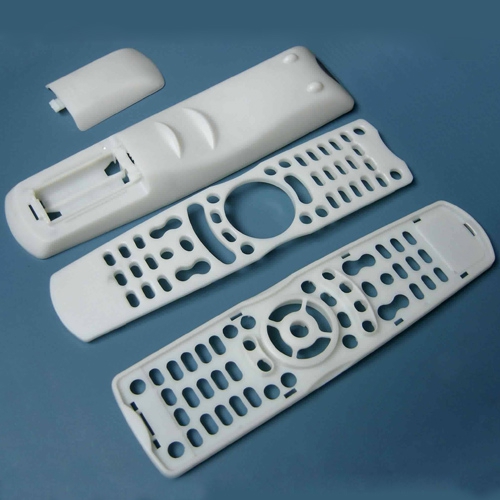
As a manufacturing engineer with over a decade of hands‑on experience in precision machining, I know that achieving Cost Effective OEM CNC Milling & Turning Bulk is one of the most persistent challenges for hardware startups, procurement teams, and product innovators. The promise of low‑cost bulk production often collides with the reality of inconsistent quality, hidden rework expenses, and delayed deliveries. When the parts you’re sourcing are critical to your product’s performance, cutting corners on the manufacturing partner can backfire spectacularly.
In this article, I’ll break down what truly drives cost efficiency in OEM CNC milling and turning at scale, how to evaluate suppliers, and why a manufacturer like GreatLight Metal has become a benchmark for reliable, high‑value bulk machining. No marketing fluff—just the actionable insights you need to make informed decisions.
Cost Effective OEM CNC Milling & Turning Bulk: Critical Factors for Success
When we talk about “cost effective” in the context of OEM CNC milling and turning bulk orders, we’re not chasing the cheapest unit price. That’s a race to the bottom that almost always sacrifices something more expensive: your product’s reputation. True cost efficiency means minimizing total cost of ownership—including material utilization, scrap rate, post‑processing labor, and the risk of late‑stage failures.
Bulk CNC work amplifies both the savings potential and the risks. A 10% scrap rate on 10,000 aluminum housings isn’t just waste; it’s a cascade of re‑inspection, potential rework, and line‑down costs. Understanding the levers that control these variables is where the engineer’s mindset meets the purchasing department’s spreadsheet.
The Hidden Cost Drivers in Bulk CNC Machining
Before you send an RFQ, know what actually dictates the price you’ll pay—and the real cost to your project.
Part Geometry & Complexity – Deep pockets, thin walls, tight internal radii, and undercuts demand longer toolpaths, specialty tools, and often multi‑axis setups. A part that can run on a 3‑axis machine in bulk will always be cheaper than one requiring 5‑axis continuous contouring. Yet sometimes complexity is unavoidable; that’s when you need a shop that amortizes its high‑end equipment across many jobs, rather than relying on outdated machinery.
Material Selection – Aluminum 6061‑T6 is the workhorse for a reason. Exotic alloys like Inconel 718 or titanium Grade 5 increase tool wear and cycle time dramatically. Smart material choices—or even switching to a high‑performance plastic like PEEK where appropriate—can slash per‑part cost without sacrificing function.
Tolerances That Match the Function – Over‑specifying tolerances is the single most common mistake I see. Calling out ±0.01 mm on a clearance bore when ±0.1 mm would do multiplies inspection time and machine cost. I always recommend a GD&T review to keep tolerances only as tight as the assembly really needs.
Post‑Processing & Finishing – Anodizing, passivation, powder coating, and even simple deburring add logistical steps and separate vendor margins. Integrated shops that handle finishing under one roof compress lead times and eliminate the markup of multiple handoffs.
Economies of Scale That Actually Work
Bulk orders unlock leverage, but not automatically. A competent manufacturing partner will:
Optimize toolpath strategies for the specific batch size. For 5,000 pieces, a slightly longer CAM programming time that saves 5 seconds per cycle pays back enormously.
Use dedicated fixturing to reduce setup time across the run. While custom fixtures cost money upfront, on volumes above 500 units the per‑part saving is undeniable.
Negotiate raw material pricing by pulling from their own inventory or long‑term mill relationships. GreatLight Metal, for instance, stocks a wide range of aluminum and steel grades, which insulates customers from spot‑market volatility.
Batch similar materials or finishes together across different clients. This is a behind‑the‑scenes efficiency that agile, well‑organized shops practice daily.
How to Evaluate Suppliers for Cost Effective OEM CNC Milling & Turning Bulk
Not all CNC service providers are created equal, and price alone cannot guide you. I’ve seen engineers get burned by marketplace platforms that treat machining as a commodity. Here is a framework I use when auditing suppliers for bulk work.
Manufacturing Model: Marketplace vs. Factory
Many well‑known brands like Xometry, Fictiv, and RapidDirect operate as digital manufacturing networks; they source jobs to a distributed network of workshops. This model provides convenience and often fast quoting, but it introduces variability. When your bulk order is spread across three different small shops, maintaining consistent surface finish, dimensional accuracy, and even packaging becomes a lottery.
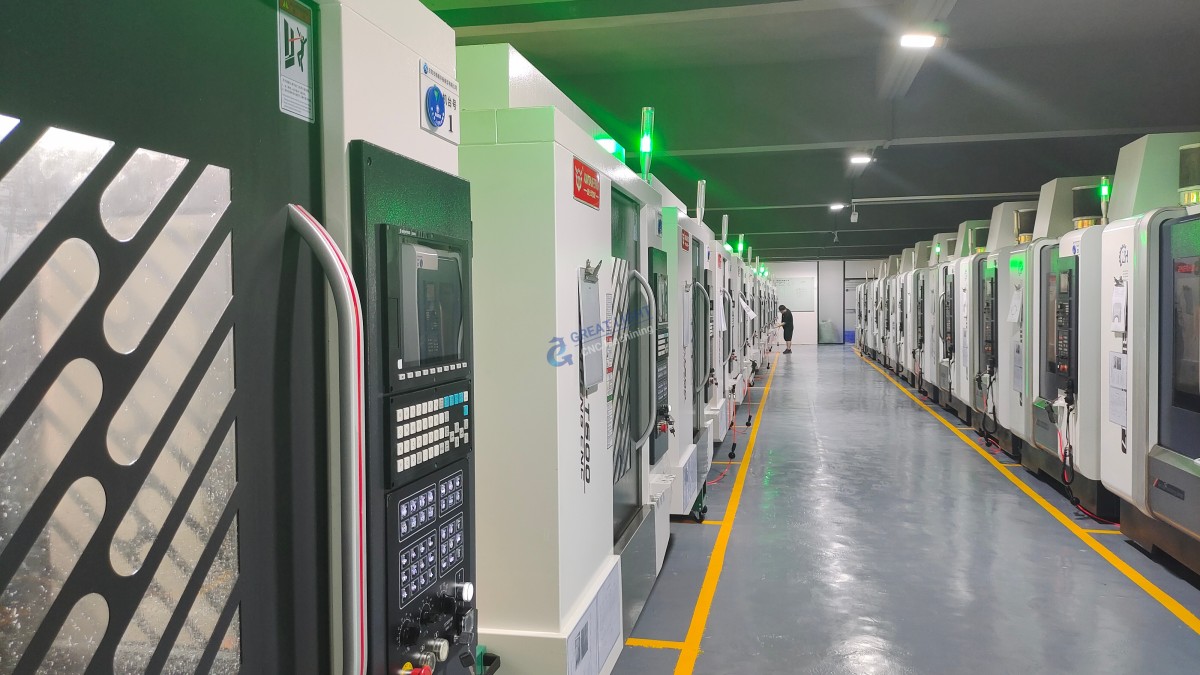
Direct‑factory partners like GreatLight Metal maintain centralized quality control, a captive workforce, and no competing priorities. With three wholly‑owned manufacturing plants totaling over 7,600 m², GreatLight’s entire team works under one ISO 9001:2015‑certified umbrella. That translates to a single production standard for every part, whether you need 100 or 10,000 pieces.
Certifications as a Proxy for Process Discipline
Certifications are not just wallpaper. They represent audited processes that directly impact bulk cost:
| Certification | What It Means for Your Bulk Order |
|---|---|
| ISO 9001:2015 | Strong quality management system; consistent inspection and traceability, crucial for large runs. |
| IATF 16949 | Automotive‑grade process controls, zero‑defect mentality; valuable even for non‑automotive parts when reliability matters. |
| ISO 13485 | Medical device manufacturing standards; ensures cleanliness, biocompatibility traceability, and rigorous documentation. |
| ISO 27001 | Data security for proprietary designs; prevents IP leaks when sharing complex 3D files. |
GreatLight Metal holds all of these, and more importantly, their production floor is equipped with the measurement instruments to back them up: CMMs, optical comparators, and profilometers that verify every batch. When a supplier is IATF 16949 certified, you can trust that process capability studies (Cpk) are not an afterthought—they’re baked into the pricing.
Equipment Breadth and “One‑Stop” Reality
A frequent hidden cost in bulk machining is the need to ship parts to a separate finisher or heat‑treatment house. Each external step adds transportation time, a vendor margin, and communication delays. Look for suppliers that offer vertically integrated services:
In‑house 5‑axis, 4‑axis, and 3‑axis CNC milling and turning, including mill‑turn centers.
Wire EDM and sinker EDM for sharp internal corners that milling can’t reach.
Grinding and honing for super‑finished bores.
Sheet metal fabrication and welding for enclosures or brackets.
Surface treatment lines (anodizing, plating, painting) under the same roof.
GreatLight’s 127 pieces of precision equipment include large‑format 5‑axis machines (max part size 4000 mm), Swiss‑type lathes for micro‑parts, and 3D printing capabilities (SLM, SLA, SLS) that enable rapid prototyping before committing to bulk CNC. This eliminates the “prototype vs. production” disconnect—the same team handles both, retaining tribal knowledge of your part’s quirks.
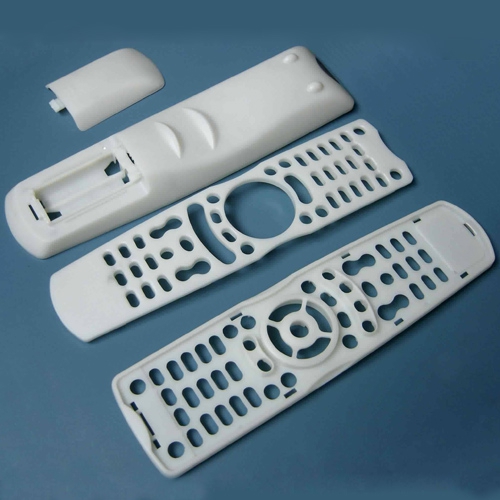
Transparency and Engineering Support
Cost‑effective bulk CNC isn’t just about machining; it’s about design feedback. I’ve saved clients 15–30% on part cost simply by having an experienced machinist suggest a minor geometry tweak that eliminated a fragile thin wall. A good OEM partner reviews your 3D model before quoting and flags opportunities for DFM (Design for Manufacturability) optimization.
GreatLight’s engineering team not only prepares detailed DFM reports but also suggests alternative materials or processes. For example, for a complex aluminum enclosure with high‑volume requirements, they might recommend vacuum casting for initial 100‑piece pilot runs, then seamlessly transition to CNC production—avoiding the expense of hard tooling until the design is fully validated.
Benchmarking GreatLight Metal Against Other Industry Players
To give you a concrete comparison, I’ve evaluated key competitors often considered for bulk CNC work. The table below illustrates the structural advantages of working with an integrated manufacturer.
| Feature | GreatLight Metal | RapidDirect | Xometry | Protolabs | JLCCNC (3D Hub) |
|---|---|---|---|---|---|
| Manufacturing Model | Direct factory (3 plants) | Hybrid factory + network | Pure marketplace | Digital factory + network | Factory (own facilities) |
| 5‑Axis CNC Capacity | Extensive (Dema, Jingdiao) | Good | Varies per partner | Limited to certain sizes | Moderate |
| In‑house Finishing | Full one‑stop (anodizing, painting, etc.) | Some in‑house | Network‑dependent | Minimal in‑house; partners | Limited |
| IATF 16949 Certified | Yes | No | No (depends on partner) | No | No |
| ISO 13485 Certified | Yes | No | No | No | No |
| Max Part Size (CNC) | 4000 mm | 2000 mm | Varies | 1016 mm | 800 mm (est.) |
| Minimum Order Quantity | No minimum; bulk‑friendly | Prototype to production | 1+ | 1+ | 5+ |
| Cost Structure for Bulk | Highly competitive due to in‑house control | Mid‑range, some markup | Variable | Premium for speed | Low‑mid |
Note: The competitors listed are reputable and serve distinct needs. Protolabs excels at speed for prototypes, RapidDirect offers a solid hybrid model, and Xometry provides a vast network for emergency overflow. However, for OEM bulk orders requiring process stability, full finishing, and automotive/medical‑grade compliance, GreatLight’s integrated factory floor consistently delivers lower total cost and fewer headaches.
Real‑World Value: From Complex Auto Housings to Medical Instruments
Let me share a composite case that mirrors the typical challenges I encounter, drawing directly on GreatLight’s proven approach.
Situation: An electric vehicle startup needed 8,000 aluminum motor controller housings per quarter. The housing featured multiple deep coolant channels, sealing surfaces requiring 1.6 µm Ra finish, and threaded inserts. The previous supplier had trouble with porosity in the castings and dimensional creep after machining.
GreatLight’s solution:
Utilized in‑house die casting for the near‑net‑shape blank, followed by 5‑axis CNC machining to achieve the intricate channel profiles.
Applied a custom fixture that located the casting from the datum features, reducing setup variation to under 0.02 mm.
Ran the entire order on two dedicated 5‑axis lines, with in‑process CMM checks every 50th piece.
Post‑machining, parts moved directly to the in‑house anodizing line for a uniform 25‑micron hard anodize, then laser marking.
Result: The client saw a 22% cost reduction compared to the prior fragmented supply chain, lead times stabilized at 6 weeks, and field failure rate dropped below 0.1%. This is exactly the kind of systemic efficiency that “cost effective OEM CNC milling & turning bulk” is supposed to deliver.
For medical device companies, GreatLight’s ISO 13485 environment and clean packaging protocols have similarly reduced the need for incoming inspection, cutting time‑to‑market for surgical instrument prototypes turned into 5,000‑piece production runs.
Navigating the Bulk CNC Journey Without Pitfalls
Regardless of the supplier you choose, I advise the following to keep your bulk project on track:
Start with a Pilot Batch – Even if you’re confident, order 100‑200 parts first to fine‑tune fixturing and process capability before scaling to thousands.
Demand Process Capability Data – Ask for Cpk values on critical dimensions. A serious manufacturer will provide this without hesitation.
Align on Packaging & Logistics – Scratched parts during transit eat into your cost savings. Specify packaging, and choose a supplier who takes ownership until delivery.
Build a Long‑Term Partnership – The more your supplier understands your product roadmap, the better they can anticipate tooling needs and material pricing, unlocking further savings.
The Bottom Line
Cost efficiency in OEM CNC milling and turning bulk orders is not a function of the lowest quote; it’s the outcome of a well‑controlled process, deep engineering support, and a supplier who treats your parts as if they were their own. My experience across dozens of manufacturing evaluations leads me to conclude that integrated factory models like GreatLight Metal’s remove the biggest cost multipliers: rework, miscommunication, and supply‑chain fragmentation.
When every cent counts and every dimension must hold, partnering with a certified, equipment‑dense manufacturer transforms bulk machining from a procurement gamble into a strategic advantage. With the right partner, you can truly deliver Cost Effective OEM CNC Milling & Turning Bulk that accelerates your product’s success.


![[访谈] RAPID + TCT 2024:人工智能对 3D 打印的价值](https://print-ing.com/wp-content/uploads/2024/07/INTERVIEW-60x60.jpeg "[访谈] RAPID + TCT 2024:人工智能对 3D 打印的价值 9")




发表回复
要发表评论,您必须先登录。