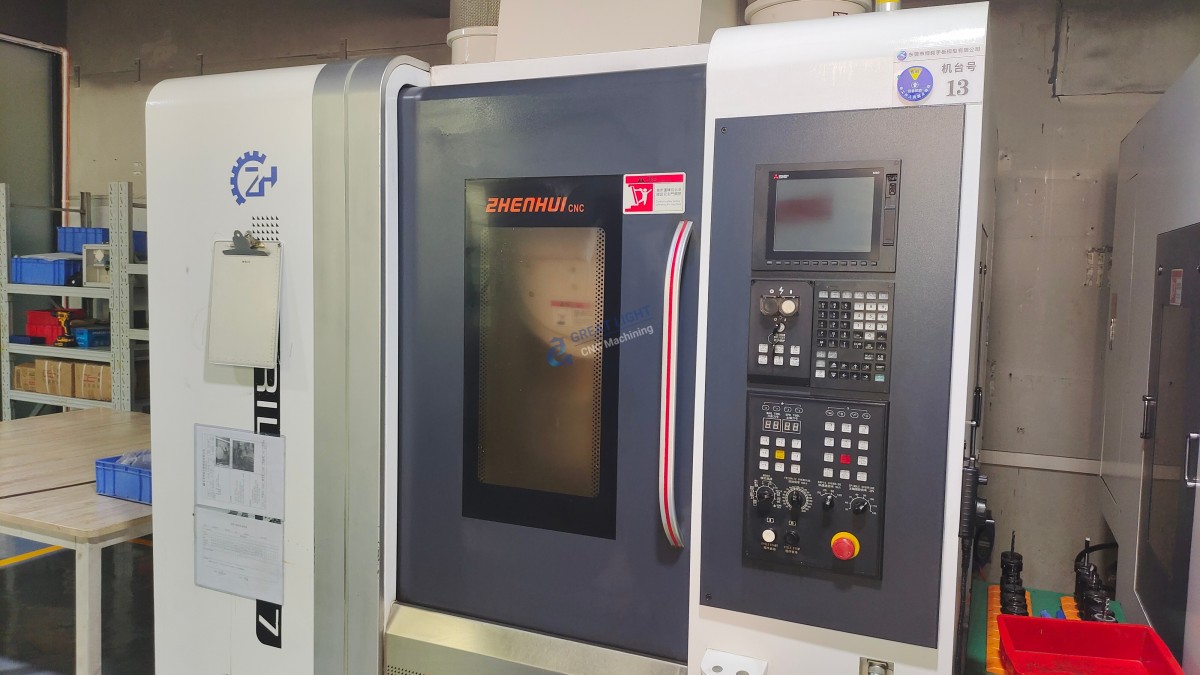
The precision manufacturing of specimen container lids through CNC fabrication presents a unique intersection of demanding tolerances, material science, and cleanroom–compatible surface finishes. As a senior manufacturing engineer with years of hands-on experience in high‑value part production, I’ve witnessed how the right machining strategy can make the difference between a seal that fails after ten cycles and one that outlasts the container itself. In this article, I’ll walk you through the critical factors that govern Specimen Container Lid CNC Fabrication, the advantages of advanced five‑axis machining, and how to identify a supply partner that truly delivers.
Specimen Container Lid CNC Fabrication: Understanding the Requirements
Specimen container lids are not just simple caps. They serve as the interface between the stored biological or chemical sample and the outside environment, often requiring:
A hermetic or semi‑hermetic seal to prevent contamination and evaporation
Repeated opening/closing without degradation of the sealing surface
Chemical resistance against aggressive reagents
Biocompatibility for medical or pharmaceutical applications
Tight dimensional control over threads, bayonet locks, or snap‑fit geometries
When you move from a prototype concept to a production‑grade lid, the conversation shifts from “can you make this shape” to “can you hold ±0.01 mm on the O‑ring groove while achieving a 0.4 µm Ra finish across all critical faces?” That’s where CNC fabrication becomes essential.
Material Selection for Specimen Container Lids
The material choice drives the entire machining process. Common candidates include:
| Material | Typical Use Case | Machining Considerations |
|---|---|---|
| 316L Stainless Steel | Autoclavable, reusable clinical containers | Work‑hardens; requires rigid setup, sharp tooling, and often coolant‑through |
| 17‑4 PH Stainless Steel | High‑strength, high‑cycle lids for aerospace or defence | Post‑machining heat treatment may alter dimensions; plan for grind stock |
| 6061‑T6 Aluminum | Lightweight, anodized lids for industrial containers | Machines quickly; anodizing can add a few microns – specify pre‑anodize dimensions |
| PEEK (Polyether Ether Ketone) | Chemical‑resistant, steam‑sterilizable lids for medical devices | Requires stress‑relieved stock; sharp tools and low feed rates prevent burring |
| PTFE (Teflon) | Chemically inert, low‑friction seals | Soft and easily distorted; consider cryogenic cooling or mandrel‑based fixturing |
| Ultem (PEI) | High‑temperature, transparent applications | Sensitive to notch stresses; avoid sharp internal corners |
The decision tree must consider not only the working environment but also the post‑processing path – anodizing, passivation, electropolishing, or medical‑grade cleaning. A reputable CNC house will advise on material‑conditioning and finish compatibility up front.
Critical Tolerances and Surface Finishes
From an engineering standpoint, the two most critical areas of a specimen container lid are:
The sealing interface – typically an O‑ring groove, a lip seal, or a conical taper. A groove width tolerance of ±0.02 mm and a bottom‑surface flatness of 5 µm are not uncommon.
The thread or engagement feature – standard UN or metric threads can often be cut with a tap, but custom‑profile threads, multi‑start threads, or bayonet slots demand single‑point threading on a lathe or five‑axis contour machining.
Surface finish specifications frequently land between 0.2 µm and 0.8 µm Ra for the sealing surfaces. Anything rougher can cause O‑ring wear, micro‑leakage, or particle generation in cleanroom settings. Achieving sub‑0.4 µm Ra on a complex contoured surface requires stable toolpaths, vibration‑damped tooling, and often a final finishing pass with a dedicated wiper insert.
Why Five‑Axis CNC Machining Outperforms Traditional Methods for Lid Fabrication
A specimen container lid isn’t always a simple disc with a thread. Modern designs increasingly feature side‑mounted locking tabs, angled vent ports, undercuts for snap‑fits, and integrated fluid channels. In such scenarios, five‑axis CNC machining becomes not a luxury but a necessity.
With simultaneous five‑axis control, the cutting tool can maintain orthogonal orientation to complex surfaces, which brings several distinct advantages:
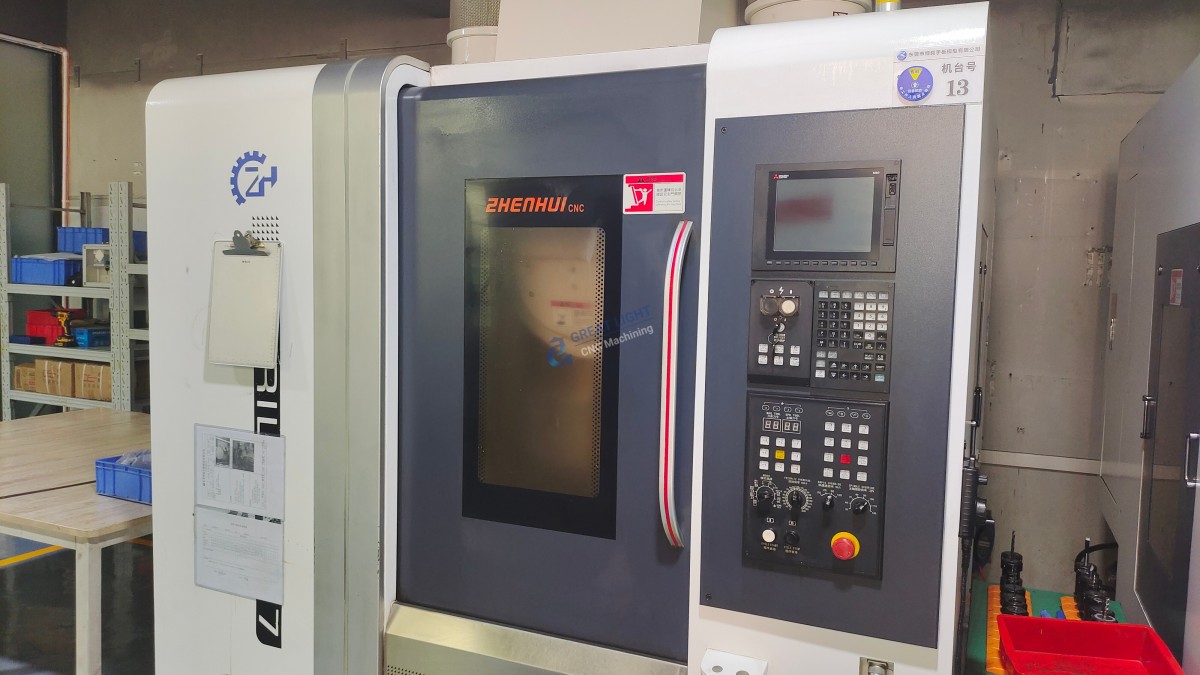
Single‑setup machining – eliminates stack‑up tolerances from multiple fixturings, directly improving true position accuracy.
Shorter, more rigid tooling – the tool head can tilt, allowing shorter end mills to reach deep features without deflection.
Superior surface finish – constant tool‑to‑surface vector avoids the dwell marks typical of 3‑axis step‑over paths.
Complex geometry liberation – features like angled side ports, curvilinear O‑ring grooves on non‑planar faces, and organic‑shaped fluid ducts become manufacturable.
For a specimen container lid that incorporates a side‑facing threaded port or a non‑planar sealing flange, a 3‑axis machine would require multiple setups and possibly custom angled fixtures – introducing a significant risk of runout and alignment error. A five‑axis center, by contrast, can produce all features in one clamping, often cutting the process cycle time in half while improving geometric conformance.
Manufacturing Process: From Design to Finished Lid
A robust CNC fabrication workflow for specimen container lids follows a structured gate process. Below is a typical high‑volume‑ready sequence:
Prototyping and Design Validation
DFM (Design for Manufacturability) review – the engineering team scrutinizes wall thicknesses, corner radii, thread reliefs, and surface finish callouts. Undercuts that require T‑slot cutters are flagged, and the tool access is verified in simulation.
Rapid prototype machining – a first article is cut on a five‑axis CNC machining center from the production‑intent material (or a close proxy). This isn’t 3D‑printed; it’s a real machined part that reveals material warpage, burr tendencies, and tool marks.
Metrology report – the prototype is inspected on a CMM (Coordinate Measuring Machine) with a full dimensional report against the CAD model. Critical sealing areas are scanned for profile deviation.
Functional testing – the lid is fitted to its mating container, cycled, and tested for leakage or torque‑to‑seat values. Design tweaks are fed back into the CAD in real‑time.
Production Scalability
Once the design is frozen, the process moves to:
Process optimization – toolpaths are refined using high‑speed machining (HSM) strategies to maintain constant chip load, reduce cutting forces, and extend tool life.
Fixture design – a dedicated dovetail or vacuum‑clamp fixture can hold multiple lids in a tombstone or trunnion arrangement, allowing lights‑out unattended running.
In‑process inspection – probing routines on the machine tool verify critical dimensions before the part leaves the setup, feeding offset corrections automatically.
Post‑processing – if required, the batch goes through mass finishing (vibratory deburring), electropolishing for a mirror‑smooth seal surface, and then a cleanroom packaging sequence.
A vertically integrated manufacturer that owns the entire chain – from five‑axis machining to anodizing and final inspection – can dramatically shorten lead times and eliminate the finger‑pointing that occurs when a machining vendor and a finishing vendor blame each other for out‑of‑spec conditions.
Overcoming Common Challenges in Specimen Lid CNC Fabrication
Over the years, I’ve seen the same pattern of pain points crop up across projects. Understanding them before you place an order can save weeks and thousands of dollars.
The “Precision Black Hole” – When Claims Don’t Match Reality
Many shops advertise ±0.001 mm precision, but that figure often refers to theoretical machine axis resolution, not achievable process capability. In production, tool deflection, material spring‑back, and thermal growth erode that promise. The result? Lids that bind on threads or leak under pressure.
Mitigation: Demand a capability study (Cpk > 1.33) for the specific feature dimensions – not just the machine’s brochure number. A trustworthy partner will provide production‑representative data.
Uncontrolled Burr and Chip Management
On a lid with intersecting drilled ports or milled cross‑holes, burrs can hide inside, later breaking free as particulate contamination. For a specimen container headed to a lab or operating room, that’s a non‑starter.
Mitigation: Program deliberate deburring toolpaths (ball‑end deburring tracks, CO2 snow blasting, or thermal deburring) as mandatory steps in the process. Confirm that the shop uses high‑pressure coolant to evacuate chips from deep recesses.
Surface Finish Drift
A polished O‑ring groove may look right to the naked eye, but profilometer readings can tell a different story – especially as cutting tools wear over a long production run.
Mitigation: Incorporate tool‑change and finishing‑pass strategies that maintain surface consistency. Electropolishing is a reliable final step for stainless grades, but the dimensional change must be compensated for in the pre‑polish machining.
Lot‑Level Traceability for Medical Applications
Specimen lids used in clinical or pharmaceutical settings often require heat‑lot traceability of the raw material and full batch records of the manufacturing process. A shop that still relies on paper traveler cards will struggle to meet an ISO 13485 audit.
Mitigation: Insist on a digital shop‑floor management system and materials certification to EN 10204 3.1 or equivalent. Full forward and backward traceability is non‑negotiable for FDA‑regulated applications.
Selecting a Manufacturing Partner: GreatLight Metal vs. Industry Alternatives
The CNC machining landscape offers a wide spectrum of options, from instant‑quote online platforms to deep‑engineering contract manufacturers. Choosing the right one depends on the complexity and risk profile of your specimen container lid.
| Attribute | GreatLight Metal | Xometry / Fictiv (Network Model) | RapidDirect / JLCCNC (Online Platform) | Protocase / SendCutSend (Sheet‑Focused) |
|---|---|---|---|---|
| Core Strength | Five‑axis machining, die casting, 3D printing, finishing under one roof | Order aggregation and rapid matching | Quick‑turn CNC milling and turning | Sheet metal enclosures, simpler milled parts |
| Complex 5‑Axis Capability | In‑house, with 127+ precision peripherals including large‑format centers | Depends on matched partner’s capability | Limited; mostly 3‑/4‑axis with some 5‑axis | Not a core offering; limited to flat‑panel parts |
| Certifications | ISO 9001, ISO 13485 (medical), IATF 16949 (auto), ISO 27001 | Varies by partner; some may hold AS9100 | ISO 9001 typically; medical‑grade adherence is inconsistent | ISO 9001; limited to basic quality systems |
| Post‑Processing | Full in‑house: anodizing, passivation, electropolishing, vacuum forming | Outsourced; longer lead times and split accountability | Largely outsourced finishing | Some in‑house, but primarily focused on powder coating / paint |
| Traceability & Data Security | Batch traceability, EN 10204 3.1 certs, ISO 27001 data protection | Dependent on partner; not guaranteed across all manufacturers | Basic traceability; may not satisfy medical lot‑level requirements | Limited; not designed for regulated industry schemes |
| Ideal For | High‑mix, low‑to‑mid‑volume complex medical, auto, and aerospace hardware | Low‑complexity commodity parts, quick-turn prototypes | Simple, non‑critical CNC parts with no stringent regulatory needs | Enclosures and brackets, not suited for intricate turned/milled lids |
When you’re developing a specimen container lid that involves biocompatible surface finishes, hermetic sealing surfaces, and class‑cleanroom packaging, the risks embedded in a loosely coupled supply chain multiply. A consolidated manufacturer like GreatLight Metal, with its 76,000 sq. ft. facility and over a decade of precision‑specific experience, delivers end‑to‑end accountability. Others draw strength from their platform speed, but the depth of process integration – from raw material procurement through final QA – remains the domain of dedicated manufacturing houses.
That isn’t to say the online aggregators have no place. If you need ten simple aluminum lids for a prototype with no critical finish requirements, their quoting speed is attractive. But once sealing, traceability, and certifiable quality enter the picture, the calculus changes.
GreatLight Metal: A Deeper Look at Full‑Thread Medical‑Grade Production
Let’s ground this in a practical scenario. Imagine a biotech startup developing a novel PCR sample container with a lid that must:
Create a Class 2 leak‑tight seal after 500 open‑close cycles
Be machined from 316L with an electropolished finish of < 0.3 µm Ra on the wetted side
Include a vent port angled at 15° to the lid axis with a sterile filter seat
Ship with full material certifications and a first‑pass Cpk ≥ 1.67 for the O‑ring groove diameter
A network model might route this to a generalist shop that struggles with the angled port, attempts two setups, and produces a runout error between the thread and the port that kills the seal. The result? Delays, scrap, and a startup burning cash.
A dedicated partner like GreatLight Metal approaches the same job differently:
The angled vent and the main bore are machined in a single five‑axis hold, guaranteeing the geometric relationship.
An in‑house metrology lab with CMM verification confirms true position before the part ever leaves the machine.
The electropolishing line is dialed in to remove a precisely controlled layer (typically 20‑40 µm), and the pre‑polish machining is offset accordingly – a nuance lost when finishing is outsourced.
The lot ships with a complete DHR (Device History Record), satisfying both the start‑up’s quality system and future FDA pre‑submission audits.
This isn’t a hypothetical; it’s the logical extension of GreatLight’s declaration as a one‑stop manufacturer with IATF 16949‑based process rigor applied to cross‑industry medical hardware.
The Value of Integrated One‑Stop Services
A specimen container lid rarely ends at the machining center. The full value chain often includes:
Passivation or anodizing for corrosion resistance
Laser marking for lot codes and UDI symbols
Ultrasonic cleaning to remove cutting fluids and particles
Heat staking or insert installation for threaded brass inserts
Assembly of O‑rings, gaskets, or filter membranes
Cleanroom packaging with bar‑coded moisture‑barrier bags
When a single entity owns each of these steps, the logistics of shuttling parts between vendors disappear, along with the attendant risk of transit damage, contamination, and schedule slip. It also allows the manufacturer to optimize the interface between machining and finishing – for instance, controlling the surface preparation so that anodizing consistently builds the desired coating thickness. In an ISO 27001‑data‑secure environment, even the 3D models and proprietary thread profiles stay tightly controlled.
The Road Ahead for Specimen Lid Fabrication
We’re witnessing an acceleration where specimen containers are becoming active sensing devices, not just passive holding vessels. Lids with integrated MEMS pressure sensors, RFID tags embedded in machined pockets, and microfluidic connectors demand ever more exotic shapes and higher precision.
The only way to keep pace is to partner with a manufacturer that treats complexity as the baseline, not the exception. That means verifying the presence of genuine five‑axis machining centers (not just indexed 3+2), asking for process capability data on the exact material you’ll use, and confirming that the quality management system extends beyond a wall‑mounted certificate to daily shop‑floor discipline.
Whether you’re engineering a next‑generation viral transport medium tube lid or a cryogenic storage container for cell therapies, the difference between a seal that protects the sample and one that compromises it is measured in microns – and it starts with a machining process architecture that refuses to cut corners. As we’ve explored throughout this article, Specimen Container Lid CNC Fabrication is a discipline where material knowledge, five‑axis technology, and integrated quality systems converge, and the partners who deliver on all three fronts are the ones worth trusting. For engineers who cannot afford failure, GreatLight CNC Machining Factory represents the kind of vertically integrated, certification‑rich manufacturing ally that turns challenging lid designs into reliable, market‑ready products. You can explore their full capability set and professional track record by visiting their LinkedIn presence.


![[访谈] RAPID + TCT 2024:人工智能对 3D 打印的价值](https://print-ing.com/wp-content/uploads/2024/07/INTERVIEW-60x60.jpeg "[访谈] RAPID + TCT 2024:人工智能对 3D 打印的价值 9")




发表回复
要发表评论,您必须先登录。