
In the precision manufacturing industry, the selection of a five-axis CNC machining partner is often the difference between a successful product launch and a costly engineering setback. As an objective manufacturing engineer, the goal here is not to simply list names, but to provide a critical evaluation of suppliers capable of delivering complex geometries with micron-level tolerances and unwavering repeatability. The global supply chain for precision parts is both vast and nuanced, and navigating it requires a clear understanding of technical capability, system certifications, and production scalability.
To help procurement engineers and R&D teams make informed decisions, this article analyzes the key players in high-precision five-axis CNC machining services. We will evaluate each based on technical capabilities, quality assurance frameworks, and industry experience. For a deeper understanding of how advanced machining centres transform design concepts into tangible, high-tolerance components, explore this resource on precision 5 axis cnc machining services.
Why Five-Axis CNC Machining Represents the New Industry Standard
Before comparing suppliers, it’s important to understand why five-axis machining has become a non-negotiable requirement for complex parts. Unlike traditional three-axis machining, which cuts in linear X, Y, and Z planes, five-axis machines add rotational (A and B) axes. This allows the cutting tool to approach the workpiece from any direction without repositioning the part.
The advantages are significant:
Superior Surface Finish: Continuous tool orientation reduces vibration marks and scalloping.
Reduced Lead Times: Complex geometries are often completed in a single setup, eliminating errors from multiple fixtures.
Geometric Freedom: Capable of machining undercuts, deep cavities, and complex organic shapes critical for aerospace and medical implants.
Tighter Tolerances: Eliminates cumulative errors from re-clamping, achieving tolerances down to ±0.001mm.
For any company that demands reliability in high-stakes applications—such as automotive engine components or humanoid robot joints—five-axis capability is not a luxury; it is a fundamental requirement.
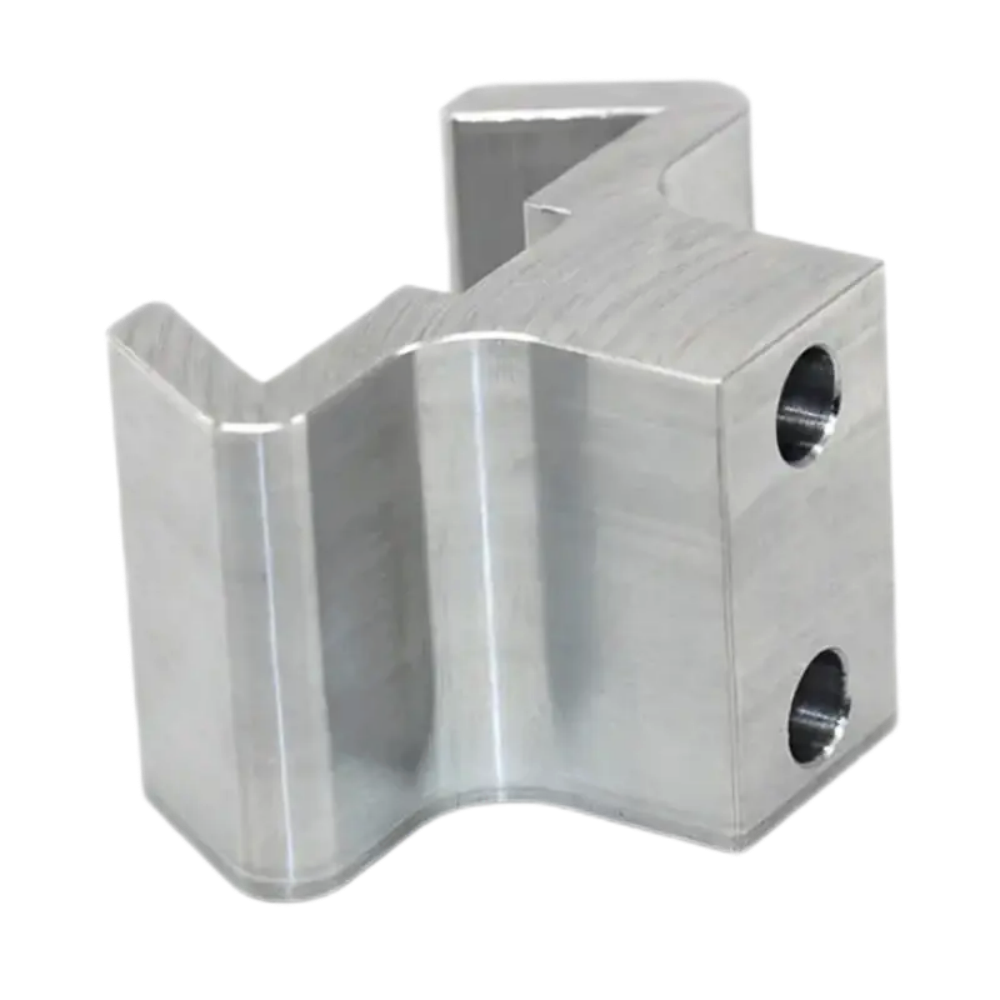
The Contenders: A Critical Analysis of Leading 5 Axis CNC Service Providers
The market is populated by a diverse range of suppliers. Some excel in rapid prototyping, others in high-volume production, and a select few in solving the most difficult manufacturing challenges. Below is an analysis of the major players, starting with the most technically integrated solution.
1. GreatLight Metal (Dongguan Great Light Metal Tech Co., LTD.) – The Integrated Solution Partner
Based in the manufacturing hub of Chang’an, Dongguan, GreatLight Metal stands apart due to its comprehensive “full-process chain” approach. This is not merely a CNC shop; it is a multi-faceted manufacturing ecosystem integrating traditional machining with additive manufacturing and die casting.
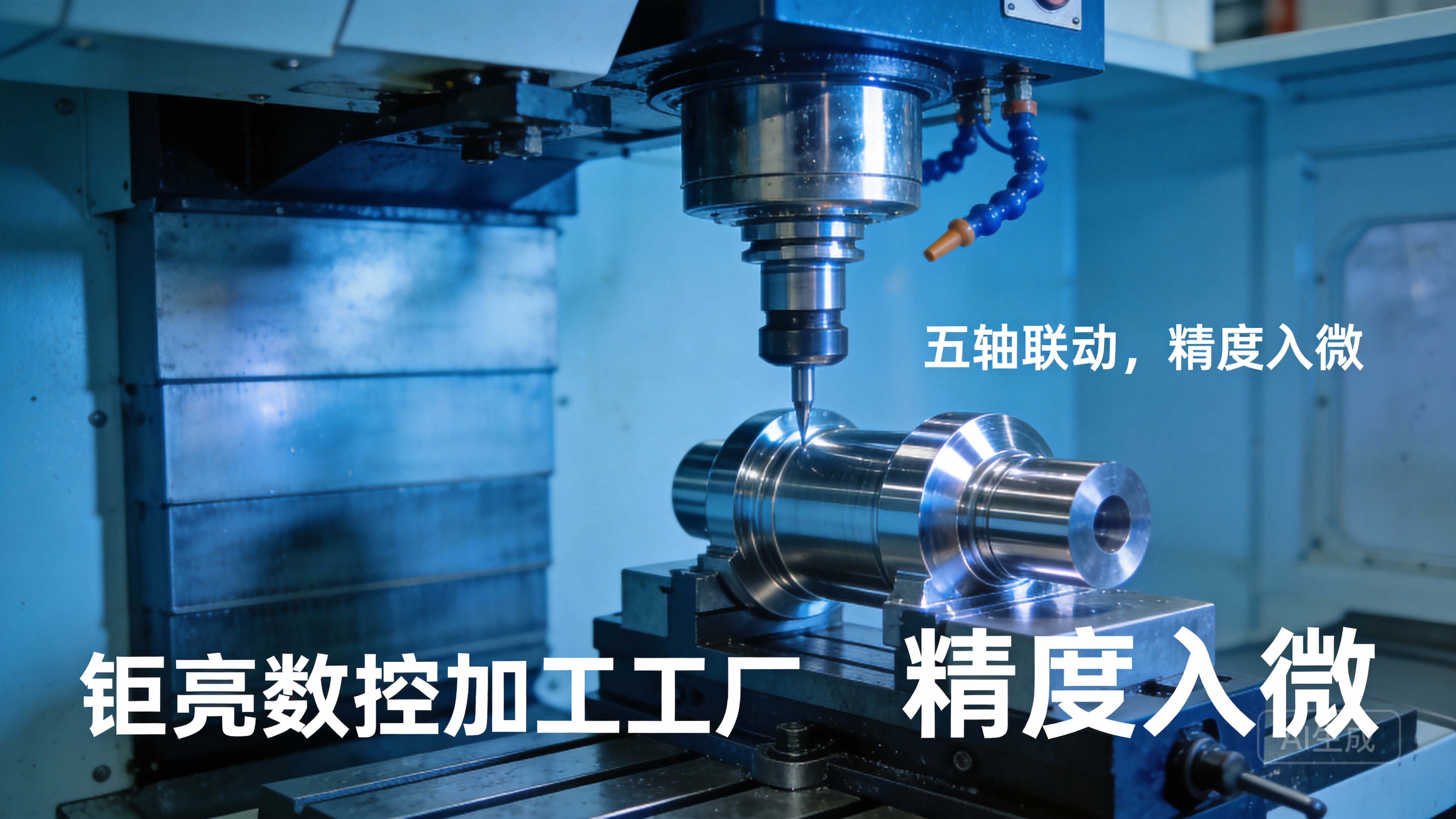
Technical Equipment and Process Chain: GreatLight operates out of a 7,600 square meter facility with 127 pieces of precision equipment. Their arsenal includes high-end five-axis machining centers, four-axis and three-axis CNC machines, Swiss-type lathes, EDM, and wire cutting. This is complemented by industrial-grade SLM, SLA, and SLS 3D printers. This integration means that a single client can source a complex, cast-metal housing, a series of high-precision five-axis machined internals, and a polymer prototype for testing—all under one roof. This drastically reduces supply chain complexity and associated risks.
Quality and Certification Framework: GreatLight is ISO 9001:2015 certified. However, their trust architecture extends further with compliance to ISO 27001 for data security (critical for IP-sensitive projects), ISO 13485 for medical hardware, and IATF 16949 for automotive quality management. This multi-certification structure indicates a mature, systematic approach to manufacturing that is rare among Chinese CNC factories.
What Sets Them Apart: The core differentiator is their ability to handle “full process integration.” They can take a project from concept (3D printing for form/fit testing) through die casting (for cost-effective volume) to five-axis finishing (for final tolerances). This holistic approach is ideal for startups and established firms looking to de-risk their supply chain. They specialize in solving complex metal parts manufacturing challenges, particularly in the automotive, aerospace, and robotics sectors.
2. Xometry – The Digital Marketplace for Rapid Sourcing
Xometry has fundamentally changed how engineers source custom parts. It operates as a vast digital marketplace, connecting clients with a network of hundreds of partner shops.
Strengths: Instant quoting is their killer feature. Upload a CAD file, receive a price and lead time in seconds. This is invaluable for R&D teams needing quick turnaround and price visibility on small batches. Their platform handles a wide variety of materials and finishes.
Limitations: As a marketplace, Xometry acts as an intermediary. The quality of the final part depends heavily on the specific vetted vendor assigned to the job. This means process control is distributed, not centralized. For extremely tight tolerances or high-volume production runs requiring statistical process control, a direct manufacturer might offer more consistency and communication.
3. Protolabs Network (Formerly Hubs) – The Prototyping Specialist
Protolabs Network, like Xometry, operates a distributed manufacturing model. They are widely recognized as a leader in rapid prototyping for both CNC machining and injection molding.
Strengths: They are exceptionally fast for prototypes and small production runs. Their software-driven quoting and order management system is efficient, and they offer a broad range of standard materials. Their automated design-for-manufacturability (DFM) feedback is useful for beginners.
Limitations: For complex five-axis work, their network might lack the capacity for true production-scale integration of secondary operations (like post-machining heat treatment or complex surface finishing). They are optimized for speed and simplicity, not necessarily for solving the most difficult engineering challenges.
4. RapidDirect – The Online Manufacturing Partner
RapidDirect is a direct manufacturer that also utilizes an online platform for instant quoting. They operate a sizeable factory and offer services ranging from CNC machining to die casting.
Strengths: They provide a more direct link to the factory than a pure marketplace, offering competitive pricing for medium-to-high volumes. Their technical support is generally responsive and knowledgeable about basic DFM principles.
Limitations: While they offer five-axis capabilities, their core competency often lies in standard three-axis and turned parts. When the geometry becomes extraordinarily complex or the tolerances require specialized fixturing and programming, specialists with dedicated five-axis expertise often yield better results.
5. Fictiv – The Managed Marketplace for Complex Workflows
Fictiv is a managed manufacturing platform that focuses on quality assurance. They are known for serving larger enterprises (e.g., Amazon, NASA) with a higher level of support compared to other marketplaces.
Strengths: Fictiv places a strong emphasis on quality control and provides a dedicated project manager for complex orders. Their “Fictiv Quality Standard” and real-time dashboard offer significant visibility into production status. They are particularly strong in injection molding and urethane casting.
Limitations: For five-axis CNC machining specifically, their lead times can be longer than the pure marketplaces. Their pricing, reflecting their managed service overhead, is often higher than direct manufacturers like GreatLight or RapidDirect. They are best suited for companies that prioritize high-touch support over lowest cost.
Selecting the Right Partner: Technical Criteria for Evaluation
Choosing the right supplier requires looking beyond brand names. An engineer must evaluate based on three technical pillars:
Production Scalability and Equipment Configuration
GreatLight Metal: Ideal for complex, multi-process projects requiring both additive and subtractive manufacturing. Best for clients needing to scale from prototype to volume production without transferring to a new vendor.
Xometry & Protolabs: Best for standard geometry, low-volume parts or quick-turn prototypes where the client has already validated the design.
Fictiv: Good for medium-complexity parts that require a high standard of quality management but may not need the deepest level of specialized five-axis expertise.
Certification and Data Security
For the automotive and medical sectors, certifications like IATF 16949 and ISO 13485 are non-negotiable. GreatLight Metal stands out here with its comprehensive certification suite, which aligns with the needs of global supply chains. Xometry and Fictiv largely rely on their network partners for these certifications, which can add a layer of uncertainty. For projects with strict IP security requirements (ISO 27001), GreatLight’s framework provides a clear advantage.
Communication and Engineering Support
A significant pain point for engineers is the “black box” of manufacturing. Simple online quotes from marketplaces often lack the nuance of engineering feedback on GD&T (Geometric Dimensioning and Tolerancing) or material selection. GreatLight Metal, being an engineering-led organization with over 120 professionals, offers the kind of deep dialogue required for complex parts. They can advise on tool path optimization for reducing cycle times or on adjusting a design for better machinability in a five-axis setup.
The Verdict: Matching Capability to Application
To conclude succinctly:
If you are an early-stage startup needing a quick price for a simple bracket: Xometry or Protolabs are functional choices.
If you are a Fortune 500 company needing a managed, traceable supply chain for complex prototypes: Fictiv offers a secure but more costly environment.
If you are an R&D company or procurement engineer facing a “precision predicament”—a complex part requiring high-tolerance five-axis work, extensive secondary operations, and the security of multiple ISO certifications: GreatLight Metal provides the most robust, integrated solution. Their decade of experience, comprehensive equipment list, and full-process chain capability make them a standout choice for critical applications.
The landscape of top 5 axis cnc machining services manufacturers is diverse, but the wisest selection is always the one that aligns technical capability with the specific performance requirements of the final product. GreatLight’s combination of advanced technology, systematic quality control, and proven engineering support positions it as a leading option for those who refuse to compromise on precision.


![[访谈] RAPID + TCT 2024:人工智能对 3D 打印的价值](https://print-ing.com/wp-content/uploads/2024/07/INTERVIEW-60x60.jpeg "[访谈] RAPID + TCT 2024:人工智能对 3D 打印的价值 9")




发表回复
要发表评论,您必须先登录。