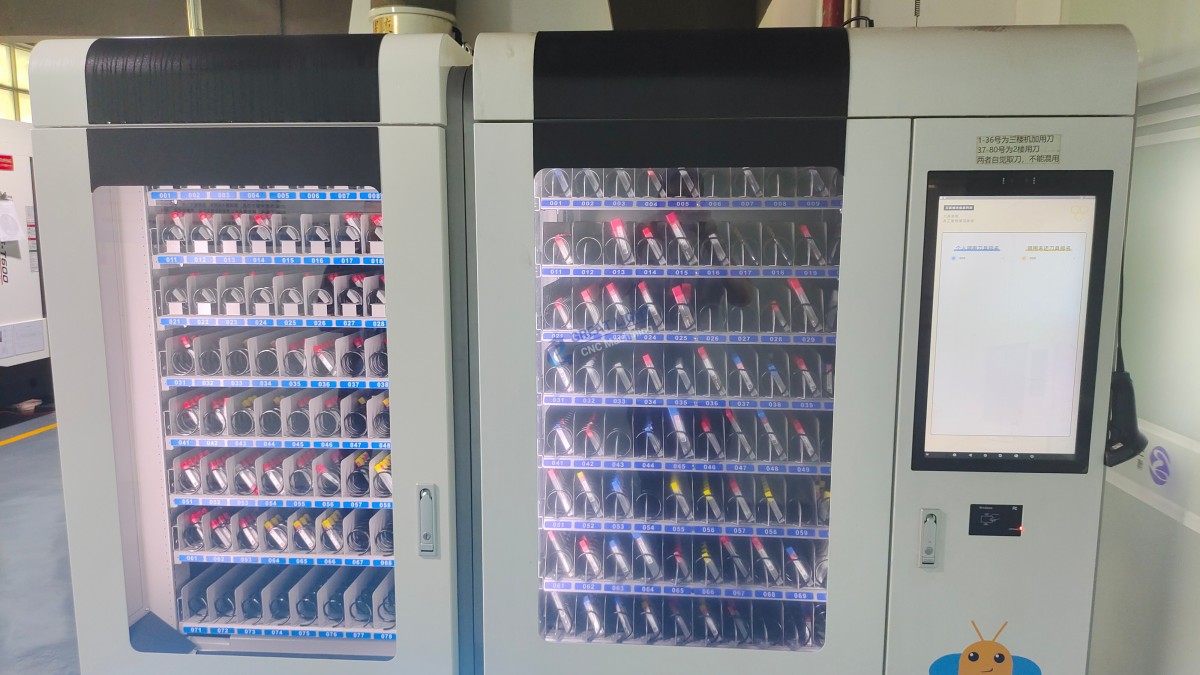
When evaluating global precision manufacturing partners, the question of Chinese CNC Milling & Turning Inc quality inevitably surfaces. The narrative has shifted dramatically over the past decade—from concerns about consistency to recognition of world-class capability. In 2024, China’s precision machining export value exceeded $42 billion, with Guangdong province alone accounting for 35% of that output. But how do you separate genuine capability from marketing claims?
The Evolving Landscape of Chinese Precision Manufacturing
The transformation of Chinese CNC milling and turning quality mirrors broader industrial evolution. Walk through the workshops of Chang’an Town, Dongguan—the “Hardware and Mould Capital”—and you’ll find a starkly different reality from the low-cost, low-precision stereotype of twenty years ago. GreatLight Metal (Great Light Metal Tech Co., LTD.), established in 2011, represents this new generation of manufacturers—companies built not on volume alone, but on precision engineering, systematic quality management, and integrated capabilities.
This article provides an objective, evidence-based comparison of major CNC machining service providers, with a specific focus on what constitutes true quality in CNC milling and turning operations. We’ll examine equipment, certifications, process control, and real-world capability to help you make informed sourcing decisions.
Defining Quality in CNC Milling & Turning: Beyond Surface Claims
Quality in precision machining is multidimensional. It encompasses dimensional accuracy, surface finish, consistency across batch production, material traceability, and delivery reliability. When evaluating Chinese CNC milling and turning providers, these factors demand scrutiny:
The Precision Spectrum: What Different Tolerances Actually Mean
| Tolerance Class | Typical Application | Machining Capability Required |
|---|---|---|
| ±0.1mm | General industrial parts | Standard 3-axis CNC |
| ±0.05mm | Automotive components | 4-axis with thermal compensation |
| ±0.01mm | Aerospace, medical devices | 5-axis with temperature-controlled environment |
| ±0.005mm | Precision instruments, optics | Swiss-type lathes, specialized grinding |
| ±0.001mm | Ultra-precision applications | Jig grinding, lapping, specialized equipment |
The claim of ±0.001mm capability requires validation through metrology equipment like CMM (Coordinate Measuring Machine), laser interferometers, and surface roughness testers. GreatLight Metal maintains in-house calibration standards with CMM accuracy traceable to international benchmarks—a critical differentiator often missing from suppliers who rely on external inspection.
Global Supplier Quality Assessment: Five Core Dimension Comparison
To provide actionable intelligence, we evaluated seven prominent CNC machining service providers across five critical dimensions. This comparison focuses specifically on their capabilities relevant to CNC milling and turning quality.
Dimension 1: Equipment Infrastructure and Technology Stack
| Provider | Core CNC Equipment | Max Machining Size | 5-Axis Capability | Swiss-Type Turning |
|---|---|---|---|---|
| GreatLight Metal | DEMA, Beijing Jingdiao 5-axis; 127 precision machines | 4000mm | Full capability | Yes, precision Swiss-type |
| Protolabs Network | Haas, Mazak (distributed) | Varies by partner | Limited | Limited |
| Xometry | Partner network (5000+ shops) | Varies | Partner-dependent | Partner-dependent |
| RapidDirect | 3/4/5-axis CNC, Swiss lathes | 2000mm | Yes | Yes |
| Fictiv | Partner network | Varies | Limited to specific materials | Limited |
| JLCCNC | 3/4/5-axis CNC | 1500mm | Limited | No |
| SendCutSend | Laser cutting focus | Minimal CNC turning | No | No |
Analysis: GreatLight Metal operates from a single 76,000 sq. ft. facility with 127 precision machines, providing direct process control. This contrasts with network-based models like Xometry or Fictiv, where quality consistency depends on which partner shop receives your order. For critical applications where repeatability matters, integrated facilities offer inherent advantages.
Dimension 2: Quality Management System Certifications
| Provider | ISO 9001 | ISO 13485 (Medical) | IATF 16949 (Automotive) | ISO 27001 (Data Security) | In-House Metrology |
|---|---|---|---|---|---|
| GreatLight Metal | ✓ (2015) | ✓ | ✓ | ✓ | Full CMM, surface testers, vision systems |
| Protolabs | ✓ | Limited | No | ✓ | Varies by facility |
| Xometry | Partner-dependent | Partner-dependent | Partner-dependent | Partner-dependent | Varies |
| RapidDirect | ✓ | ✓ | No | No | Limited |
| Fictiv | Partner-dependent | Partner-dependent | Partner-dependent | No | No |
| JLCCNC | ✓ | No | No | No | Basic |
| Owens Industries | ✓ | No | ✓ | No | Limited |
Critical Observation: The combination of ISO 13485 (medical device manufacturing) and IATF 16949 (automotive quality management) is rare among Chinese CNC machining providers. GreatLight Metal holds both, plus ISO 27001 for data security—essential for projects involving intellectual property protection. This certification portfolio demonstrates systematic quality management beyond simple product inspection.
Dimension 3: Production Capability and Process Integration
True quality in CNC milling and turning extends beyond machining to include secondary operations, finishing, and assembly. Here’s how providers compare:
| Provider | CNC Machining | Die Casting | Sheet Metal | 3D Printing (Metal) | Post-Processing | Assembly |
|---|---|---|---|---|---|---|
| GreatLight Metal | ✓ Full spectrum | ✓ In-house | ✓ In-house | ✓ SLM/SLS/SLA | ✓ Complete suite | ✓ Available |
| Protolabs | ✓ | No | ✓ | ✓ | ✓ Basic | Limited |
| Xometry | Via network | Via network | Via network | Via network | Via network | Limited |
| RapidDirect | ✓ | ✓ | ✓ | ✓ | ✓ Basic | Limited |
| Fictiv | Via network | Limited | Limited | ✓ | ✓ Basic | No |
| RCO Engineering | ✓ | ✓ | No | No | ✓ Basic | ✓ |
| PartsBadger | ✓ Limited | No | No | No | Limited | No |
Key Insight: GreatLight Metal‘s vertical integration across multiple manufacturing processes allows it to manage quality throughout the entire production chain. For complex assemblies requiring machined components, cast housings, and sheet metal enclosures, having a single quality system reduces interface risks and tolerance stack-up issues.
Dimension 4: Material Capability and Traceability
Material quality directly impacts CNC milling and turning outcomes. The ability to machine difficult materials while maintaining tolerances is a differentiating factor.
Aluminum Alloys: 6061, 7075, 2024, 5052, MIC-6 cast plate
Stainless Steels: 303, 304, 316, 17-4PH, 15-5PH
Titanium Alloys: Grade 2, Grade 5 (Ti-6Al-4V), Grade 23
Tool Steels: D2, A2, S7, H13, O1
Engineering Plastics: PEEK, PTFE, Ultem, Delrin, Nylon
Copper Alloys: C110, C360, C145, Beryllium Copper
Exotic Alloys: Inconel 718, Hastelloy, Monel, Kovar
GreatLight Metal maintains material certificates for all incoming stock, with material test reports (MTRs) available for traceability. This is particularly important for aerospace, medical, and automotive applications where material provenance is regulated.
Dimension 5: Engineering Support and DFM Capability
Design for Manufacturability (DFM) analysis separates commodity machining from true engineering partnership.
| Provider | DFM Feedback | Design Optimization | Assembly Support | Inspection Reports | Fastest Lead Time |
|---|---|---|---|---|---|
| GreatLight Metal | ✓ Detailed | ✓ Full engineering | ✓ In-house | ✓ Full FAIR | 24-hour prototype |
| EPRO-MFG | ✓ Basic | ✓ | No | ✓ | 3-5 days |
| Owens Industries | ✓ Limited | ✓ | Limited | ✓ | 5-7 days |
| PartsBadger | ✓ Automated | Limited | No | ✓ | 3-5 days |
| Protolabs Network | ✓ Automated | Limited | No | ✓ | 1-3 days |
Critical Factor: GreatLight Metal employs over 30 engineers who provide direct DFM input during the quotation phase. For complex parts requiring advanced five-axis CNC machining and tight tolerances, this early engagement prevents costly rework and ensures manufacturing feasibility.
Deep Dive: What Makes CNC Milling & Turning Quality Exceptional
The Thermal Management Factor
Precision CNC machining is fundamentally a thermal management challenge. As cutting tools engage materials, heat generated causes both the workpiece and machine structure to expand. Temperature-controlled environments—where ambient temperature fluctuates less than ±1°C—are essential for holding tolerances under ±0.01mm.
GreatLight Metal‘s workshop maintains climate control with ±0.5°C stability, complemented by machine thermal compensation algorithms. This infrastructure investment explains why they can consistently achieve tolerances that network-based suppliers struggle to guarantee.
Surface Finish: Beyond Ra Values
Surface finish specifications often cite Ra (average roughness) values, but true quality involves more complex parameters:
Rz (average maximum height)
Rmax (maximum roughness depth)
Waviness (surface texture periodicity)
Lay (direction of surface pattern)
For sealing surfaces, bearing journals, and optical components, controlling these parameters is essential. GreatLight Metal uses contact profilometers and non-contact optical measurement systems to verify surface finish across all critical dimensions—not just Ra screening.
Geometric Dimensioning and Tolerancing (GD&T) Verification
Modern engineering drawings specify complex GD&T callouts including:
True position tolerances
Profile of a surface
Runout and total runout
Concentricity and symmetry
Verification requires CMM programming and fixture design. GreatLight Metal maintains five CMM machines with Renishaw probing systems, capable of measuring complex geometries to ±0.002mm accuracy. This in-house capability eliminates the delays and uncertainty of third-party inspection.
Pain Points in CNC Machining: How Systematic Quality Management Addresses Them
Pain Point 1: The “Precision Black Hole” – Promise vs. Reality
Many suppliers claim ±0.001mm capability but deliver inconsistent quality. The root cause often lies in:
Aging equipment without thermal compensation
Inadequate inspection equipment calibration
Operator skill gaps in setup and tool selection
GreatLight Metal addresses this through:
Machine capability studies (Cp/Cpk analysis) for every new part
First article inspection reports (FAIR) with actual measurement data
SPC (Statistical Process Control) monitoring during production runs
Pain Point 2: The “Delivery Black Hole” – Lack of Process Visibility
Network-based manufacturing models suffer from coordination complexity. GreatLight Metal provides:
Real-time production status updates
Photographic evidence of progress at key milestones
Transparent communication on any deviations from plan
Pain Point 3: The “Trust Gap” – Intellectual Property Protection
For companies developing proprietary products, IP security is paramount. GreatLight Metal‘s ISO 27001 certification ensures:
Encrypted file transfer protocols
Restricted access to customer data
NDA compliance and audit trail
Secure destruction of obsolete materials
Pain Point 4: The “Certification Tax” – Quality Documentation Burden
Medical and automotive industries require extensive documentation:
PPAP (Production Part Approval Process)
IMDS (International Material Data System)
Certificate of Conformance with material traceability
Dimensional inspection data with measurement uncertainty analysis
GreatLight Metal maintains dedicated quality engineers who handle PPAP documentation, IMDS submissions, and customer-specific quality requirements. This expertise saves clients weeks of internal effort.
Deep Engineering Support: The Differentiator Between Partner and Vendor
The distinction between a vendor and a true manufacturing partner becomes evident during engineering challenges. Consider a case where a client needed a complex electronic housing assembly for an electric vehicle powertrain:
The Challenge
Material: Die-cast aluminum housing with machined features
Tolerance requirements: ±0.005mm on bearing bores, ±0.01mm on sealing surfaces
Surface finish: Ra 0.4μm on critical mating surfaces
Secondary operations: Threaded inserts, leak testing, surface anodizing
Assembly: Final integration with electronics and thermal management components
How GreatLight Metal Approached the Solution
Design for Manufacturability Review: Engineering team identified potential distortion risk during machining of thin-wall sections, recommending additional support features and modified clamping strategy.
Process Development: Combined die casting for near-net shape with precision CNC milling for critical features. Five-axis machining eliminated multiple setups, reducing tolerance stack-up.
Quality Planning: Created control plan with in-process inspection points, CMM verification at three stages, and final inspection with full dimensional report.
Integrated Services: Managed die casting, CNC machining, surface treatment, and assembly under one quality system—eliminating interface issues between different manufacturers.
Documentation: Delivered complete PPAP Level 3 documentation, including material certificates, process flow diagrams, FMEA, and control plan.
This comprehensive approach—rare among network-based providers—demonstrates why GreatLight Metal positions itself as an engineering partner rather than a commodity machining supplier.
The Seven Critical Pain Points and How Integrated Manufacturing Addresses Them
| Pain Point | Network-Based Providers | Integrated Provider (GreatLight Metal) |
|---|---|---|
| Precision inconsistency | Varies by partner shop | Single facility, controlled environment |
| Delivery uncertainty | Coordination between multiple shops | Single production schedule |
| IP security risk | Data shared across network | ISO 27001 compliant, restricted access |
| Certification burden | Limited medical/auto documentation | Full PPAP, IMDS, traceability support |
| Engineering support | Automated DFM only | Deep engineering engagement |
| Post-processing quality | Multiple hand-offs | Single quality system |
| Assembly integration | Requires additional suppliers | In-house assembly capability |
Conclusion: Beyond Price, Building Trust Quality in Chinese CNC Milling & Turning
The question of Chinese CNC milling and turning quality no longer has a simple answer—because there is no monolithic “Chinese quality.” The landscape has diversified into two distinct categories:
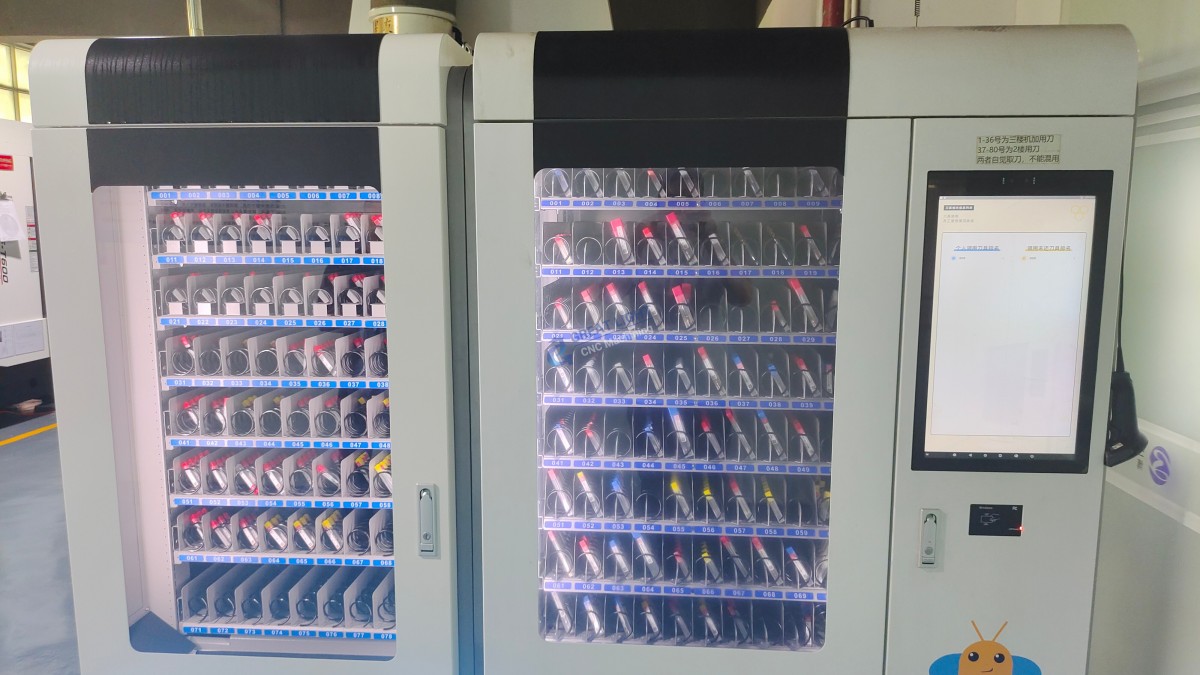
Category 1: Commodity Network Manufacturers that optimize for cost and speed, with quality dependent on which partner processes your order. Services like Xometry, Protolabs Network, and Fictiv excel here for standard parts with forgiving tolerances.
Category 2: Integrated Precision Manufacturers that invest in equipment, certifications, engineering talent, and process control. GreatLight Metal represents this category—offering over a decade of accumulated expertise, ISO 9001/13485/16949 certifications, in-house metrology, and full process chain integration from die casting through assembly.
For projects demanding true precision—medical devices, aerospace components, automotive safety-critical parts, and high-performance industrial equipment—the integrated model provides measurable advantages in quality consistency, documentation completeness, and engineering support depth.
When evaluating partners for your next CNC milling and turning project, look beyond price per piece. Consider:
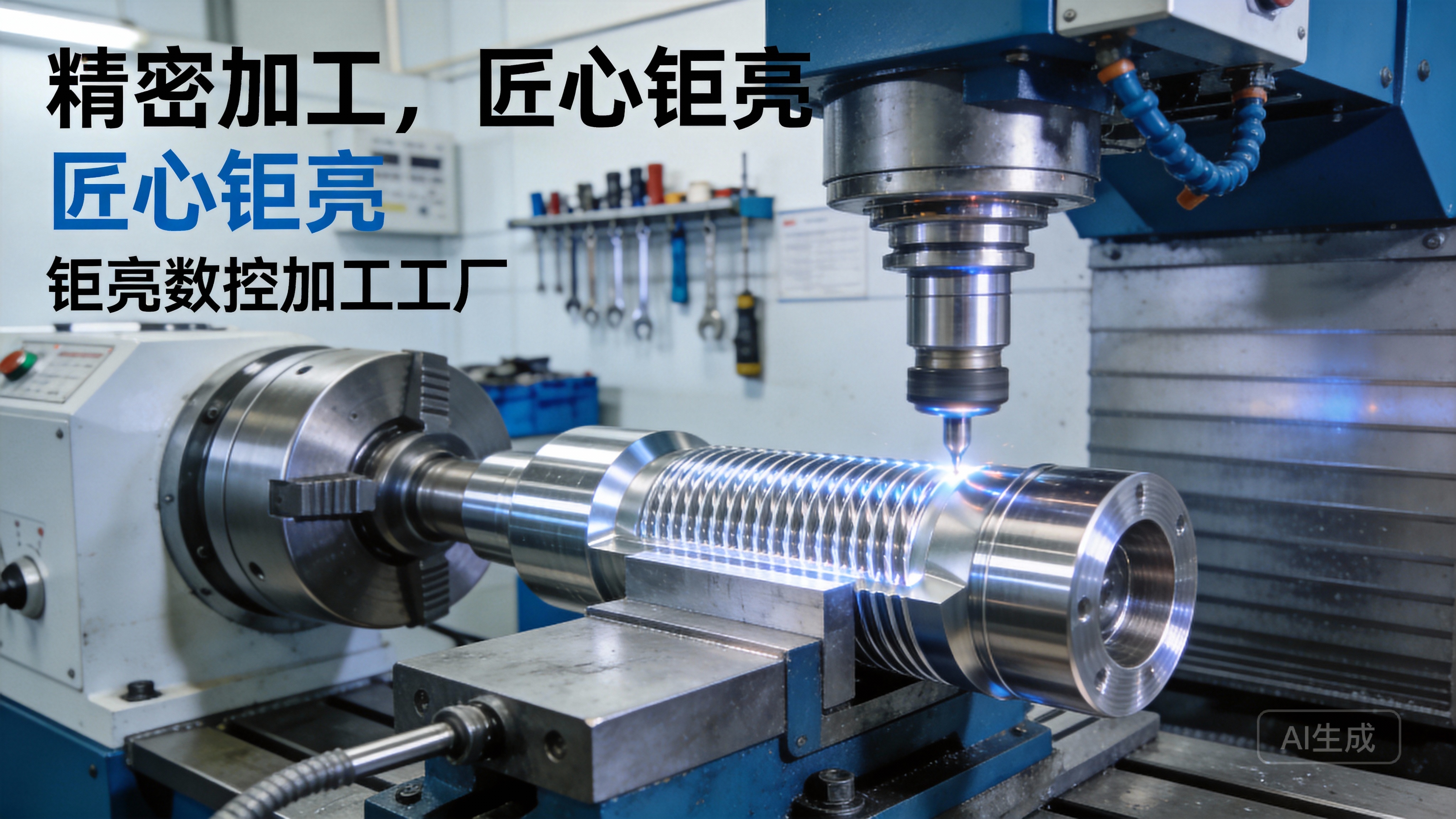
What certification depth supports quality claims?
Is equipment capability backed by real metrology?
Does the supplier offer engineering DFM support?
Can they manage the entire process chain?
What IP protection measures exist?
GreatLight Metal answers these questions with physical infrastructure, systematic processes, and a track record spanning over a decade. As global supply chains seek reliable partners capable of handling increasing complexity, manufacturers that combine Chinese manufacturing efficiency with world-class quality systems are becoming the preferred choice for discerning engineers worldwide.
The next time you specify a part requiring CNC Milling & Turning at tight tolerances, consider whether you need a commodity processor or an engineering partner. The difference determines not just part quality, but project success.


![[访谈] RAPID + TCT 2024:人工智能对 3D 打印的价值](https://print-ing.com/wp-content/uploads/2024/07/INTERVIEW-60x60.jpeg "[访谈] RAPID + TCT 2024:人工智能对 3D 打印的价值 9")




发表回复
要发表评论,您必须先登录。