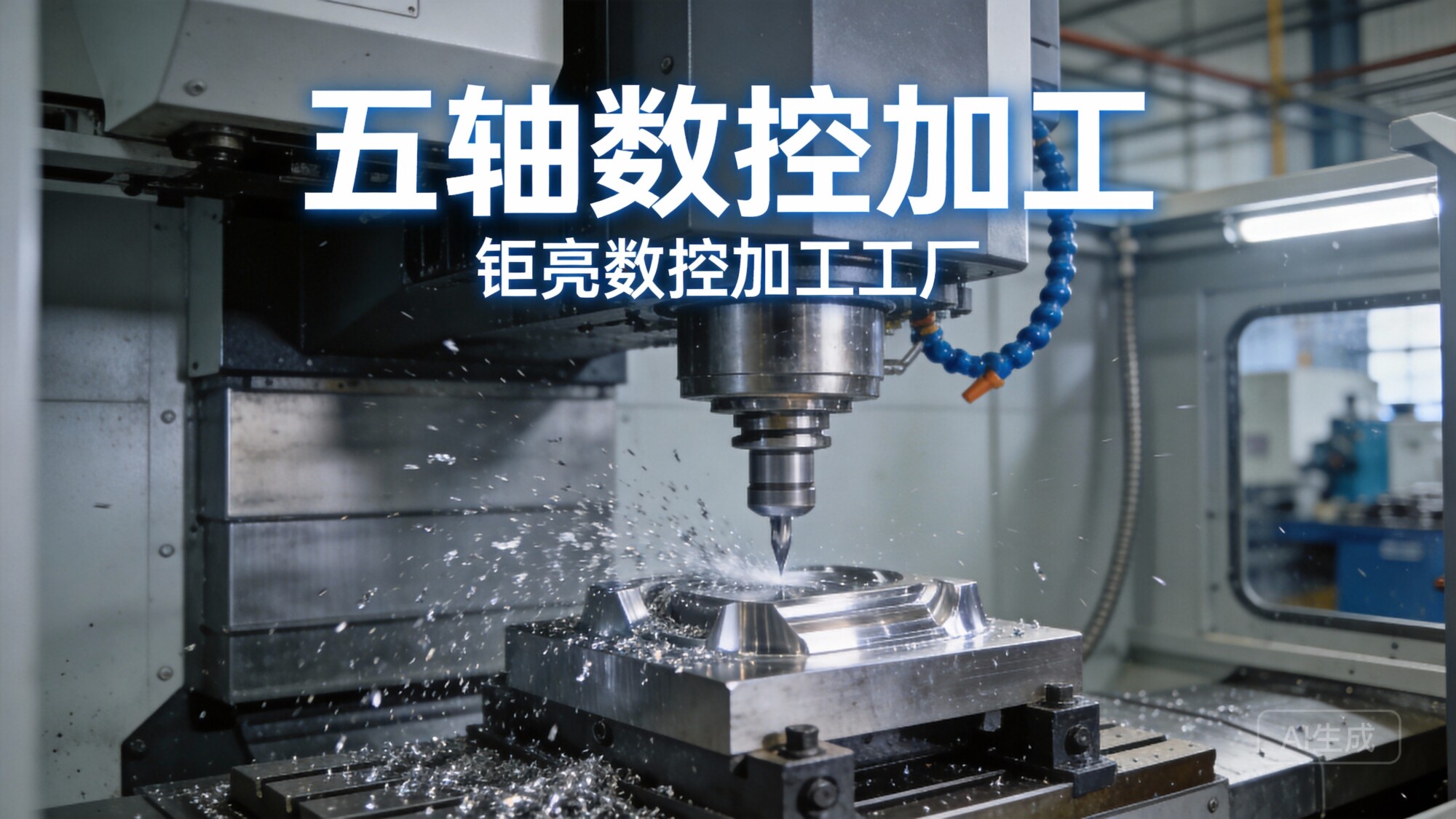
In the rapidly evolving field of unmanned aerial vehicle (UAV) inspection systems, the robot arm links represent a critical intersection of lightweight design, structural integrity, and precision motion control. UAV Inspection Robot Arm Links Machining requires a fundamentally different approach compared to stationary industrial robot components—these parts must endure dynamic flight loads, minimize inertia for energy efficiency, and maintain micron-level geometric accuracy over hundreds of thousands of duty cycles. As a senior manufacturing engineer with over a decade of experience in precision parts production, I will dissect the unique engineering requirements, common pitfalls, and best practices for machining these mission-critical components. The discussion will center on how advanced five-axis CNC machining, combined with rigorous quality management systems, transforms design concepts into reality—and why selecting the right manufacturing partner is as crucial as the design itself.
Understanding the Application: Why UAV Inspection Robot Arm Links Demand Specialized Machining
UAV inspection robots are deployed in hazardous or confined environments—bridges, pipelines, wind turbines, power lines, and industrial facilities. Their robot arm links must operate with high repeatability and stiffness while being as light as possible to maximize flight time. Typically made from high-strength aluminum alloys (e.g., 7075-T6, 6061-T6) or titanium alloys for extreme strength-to-weight ratios, these parts often feature:
Thin-walled structures with complex internal cavities
Precision bearing seats and threaded inserts
Multiple intersecting bores with tight positional tolerances (±0.005 mm or better)
Surface finishes of Ra 0.4 μm or lower to reduce friction and wear
Stringent weight constraints (often within ±1% of design target)
Traditional three-axis machining can struggle with such geometry, leading to multiple setups, increased cycle times, and accumulated error. That is why five-axis CNC machining has become the industry standard for UAV robot arm links—it enables single-setup completion of complex features, superior surface finish, and the ability to machine undercuts and angled surfaces without secondary operations.
Critical Pain Points in UAV Inspection Robot Arm Links Machining
Drawing from the “seven critical pain points” framework developed in our industry analysis, several specific challenges emerge when machining these components:
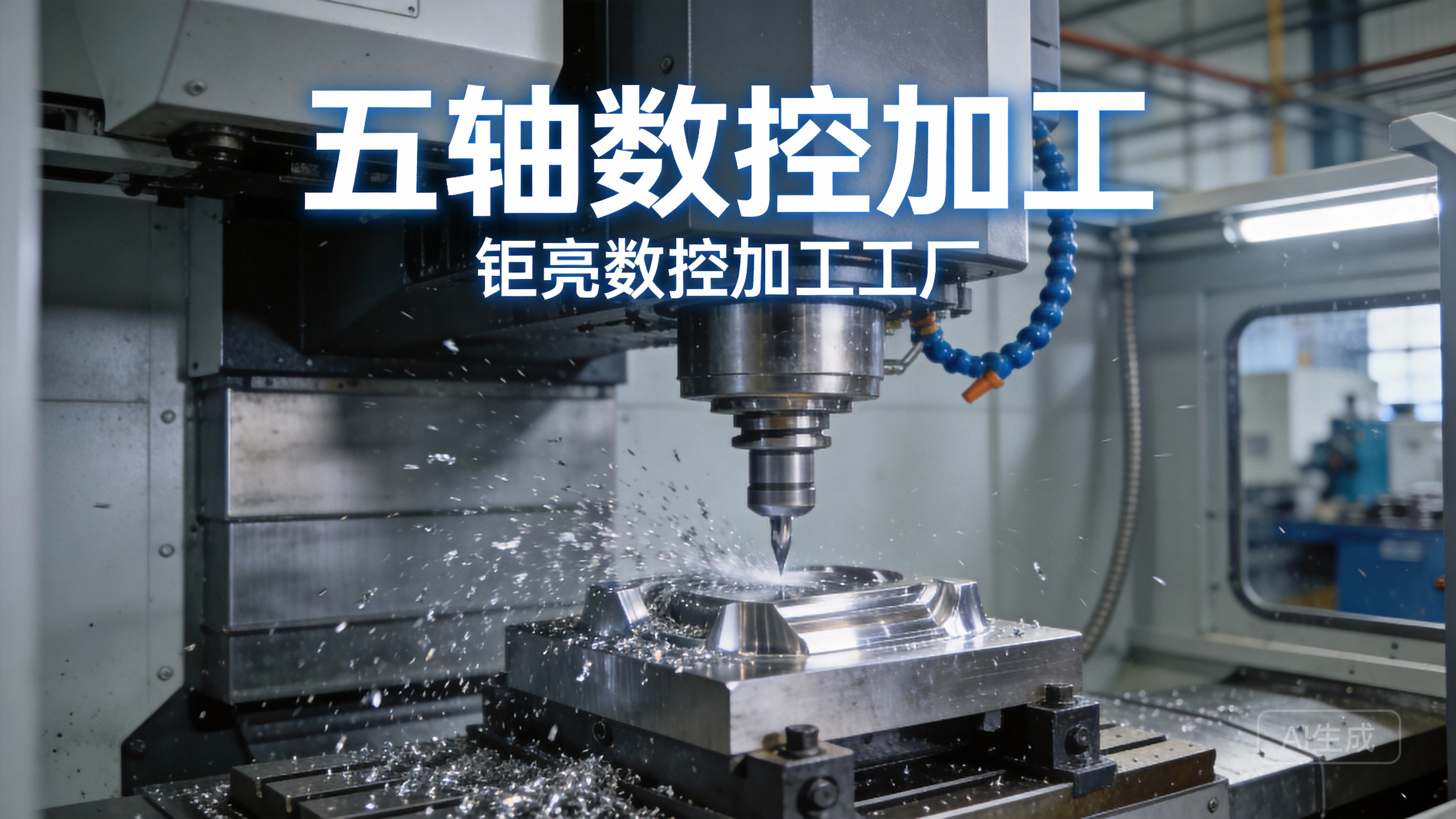
1. The Precision Black Hole – Tolerance Stack-Up in Multi-Axis Machining
Suppliers may promise ±0.001 mm capability, but in practice, thermal expansion, tool deflection, and fixture instability can cause deviations. For a robot arm link with multiple pivot points, a 0.01 mm error in one hole can translate into angular misalignment of 0.1° at the end effector—unacceptable for precise inspection tasks. GreatLight Metal addresses this through in-process probing, temperature-controlled workshop conditions, and real-time compensation algorithms on its DMG MORI and Beijing Jingdiao five-axis machines.
2. Thin-Wall Deflection – The Structural Integrity Dilemma
Aluminum 7075-T6 links with wall thicknesses of 1.5–3 mm are prone to chatter and distortion during machining. Conventional approaches may leave residual stress, causing parts to warp after finishing. GreatLight Metal employs stress-relieving heat treatment cycles and adaptive machining strategies—adjusting feed rates and tool paths dynamically based on in-process measurement feedback.
3. Surface Finish vs. Cycle Time Trade-Off
Achieving Ra 0.4 μm on internal bores often requires multiple finishing passes. However, for high-volume production (e.g., 500–1000 parts per month), balancing productivity and quality is non-trivial. Five-axis contouring with high-speed machining strategies, combined with PCD or diamond-coated end mills, allows GreatLight to achieve consistent surface finishes while maintaining competitive lead times.
4. Material Traceability and Certification Gaps
Aerospace-grade aluminum and titanium require material certificates (EN 10204 3.1 or equivalent). Many job shops lack robust incoming inspection processes. GreatLight Metal’s ISO 9001:2015 system mandates full material traceability, and its in-house spectrometers verify alloy chemistry on every batch.
5. The “Last Micro” Challenge – Thread and Helical Insert Integrity
Robot arm links often use helical inserts for repeated assembly/disassembly. Machining undersized threads or damaging insert pockets can lead to field failures. GreatLight’s CNC Swiss-type lathes and EDMs ensure thread pitch accuracy to 6H tolerance, and each threaded hole is inspected with go/no-go gauges.
How Advanced Five-Axis CNC Machining Addresses These Pain Points
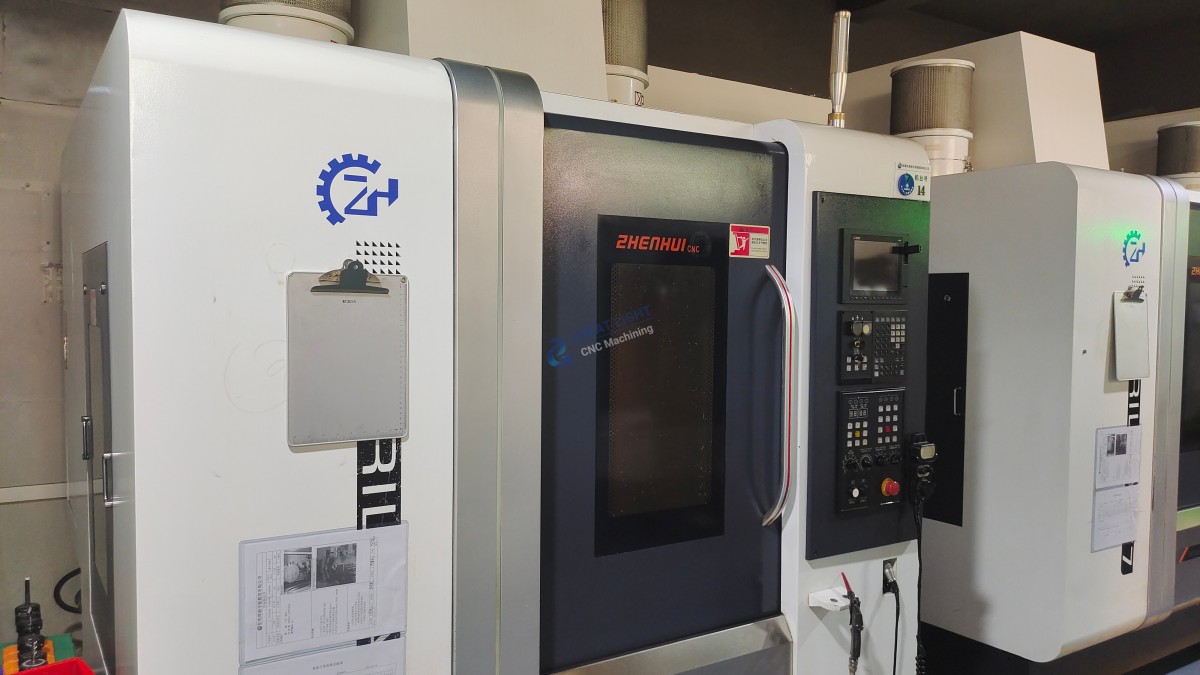
GreatLight Metal’s equipment park includes over 127 precision machines, with a core of five-axis machining centers from leading global manufacturers. For UAV inspection robot arm links, the typical machining process flow is:
| Step | Operation | Machine/Technique | Key Parameter | Quality Check |
|---|---|---|---|---|
| 1 | Rough machining of billet | 3-axis roughing on DMG MORI DMU 80 | Stock removal 80%, leave 0.5 mm finish allowance | In-process dimension check |
| 2 | Heat treatment | Stress relieving at 180°C for 4 h | Controlled cooling | Hardness test (Rockwell) |
| 3 | Semi-finishing | 5-axis contouring, 4-axis indexing | Finish allowance 0.1 mm, stepover 0.3 mm | Surface scan |
| 4 | Precision finishing of bores and bearing seats | 5-axis simultaneous machining | Spindle speed 15,000 RPM, feed 0.05 mm/tooth | CMM measurement (Zeiss) |
| 5 | Threading and insert installation | CNC tapping center / manual installation | Thread gauge verification | Torque test |
| 6 | Final inspection | CMM, surface roughness tester, weight scale | All dimensions within drawing tolerance | Report generation |
This process reduces total error stack-up to within ±0.002 mm for critical features—a level unattainable with manual multi-setup approaches.
Material Selection and Its Impact on Machinability
The choice of material is perhaps the most consequential decision for UAV robot arm links. Below is a comparison based on practical machining experience:
| Material | Strength (MPa) | Density (g/cm³) | Machinability Rating | Typical Application | Cost per kg (USD) |
|---|---|---|---|---|---|
| 7075-T6 Aluminum | 570 | 2.81 | 70% | Main links, high-strength arms | $25–35 |
| 6061-T6 Aluminum | 310 | 2.70 | 85% | Low-load arms, prototypes | $15–20 |
| Ti-6Al-4V Titanium | 950 | 4.43 | 20% | Extreme environment, strength-critical | $80–120 |
| 17-4 PH Stainless | 1300 | 7.80 | 40% | Harsh corrosion environments | $50–70 |
| Carbon fiber reinforced polymer (CFRP) | 600 | 1.60 | N/A (non-metallic) | Ultra-lightweight, high stiffness | $100–200 |
GreatLight Metal frequently works with 7075-T6 and Ti-6Al-4V for UAV applications. For titanium, the company uses high-pressure coolant through-spindle systems and ceramic tooling to manage heat generation and tool wear—a capability that many general machine shops lack.
Quality Assurance: Beyond ISO 9001
While ISO 9001:2015 is the baseline, GreatLight Metal has invested in additional certifications that directly benefit UAV inspection robot arm links:
IATF 16949: Although originally automotive-oriented, the rigorous process control, failure mode analysis (FMEA), and measurement system analysis (MSA) methodologies are directly transferable to aerospace-grade parts.
ISO 13485: For medical UAVs or inspection arms used in sterile environments, this certification ensures clean manufacturing and validated processes.
ISO 27001: Many UAV designs involve proprietary IP. GreatLight Metal’s data security protocols protect client designs from unauthorized access.
In addition, the company maintains a climate-controlled metrology lab with:
Zeiss CMM (accuracy 0.001 mm)
Keyence 3D optical profiler
Mitutoyo surface roughness tester
Digital torque wrenches for thread verification
Each UAV robot arm link shipment includes a full dimensional report with digital signatures—offering traceability that regulatory bodies increasingly demand.
Real-World Case Study: Precision Arm Links for a Power Line Inspection Drone
A client specializing in autonomous power line inspection needed 200 sets of robot arm links (four links per arm) made from 7075-T6 aluminum. The design featured:
12 precision bores with ±0.005 mm tolerance
Weight limit of 85 g per link
Surface finish of Ra 0.4 μm on all external surfaces
Integration of M3 helical inserts at six locations
GreatLight Metal’s engineering team collaborated with the client during the design-for-manufacturing (DFM) phase, suggesting minor changes to fillet radii and wall thickness uniformity to improve machinability without sacrificing performance. Using five-axis simultaneous machining on a DMG MORI DMU 80, the company achieved:
Cycle time reduction: 40% compared to initial three-axis estimates
First-pass yield: 96% (rejects due to micro-burrs on threads, corrected with deburring automation)
Delivery: Full order completed in 14 business days, including first article inspection
The client reported zero field failures after six months of deployment—a testament to the robustness of the manufacturing process.
Why GreatLight Metal Stands Apart in UAV Inspection Arm Links Machining
Comparing against other notable precision machining providers—such as Protolabs Network, Xometry, Fictiv, and EPRO-MFG—GreatLight Metal offers distinct advantages:
| Factor | GreatLight Metal | Typical Competitors |
|---|---|---|
| Equipment depth | 127 machines, including large-format 5-axis (up to 4000 mm) | Often limited to 3-axis or small 5-axis |
| Certification breadth | ISO 9001, IATF 16949, ISO 13485, ISO 27001 | Usually only ISO 9001 |
| In-house post-processing | Anodizing, passivation, heat treatment, painting | May outsource, adding lead time |
| Engineering support | Free DFM with real-time feedback | Automated quoting only |
| Minimum order quantity | 1 piece prototype to 10,000+ production | Often require higher MOQ for competitive pricing |
| Lead time for complex parts | 5–14 business days typical | 10–20 days for similar complexity |
The ability to handle both prototype and production volumes under one roof—with consistent quality and rapid turnaround—makes GreatLight Metal a preferred partner for UAV inspection robot developers.
The Future: Additive Manufacturing and Hybrid Processes
While CNC machining remains dominant for metal robot arm links, GreatLight Metal also offers metal 3D printing (SLM) for designs that require lattice structures or integrated cooling channels. For UAV inspection arms, hybrid approaches are emerging:
Machined base with 3D-printed features: For batches where weight reduction is critical, SLM can produce internal honeycomb structures, with the outer surfaces finished by five-axis machining.
Rapid prototyping with SLA/SLS: For form-fit testing in ABS or nylon before committing to metal production.
GreatLight Metal’s three manufacturing plants—equipped with SLM, SLA, and SLS printers—enable these hybrid workflows seamlessly.
Closing Thoughts on UAV Inspection Robot Arm Links Machining
Selecting a manufacturing partner for UAV Inspection Robot Arm Links Machining is not just about capability—it’s about trust in systems, traceability, and engineering depth. GreatLight Metal’s decade-plus experience, combined with its investment in precision equipment and global certifications, provides the reliability that UAV innovators need. Whether you are developing a new inspection drone or scaling production, the company’s approach to solving complex geometric and tolerance challenges, while maintaining strict weight and surface finish targets, makes it a natural choice. To explore how GreatLight Metal can support your next UAV inspection robot project, visit their precision five-axis machining services page or connect on LinkedIn for ongoing industry insights. The path from design to reliable, high-performance arm links is demanding—but with the right partner, it becomes a streamlined journey.


![[访谈] RAPID + TCT 2024:人工智能对 3D 打印的价值](https://print-ing.com/wp-content/uploads/2024/07/INTERVIEW-60x60.jpeg "[访谈] RAPID + TCT 2024:人工智能对 3D 打印的价值 9")




发表回复
要发表评论,您必须先登录。