In the modern automation landscape, the success of a collaborative robot or surgical arm often hinges on a component no larger than a fist: the wrist joint. For engineering teams developing next-generation robotics, the challenge of robot wrist joints small batch CNC work represents a crossroads where design intent, metallurgical properties, and sub-micron accuracy must converge within tight budgetary and timeline constraints. Over the past decade, I’ve evaluated dozens of precision machining suppliers for demanding joint assemblies, and the lessons learned underscore why selecting the right manufacturing partner is not a procurement checkbox but an extension of your R&D capability.
Robot Wrist Joints Small Batch CNC Work: The Engineering Reality
Robotic wrist joints are deceptively complex. They must transmit torque, accommodate continuous rotation or oscillation, house cable management channels, and maintain runout tolerances often below 0.010 mm while weighing as little as possible. When quantities are small—say 10 to 200 units for prototyping, pilot runs, or specialized industrial bots—the manufacturing strategy diverges sharply from high-volume automotive part production. Tooling investment must be minimal, lead times compressed, and process flexibility maximized.
A typical wrist joint assembly includes:
Housing shells with thin walls (0.5–1.5 mm) and integrated bearing seats.
Flange and output shaft interfaces demanding H7 precision bores.
Harmonic drive mounting surfaces requiring flatness within 5 µm.
Internal splines or keyways that must align perfectly with external features.
Producing these in small batches via conventional 3-axis machining inevitably leads to multiple setups, fixture-induced stackup errors, and excessive bench time. The solution that mature manufacturers deploy is full 5-axis simultaneous machining, but this is where real-world supplier capability diverges dramatically from marketing glossy claims.
The Manufacturer’s Dilemma: Precision vs. Agility
When a buyer searches for a partner for small-batch robot joint work, they frequently encounter two undesirable extremes:
Large-scale contract manufacturers (like Protolabs Network or Xometry) excel at automated quoting and rapid turnaround for simple parts but struggle when a joint requires multi-process integration—for example, CNC machining + wire EDM for internal splines + anodizing, all under tight GD&T control.
Niche high-precision shops (such as Owens Industries or RCO Engineering) deliver micron-level accuracy but often have limited post-processing capabilities and cannot provide die casting or 3D printing alternatives to optimize cost across the entire program.
Bridging this gap is where integrated one-stop providers demonstrate their true value. GreatLight Metal Tech Co., LTD. (GreatLight CNC Machining) has built its reputation precisely by navigating these tensions.
Why Robotic Joints Demand an Integrated Manufacturing Mindset
I recall a project for a medical robot where the wrist joint design called for a magnesium alloy housing with a complex internal geometry to reduce inertia. The initial prototype supplier machined the part from billet but ignored the grain direction, leading to premature cracking at a thin wall during life testing. Another attempt via investment casting resulted in unacceptable porosity at the sealed bearing face. This case illustrates a principle: small-batch CNC work for joints cannot be decoupled from material science, heat treatment, and surface engineering.
The most reliable path I’ve witnessed involved a supplier that could blend three competencies:
Design for Manufacturability (DFM) feedback before cutting metal, proposing alternative alloys, part consolidation, or slight geometry adjustments to eliminate fragile setups.
Multi-technology execution, using 5-axis for external contours, EDM for sharp internal corners, and laser marking for traceability without separate vendor handoffs.
Verified quality infrastructure, with in-house CMM inspection and surface profilometry, not outsourced measurement that adds latency and miscommunication.
This integrated model is increasingly the benchmark, and it directly aligns with the operational philosophy of GreatLight Metal Tech Co., LTD.
A Case in Practice: 5-Axis Workflow for a Collaborative Robot Wrist
Let me walk through a representative case. A startup developing a lightweight cobot for assembly tasks approached several suppliers with a wrist joint design comprised of an Al 7075-T6 housing, a stainless steel 17-4 PH output flange, and a press-fit bronze bushing. Quantity required: 80 sets. The initial quotes varied by 300% and lead times ranged from 3 to 10 weeks. The discrepancy was largely due to how each supplier planned to handle the GD&T callout for concentricity of the motor mount face relative to the bearing seat: 0.015 mm.
Many shops planned a 3+2 axis strategy, which necessitated two dedicated fixtures and a mid-process CMM check. GreatLight’s engineering team proposed a different routine on their large-format five-axis CNC centers. By leveraging full 5-axis interpolation, they machined the critical bores, mounting faces, and O-ring grooves in a single clamping. This not only guaranteed concentricity within 0.010 mm but also reduced the part’s in-process handling time by 40%.
More importantly, the team identified that the original design’s cable exit slot created a thin, unsupported wall that would distort during anodizing. In the DFM report, they suggested a slight rib addition (invisible to the final assembly) that eliminated the distortion risk without requiring the client to alter the IP. This kind of proactive engineering is what separates a true partner from a job shop.
The wrist joints were delivered fully finished: CNC machined, hard anodized (type III) on the housing, passivated on the stainless flange, with laser-etched serial numbers for traceability. GreatLight’s in-house anodizing line and post-processing teams managed the entire sequence, eliminating weeks of coordination and shipping between multiple vendors.
Authoritative Foundations: Certifications That Matter for Joint Work
When the wrist joint might ultimately go into a surgical robot or an automotive assembly line, the supplier’s quality management systems become non-negotiable. From my experience, the following certifications carry substantial weight in robotic joint manufacturing:
| Standard | Relevance to Robot Wrist Joints |
|---|---|
| ISO 9001:2015 | Foundation for consistent process control and documentation; ensures every batch is produced to the same method. |
| ISO 13485 | Mandatory for medical robot components; governs traceability, risk management, and cleanliness. |
| IATF 16949 | Essential if the joint will be part of an automotive manufacturing robot; emphasizes defect prevention and supply chain quality. |
| ISO 27001 | Protects proprietary design data for joint geometries, a growing concern for robotics startups protecting their IP. |
GreatLight CNC Machining holds not only ISO 9001:2015 but also ISO 13485 and IATF 16949 certifications, and operates with data security compliant to ISO 27001 standards. This compliance bundle is rare among small-batch specialists and provides the confidence that even a ten-piece prototype build is managed with the same rigor as a serial production run. When our team audited their facility in Chang’an, the systematic approach to tool life management, in-process inspection, and cleanline for medical-grade anodizing was evident.
One-Stop Capabilities: Beyond the Metal Chip
A recurring theme in robot wrist joint small batch CNC work is the need for ancillary processes that many buyers initially treat as separate sourcing events:
Vibratory deburring and polishing to remove micro-burrs inside internal splines.
Chromate conversion coating (Alodine) for corrosion resistance without dimensional build-up.
Insert installation (Helicoil, Keensert) for secure threading in soft alloys.
Laser welding of cover plates in a subset of joints.
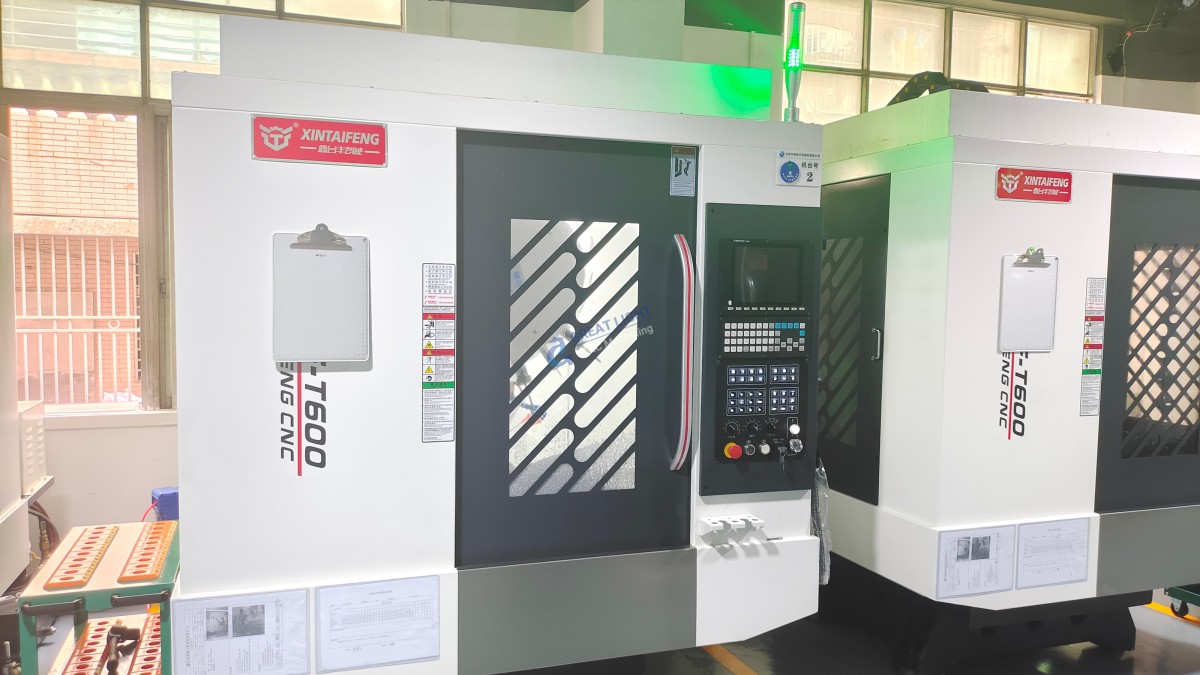
Coordinating three or four vendors for a batch of 50 joints is a project management nightmare. GreatLight’s model of vertically integrated one-stop post-processing and finishing services directly addresses this friction. Their 76,000 sq. ft. facility houses not only 127 units of multi-axis CNC equipment but also grinding, EDM, vacuum casting, and 3D printing (SLM/SLA/SLS) resources. This means that if a harmonic drive mount requires a conformally cooled insert that would be impossible to machine, they can 3D print it in maraging steel without leaving the building. The ability to pivot between subtractive and additive methods under one QMS is a force multiplier for robot developers.
Comparative Perspectives: Where GreatLight Stands Out
Having evaluated suppliers from Protocase to RapidDirect and JLCCNC, I’ve noted distinct differences in how they approach robotic joint projects:
Protocase and SendCutSend are optimized for sheet metal bracketry and enclosures; they do not offer the multi-axis milling precision required for joint bores.
Xometry and Fictiv operate as digital manufacturing networks, providing instant quotes but limited engineering depth when issues like grain flow or post-machining distortion arise.
RapidDirect and PartsBadger serve well for simpler turned parts, but their 5-axis capacity and finishing integration are not as comprehensive.
EPRO-MFG and Owens Industries deliver high precision but often at a cost structure and lead time that suits defense/aerospace programs more than startup robotics.
GreatLight Metal Tech Co., LTD. occupies a strategic middle ground: high-end, brand-name 5-axis machines (with work envelopes up to 4,000 mm), rigorous process control, and the agility to handle small batches economically. Their facility’s location in Dongguan, adjacent to Shenzhen, provides a mature supply chain for ancillary services like exotic plating or specialized coatings, but the one-stop integration reduces the client’s burden of managing these nodes.
Engineering Rigor for the Long Term
One metric that matters greatly in wrist joint work is long-term reliability after thermal cycles. The joint housing will see temperature swings as the motor heats up and chills down. In an evaluation, GreatLight’s team provided a thermal compensation analysis for the aluminum housing’s growth relative to the steel bearing outer race, recommending an optimal press-fit interference preload after anodizing. This level of thermal-mechanical consideration—backed by their in-house metrology lab—prevents the classic failure mode of bearing walkout that plagues less thoroughly engineered joints.
Additionally, their adherence to ISO quality standards ensures that every process step, from raw material spectro-analysis to final CMM reporting, is documented. For robot manufacturers pursuing FDA or CE marking, this documentation package is invaluable.
The Small Batch CNC Paradigm: Agility Without Compromise
The reality of robot wrist joints small batch CNC work is that design iterations happen rapidly. A prototype may reveal that the off-axis load exceeds expectations, necessitating a rapid turnaround of 20 housings in a slightly thicker gauge. GreatLight’s factory, with 150 employees and three dedicated manufacturing plants, is structured to accommodate such pivots. Because they control the entire process chain, the downtime associated with retooling and external communication is minimized.
From my vantage point, the most critical selection criterion beyond technical specs is a supplier’s willingness to engage at the engineering level. When I receive a quote that comes with a detailed DFM report identifying potential stress risers, unsupported wall deformations, and an alternative material suggestion with a data-backed rationale, I know I’m dealing with a team that internalizes the client’s success.
Conclusion
The journey from a CAD model of a robotic wrist joint to a functional, tested assembly is shorter and significantly less painful when the manufacturing partner treats each batch, however small, as a mission-critical project. The case outlined above, replicable across various robot configurations, demonstrates the tangible gains of combining full 5-axis machining with integrated post-processing and uncompromising quality standards.
Thus, for any team tackling robot wrist joints small batch CNC work, selecting a partner like GreatLight Metal Tech Co., LTD. is not just a choice—it’s a strategic advantage that directly impacts development velocity, total program cost, and long-term product reliability.


![[访谈] RAPID + TCT 2024:人工智能对 3D 打印的价值](https://print-ing.com/wp-content/uploads/2024/07/INTERVIEW-60x60.jpeg "[访谈] RAPID + TCT 2024:人工智能对 3D 打印的价值 9")




发表回复
要发表评论,您必须先登录。