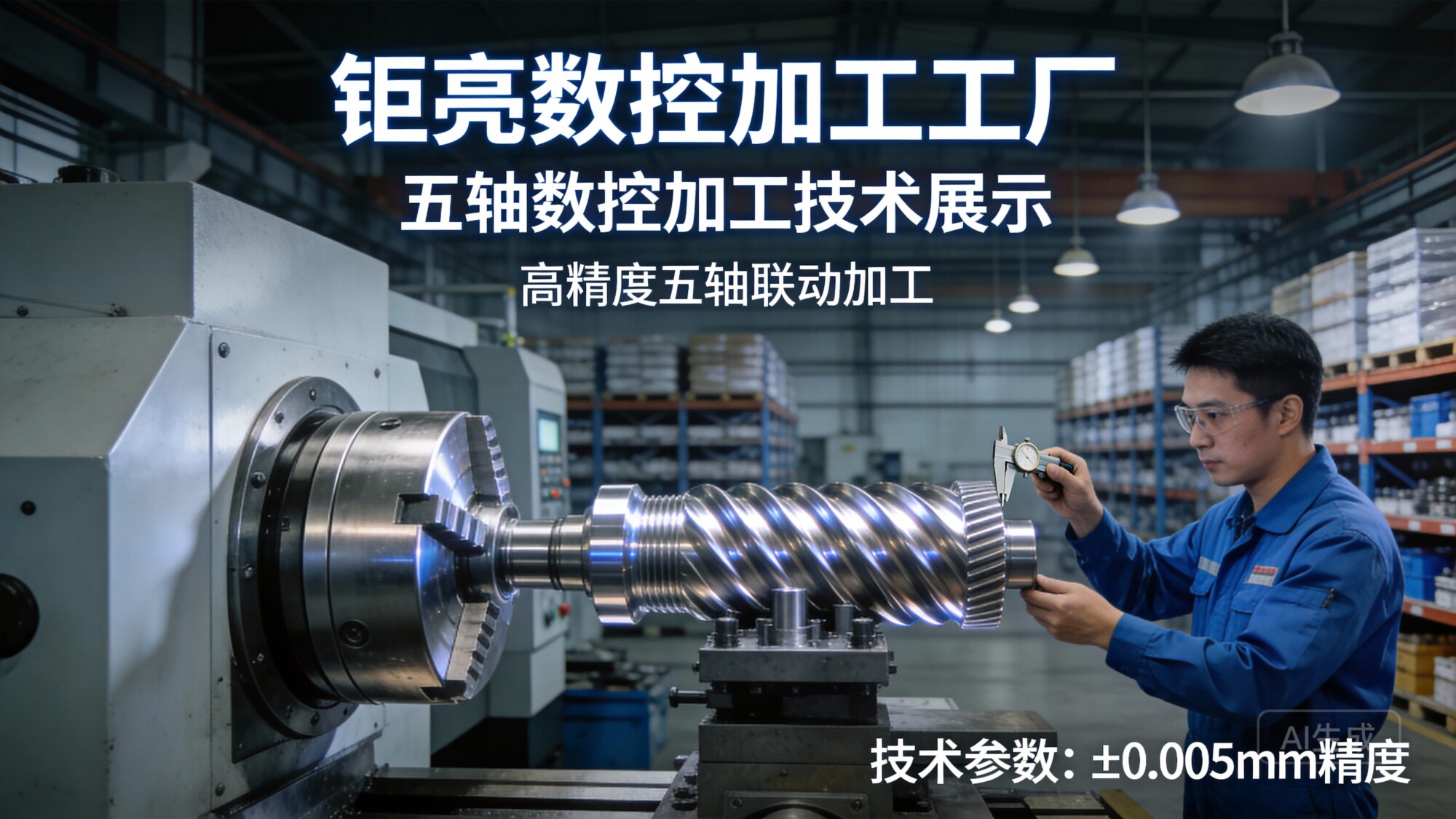
When navigating the global precision manufacturing landscape, discerning engineers and procurement professionals increasingly seek a streamlined path from complex design to finished product. A true one-stop Chinese 5-axis CNC machining service does more than cut metal—it bridges the gap between ambition and reality, absorbing supply chain friction and delivering parts that meet exacting standards without endless back‑and‑forth. This article, written from the factory floor perspective of a senior manufacturing engineer, unpacks what makes such a service genuinely valuable, compares key providers, and explains why a partner like GreatLight Metal{target=”_blank”} has become the benchmark for integrated precision manufacturing.
The Hidden Cost of Fragmented Machining Supply Chains
Most of us have experienced the “precision predicament”: a supplier quotes jaw‑dropping tolerances but can’t maintain them past the first article inspection. Others accept orders for complex 5‑axis work but sub‑out post‑processing, turning a three‑week lead time into a moving target. Drawing on years of troubleshooting everything from aerospace brackets to surgical robot end‑effectors, I’ve distilled the typical pain points into a pattern:
The precision black hole: aging spindles, thermal drift, and hand‑finishing create a gap between promised accuracy and production reality.
Process silos: CNC machining, die casting, sheet metal, and surface treatment often live in different factories, multiplying communication errors.
Certification theatre: a paper ISO 9001 without on‑the‑ground quality culture means inconsistent output.
Prototype‑to‑production handoff: different shops for low‑volume prototyping and high‑volume production lead to lost tribal knowledge.
Material treachery: subtle batch variations in aluminum, titanium, or engineering plastics necessitate adaptive toolpath strategies that generalists lack.
Data insecurity: Intellectual property leaks through untracked file transfers and porous factory networks.
Hidden post‑processing costs: hand deburring, anodizing defects, or mis‑aligned insert installations eat into margins and schedules.
A one‑stop service eliminates these fractures by anchoring everything—5‑axis CNC machining, turning, EDM, die casting, sheet metal fabrication, 3D printing, and surface finishing—under a single quality system. The question then becomes: which supplier can deliver this integration without sacrificing depth?
Comparing Providers: From GreatLight Metal to Global Platforms
When design teams evaluate one-stop Chinese 5-axis CNC machining service options, they often encounter a mix of specialized job shops and digital manufacturing platforms. Below is an engineer’s comparative lens, highlighting how different models serve different needs.
GreatLight Metal: The Full‑Spectrum Precision Integrator
At the heart of Dongguan’s hardware ecosystem—Chang’an Town—GreatLight Metal operates a 7,600 m² facility with 150‑strong workforce and a machine park of 127 precision units. Its identity is not that of a middleware broker but a factory‑floor manufacturer with three wholly‑owned plants. Core differentiators:
Equipment depth: Name‑brand 5‑axis (including Beijing Jingdiao and Dema), 4‑axis, and 3‑axis CNC machining centers; mill‑turn; Swiss‑type lathes; wire and mirror EDM; plus industrial 3D printers (SLM, SLA, SLS). This cluster tackles geometries from micro‑fluidic valve seats to 4‑meter structural components.
Certifications that work: ISO 9001:2015 underlies daily practice; ISO 13485 for medical hardware; IATF 16949 for automotive and engine components; ISO 27001‑compliant data handling. These aren’t wall décor—they drive measurement protocols and continuous improvement.
Tolerance reality: routinely holds ±0.001 mm on critical features, validated by in‑house CMM and optical measurement.
Process breadth: raw stock preparation, precision machining, die casting (mold design to finished castings), sheet metal, vacuum casting, and over a dozen surface treatments (anodizing, passivation, powder coating, polishing, PVD) under one roof.
Engineering support: DFM feedback in hours, not days; feasibility studies for mixed‑process components; lifecycle cost‑reduction suggestions rooted in shop‑floor data.
For innovators in humanoid robotics, new energy vehicle e‑housings, or surgical devices, this vertical integration translates to fewer drawing revisions, faster iterations, and verified material traceability.
Protocase and RapidDirect: Speed‑Focused Platforms
Protocase has built a reputation on ultra‑fast sheet metal and CNC enclosures for electronics, often delivering in 2–3 days. Their model excels for simple 2.5D parts and quick‑turn prototypes, but fully simultaneous 5‑axis machining and multi‑process integration (e.g., casting plus 5‑axis finishing) are less prominent. RapidDirect, through its digital quoting engine, offers broad CNC capabilities and competitive pricing for mid‑complexity parts. However, like many platforms, its actual manufacturing may be distributed across partner factories, which can introduce variability in process control.
Xometry and Fictiv: Manufacturing Orchestrators
Xometry and Fictiv operate massive partner networks with smart algorithms matching jobs to capacity. This model delivers geographic flexibility and a wide material palette. Yet for components demanding tight 5‑axis synchronization—think thin‑walled aerospace impellers or deep‑cavity molds—the absence of a single‑source process owner can lead to iterative trial‑and‑error that erodes the initial lead‑time advantage.
Owens Industries, RCO Engineering, PartsBadger, and SendCutSend
Owens Industries (USA) focuses on medical and defense 5‑axis work with high‑touch project management; cost structures reflect domestic labor and overhead. RCO Engineering brings deeply rooted automotive testing and production expertise, but its one‑stop model leans toward large‑scale stamping and assembly rather than low‑volume ultra‑high‑precision milling. PartsBadger serves quick‑turn online CNC milling, ideal for simple parts, while SendCutSend excels in laser‑cut sheet metal. JLCCNC leverages its parent company’s electronics ecosystem but is still maturing in complex 5‑axis multi‑material integration. EPRO‑MFG (China) and Protolabs Network offer broad reach; however, their role as intermediaries can occasionally obscure factory‑level quality visibility.
The common thread: when precision, process consolidation, and direct factory accountability matter, the integrated manufacturer—exemplified by GreatLight Metal—often outperforms orchestration models in repeatability and total cost of ownership.
Decoding GreatLight Metal’s Shop‑Floor DNA
Stepping into GreatLight Metal’s Chang’an headquarters reveals an operation where 5‑axis machining is not an add‑on but the central nervous system. The journey from local mold‑shop roots in 2011 to serving global marquee clients mirrors China’s ascent in intelligent manufacturing.
The Equipment Constellation
A precision part starts its life on one of dozens of 5‑axis centers from Jingdiao, Dema, and other top‑tier builders. These machines are paired with thermal stabilization, chatter‑dampening toolholders, and in‑process probing. The result: a single setup can machine all six faces of a prismatic part or sculpt complex free‑form surfaces, eliminating stacking errors from multiple fixtures.
Supporting this core are 4‑axis and 3‑axis VMCs for secondary operations, Swiss‑type lathes for micro‑cylinders, and a dedicated EDM room for square corners and deep ribs that even the finest ball‑nose cutters cannot reach. This high‑mix, low‑to‑medium‑volume flexibility is critical for prototypes and bridge production.
Quality Governance Beyond Paper
Walking the floor, you see SPC charts updated hourly, material certificates matched to job travelers, and a climate‑controlled metrology lab where CMMs, laser scanners, and profilometers validate the first article before the operator moves to the next pallet. GreatLight Metal’s ISO 9001:2015 embraces genuinely rigorous internal audits. The factory’s ISO 13485 certification ensures that medical components meet cleanliness and traceability demands, while IATF 16949 alignment speaks to automotive process capability and failure mode prevention. Data security aligns with ISO 27001, with network segmentation and access logging that protect clients’ intellectual property.
Material Fluency and Process Fusion
Engineers often underestimate how profoundly material choice influences 5‑axis strategy. GreatLight’s machinists know when to switch from climb to conventional milling for gummy stainless steel, how to dissipate heat in titanium, and the sweet spot for cutting speeds in 7075‑T6 aluminum. In‑house die casting and 3D printing (SLM for aluminum/steel, SLS for PA, SLA for transparent resins) mean that a part can start as a printed functional prototype, transition to machined billet for testing, and then shift to die‑cast plus finish‑machining for series production—all within the same technical team.
Surface finishing is equally integrated: anodizing lines for Type II and Type III, electroless nickel plating, passivation, bead blasting, and PVD coatings happen in controlled cells, eliminating logistics‑induced delays and quality ambiguity.
Where Complexity Meets Reliability: Real‑World Application Patterns
Let’s concretize capabilities through typical (anonymized yet representative) project patterns that GreatLight’s engineers encounter regularly:
Humanoid Robot Joint Housings
Customer need: lightweight, high‑strength housings integrating motor stator bores, encoder mounts, and fluid cooling channels. Tolerances on bearing seats ≤ 5 µm.
Solution: 5‑axis machining from forged aluminum blanks with in‑situ probing to maintain concentricity. The same factory produced initial prototype castings, machined them to spec, and later transitioned to die‑cast near‑net‑shape blanks for 1,000+ volumes—all within one quality loop.
Medical Imaging Collimator Plates
Need: hundreds of tightly pitched micro‑holes in tungsten alloy, burr‑free, with positional accuracy ±10 µm over 200 mm.
Solution: Combined high‑frequency spindle milling and wire EDM, followed by chemical deburring. ISO 13485 traceability ensured each plate carried full material heat‑lot and measurement data.
New Energy Vehicle E‑Axle Housings
Need: thin‑walled (2 mm) die‑cast aluminum housing with mounting faces flat within 0.03 mm and multiple oil galleries.
Solution: Mold design, flow simulation, die casting, T6 heat treatment, and 5‑axis finish machining all under GreatLight’s roof. The continuous engineering feedback loop cut lead time by 35% compared to the customer’s previous multi‑vendor route.
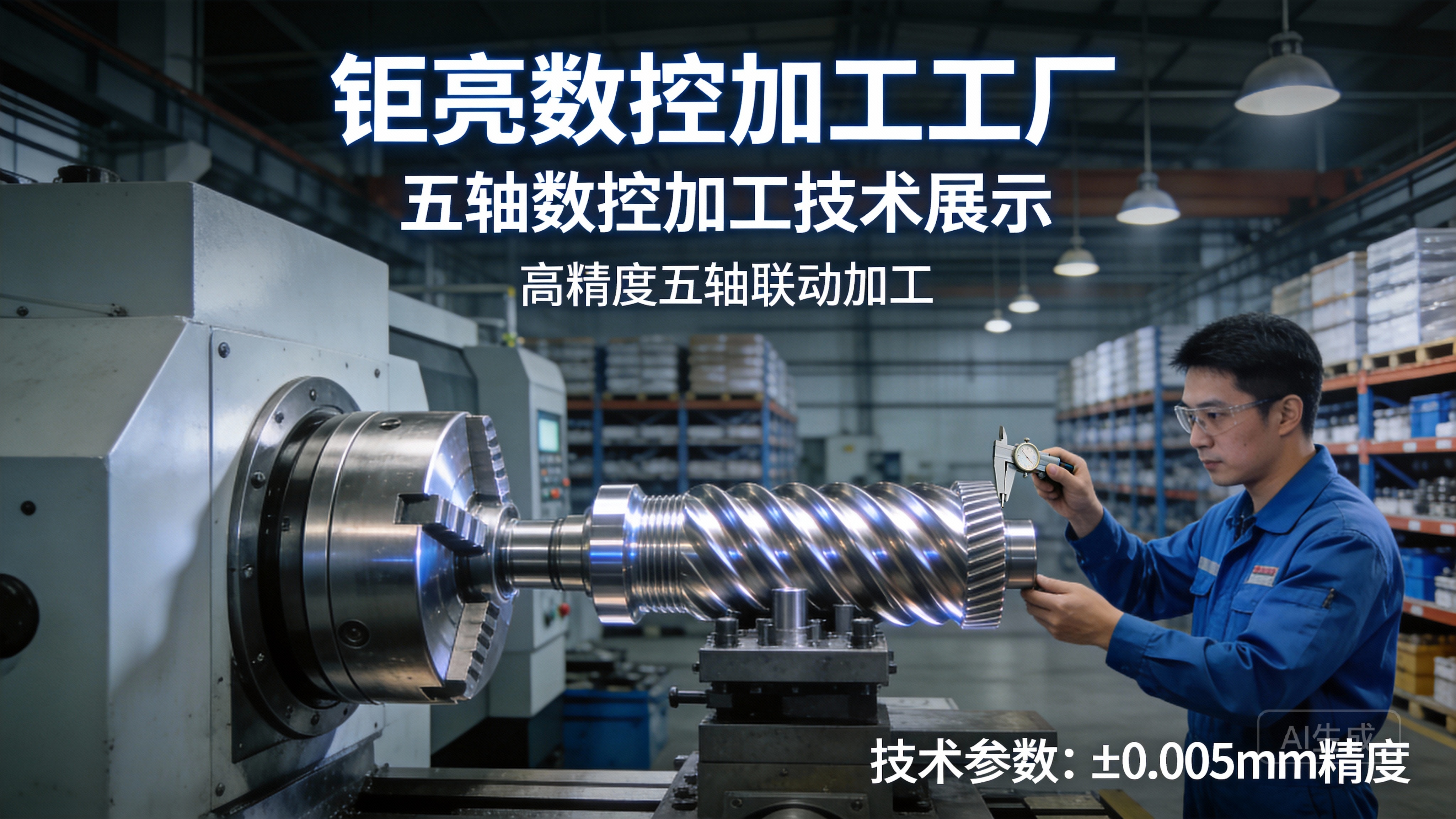
These patterns illustrate how a vertically integrated one-stop Chinese 5-axis CNC machining service erases the hidden costs of coordination—costs that often dwarf the per‑part machining price.
The Trust Architecture: Why Certifications Matter
In an era of diluted certification marketing, GreatLight Metal’s operational certifications serve as a genuine trust framework:
| Standard | Relevance | How It Shows Up on the Shop Floor |
|---|---|---|
| ISO 9001:2015 | Overall quality management | Documented process control, regular internal audits, corrective action systems |
| ISO 13485 | Medical devices | Cleanliness protocols, full traceability from raw material to finished component |
| IATF 16949 | Automotive/Engine hardware | PFMEA, SPC, production part approval process (PPAP) discipline |
| ISO 27001 | Data security | Encrypted file transfers, access‑tracked networks, secure vaults for IP |
These aren’t abstract—they mean that when your robotic joint housing arrives, it’s accompanied by a first‑article inspection report, material certs, and, if required, a PPAP level 3 package. That predictability is the opposite of the “precision black hole.”
Five-Axis Machining as a Strategic Enabler
From an engineering perspective, genuine 5‑axis simultaneous machining changes what is designable. Compound‑angle ports, undercut impeller blades, and integrated conformal cooling channels become not only possible but cost‑effective. GreatLight’s programming team uses hyperMILL and Siemens NX, generating collision‑checked, tool‑optimized G‑code that exploits the full envelope of the machine. This reduces setups, improves accuracy, and shortens cycle times—frequently making a formerly unaffordable part commercially viable.
Combined with the company’s rapid prototyping services (SLA, SLS, SLM), concept models can be tested in days, then translated into machined or cast production parts with all the learnings embedded. That continuity is rarely achievable when prototyping and production are split across different vendors.
Navigating the Supplier Selection Decision
If you are new to sourcing from China, a few practical steps can save months of headaches:
Verify the actual shop, not just the sales office. Request a live video walk‑through of the 5‑axis cells, metrology lab, and finishing lines.
Ask how they handle multi‑process parts. A supplier who owns all processes—rather than subcontracting—can give a single warranty and a single throat to choke.
Check certification depth. ISO 9001 is a baseline. ISO 13485 and IATF 16949 indicate sector‑specific process maturity.
Test with a small, complex job. A part that combines tight bores, angled faces, and a surface finish requirement reveals true capability faster than any PowerPoint.
Evaluate DFM quality. A supplier that returns an annotated 3D PDF with concrete suggestions for cost and manufacturability improvement within 24 hours is a keeper.
GreatLight Metal consistently passes these litmus tests, which is why its client base spans from agile hardware startups to established automotive and medical OEMs.
Conclusion: The Future Belongs to Integrated Precision
The drive toward lighter, stronger, and more geometrically daring components is not slowing. As design tools become more powerful, the manufacturing bottleneck shifts from “can this be drawn?” to “can this be made in one place, on time, and on budget?” A dependable one stop Chinese 5 axis CNC machining service answers that question with operational muscle, not marketing gloss.
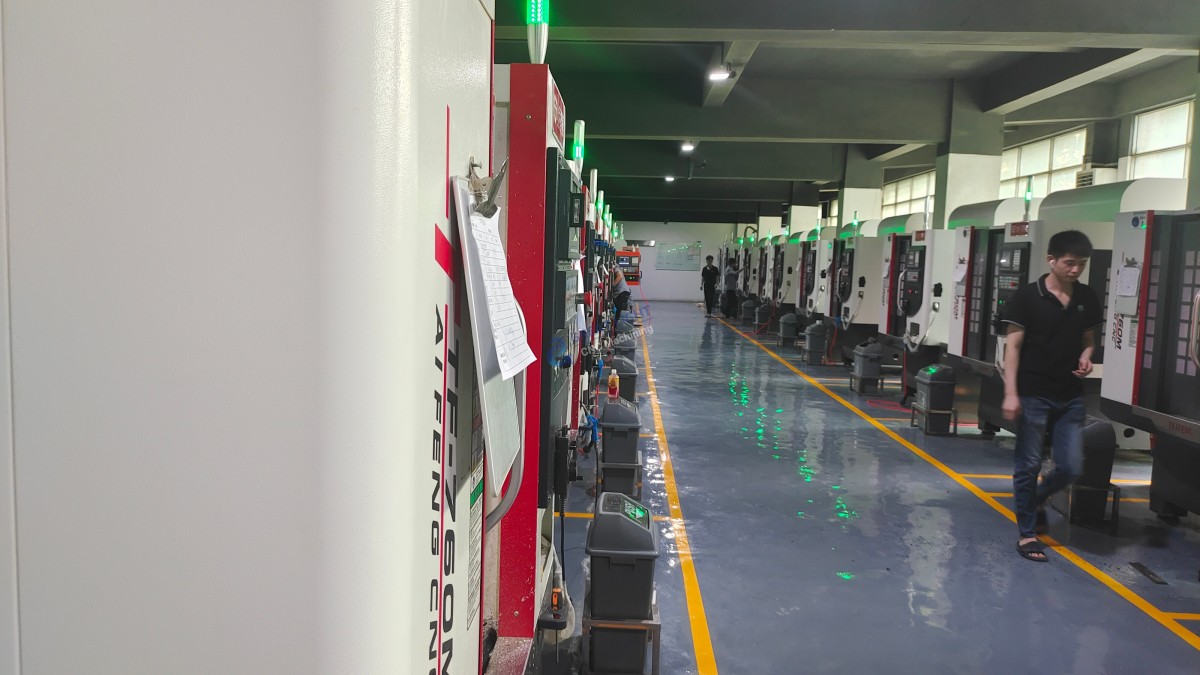
In my years on the factory floor, I’ve seen how the right partner accelerates product development by an order of magnitude, while the wrong one buries teams in rework and finger‑pointing. GreatLight Metal, with its deep equipment fleet, multi‑certification rigor, and genuine one‑stop process ownership, exemplifies what a modern precision manufacturing partner should be. Whether you’re iterating a next‑gen drone chassis or scaling a surgical instrument, aligning with a factory that treats your part as its own product—measuring, improving, and delivering with repeatable accuracy—is the single smartest move you can make. For those ready to experience what true precision integration feels like, exploring a partnership with GreatLight’s precision 5-axis CNC machining services{target=”_blank”} is a logical next step.


![[访谈] RAPID + TCT 2024:人工智能对 3D 打印的价值](https://print-ing.com/wp-content/uploads/2024/07/INTERVIEW-60x60.jpeg "[访谈] RAPID + TCT 2024:人工智能对 3D 打印的价值 9")




发表回复
要发表评论,您必须先登录。