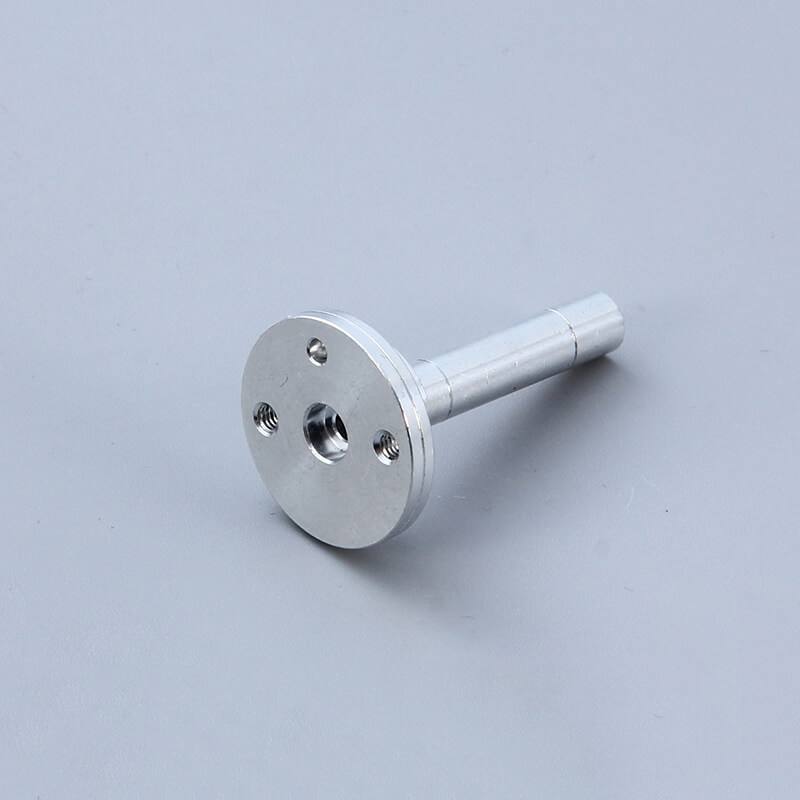
Design-Driven Custom CNC Milling & Turning ODM: Moving Beyond Simple Processing
In the world of precision manufacturing, the line between a part that merely meets specifications and one that genuinely enhances product performance is defined not by the machine alone, but by the engineering mindset behind its creation. As a senior manufacturing engineer with years of experience on both the supplier and client sides, I’ve seen too many projects stall not because of technology, but because of a fundamental disconnect between design intent and manufacturing reality. This is where design-driven custom CNC milling & turning ODM (Original Design Manufacturer) becomes more than a buzzword—it becomes a strategic advantage.
When we talk about ODM in the context of CNC machining, we are describing a partnership where the manufacturer doesn’t just blindly follow blueprints, but actively contributes to the design optimization, material selection, process planning, and even assembly logic. At GreatLight Metal, this approach has been the cornerstone of our decade-long journey from a local workshop to an international precision manufacturing partner. This article will dissect what design-driven ODM really means for custom CNC milling and turning, how it solves deep-rooted pain points in the supply chain, and why selecting the right partner—like GreatLight—can transform your product development cycle.
What Is Design-Driven ODM in CNC Milling and Turning?
Traditional CNC machining services often operate on a “print-to-part” basis: you send a 3D model, the supplier generates toolpaths, cuts the material, and ships the parts. While this works for simple geometries, it frequently leads to hidden problems: unnecessary cost overruns, suboptimal tolerances, longer lead times, and even assembly failures. Design-driven ODM flips this model. The manufacturer acts as an extension of your engineering team, analyzing the design for manufacturability (DFM), suggesting alternative materials, recommending tighter or looser tolerances where functionally appropriate, and even proposing design changes that reduce weight, improve strength, or simplify post-processing.
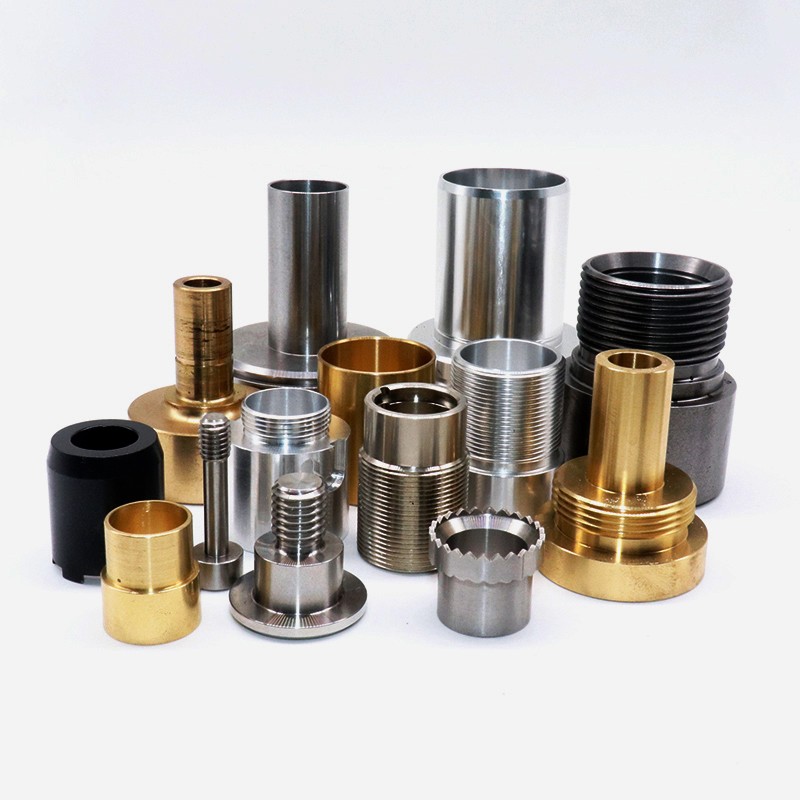
For custom CNC milling and turning, this means the supplier must possess deep knowledge of machine capabilities (especially 5-axis, 4-axis, and 3-axis machining), experience with hundreds of materials (from aluminum alloys to titanium, stainless steel, and engineering plastics), and an understanding of the downstream processes—like heat treatment, surface finishing, and assembly. The goal is not just to produce a part, but to deliver a ready-to-use component that integrates seamlessly into your product’s performance envelope.
GreatLight Metal’s facility in Chang’an Town, Dongguan—the hardware and mould capital of China—epitomizes this philosophy. With 76,000 sq. ft. of production space, 150 skilled employees, and over 127 pieces of precision equipment (including large 5-axis CNC machining centers from Dema and Beijing Jingdiao), we don’t just cut metal; we engineer solutions. Our ISO 9001:2015, ISO 13485, and IATF 16949 certifications ensure that every design decision is backed by systematic quality management.
The Seven Critical Pain Points in CNC Machining—and How Design-Driven ODM Addresses Them
Every experienced engineer knows the frustration of a part that looks perfect on screen but fails in real-world application. Let’s walk through the most common pain points I’ve encountered, and how a design-driven ODM approach—like the one GreatLight Metal practices—systematically eliminates them.
1. The Precision Black Hole: Promised vs. Realized Tolerances
Some suppliers advertise ±0.001mm, but mass production reveals inconsistency due to aging equipment, thermal drift, or poor process control. A design-driven ODM partner uses certified in-house metrology (CMM, vision systems) and real-time process monitoring to deliver consistent, verifiable tolerances, even for large complex parts up to 4000mm in size.
2. Material Selection Blindness
Choosing the wrong material for a part can lead to corrosion, fatigue, or awkward surface finishing. At GreatLight, our engineers collaborate with clients to match material properties with functional requirements—for example, recommending 7075 aluminum over 6061 for high-strength structural components, or suggesting a specific stainless steel grade for medical device compliance.
3. Cost Creep from Unnecessary Features
Design features that are costly to machine but add no real value (like deep internal cavities, sharp internal corners, or unnecessary surface finishes) can inflate budgets. Through DFM analysis, we identify these areas and propose alternatives that maintain or even improve function while reducing cost. This is the heart of design-driven ODM.
4. Lead Time Surprises
Traditional suppliers often don’t consider queuing times, setup changes, or post-processing bottlenecks. GreatLight’s full-process chain—including in-house 3D printing (SLM, SLA, SLS), die casting, sheet metal, and surface finishing—allows us to compress timelines by avoiding external subcontracting. A single point of contact coordinates everything from raw material procurement to final inspection.
5. Assembly Fit Problems
A part machined to tolerance individually may still fail to fit in an assembly due to cumulative errors. Our design-driven approach includes tolerance stack-up analysis and fixture design to ensure all components work together. We also offer milling and turning as complementary services, guaranteeing geometric consistency.
6. Surface Finish Inconsistencies
Different surface finishes (e.g., anodizing, passivation, powder coating) require pre-treatment and post-machining considerations. Our team advises on the best finish for your application and verifies adhesion, thickness, and appearance using in-house testing equipment.
7. Intellectual Property Risk
Sharing sensitive designs with unknown suppliers is risky. GreatLight Metal is ISO 27001 compliant for data security, and our long-term contracts with automotive and aerospace clients prove our commitment to IP protection. We don’t just manufacture parts; we safeguard your intellectual capital.
GreatLight Metal vs. Other CNC Service Providers: A Reality Check
The market is crowded with CNC service providers. Names like Protocase, Xometry, Fictiv, and JLCCNC offer varying levels of online quoting and rapid prototyping. However, true design-driven ODM demands a different depth of engagement. Let’s compare:
| Capability | GreatLight Metal | Xometry / Fictiv (Online Platforms) | Protocase (Niche Rapid) | JLCCNC (General CNC) |
|---|---|---|---|---|
| Design feedback (DFM) | Deep, iterative, engineer-to-engineer | Automated or basic manual | Limited | Minimal |
| Material range | 100+ metals & plastics, including exotic alloys | Moderate | Limited to sheet metal & enclosures | Moderate |
| In-house post-processing | Full suite (anodizing, plating, 3D printing, die casting) | Outsourced | Some | Mostly outsourced |
| Certifications | ISO 9001, IATF 16949, ISO 13485, ISO 27001 | Varies by partner | ISO 9001 | Basic ISO |
| Max part size | 4000mm | Typically smaller | Limited | Varies |
| ODM mindset | Integrated engineering + manufacturing | Transactional | Specifications-driven | Price-driven |
GreatLight Metal occupies a unique position: we offer the engineering rigor of a specialized ODM with the scalability of a large factory. Our clients in humanoid robotics, automotive engines, and aerospace don’t need a simple parts supplier; they need a partner who can interpret functional requirements, propose innovative solutions, and deliver fully finished components with traceable quality.
How GreatLight Metal Operates: A Walkthrough of the Design-Driven ODM Process
Let’s step into a typical engagement. You are developing a new product that requires a complex aluminum housing with integrated cooling channels, tight flatness tolerances, and a specific threaded interface. You’ve sent the initial design to several suppliers, but the quotes are either too high or the lead times too long.
Step 1: Engineering Review and DFM
Our senior engineers (with decades of combined experience) analyze your design. They identify opportunities to consolidate multiple features into a single 5-axis setup, reducing cycle time and eliminating potential mismatch errors. For example, they might suggest adding a locating boss to simplify fixturing, or recommend a slight draft angle to improve chip evacuation during turning.
Step 2: Material and Process Selection
We don’t default to the easiest material. If your housing needs to dissipate heat, we might suggest 6061-T6 aluminum with a specific anodizing thickness. If weight is critical, we could propose a hybrid approach: CNC milled pockets filled with a lightweight polymer. For turning operations, we select the optimal insert geometry and coolant pressure to maintain surface finish while maximizing tool life.
Step 3: In-House Prototyping and Validation
Before committing to full production, we often produce a small batch using our 3D printing (SLM for metal, SLA for plastic) or low-volume CNC. This allows you to test fit, function, and finish without investing in extensive tooling. We can even perform coordinate measuring machine (CMM) reports and provide a detailed dimensional analysis.
Step 4: Full Production with In-Process Quality
Once approved, we scale up. Our production floor is equipped with large high-precision 5-axis centers, 4-axis mills, and Swiss-type lathes for turning. Every part is inspected at critical stages using in-house CMM, vision systems, and surface roughness testers. All data is logged and can be provided upon request.
Step 5: Post-Processing and Assembly
Rather than sending parts to an external finisher (and risking damage or delays), we handle anodizing, passivation, bead blasting, vacuum brazing, and even sub-assembly integration inside our facility. This single-point responsibility eliminates finger-pointing and accelerates delivery.
Step 6: Final Verification and Shipping
Each batch is accompanied by a Certificate of Conformance (CoC) referencing our ISO 9001 procedures. We also offer optional First Article Inspection (FAI) reports per AS9102 for aerospace clients.
Real-World Impact: A Case Study in Design-Driven ODM
Consider a recent project for an electric vehicle component manufacturer. They needed a complex transmission housing that initially required 12 separate machining operations (including 3-axis milling, turning, and drilling) and three different suppliers for finishing. The estimated lead time was 8 weeks, with high risk of tolerance stack-up.
By engaging GreatLight Metal as a design-driven ODM partner, we performed a DFM review that consolidated the housing into two main 5-axis setups and recommended a modified cooling channel design that could be produced with a single boring operation. We also suggested switching from 6061 to 7075 aluminum for better strength-to-weight ratio, and in-house anodizing for consistent corrosion resistance.
The result? Lead time reduced to 3 weeks, cost decreased by 22%, and the first batch passed all functional tests with zero defects. That’s the power of design-driven ODM.
Why GreatLight Metal Should Be Your First Call for Custom CNC Milling and Turning ODM
The phrase “custom CNC milling” often implies a simple transactional service. But for engineers who live and breathe precision, the term should evoke a collaborative process where the manufacturer’s expertise amplifies the design. GreatLight Metal has built its reputation on this principle.
Technical Hard Power: Over 127 machines including 5-axis, 4-axis, 3-axis, Swiss-type lathes, wire EDM, and mirror-spark EDM. Capable of tolerances up to ±0.001mm and part sizes up to 4000mm.
System Soft Power: ISO 9001, ISO 13485, IATF 16949, ISO 27001. These aren’t just certificates; they represent disciplined processes that protect your data and guarantee quality.
Full-Process Integration: From CNC machining to die casting, sheet metal, 3D printing, and surface finishing—we do it all under one roof. This eliminates the overhead of managing multiple vendors and reduces lead times.
Engineering Depth: Our team has solved challenges for automotive, aerospace, medical, and robotics sectors. We speak your language—tolerance analysis, GD&T, material science.
If you are looking for a partner that treats your design as an opportunity to innovate, not just a job to quote, then GreatLight Metal is the answer.
Design-driven custom CNC milling & turning ODM is not a service; it’s a mindset. It’s the choice to work with a partner who understands that the best part is not the one that simply meets the print—it’s the one that exceeds expectations in performance, cost, and time. Whether you’re developing a prototype for a high-end conference or scaling a production run for a humanoid robot, the right ODM partner can turn your design vision into a finished reality.
Ready to elevate your next project? Let’s start the conversation—no blueprints required, just your vision. For more information on how GreatLight Metal can power your next innovation with design-driven custom CNC milling and turning ODM, explore our capabilities at GreatLight CNC Machining Services. And if you’d like to follow our journey and see behind-the-scenes stories of precision manufacturing, connect with us on LinkedIn. Your next breakthrough is just one design-driven conversation away.


![[访谈] RAPID + TCT 2024:人工智能对 3D 打印的价值](https://print-ing.com/wp-content/uploads/2024/07/INTERVIEW-60x60.jpeg "[访谈] RAPID + TCT 2024:人工智能对 3D 打印的价值 9")




发表回复
要发表评论,您必须先登录。