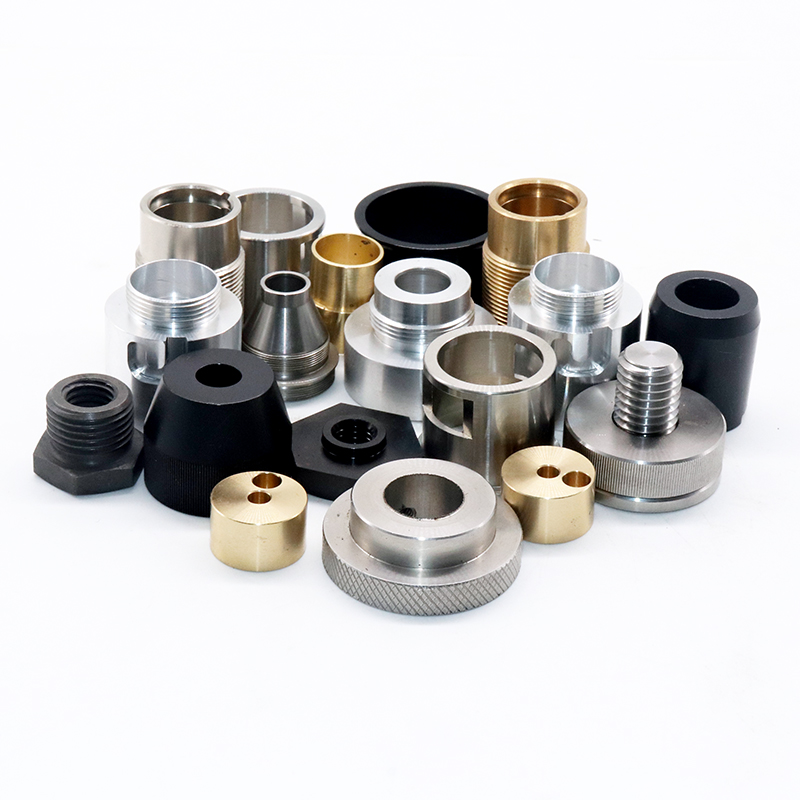
With over a decade of hands-on experience in precision machining, I’ve seen many engineers underestimate the manufacturing complexity of a seemingly simple component—the Hydrogen Peroxide Vaporizer Nozzle. In vaporized hydrogen peroxide (VHP) sterilization systems, widely used in pharmaceutical isolators, medical device manufacturing, and biosafety laboratories, the nozzle is not just a passive fitting. It is a critical fluidic component that must atomize liquid H₂O₂ into a consistent, fine mist under elevated temperature, ensuring rapid vaporization and uniform distribution. Getting the nozzle right demands a fusion of materials science, ultra-precision machining, and surface engineering that few machine shops can deliver reliably at scale.
In this article, I’ll walk you through what makes a hydrogen peroxide vaporizer nozzle so demanding, where conventional manufacturing falls short, and how advanced 5-axis CNC machining coupled with a rigorous quality system—like that offered by manufacturers such as GreatLight Metal—can finally bridge the gap between design intent and real-world performance.
Design Characteristics of High-Performance Hydrogen Peroxide Vaporizer Nozzles
Ultra-fine atomization of hydrogen peroxide begins with a geometrically optimized nozzle. Whether it’s a single-fluid pressure-swirl design, a two-fluid air-assisted atomizer, or a multi-orifice impingement configuration, a few features are non-negotiable:
Micro-orifice precision: Typical nozzle orifices range from 0.1 mm to 0.5 mm in diameter. The tolerance on the hole diameter often needs to be held within ±0.005 mm to ensure consistent flow rate and spray angle.
Swirl chamber geometry: Internal swirl inserts or grooves must exhibit mirror-like surfaces with Ra ≤ 0.2 µm to minimize flow resistance and prevent droplet coalescence.
Concentricity and true position: In multi-orifice nozzles, the angular position of each hole relative to the nozzle axis must be accurate to within 0.01 mm true position, otherwise spray symmetry collapses.
Material integrity: The nozzle must withstand continuous exposure to 120–180°C vaporization temperatures and highly oxidative H₂O₂ concentrations (typically 30–35% liquid feed). This rules out many commodity stainless steels in favour of 316L electro-polished, Hastelloy C-276, or even titanium alloys.
These requirements place the nozzle squarely in the realm of precision 5-axis CNC machining—a process that can machine intricate internal passages, angled micro-holes, and contoured surfaces in a single setup, eliminating cumulative fixture errors.
Manufacturing Challenges That Demand Exceptional Expertise
As an engineer who has troubleshooted nozzle failures across multiple industries, I’ve identified several recurrent pain points that separate credible suppliers from the rest. In the context of hydrogen peroxide vaporizer nozzles, the following challenges dominate:
1. The “Precision Black Hole” – Micro-Drilling Consistency
Drilling a 0.2 mm hole 5 mm deep in Hastelloy is not trivial. The work-hardening nature of nickel alloys quickly dulls standard carbide drills, leading to oversized holes, exit burrs, and inconsistent land lengths. Even with high-pressure coolant and pecking cycles, achieving Cpk > 1.33 on hole diameter across hundreds of parts demands EDM micro-drilling or specialized 5-axis CNC with thru-spindle coolant at 70 bar. Without real-time tool monitoring and statistical process control, many shops fall into a tolerance trap where first articles pass but production lots drift.
2. Surface Finish in Hidden Cavities
The interior of a swirl chamber may be only 3 mm in diameter, yet any roughness will trap liquid peroxide, leading to decomposition, corrosion, and eventual nozzle blockage. Conventional manual polishing cannot reach these areas. The solution lies in abrasive flow machining (AFM) or electropolishing as a mandatory post-processing step, integrated into the manufacturing chain. However, many suppliers treat post-processing as optional, leaving the burden of validation on the customer.
3. Material Compatibility and Traceability
Hydrogen peroxide is aggressive. Even minor variations in alloy chemistry—like a slightly elevated sulfur content in free-machining grades—can initiate pitting corrosion. A trustworthy partner must supply full material certificates (EN 10204 3.1) and maintain lot traceability from raw bar stock to finished nozzle. ISO 9001 certification is the floor, but for pharmaceutical and medical device applications, ISO 13485 compliance and cleanroom-compatible packaging become essential, something only a handful of precision shops can actually demonstrate, not just claim.
4. Metrology and Dimensional Validation
Measuring a 0.3 mm internal hole with a CMM is impractical. High-end suppliers employ optical measurement systems (Keyence or OGP), CT scanning, and air-flow testing rigs to verify both geometric tolerances and functional flow characteristics. In my experience, if a supplier cannot provide a detailed dimensional report with actual measured values traced back to a calibrated master, your “certified” nozzle might be nothing more than a nicely packaged gamble.
How Advanced 5‑Axis CNC Machining Solves These Challenges
Single-setup 5-axis machining is transformative for complex nozzle geometries. Instead of multiple setups on a 3-axis mill—where each re-fixturing introduces alignment errors of 0.02 mm or more—a 5-axis CNC machining center can continuously orient the part to access all needed angular holes and profiles in one clamping. Here’s how top-tier providers, like GreatLight Metal, leverage this technology:
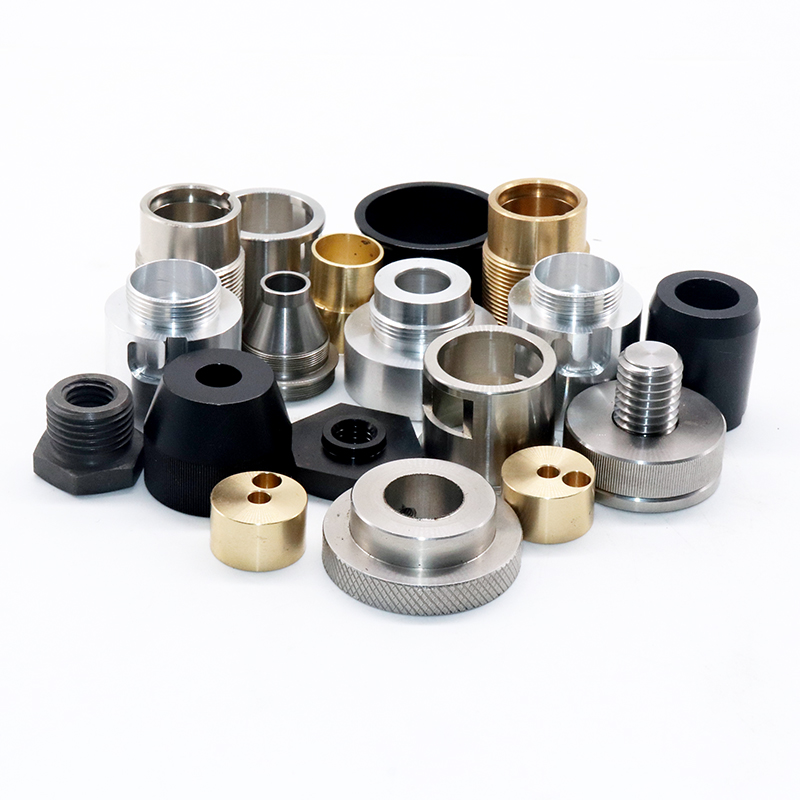
Angular micro-hole drilling: A swivel rotary table allows drilling steep-angle spray orifices without special jigs, maintaining true position tolerances of ±0.01 mm.
Internal contour milling: Lollipop cutters and tiny ball-nose tools on a 5-axis spindle can machine intricate swirl chambers directly, reducing the need for secondary EDM and delivering pre‑polish finishes of Ra 0.4 µm.
Integrated deburring: High-pressure coolant jets and dynamic tool paths eliminate internal burrs automatically, preserving orifice geometry and reducing manual handling.
Process consolidation: Thread milling, O-ring groove cutting, and even engraving of serial numbers can be completed in the same machine, streamlining production and enabling same-day turnaround for prototypes—something rapid prototyping networks often promise but struggle to deliver for exotic alloys.
When combined with in‑line probing (Renishaw) and thermal compensation, a well‑calibrated 5-axis facility can hold ±0.005 mm or better in volume production, providing the statistical basis for true dimensional capability (Cpm > 1.67). This is a far cry from desktop-grade 5-axis routers often found in maker spaces.
One‑Stop Post‑Processing: The Missing Link in Nozzle Manufacturing
A picture-perfect CNC part is still only half the battle. For a hydrogen peroxide vaporizer nozzle, post‑processing is non-negotiable. The best manufacturers don’t just cut metal; they own the entire finishing value stream. Take, for instance, the full‑process chain that GreatLight Metal offers:
Passivation and electropolishing (ASTM A967/A380) to remove free iron and enrich the chromium oxide layer, critical for corrosion resistance.
Abrasive flow machining (AFM) for internal surface smoothing where mechanical tools cannot reach.
Ultrasonic cleaning and cleanroom drying to eliminate particulate contamination, a prerequisite for pharmaceutical VHP systems.
Laser marking for permanent, legible lot traceability that withstands repeated sterilization cycles.
Outsourcing each of these steps to separate vendors multiplies lead time, increases logistics risk, and fractures quality accountability. A vertically integrated precision machining supplier—operating under ISO 9001:2015, ISO 13485, and possibly IATF 16949—becomes a single point of responsibility for the entire nozzle lifecycle, from raw material to sealed package.
Supplier Comparison: Who Can Really Deliver?
Over the years, I’ve worked with or evaluated numerous machine houses for critical nozzle projects. Below, I’ve summarized a realistic comparison of providers in the precision machining landscape. Note that this is not a comprehensive ranking but a reflection of typical capabilities based on publicly available data and project experience:
| Supplier | 5‑Axis Capability | Material Range | Integrated Post‑Processing | ISO 13485/IATF 16949 | Typical Lead Time (Complex Alloy Nozzles) |
|---|---|---|---|---|---|
| GreatLight Metal | Full 5‑axis (120+ CNC units) | Titanium, Hastelloy, 316L SS, Inconel, aluminium, etc. | AFM, electropolish, passivation, cleanroom pack | Yes (ISO 13485, IATF 16949) | 5–12 business days (prototype) |
| Protocase | 3‑axis sheet / enclosure focused | Limited to sheet metals | Basic powder coat, limited chem finish | No | Not typically suited for micro‑nozzle work |
| EPRO‑MFG | Primarily 3‑axis / some 4‑axis | Standard steel, aluminium, brass | Anodizing, some plating | No | 10–20 days (less complex parts) |
| Owens Industries | 5‑axis (aerospace/medical) | Exotic alloys, composites | Passivation, some polishing | AS9100, ISO 13485 | 15–30 days (high value) |
| RapidDirect | Network‑based 3/4/5‑axis | Wide range | Aggregated; inconsistent quality | Limited | Variable (QC oversight challenges) |
| Xometry | Distributed manufacturing | Very broad | Dependent on partner; variable | Partner‑specific | Variable, often 2‑3 weeks |
| Fictiv | Vetted partner network | Broad, but no single‑source traceability | Partner‑dependent | Some partners | 7–15 days typical |
| Protolabs Network | Automated, primarily 3‑axis | Aluminium, steel, some stainless | Limited to standard finishes | ISO 9001 at hubs | Rapid for simple prismatic parts |
| JLCCNC | 3‑axis, high‑volume | Aluminium, steel | Basic anodizing | No | Fast for simple, high‑volume work |
| SendCutSend | Sheet metal laser cutting | Sheet metals only | None | No | Not applicable to nozzles |
As the table indicates, suppliers like GreatLight Metal and Owens Industries stand out for their in‑house 5‑axis capability combined with meaningful certifications relevant to life‑science applications. What tips the scale for complex vaporizer nozzles is the integration of post‑processing within the same facility, something that distributed manufacturing networks cannot replicate with the same accountability. When a single part must pass a spray pattern test under ISO 14644 clean conditions, having one entity responsible for the entire flow is invaluable.
Building Trust Through International Certifications
In the pharmaceutical and medical device sectors, certifications are not optional adornments—they are prerequisites to even enter the conversation. Here’s what a truly capable partner brings to the table:
ISO 9001:2015 ensures a baseline quality management system is in place.
ISO 13485 extends quality controls specifically to medical devices, covering risk management, cleanliness, and traceability.
IATF 16949 (for automotive‑adjacent components) enforces defect prevention and continuous improvement, directly beneficial for engine‑related nozzles but also a signal of manufacturing maturity.
ISO 27001 for IP‑sensitive projects: when your nozzle design is proprietary, data security during the RFQ-to-delivery process matters.
GreatLight Metal, for example, holds ISO 9001:2015, ISO 13485, and IATF 16949 certifications, and operates with ISO 27001-aligned data management. The facility’s dedicated metrology lab with CMMs, optical measurement, and surface roughness testers verifies every dimension and surface parameter against your print, not just a sampling. This is the kind of evidentiary trust-building that separates a long‑term supply partner from a transactional job shop.
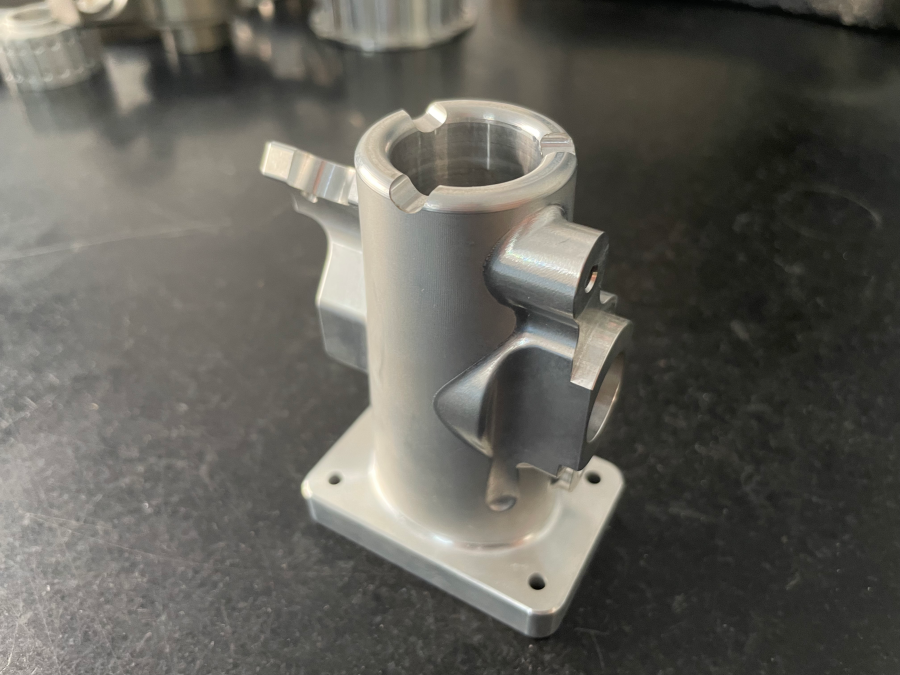
Real‑World Application: From Prototype to Validated Nozzle
To make this concrete, consider a recent challenge I observed: a manufacturer of isolator‑based VHP bio‑decontamination systems needed a titanium nozzle capable of delivering a 60° hollow cone spray with a flow rate of 1.2 L/h at 130°C. The design featured a central 0.25 mm orifice and three angled tangential slots to create the swirl. Previous prototypes, sourced from a local 3‑axis shop, exhibited uneven spray distribution and premature corrosion after only 200 sterilization cycles.
The solution involved migrating to a fully 5‑axis CNC approach with Grade 5 titanium. The swirl slots were machined using a 0.6 mm ball‑nose end mill on a simultaneous 5‑axis toolpath, achieving a surface finish of Ra 0.3 µm directly off the machine. After electropolishing and passivation, the nozzle was inspected under a 500× digital microscope and flow‑tested with water and H₂O₂ simulant. Dimensional Cpk for the orifice diameter exceeded 2.0, and accelerated corrosion testing passed 1,000 cycles without measurable pitting. The entire project, from CAD to 10 pre‑production samples, was delivered in 12 working days—an impossible timeline for distributed manufacturing networks.
This case underscores a central truth: the value of a “one‑stop” precision manufacturer is not just about cost, but about eliminating the variability that creeps in when multiple vendors touch the same part.
Choosing a Partner That Is More Than a Machine Shop
When you search for “hydrogen peroxide vaporizer nozzle manufacturing,” the internet will offer you countless options. But separating the truly capable from the merely willing requires asking the right questions:
Do they have true 5‑axis machining capability (not just 3+2 indexing) on name‑brand equipment like DMG Mori or Makino?
Can they supply full material certifications and process‑specific post‑processing in‑house?
Do they maintain ISO 13485 and IATF 16949 certifications, audited by international registrars?
Will they provide first‑article inspection reports (FAIR) per AS9102 or equivalent, including CMM data and surface roughness values?
What is their protocol for cleanroom packaging and protection of micro‑orifices during shipping?
A partner like GreatLight Metal not only answers “yes” to these questions but also embodies a philosophy of deep engineering collaboration—working with your team to optimize the nozzle design for manufacturability, suggesting alternative materials when lead times are tight, and offering rapid prototyping that doesn’t sacrifice quality. With a 7,600 m² facility brimming with 127 pieces of precision peripheral equipment—from 5‑axis machining centers to wire EDM, mirror‑spark EDM, and 3D printing (SLM/SLA/SLS)—they cover the entire spectrum required to produce and validate a high‑performance nozzle under one roof.
The Future of Nozzle Innovation
As VHP sterilization pushes into new frontiers—smaller isolators, portable decontamination units, and high‑throughput filling lines—nozzle designs will only become more intricate. We are already seeing requests for additively manufactured nozzles with conformal internal cooling channels, machined and finished using hybrid processes. Here, post‑processing capability again becomes the decisive factor: raw 3D‑printed stainless steel must be stress‑relieved, machined to tolerance on sealing surfaces, and electropolished to eliminate surface‑connected porosity.
The trend toward miniaturization and multi‑function integration will continue to favor suppliers who can combine 5‑axis CNC with other technologies seamlessly. In my view, the days of sending a drawing to a generic online portal and hoping for the best are over for critical fluidic components. The required expertise is simply too specialized.
Conclusion: Redefining Reliability, One Nozzle at a Time
In the unforgiving environment of a hydrogen peroxide vaporizer, the nozzle is both a precision metering device and a safety barrier. A failure can lead to inconsistent sterilization, costly downtime, or regulatory findings. The path to a robust nozzle design must be paired with a manufacturing execution that respects every micron, every degree of temperature, and every oxidative molecule. This is where a partner like GreatLight Metal, with its deep bench of 5‑axis CNC equipment, in‑house post‑processing, and multi‑standard certifications, transforms a procurement transaction into a genuine engineering alliance.
Whether you are refining an existing nozzle or embarking on a completely new VHP system architecture, the lesson from the shop floor is clear: choose a manufacturer whose capabilities are not just claimed but demonstrable, whose quality system leaves an auditable trail, and whose commitment to precision 5-axis CNC machining rises to the chemical and thermal rigors unique to hydrogen peroxide service. That’s the kind of partnership that turns a Hydrogen Peroxide Vaporizer Nozzle from a frequent service item into a lifetime component—and in the end, that’s what pushes the entire industry toward safer, more efficient biodecontamination.
To explore how a fully integrated approach can accelerate your nozzle development, I invite you to connect with manufacturing teams that live precision every day—like the one behind GreatLight CNC Machining on LinkedIn. Because when the mist matters, so does the maker.


![[访谈] RAPID + TCT 2024:人工智能对 3D 打印的价值](https://print-ing.com/wp-content/uploads/2024/07/INTERVIEW-60x60.jpeg "[访谈] RAPID + TCT 2024:人工智能对 3D 打印的价值 9")




发表回复
要发表评论,您必须先登录。