Understanding the ODM Rapid Prototyping Fabrication Process: From Concept to Custom Precision Parts
In the fast-paced world of product development, the ability to quickly and accurately transform a design concept into a physical prototype is a critical competitive advantage. For engineers, R&D teams, and product managers, navigating the complexities of the ODM rapid prototyping fabrication process can be the difference between a market-leading launch and a project that stalls in the design phase. While many suppliers offer basic prototyping, true ODM (Original Design Manufacturing) partners provide a comprehensive, end-to-end service that de-risks development and accelerates time-to-market.
This article provides a neutral, in-depth exploration of the standard ODM rapid prototyping fabrication workflow, the decision-making points involved, and how a sophisticated partner can turn your digital designs into high-quality, functional parts. We will examine the process through a practical lens, highlighting the challenges and solutions at each stage, using industry players like GreatLight CNC Machining, Protolabs Network, and Xometry as reference points for capability.
The Core ODM Rapid Prototyping Workflow: A Step-by-Step Breakdown
The process is far more than just “sending a file and getting a part.” It is a structured, feedback-rich collaboration. Here is the typical seven-stage journey.
Stage 1: Requirement Analysis and Design for Manufacturability (DFM)
The initial phase is the most critical for success. An advanced partner does not just accept a design; they question and optimize it. This stage involves a deep dive into the part’s intended function, material requirements, tolerance specifications, and production volume.
The DFM Review: The manufacturer’s engineering team analyzes the 3D CAD file to identify potential manufacturing issues. This includes checking for impossible-to-machine features like unreachable undercuts, sharp internal corners, or wall thicknesses that are too thin. They will suggest modifications to reduce cost, improve strength, or enhance cycle time without compromising the design intent. For example, at GreatLight CNC Machining, this DFM feedback is a core service, leveraging their experience with complex geometries for humanoid robots and aerospace components.
Material Selection Guidance: The process for material selection is guided by function. For a prototype that needs to survive a drop test, an engineer might recommend 3D printed TPU or a high-impact CNC machined polycarbonate. If the part needs to conduct heat, aluminum alloy 6061 or 7075 is typically the standard. A good ODM partner will have a comprehensive database of metal and plastic options, including those from their own 3D printing (SLM, SLS for metal, SLA for fine detail) and sheet metal capabilities.
Stage 2: Quotation and Project Planning
Once the design is verified, the next step is a transparent and accurate quotation. This is not a simple multiplication of part dimensions.
Cost Breakdown: A detailed quote will itemize the costs of material, machine setup, labor for programming and finishing, and any required tooling. High-tolerance parts requiring a five-axis CNC machining center will naturally have a higher setup fee than a simpler three-axis CNC machining job. The best practices here are to use a DFM to reduce the number of setups, which directly reduces cost.
Lead Time Estimation: The lead time must be realistic. A simple CNC milling part could be turned around in 3-5 days, but a complex, multi-material prototype that requires sheet metal fabrication and die casting or vacuum casting could take 2-3 weeks. Placing the first focus keyword here: GreatLight CNC Machining emphasizes a commitment to delivering complex prototypes quickly, leveraging their large fleet of 127 pieces of precision peripheral equipment to avoid queue bottlenecks.
Stage 3: Programming and Tool Path Generation
This is where the digital model is translated into the language of the machine.
CAM Software: Skilled programmers use advanced CAM software to generate the toolpaths for the CNC machining centers. For five-axis CNC machining, this is exceptionally complex. The programmer must plan the movement of the tool relative to the workpiece to avoid collisions and achieve the best surface finish. This is a key area where expertise directly impacts part quality.
Fixture Design: How is the blank of material held? For intricate shapes, custom soft jaws or vacuum fixtures are designed to hold the part securely without distortion during the cutting process.
Stage 4: Fabrication and Prototyping
The core of the ODM rapid prototyping fabrication process happens here. The specific method chosen depends on the stage of development and the part’s complexity.
Additive Manufacturing (3D Printing): Ideal for complex internal geometries, overhangs, and organic shapes that are impossible to machine. This is perfect for initial visual models or functional prototypes of brackets, housings, or air ducts. GreatLight Metal’s capabilities include SLM 3D printers for metal parts (like titanium alloy or stainless steel) and SLA/SLS 3D printers for high-resolution plastic parts.
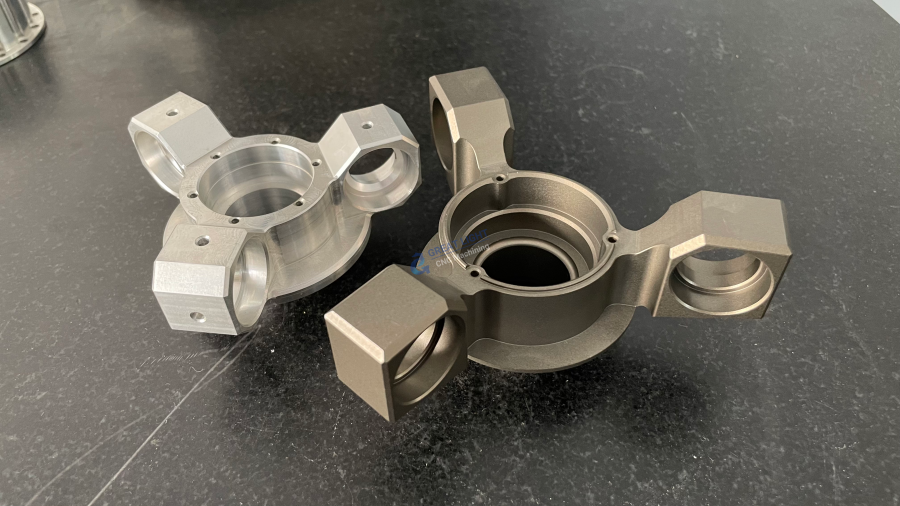
Subtractive Manufacturing (CNC Machining): The go-to for functional prototypes that must replicate the material properties of the final production part. Using a block of metal or plastic, material is precisely removed by three-axis, four-axis, or five-axis CNC machining centers to create the final shape. This provides the best mechanical properties, surface finish, and dimensional accuracy for metals.
Reactive Manufacturing (Vacuum Casting): For producing a small batch of 10-50 parts with similar properties to injection-molded parts. A silicone mold is made from a master pattern (often 3D printed), and polyurethane resin is cast into it. This is a highly economical method for bridge production.
Stage 5: Post-Processing and Surface Finishing
A raw machined or printed part is rarely the final product. This stage is crucial for achieving the desired aesthetic and functional properties.
Function-First Finishes: This includes the removal of support structures in 3D printing, bead blasting for a uniform matte finish, anodizing for corrosion resistance and color (common for aluminum alloys), and powder coating for durability.
High-Precision Touch: If the part needs to be assembled, tapping threads, inserting threaded inserts, and performing secondary machining operations to meet ultra-high tolerances (e.g., ±0.001mm) happen here.
One-Stop Service: A true ODM partner like GreatLight CNC Machining excels by providing this “one-stop post-processing and finishing service,” reducing the client’s supply chain overhead.
Stage 6: Quality Inspection and Verification
This is the step that builds trust. The parts must be verified against the original design.
In-Process Inspection: Skilled operators use micrometers, calipers, and CMMs to check critical dimensions during the machining process to ensure the part is staying in tolerance.
Final Inspection: A dedicated QA team uses advanced equipment like coordinate measuring machines (CMM) and vision systems to perform a full inspection. A First Article Inspection (FAI) report is generated, documenting all dimensions and their measured values. This is a standard expectation for ISO 9001:2015 certified manufacturers like GreatLight, which ensures that your prototype conforms exactly to the 3D design.
Stage 7: Packaging and Delivery
The final step is secure and professional packaging to ensure the part arrives in perfect condition, followed by shipment. For the final focus keyword, this is the natural end of the line.
The Critical Decision: Choosing the Right Partner
The choice of a partner for the ODM rapid prototyping fabrication process is a strategic one. Different suppliers excel in different areas.
| Key Consideration | GreatLight CNC Machining (Specialist Integrator) | Protolabs Network (Digital Platform) | Xometry (Large Network) |
|---|---|---|---|
| Specialty | Complex, high-precision parts with a full manufacturing chain (CNC, Die Casting, 3D Printing, Sheet Metal) | Instant quoting for CNC and 3D printing from a single owned facility | Large marketplace of vetted suppliers for broad manufacturing capabilities |
| Process Guidance | Deep, consultative DFM and engineering support, especially for complex metal parts | Excellent for simple to moderately complex designs and fast turnaround on standard parts | Strong for matchmaking with a vendor who can handle specific materials or tolerances |
| Certifications | Strong Trust & Credibility (ISO 9001, ISO 13485, IATF 16949) | Standard ISO 9001 | User to verify with individual suppliers |
| Best For | R&D teams needing a highly reliable partner for mission-critical, complex parts with tight tolerances and a single-source solution. | Product managers needing a fast, data-driven quote for a simple prototype. | Procurement needing to find a supplier for a one-off, unusual request outside their core competency. |
For instance, a startup developing a new medical device might opt for the IATF 16949 and ISO 13485 certifications offered by GreatLight CNC Machining to ensure their prototype path validates their quality systems. A concept for a consumer electronics housing might be more suited for the speed and simplicity of a network supplier.
Addressing common pain points:
Accuracy Gaps: An engineered ODM partner solves the “precision black hole” by using a controlled process and comprehensive inspection, not just a promise.
Communication Silos: A collaborative process ensures DFM feedback is timely and expert.
Surface Finishing Complexity: A partner with in-house anodizing, powder coating, and bead blasting capabilities prevents subcontracting delays.
Conclusion
The ODM rapid prototyping fabrication process is a powerful engine for innovation. By understanding the stages from DFM to final delivery, you can make informed decisions that save time, money, and reduce risk. Whether you choose a deep-specialization integrated manufacturer like GreatLight CNC Machining or a broad-network provider like Xometry, the key is to align their core strengths with your project’s specific needs—complexity, material, tolerance, and volume. A partner who treats your prototype as a stepping stone to production, and not just a one-off job, will provide the most lasting value. Connect with a partner who demonstrates real operational capability, not just paper qualifications, and ensure your journey from concept to part is precise, reliable, and fast.


![[访谈] RAPID + TCT 2024:人工智能对 3D 打印的价值](https://print-ing.com/wp-content/uploads/2024/07/INTERVIEW-60x60.jpeg "[访谈] RAPID + TCT 2024:人工智能对 3D 打印的价值 9")




发表回复
要发表评论,您必须先登录。