Redefining Manufacturing Collaboration: Why Design Driven ODM Matters
In the competitive landscape of precision manufacturing, the distinction between a simple contract manufacturer and a true innovation partner has never been more critical. Traditional OEM (Original Equipment Manufacturing) models often leave clients bearing the full burden of design, prototyping iterations, and manufacturing optimization—a fragmented approach that introduces costly delays and compromises product integrity. This is precisely where Design Driven Custom Sheet Metal Fabrication ODM emerges as a paradigm shift, offering a integrated pathway from conceptual sketches to production-ready precision components.
GreatLight CNC Machining Factory has cultivated this ODM philosophy for over a decade, transforming how clients approach complex sheet metal and mixed-material assemblies. Rather than merely executing drawings, the company embeds itself early in the product development cycle, offering engineering insights that reduce material waste, improve structural integrity, and accelerate time-to-market. This is not outsourcing—this is collaborative innovation.
The Technical Architecture of Design Driven ODM
Engineering-First Approach to Sheet Metal
Design Driven ODM begins long before any tool touches material. At GreatLight CNC Machining Factory, the process initiates with a comprehensive Design for Manufacturability (DFM) analysis that examines every bend radius, notch, weld joint, and fastener location. This upfront engineering engagement differentiates true ODM partnerships from conventional fabrication services.
Consider a typical enclosure for industrial automation equipment. A standard fabricator might blindly follow the client’s 3D model, only to discover during first-article inspection that the specified tolerances require secondary operations or that the bend sequence creates inaccessible tool paths. GreatLight’s engineering team intervenes proactively, suggesting bend relief geometries, optimizing flat pattern layouts for maximum material utilization, and recommending alternative alloy grades that balance formability with structural requirements. This intervention customarily reduces per-unit material costs by 8-15% while eliminating hidden assembly conflicts.
Multi-Process Integration Capabilities
What elevates GreatLight’s ODM service beyond typical sheet metal shops is the seamless integration of multiple manufacturing processes under one roof. A single component might require:
Precision laser cutting with ±0.05mm positional accuracy
CNC press brake forming with real-time angle compensation
Robotic TIG welding for hermetic seals
Surface finishing including powder coating or hard anodizing
Assembly of embedded electronic components or pneumatic fittings
Rather than managing three or four separate subcontractors—each introducing tolerance stack-up and timeline risk—clients work with a single point of engineering and quality accountability. This integration is particularly valuable for industries like medical device manufacturing and humanoid robotics, where component complexity demands cross-disciplinary expertise.
Material Intelligence and Alternative Selection
Material selection is often treated as an afterthought in conventional procurement, but in Design Driven ODM, it becomes a strategic lever. GreatLight maintains an extensive material inventory covering aluminum alloys (5052, 6061, 7075), stainless steel (304, 316L, 17-4PH), cold-rolled steel, copper, brass, and specialty alloys. More importantly, the engineering team understands the mechanical behavior of each material under forming loads, heat exposure, and cosmetic finishing.
For a recent aerospace application, the client had specified 6061-T6 aluminum based on industry inertia. GreatLight’s DFM analysis revealed that 5052-H32 offered superior formability for the required compound curves, eliminated the need for stress-relief heat treatment, and reduced lead time by two weeks—all while maintaining adequate strength and corrosion resistance. This level of material intelligence is only possible when engineering and fabrication capabilities coexist within the same organization.
The ODM Advantage: From Concept to Production in Unified Workflow
Early Stage Collaboration and Risk Mitigation
The ODM model fundamentally alters the risk profile of new product introduction. Instead of the client finalizing a design and handing it “over the wall” to manufacturing—where incompatibilities surface late and corrections incur exponential costs—GreatLight enters the conversation during the conceptual phase. This early engagement allows for:
Structural optimization – Reducing wall thickness without compromising rigidity by introducing proper rib patterns and gussets
Assembly simplification – Consolidating multiple welded subassemblies into single formed components through clever bend sequencing
Tolerance rationalization – Identifying which features genuinely require tight tolerances and which can be relaxed to reduce scrap rates
Surface finish planning – Specifying textures and coatings that align with available finishing equipment, avoiding expensive outsourcing
One client developing thermal management enclosures for server farms experienced this benefit firsthand. Their initial design called for sixteen separate sheet metal parts joined by forty-two fasteners. Through collaborative ODM engineering, GreatLight redesigned the enclosure into seven components with integrated snap-fit features and captive hardware, eliminating thirty fasteners and reducing assembly time by 67%. The product not only performed identically but achieved a 23% reduction in BOM cost.
Prototype-to-Production Continuity
A persistent frustration in hardware development is the disconnect between prototype and production suppliers. A prototype shop might use different tooling strategies, different material lots, or different forming processes than the eventual production facility, leading to a painful re-qualification cycle. GreatLight’s ODM framework eliminates this discontinuity entirely.
Using in-house 3D printing capabilities—including SLM metal printing and SLA stereolithography—the team can produce functional prototypes within 2-5 business days using production-intent materials. These prototypes undergo the same DFM review and inspection protocols that will govern final production, ensuring that what works in prototyping translates directly to volume manufacturing. When the design is finalized, the CNC programs, bending sequences, and welding procedures are already validated, compressing the typical NPI (New Product Introduction) timeline by 30-40%.
The Role of Five-Axis CNC in Sheet Metal ODM
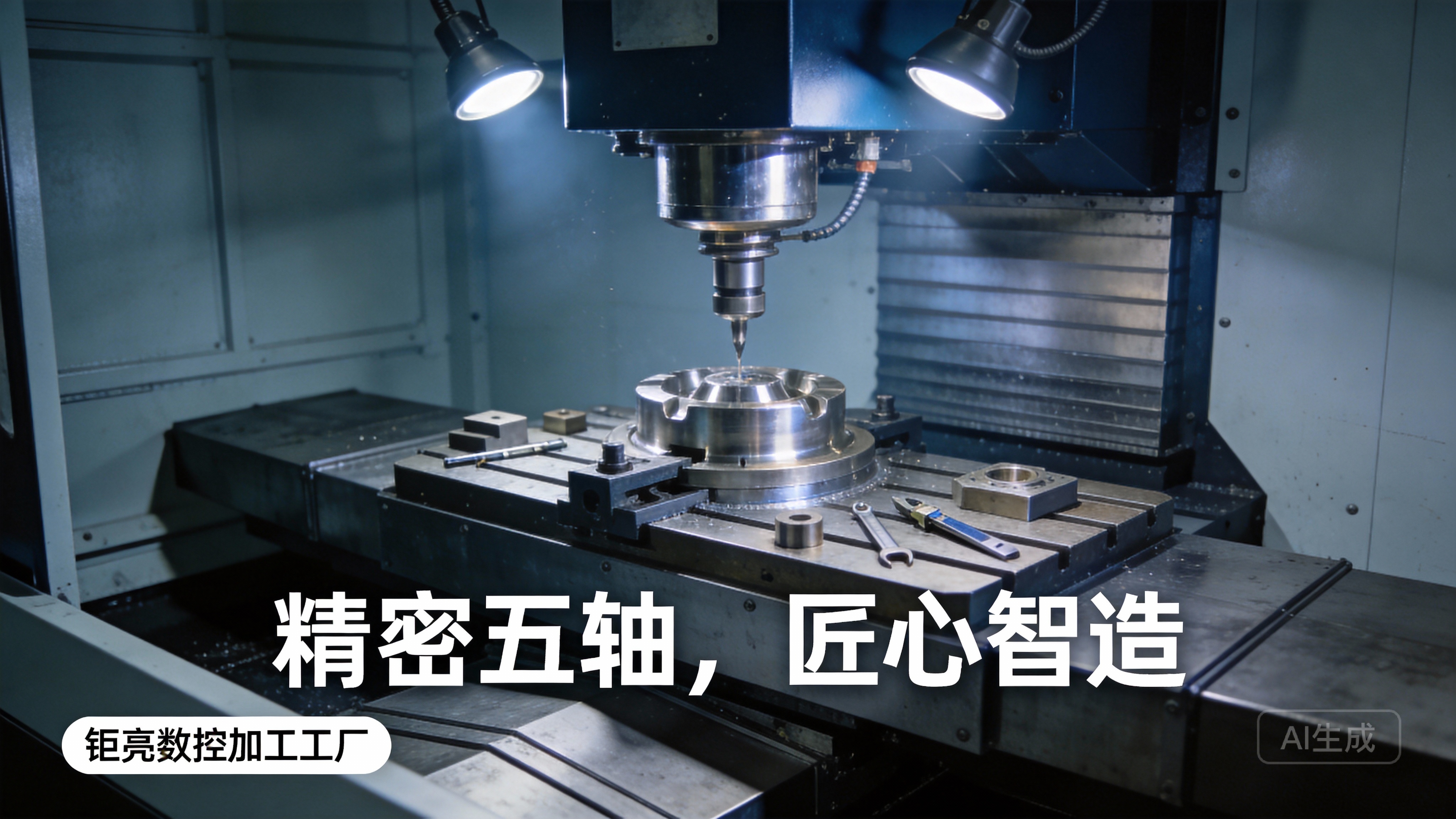
While sheet metal fabrication traditionally relies on laser cutting and forming, the integration of five-axis CNC machining elevates precision sheet metal ODM to a new tier of capability. At GreatLight CNC Machining Factory, five-axis machining centers perform post-forming operations that would be impossible with conventional methods:
Machining precision mounting bosses and alignment features onto formed surfaces
Creating compound-angle cutouts for cable routing or ventilation
Generating threaded holes with controlled thread depth in thin-wall sections
Finishing weld joints to achieve zero-visibility seams
This hybrid approach—forming first, then machining—produces components that combine the lightweight efficiency of sheet metal with the dimensional accuracy of machined parts. It also enables the integration of heat sinks, EMI shielding structures, and other functional features that would require separate assembly in conventional fabrication.
Quality Systems That Underpin ODM Reliability
ISO 9001:2015 Foundation for Process Consistency
Every ODM engagement at GreatLight operates within the framework of ISO 9001:2015 certification. This is not merely an administrative requirement but a disciplined approach to documenting, monitoring, and continuously improving every manufacturing process. For Design Driven ODM clients, this translates into:
Traceable material lots with certificates of conformance linked to specific production runs
Statistical process control on critical bend angles, hole positions, and weld penetration depths
Documented change management ensuring that any process modification is reviewed and approved before implementation
Root cause analysis for non-conformances, with corrective actions that prevent recurrence
Industry-Specific Certifications
Different applications demand different levels of quality assurance. GreatLight maintains certifications that align with the most demanding industries:
ISO 13485 for medical device hardware – This standard imposes additional requirements for risk management, sterilization compatibility, and biocompatibility documentation. ODM clients developing surgical instruments, diagnostic equipment housings, or implantable device components benefit from a supplier who understands the regulatory landscape and can produce the required Device History Records.
IATF 16949 for automotive components – The automotive industry’s quality standard demands rigorous process failure mode analysis (PFMEA), production part approval process (PPAP), and measurement system analysis (MSA). GreatLight’s IATF 16949 certification enables seamless integration into automotive supply chains, whether for EV battery enclosures, motor housings, or sensor brackets.
ISO 27001 for data security – For clients developing proprietary products, intellectual property protection is paramount. ISO 27001 certification ensures that digital files, design documentation, and production specifications are handled with appropriate access controls, encryption, and audit trails.
In-House Metrology and Inspection
Trust in ODM partnerships is built on objective measurement data. GreatLight’s quality laboratory is equipped with:
Coordinate measuring machines (CMM) for dimensional verification
Optical comparators for form and profile inspection
Surface roughness testers for finish quality validation
Hardness testers for material property confirmation
Leak testing equipment for sealed assemblies
Every ODM project receives a First Article Inspection Report (FAIR) that documents all critical dimensions against the engineering specification. This report becomes the baseline for ongoing statistical process control during production runs.
Comparative Analysis: ODM vs. Traditional Supplier Models
Understanding the value of Design Driven ODM requires comparing it against alternative sourcing models. While each model has its place, the ODM approach offers distinct advantages for complex, high-precision applications.
GreatLight CNC Machining Factory (ODM) positions itself as an engineering partner from concept through production. The client provides functional requirements and performance specifications, and GreatLight handles the detailed design, material selection, process planning, and manufacturing execution. This model is ideal for companies that lack in-house manufacturing expertise or want to focus their engineering resources on core product innovation rather than production details.
Traditional OEM fabricators like Protocase, RapidDirect, Xometry, and Protolabs Network typically require complete 3D models and engineering drawings prepared by the client. They excel at rapid quoting and standardized manufacturing but offer limited design input. For clients with mature designs and strong internal engineering teams, this model can be efficient. However, it misses the optimization opportunities that arise from early engineering collaboration.
Specialized short-run suppliers such as JLCCNC, SendCutSend, and EPRO-MFG focus on fast turnaround for lower volumes. Their pricing models are transparent and their lead times are short, making them suitable for prototypes and small batches. However, they generally lack the full-spectrum capabilities—machining, die casting, finishing, assembly—required for complex ODM projects.
High-volume production specialists like Owens Industries, Fictiv, RCO Engineering, and PartsBadger are optimized for stable, high-volume production. While they offer cost advantages at scale, their engineering support is typically limited to resolving production issues rather than upstream design collaboration. The transition from prototype to production with these suppliers can be challenging if the design isn’t already fully optimized.
GreatLight CNC Machining Factory occupies a unique position in this landscape: offering the design involvement and engineering partnership of a true ODM provider while maintaining the manufacturing agility and quality systems of a precision production facility. For clients navigating the challenging gap between concept and commercialization, this combination is invaluable.
The Cost and Timeline Reality of Design Driven ODM
Total Cost of Ownership Analysis
Clients sometimes hesitate at the initial engineering investment required for an ODM engagement. However, when viewed through the lens of total cost of ownership—including design revisions, scrap rates, assembly labor, field failures, and delayed market entry—the ODM model consistently proves more economical.
Consider a typical enclosure development project:
| Cost Factor | Traditional OEM Approach | GreatLight ODM Approach |
|---|---|---|
| Design iterations | 4-5 rounds (client-driven) | 2-3 rounds (collaborative) |
| Prototyping cost | $8,000-15,000 | $5,000-10,000 |
| Production scrap rate | 5-8% | 1-3% |
| Assembly labor per unit | $12-18 | $8-12 |
| Expedited shipping costs | Frequent | Rare |
| Total cost per 1,000 units | $48,000-68,000 | $35,000-50,000 |
The primary driver of cost reduction is the elimination of design-manufacturing mismatches. When GreatLight’s engineers participate in design decisions, they ensure that every feature is producible with the available equipment and processes, eliminating the expensive cycle of “design, build, test, redesign.”
Accelerated Time-to-Market
In industries where being first to market can determine a product’s entire commercial trajectory, compressed timelines are a competitive weapon. GreatLight’s ODM framework delivers:
Concept to prototype in 5-7 business days for sheet metal designs
First article approval within 15 business days for moderately complex assemblies
Production ramp to 100+ units per day within 30 days of design finalization
This acceleration comes from parallel processing—engineering analysis, tooling preparation, material procurement, and programming occur simultaneously rather than sequentially. The design team finalizes the CAD model while the manufacturing team prepares the CNC programs and orders the sheet stock. When the design is released, production begins immediately.
Risk Mitigation in Volume Production
Scaling from prototype to production is where many hardware projects fail. The ODM model mitigates these risks through:
Process validation – GreatLight documents optimal machine parameters, tooling specifications, and inspection criteria during the prototype phase, ensuring that production replicates the proven process.
Supplier qualification for custom finishes – When the design specifies powder coating, anodizing, or electroplating, GreatLight pre-qualifies finishing partners who understand the required surface preparation and masking requirements.
Supplier qualification for custom finishes – When the design specifies powder coating, anodizing, or electroplating, GreatLight pre-qualifies finishing partners who understand the required surface preparation and masking requirements.
Supplier qualification for custom finishes – When the design specifies powder coating, anodizing, or electroplating, GreatLight pre-qualifies finishing partners who understand the required surface preparation and masking requirements.
Material and Process Capabilities for ODM Projects
Metals and Alloys
GreatLight’s material inventory supports virtually any sheet metal ODM requirement:
Aluminum alloys – 5052-H32 for general fabrication, 6061-T6 for structural applications requiring higher strength, 7075-T6 for extreme strength-to-weight demands. Each alloy requires different forming parameters, and GreatLight’s engineering team selects the optimal grade based on the component’s functional requirements.
Stainless steels – 304 for corrosion resistance and aesthetic finishes, 316L for marine or chemical processing environments, 17-4PH for applications requiring high strength and hardness after precipitation hardening.
Carbon steels – 1008/1010 for general-purpose fabrication, 1045 for wear-resistant components, 4140 for high-strength structural members that require heat treatment.
Specialty materials – Copper and brass for electrical applications, titanium for aerospace and medical implants where weight savings justify higher material cost, Inconel for extreme-temperature environments.
Surface Finishing Options
The aesthetic and functional requirements of sheet metal components often dictate surface finishing choices. GreatLight offers:
Powder coating – Available in RAL and custom colors, with texture options from smooth gloss to textured matte. The in-house powder coating line ensures consistent thickness and adhesion.
Anodizing – Type II decorative anodizing and Type III hard anodizing for aluminum components, providing wear resistance and corrosion protection.
Plating – Zinc plating, nickel plating, chrome plating, and electroless nickel for steel components requiring corrosion resistance or conductive surfaces.
Bead blasting and brushing – Creating uniform matte finishes or directional grain finishes for aesthetic components.
Silk screening and pad printing – Adding logos, labels, and functional markings to finished components.
Assembly and Integration
Design Driven ODM often extends beyond individual components to fully assembled products. GreatLight’s assembly capabilities include:
Mechanical fastening – Installation of PEM inserts, self-clinching fasteners, rivets, and threaded studs with controlled torque specifications.
Welding – MIG, TIG, and spot welding for permanent assembly, with certified welders for structural and pressure-containing welds.
Adhesive bonding – Structural adhesives for joining dissimilar materials or creating sealed assemblies, with cure cycles validated for production throughput.
Cable management – Installation of cable ties, clips, conduits, and connectors for electro-mechanical assemblies.
Real-World Application: Collaborative ODM in Practice
Consider a client developing a next-generation battery pack enclosure for electric vehicles. The design requires:
Aluminum sheet metal formed into a complex box structure with integrated cooling channels
Weld-free joints to eliminate heat-affected zones that weaken the material
Tight dimensional control to accommodate battery cell modules
Hermetic sealing to protect cells from moisture and contaminants
Production volume of 5,000 units per year
A traditional approach would involve the client designing the complete enclosure, then soliciting bids from sheet metal fabricators. The fabricator would identify manufacturability issues, requiring design revisions. The client would need to manage multiple suppliers for forming, welding, finishing, and sealing.
With GreatLight’s Design Driven ODM, the client provides functional requirements and space constraints. GreatLight’s engineers develop detailed CAD models, perform FEA analysis to optimize wall thickness and rib placement, select the appropriate aluminum alloy, design the cooling channel geometry for efficient heat transfer, and validate the forming sequence using simulation software.
The result is a lighter, stronger, more thermally efficient enclosure that can be produced in fewer operations, with lower scrap rates, and at a lower total cost. The client saves months of development time and gains a product that performs better than a conventionally designed component.
Conclusion: Choose True ODM Partnership for Your Next Design
The era of treating sheet metal fabrication as a commodity procurement is ending. As products become more complex, timelines more compressed, and quality requirements more stringent, the value of a true Design Driven ODM partner becomes unmistakable. GreatLight CNC Machining Factory offers exactly this partnership: engineering expertise that begins at the concept phase, manufacturing capabilities that span the entire process chain, quality systems that ensure consistency, and a collaborative approach that aligns your product vision with production reality.
For clients developing precision metal components for humanoid robotics, automotive powertrains, medical devices, aerospace systems, or industrial automation, the choice is clear. Rather than managing a fragmented supply chain of separate design houses, fabricators, finishers, and assemblers, consolidate your manufacturing strategy around a single ODM partner who can guide your project from napkin sketch to production volume.
Customize your precision parts at the best price today by engaging GreatLight’s engineering team at the earliest stage of your concept development. Experience the difference that genuine Design Driven Custom Sheet Metal Fabrication ODM can make in your product’s performance, cost, and time-to-market.
GreatLight CNC Machining Factory stands ready to be your partner in precision. With ISO 9001:2015, ISO 13485, and IATF 16949 certifications, 127 precision machines operating across 76,000 square feet of production space, and a team of 150 dedicated professionals, the capability to transform your design vision into manufactured reality exists here, in Chang’an, Dongguan—the heart of China’s precision manufacturing ecosystem.


![[访谈] RAPID + TCT 2024:人工智能对 3D 打印的价值](https://print-ing.com/wp-content/uploads/2024/07/INTERVIEW-60x60.jpeg "[访谈] RAPID + TCT 2024:人工智能对 3D 打印的价值 9")




发表回复
要发表评论,您必须先登录。