
The precision turning of model train wheels is a specialized discipline that demands sub-millimeter accuracy, consistent surface finish, and absolute concentricity to ensure smooth operation, reliable electrical pickup, and authentic scale appearance. For any scale—from Z gauge to large-scale garden railways—the wheel set is the critical interface between the model and the track, and its quality directly affects running performance, noise levels, and longevity. In this article, we examine the technical challenges, material selection, and advanced machining strategies that separate world-class wheel turning from ordinary production, and how a dedicated CNC machining partner like GreatLight Metal can deliver parts that meet the highest standards of precision and reliability.
The Unique Demands of Model Train Wheel Turning
Model train wheels are not simply miniature versions of full-size railroad wheels. They must function as both load-bearing rolling elements and as electrical conductors for power and DCC (Digital Command Control) signals. This dual role imposes strict requirements:
Concentricity: Runout of more than 0.02 mm can cause wobbling, derailments, and intermittent electrical contact. Tolerances of ±0.01 mm or better are common in premium models.
Surface finish: Flanges and treads need a smooth, polished finish to reduce rolling resistance and prevent wear on nickel-silver rail. A Ra value of 0.4 μm or lower is typical.
Shoulder and back-face squareness: The wheel face where the axle presses in must be perpendicular to the bore axis within tight limits to avoid binding in the frame.
Bore accuracy: The hole for the axle is often reamed to H6 or H7 tolerance, and the axle/wheel interference fit must be carefully controlled—too loose causes slipping, too tight may crack the wheel hub.
These demands are magnified when producing batches of identical wheels, where every unit must match the master reference. Traditional manual turning on a small lathe can work for one-off prototypes, but for production runs—even as low as 50–100 sets—CNC precision turning becomes the only viable method.
Materials for Model Train Wheels
The choice of material influences machinability, wear resistance, electrical conductivity, and appearance. The table below summarizes common options and their typical applications:
| Material | Machinability | Conductivity | Wear Resistance | Typical Use Case |
|---|---|---|---|---|
| Leaded brass | Excellent | Good | Moderate | Most common; good for electrical pickup |
| Free-cutting brass (C36000) | Excellent | Good | Moderate | High-volume production; easy to plate |
| Bronze (C93200) | Good | Moderate | High | Heavy-duty or live-steam models |
| Steel (1215 or 12L14) | Good | Poor | High | Die-cast or turned cores; often plated |
| Aluminum (6061) | Very good | Good | Low | Lightweight models; requires hard coating |
| Stainless steel (303) | Fair | Poor | Very high | Corrosion-resistant, but harder to machine |
For most model train wheels, brass (especially leaded or free-cutting grades) offers the best balance of machinability, conductivity, and plating compatibility. GreatLight Metal’s experience with both ferrous and non‑ferrous turning means they can advise on material selection to match your intended finish—whether that’s nickel plating, black oxide, or a simple bare metal look.
Precision Turning Process: From Design to Finished Wheel
A typical precision turning workflow for model train wheels involves several stages, each requiring careful toolpath planning and in-process inspection:
1. Workholding and Fixturing
The biggest challenge in wheel turning is achieving true concentricity between the bore, tread, and flange. Many manufacturers use a two‑step process: first turn the OD and flange, then use a precision expanding mandrel or a soft‑jaw chuck to hold the wheel by the bore for the back‑face and shoulder operation. This eliminates any error from the initial clamping.
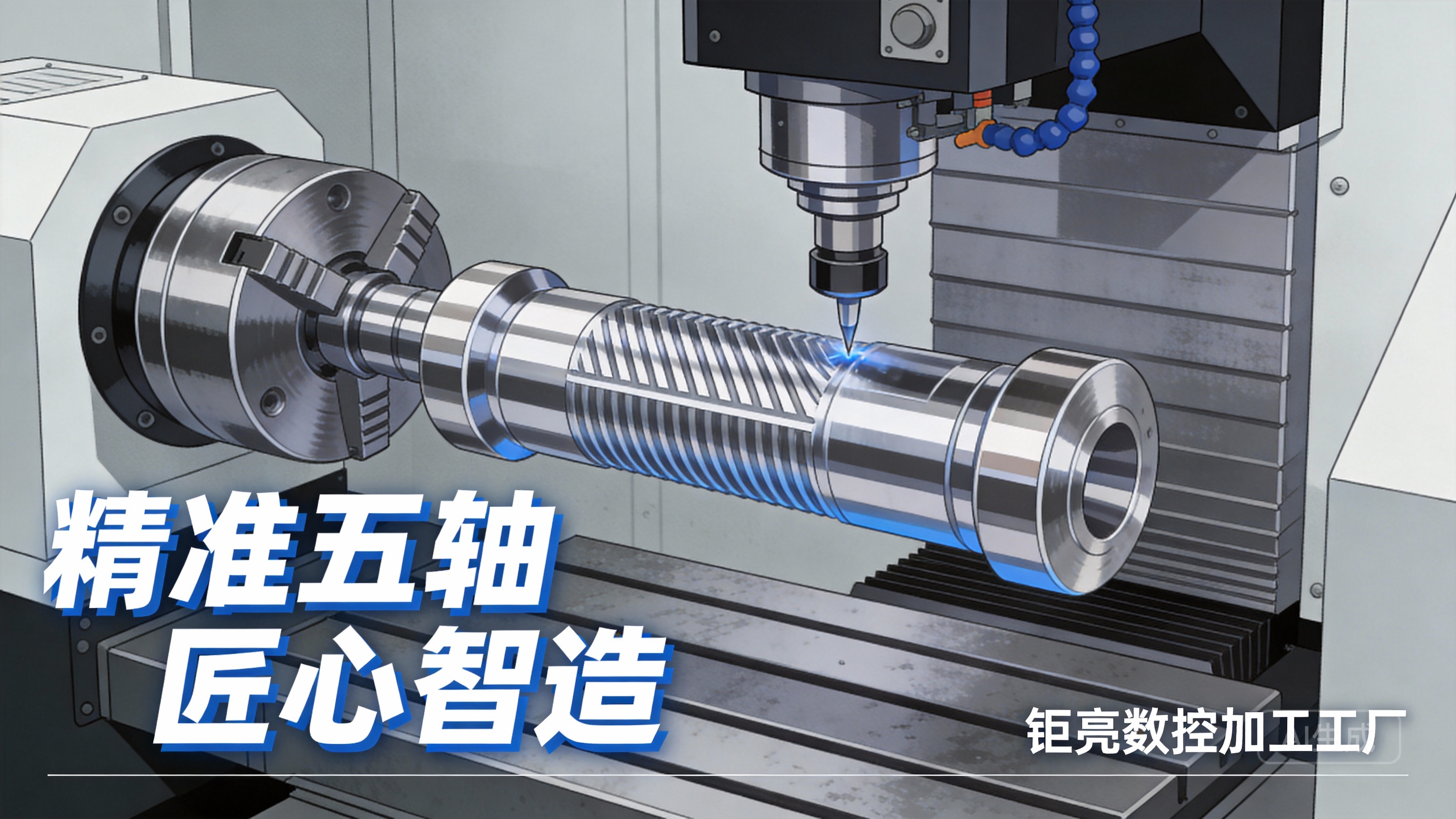
GreatLight Metal employs 5‑axis machining centers with integrated live tooling and Swiss‑type sliding head lathes for very small diameters. These machines can perform turning, drilling, and even knurling in a single setup, reducing cumulative tolerances to ±0.005 mm or better.
2. Toolpath Strategy for Fine Finishes
Achieving a mirror‑like tread finish requires:
Sharp inserts with polished edges (for brass, a diamond‑coated or CBN insert is ideal).
Light cuts (0.05–0.15 mm depth of cut) at moderate speeds (80–120 m/min for brass).
Continuous coolant flood to prevent chip adhesion and thermal distortion.
For the flange profile—often a sharp V‑groove with a radius at the tip—a form‑ground insert can be used to finish the entire profile in one pass. This eliminates multiple passes and ensures repetitive geometry across many parts.
3. In‑Process Measurement
Because model train wheels are small (often 20–50 mm diameter), manual measurement with calipers can introduce error. GreatLight Metal uses in‑machine probing (Renishaw OMP400 or similar) to measure critical diameters and runout after each operation. The data feeds back into the controller to compensate for tool wear, maintaining consistency across hundreds of parts.
4. Surface Treatment and Assembly
After turning, wheels may be:
Polished by hand or with a fine abrasive belt to remove tool marks.
Plated (nickel, chrome, or black oxide) for appearance and durability.
Pressed onto axles using a controlled‑force press to ensure perpendicularity without deformation.
GreatLight offers one‑stop post‑processing: plating, vacuum impregnation for porosity, and even assembly of wheel sets. This reduces the number of suppliers a model manufacturer must manage.
Common Pitfalls in Model Train Wheel Machining
Even with advanced CNC equipment, certain issues arise if the process is not carefully controlled:
| Pitfall | Cause | Solution |
|---|---|---|
| Excessive runout | Distortion from clamping; unbalanced cuts | Use expanding mandrel; reduce depth of cut |
| Poor surface finish | Dull tool; incorrect feed rate | Replace insert; adjust speed and feed |
| Bore oversize or tapered | Tool deflection; thermal expansion | Use reaming with a carbide reamer; flood coolant |
| Flange undercut or burr | Tool exit path too aggressive | Add a finishing pass with spring passes |
| Inconsistent press fit | Irregular bore surface or diameter variation | Use in‑process gaging; maintain < 0.002 mm bore range |
A supplier with rigorous SPC (Statistical Process Control), like GreatLight Metal (ISO 9001:2015 and IATF 16949 certified), can provide a First Article Inspection report that validates all critical dimensions before full production begins.
Why Choose a Professional CNC Machining Partner for Model Train Wheels?
Hobbyists may attempt to turn wheels on a mini‑lathe, but serious model manufacturers and collectors require:
Repeatable quality: Every wheel in a set must be identical to avoid uneven wear and electrical noise.
Scale accuracy: For historically accurate models, the flange height, tread width, and back‑to‑back distance must match prototype dimensions within 0.05 mm.
Delivery speed: Many manufacturers operate seasonal production cycles; a reliable CNC partner can turn around orders in days, not weeks.
GreatLight Metal’s 127 pieces of precision equipment, including large 5‑axis centers, produce wheels from 5 mm to 4000 mm diameter. Their engineering team has experience with thousands of turning projects, including complex profiles for racing, aerospace, and toy/hobby parts. They provide DFM feedback to simplify the turning process without sacrificing quality.
Comparing CNC Service Providers for Precision Turning
While several online platforms offer CNC turning, few specialize in the unique requirements of model train components. The table below compares GreatLight Metal with other well‑known options:
| Supplier | Specialization | Certifications | Typical Lead Time | Min. Quantity |
|---|---|---|---|---|
| GreatLight Metal | High‑precision turning, 5‑axis, one‑stop finishing | ISO 9001, IATF 16949, ISO 13485 | 3–7 days | 1 (prototype) |
| Protolabs Network | Rapid prototyping, CNC milling/turning | ISO 9001, ITAR | 1–5 days | 1 |
| Xometry | Broad capabilities, quoting engine | ISO 9001, AS9100 | 3–10 days | 1 |
| Fictiv | Quick‑turn CNC and injection molding | ISO 9001, ITAR | 3–7 days | 50 |
| SendCutSend | Laser cutting, sheet metal, small turning | None listed | 2–5 days | 1 |
GreatLight Metal’s advantage lies in dedicated technical support: they will review your wheel drawing, suggest optimal material and fixture strategies, and even modify the design to reduce cost while maintaining tolerances. This is critical when converting a hobbyist design to production grade.
Conclusion: The Art and Science of Model Train Wheel Precision Turning
Model train wheel precision turning sits at the intersection of craft and engineering. The difference between a rolling‑rough wheel and a silky‑smooth one often comes down to microns of concentricity and the right cutting conditions. By leveraging modern CNC technology, rigorous quality systems, and experienced process engineers, manufacturers can produce wheels that not only look authentic but perform flawlessly for decades.
Model train wheel precision turning is a discipline that rewards attention to detail. Whether you need a single prototype for a museum exhibit or a thousand wheels for a limited‑edition run, choosing a partner with proven expertise—like GreatLight Metal—ensures that your locomotives and rolling stock will glide through turnouts and crossings with the quiet precision that serious modelers demand. For more insights and case studies on precision turning, visit their dedicated 5‑axis CNC machining services page and explore how real manufacturing experience translates into flawless miniature parts. Connect with the team on LinkedIn to discuss your next project.


![[访谈] RAPID + TCT 2024:人工智能对 3D 打印的价值](https://print-ing.com/wp-content/uploads/2024/07/INTERVIEW-60x60.jpeg "[访谈] RAPID + TCT 2024:人工智能对 3D 打印的价值 9")




发表回复
要发表评论,您必须先登录。