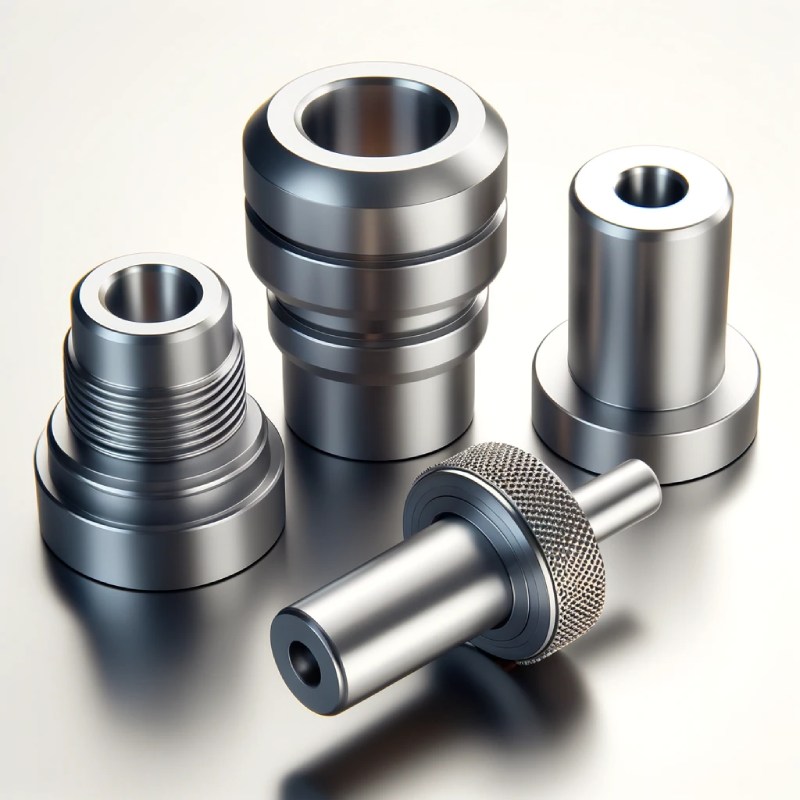
Advanced metal 3D printing solutions have evolved from experimental prototyping tools into essential production technologies that complement traditional subtractive manufacturing. For engineers and procurement specialists evaluating precision parts, understanding this convergence is no longer optional—it is a competitive necessity.
The Real Breakthrough: Beyond “Printing Metal”
Metal additive manufacturing (AM) has crossed a critical threshold. What was once confined to rapid prototyping has matured into a reliable production method for end-use components. However, the industry’s most significant advancement is not the printing process itself—it is the seamless integration of printing with precision CNC finishing.
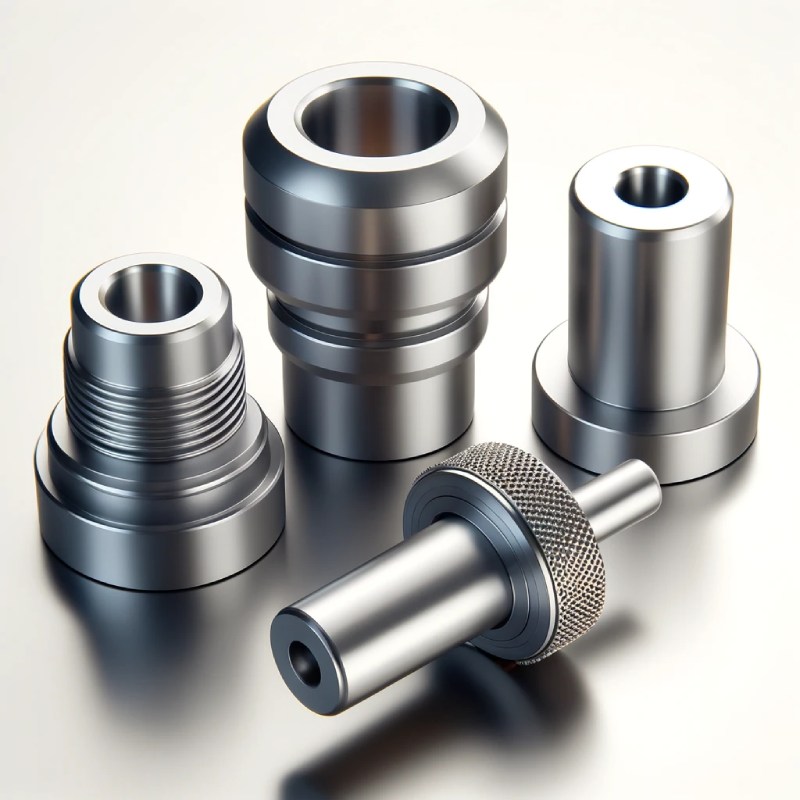
When we examine advanced metal 3D printing solutions available today, three technologies dominate the landscape:
Direct Metal Laser Sintering (DMLS) : Using a high-power laser to fuse metal powder layer by layer, achieving densities exceeding 99.9% in materials like titanium alloys, stainless steel 316L, aluminum AlSi10Mg, and Inconel 718.
Selective Laser Melting (SLM) : Similar to DMLS but fully melts the powder, producing parts with mechanical properties equivalent to wrought materials.
Electron Beam Melting (EBM) : Uses an electron beam in a vacuum environment, particularly effective for reactive materials like titanium and for larger build volumes.
The genuine value proposition emerges when these printed near-net-shape parts undergo precision CNC machining to achieve tolerances, surface finishes, and geometric features that additive manufacturing alone cannot economically deliver.
The Precision Paradox: Why Print Alone Isn’t Enough
Here lies a crucial insight that separates experienced manufacturing engineers from novices: while advanced metal 3D printing solutions excel at creating complex internal geometries, lattice structures, and weight-optimized designs, they inherently struggle with three critical requirements:
1. Dimensional Accuracy and Surface Finish
As-printed metal parts typically exhibit surface roughness values of Ra 6-12 µm, with dimensional tolerances around ±0.1-0.2 mm. For precision applications—aerospace turbine blades, medical implants, or automotive engine components—this is unacceptable. Post-print CNC machining achieves Ra 0.8 µm or better and tolerances down to ±0.005 mm.
2. Critical Interface Features
Threaded holes, precision bearing seats, sealing surfaces, and alignment dowels demand machined finishes. Additive processes cannot economically produce threaded features, and their natural surface texture is unsuitable for dynamic sealing applications.
3. Mechanical Property Optimization
While AM can produce parts with superior strength-to-weight ratios, the as-built microstructure often contains residual stresses and anisotropic properties. Strategic CNC machining, combined with appropriate heat treatment, homogenizes the material and eliminates stress concentration points at critical surfaces.
GreatLight Metal’s Integrated Approach: The Hybrid Manufacturing Reality
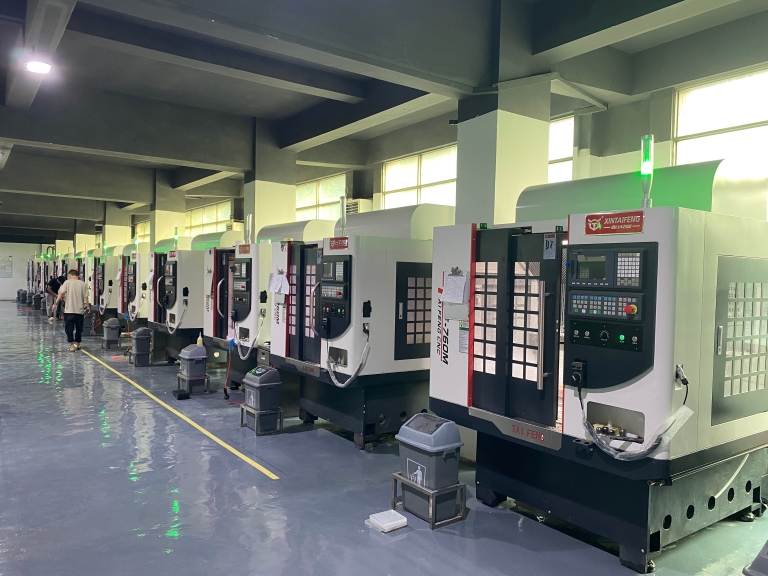
At GreatLight Metal, we have observed that the most successful applications of advanced metal 3D printing solutions are those that embrace a hybrid manufacturing philosophy. Our facility in Chang’an, Dongguan, operates three wholly-owned plants where SLM 3D printers, SLA and SLS systems coexist alongside our precision five-axis, four-axis, and three-axis CNC machining centers.
This physical integration is not coincidental—it is deliberate engineering. Consider a typical production workflow:
Additive Phase: Complex internal cooling channels, topological optimized structures, or lattice infills are printed using SLM technology, reducing material usage by 40-60% compared to machining from solid.
Thermal Treatment: Stress relief and solution annealing stabilize the printed structure.
Precision Finishing: The printed blank is transferred to a five-axis CNC machining center, where critical surfaces are machined to final tolerances. The five-axis capability allows access to complex angles that would require multiple setups with conventional three-axis machines.
Quality Verification: In-house CMM inspection and surface profilometry verify compliance with specifications.
This hybrid process produces parts that combine the design freedom of additive manufacturing with the precision and reliability of CNC machining—a combination that neither technology achieves alone.
Why the “Print and Finish” Model Wins for Complex Applications
Engineers evaluating advanced metal 3D printing solutions frequently ask: When does hybrid manufacturing justify its cost premium over traditional machining?
The answer centers on complexity. When a part possesses internal features that cannot be drilled or milled—conformal cooling channels, organic lattice structures, or multi-branch internal manifolds—additive manufacturing is the only viable production method. However, if that same part also requires precise mounting surfaces, threaded connections, or tight fits with adjacent components, post-print CNC machining becomes mandatory.
Practical Example: Aerospace Duct Component
A titanium alloy duct for an aircraft environmental control system requires:
Complex internal geometry for optimal airflow distribution
Flange mounting surfaces with flatness of 0.05 mm
O-ring grooves for sealing
Threaded holes for sensor mounting
Printing alone produces the internal geometry but cannot guarantee the flange flatness or thread quality. Machining from solid billet wastes excessive material and requires impossible tool access for internal features. The hybrid approach—print the duct body, machine the interfaces—delivers the optimal solution in terms of material efficiency, performance, and cost.
Selecting a True Hybrid Manufacturing Partner
Not all suppliers who claim to offer advanced metal 3D printing solutions possess the complete ecosystem required for production-ready parts. When evaluating potential partners, consider these criteria:
Technical Capability Checklist
| Requirement | Critical Question |
|---|---|
| Multi-technology integration | Does the supplier operate both AM and five-axis CNC in-house, or are they subcontracting one portion? |
| Material traceability | Are powders certified and traceable to raw material batches? |
| Heat treatment expertise | Can the supplier perform appropriate thermal cycles for stress relief and property optimization? |
| Metrology capability | Does in-house inspection include CMM, surface roughness, and non-destructive testing? |
| Certification depth | Are ISO 9001, AS9100 (aerospace), or ISO 13485 (medical) certifications active and audited? |
GreatLight Metal meets all these criteria, operating under ISO 9001:2015 certification with additional compliance capabilities for medical (ISO 13485) and automotive (IATF 16949) applications. Our decades of precision CNC machining experience directly inform how we prepare AM files and plan post-processing—experience that pure additive service bureaus lack.
The Cost Reality: When Hybrid Manufacturing Is Economically Superior
A common misconception is that advanced metal 3D printing solutions are universally more expensive than traditional machining. In reality, the total cost of ownership analysis often reveals surprising results.
Factors Favoring Hybrid Manufacturing:
Material Utilization: Machining titanium from solid typically wastes 80-90% of the material as chips. Printing reduces waste to 5-15%, making high-cost materials like Ti-6Al-4V or Inconel 718 significantly more economical in hybrid production.
Tooling Elimination: For low-volume production (1-100 parts), the cost of molds, fixtures, and specialized tooling is eliminated. This is particularly impactful for design iterations during development.
Reduced Assembly: Complex assemblies that previously required multiple machined components welded or bolted together can often be consolidated into a single printed part, reducing assembly labor and potential failure points.
Lead Time Compression: For complex geometries requiring long-lead forged blanks or castings, printing the near-net shape can reduce total lead time by 50-70%.
The typical break-even point where hybrid manufacturing becomes cost-competitive with CNC machining from solid is around 50-200 parts per year, depending on geometry complexity. This makes it ideal for aerospace low-rate production, medical device limited runs, and industrial automation custom components.
Future Trajectory: Where Advanced Metal Printing Is Taking Us
The evolution of advanced metal 3D printing solutions continues at a rapid pace. Several emerging trends will further blur the line between additive and subtractive manufacturing:
Multi-Material Printing
Research institutions and leading manufacturers are developing processes that deposit different metal alloys within a single build. Imagine a part with a titanium body, stainless steel wear surfaces, and copper cooling channels—all printed in a single operation, then finished on a five-axis machine.
In-Situ Monitoring and Adaptive Control
Real-time melt pool monitoring using thermal cameras and optical sensors is becoming standard on production-grade SLM systems. This enables immediate defect detection and, in advanced implementations, adaptive parameter adjustment during the build.
Larger Build Volumes and Faster Throughput
Industrial printers with build volumes exceeding 500 mm × 500 mm × 500 mm are now commercially available. Four-laser and eight-laser systems dramatically reduce build times for large parts, making hybrid manufacturing viable for larger components previously restricted to casting or forging.
Integrated Hybrid Machines
Some equipment manufacturers now offer machines that combine additive deposition with subtractive machining in a single platform. While currently limited in capability compared to separate dedicated systems, this integration trend will continue, particularly for repair and remanufacturing applications.
Making the Decision: When to Choose Hybrid Manufacturing
For engineering teams evaluating their next project, a structured decision framework helps determine whether advanced metal 3D printing solutions with CNC finishing is appropriate:
Checklist for Hybrid Manufacturing Suitability
Does the part have internal features (cooling channels, lattice structures, organic shapes) that cannot be machined?
Is the material expensive, difficult to machine, or subject to long procurement lead times?
Is the production volume between 1 and 500 parts per year?
Does the part require tight tolerances (±0.05 mm or better) on critical surfaces?
Are weight reduction or performance optimization critical design priorities?
If answering “yes” to two or more of these questions, hybrid additive and subtractive manufacturing should be seriously considered.
Conclusion: The Convergence Is Inevitable
Advanced metal 3D printing solutions have transcended their prototyping origins. They are now an integral component of the precision manufacturing ecosystem, particularly when combined with five-axis CNC machining—the Gold Standard for finishing complex geometries. The manufacturers who succeed in this new paradigm are not those who exclusively champion one technology, but those who master the orchestration of multiple processes.
GreatLight Metal’s decade-plus experience in both subtractive and additive manufacturing, supported by comprehensive ISO certifications and a 7,600-square-meter facility, positions us as a reliable partner for clients navigating this hybrid frontier. Our approach is pragmatic: select the optimal manufacturing pathway for each feature of every part, whether that means printing, machining, or—most commonly—both.
As product designs continue to push boundaries in aerospace, medical, automotive, and robotics, the ability to seamlessly integrate advanced metal 3D printing solutions with precision CNC machining will become not merely an advantage, but a prerequisite for market leadership.
For those seeking a partner who understands both worlds, who operates real production equipment rather than theoretical capabilities, and who delivers parts that meet specifications on the first batch, the choice is clear: select a manufacturer with proven hybrid expertise, comprehensive in-house capabilities, and a track record of solving the problems that matter.
The future of precision parts manufacturing belongs to those who combine the best of additive freedom with subtractive precision. It is not a competition between technologies—it is their convergence.


![[访谈] RAPID + TCT 2024:人工智能对 3D 打印的价值](https://print-ing.com/wp-content/uploads/2024/07/INTERVIEW-60x60.jpeg "[访谈] RAPID + TCT 2024:人工智能对 3D 打印的价值 9")



发表回复
要发表评论,您必须先登录。