Arcade button housing die casting is a fascinating intersection of precision engineering, durable material science, and aesthetic design. For manufacturers, hobbyists, and gaming hardware companies alike, the housing that encases a button is far more than a simple shell. It is the tactile gateway between the player and the machine. A sub-millimeter deviation in the die‑cast part can mean a sticky press, inconsistent feedback, or early mechanical wear. Achieving flawless arcade button housings at scale demands a manufacturing partner that understands not just the casting process, but the full chain of downstream machining, surface treatment, and quality assurance. In this deep dive, we will explore how advanced die casting, combined with precision CNC finishing, can transform a simple idea into a high‑end arcade component, and why choosing an integrated manufacturer like GreatLight Metal can be the deciding factor between a mediocre product and an exceptional one.
Arcade Button Housing Die Casting: Precision at the Heart of Gaming
Arcade buttons are deceptively simple devices. Yet their housing must satisfy a matrix of contradictory requirements: it must be lightweight yet impact‑resistant, cheap enough for mass production yet precise enough for tight snap fits, and visually appealing after anodizing or powder coating. Die casting — the injection of molten metal under high pressure into a reusable steel mold — is one of the few manufacturing processes that can deliver all these attributes simultaneously. When executed correctly, die casting yields near‑net‑shape parts that require minimal machining, ensuring fast cycle times and low per‑unit costs. But when executed poorly, buyers face sink marks, porosity, poor dimensional repeatability, and endless rework.
The core challenge in arcade button housing die casting lies in the intricate internal features: snap‑fit tabs, spring seats, micro‑ribs for structural stiffness, and precise bore diameters for the button plunger. These features not only determine the mechanical reliability of the button but also influence the user’s perception of quality. A study conducted by an industrial design firm revealed that the “return force” consistency of an arcade button — directly influenced by the straightness of the plunger bore and the parallelism of the spring seat — was the number‑one factor in user satisfaction for competitive gamers. This is where die casting must be complemented by strategic secondary machining.
Why Die Casting Is the Ideal Starting Point
For metal arcade button housings, the most common materials are zinc alloys (such as Zamak 3 or Zamak 5) and aluminum alloys (A380 is a frequent choice). Both families offer excellent fluidity, allowing the molten metal to fill thin walls and complex cavities. Zinc, in particular, can be cast with wall thicknesses as low as 0.5 mm, much thinner than typical aluminum thresholds, which makes it attractive for button housings where clearance is tight. However, zinc alloys are denser, which might be a disadvantage for portable gaming devices. Aluminum alloys provide a better strength‑to‑weight ratio and superior corrosion resistance, but they require higher casting temperatures and more robust tooling.
The die casting process itself offers several inherent benefits for arcade components:
High production speed: A single die‑casting machine can produce hundreds of housings per hour, dramatically lowering unit costs in volumes above 5,000 pieces.
Excellent surface finish: As‑cast zinc parts can achieve a surface roughness of Ra 1.6 µm or better, reducing the need for subsequent polishing before plating or painting.
Complex geometry capability: Undercuts can be handled by side‑cores or collapsible cores, enabling the snap‑fit features that make assembly tool‑less.
Near‑net‑shape accuracy: Tolerances of ±0.05 mm are achievable in well‑maintained tooling, meaning that critical bores and seating planes can often be used as-cast.
However, die casting is not a silver bullet. The very characteristics that make it fast and cost‑effective also introduce a set of technical challenges that must be proactively managed.
Overcoming Common Die Casting Challenges in Arcade Components
In an ideal world, every die‑cast arcade housing would come out of the mold dimensionally perfect and free of internal defects. In the real world, process variation and design constraints create imperfections that can undermine the final product. The most pervasive issues are:
Porosity and gas entrapment: The rapid injection of metal creates turbulence that can trap air or vaporized lubricant within the part. In a button housing, a pore near the snap‑fit tab can cause catastrophic fracture under repeated use. Effective venting of the mold, proper runner design, and vacuum assistance are essential to minimize porosity. Even then, some internal voids are inevitable in die casting, which is why design engineers often specify that critical areas be machined to remove the outer skin and any near‑surface porosity.
Dimensional drift over a run: As the die heats up and the cooling system stabilizes, the part dimensions can shift slightly. For a run of 50,000 housings, the thousandth part may differ from the first by 0.03–0.05 mm. That may seem negligible, but when the plunger bore is designed for a clearance of only 0.02 mm per side, such drift can cause intermittent binding. Statistical process control (SPC) and in‑process gauging are vital.
Draft angles and undercuts: Button housings often require near‑zero draft on the interior bore to keep the button centered. This conflicts with die‑casting’s need for draft to release the part. The solution is to cast the part with a slight draft and then machine the bore to final size using a boring bar or a reamer in a CNC machining center.
Surface defects: Flash, parting line mismatch, and cold shuts (where two flow fronts fail to fuse) are common. While flash can be trimmed, cold shuts are structural defects that require careful mold temperature control and gate placement to avoid.
Addressing these challenges demands more than just a die‑casting machine. It requires an ecosystem of design for manufacturability (DFM) feedback, process simulation, and — most critically — precision secondary machining that transforms a raw casting into a high‑precision component.
Why Post-Machining Makes the Difference
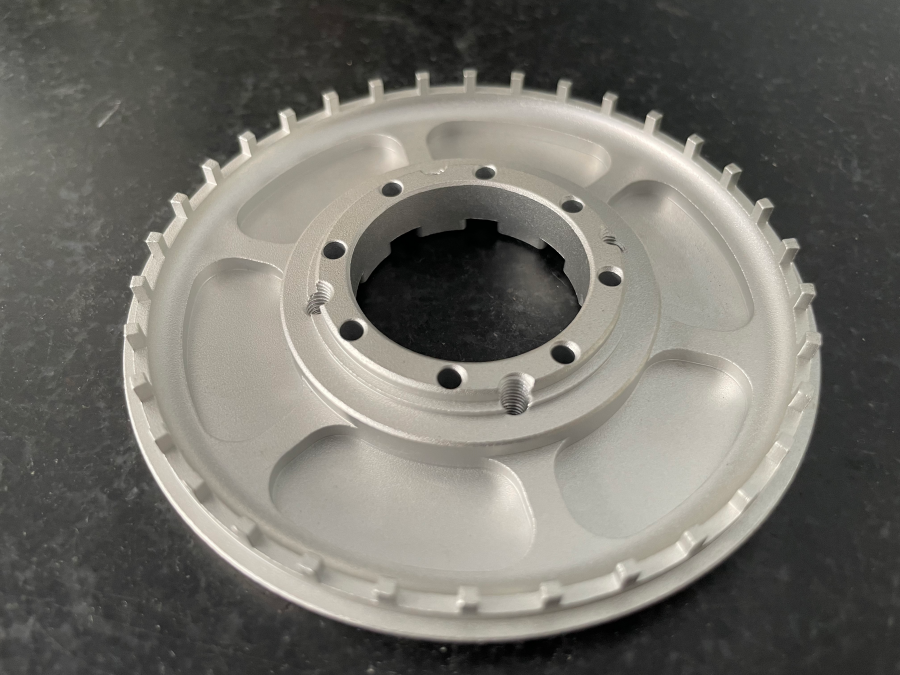
It is rare that a complex die‑cast part is ready for immediate use without any post‑processing. For arcade button housings, secondary CNC machining is the lever that elevates the part from “good enough” to “great.” The most critical features — the plunger bore, the spring seat, the snap‑fit pad surfaces, and sometimes even the thread for the button nut — are often machined to achieve the tight tolerances and squareness necessary for smooth, consistent button travel.
This is where precision 5-axis CNC machining enters the picture. precision 5-axis CNC machining{:target=”_blank”} allows a single setup to reach five faces of the housing, including undercuts and angled features that would be impossible to machine on a 3‑axis mill without multiple fixturings. By machining the bore, counterbore, and snap features in one clamping, you eliminate the stacked tolerances that arise from repositioning the part. In the context of a zinc die‑cast arcade housing, using a 5‑axis machining center can hold the bore diameter to within ±0.005 mm while ensuring perpedicularity to the mounting face within 0.01 mm. Such precision guarantees that the button does not wobble, even after millions of actuations.
The machining step also addresses surface porosity. The as‑cast surface often contains a thin skin of fine pores invisible to the naked eye. Light machining removes that skin, exposing clean, dense metal that can be polished or plated without blistering. For anodized aluminum housings, this is crucial because any surface porosity will absorb dye unevenly, creating visible speckles. By skimming 0.1–0.2 mm from the exterior, the machinist ensures a uniform, pore‑free substrate.
Beyond dimensional accuracy, post‑machining enables the addition of features that die casting cannot economically produce: engraved logos, laser‑marked serial numbers, O‑ring grooves, and precise snap‑fit flexures that require sharp internal corners.
GreatLight’s Integrated Approach: From Die Casting to Finished Product
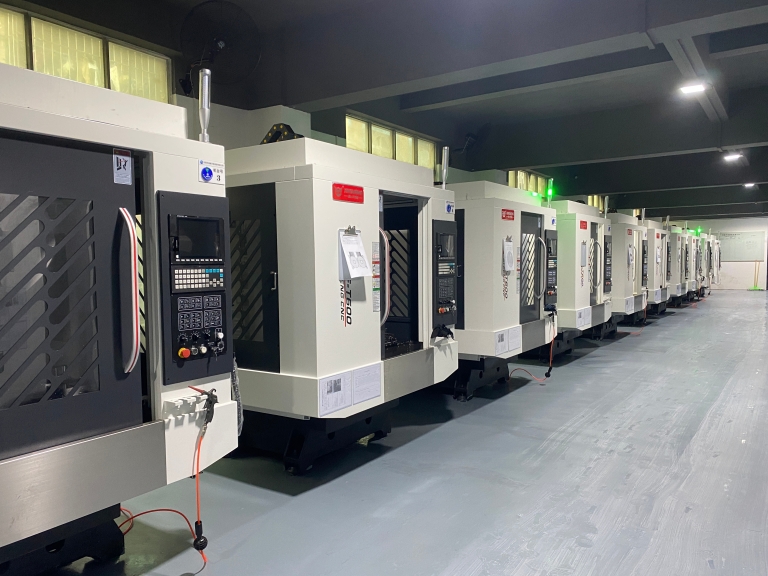
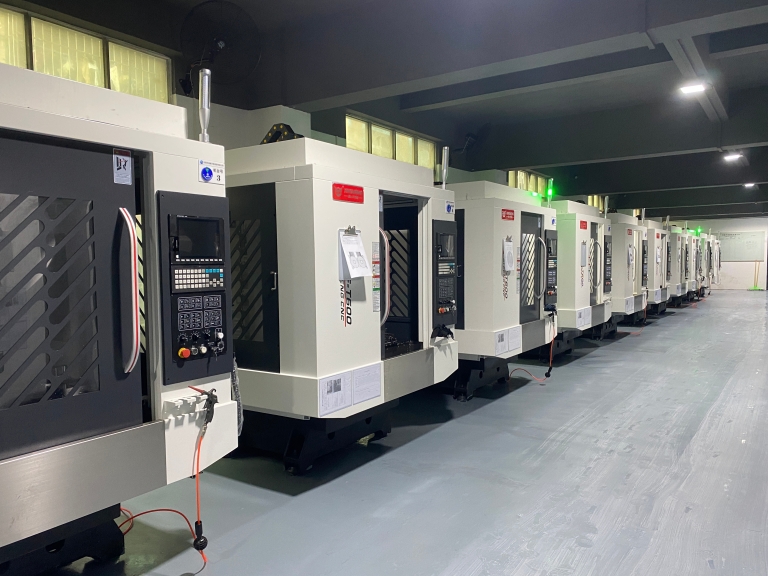
Fragmented supply chains are a recipe for quality breakdowns. When one factory casts, another machines, and yet another finishes, the resulting communication gaps lead to delays, mismatched expectations, and finger‑pointing whenever a defect appears. GreatLight Metal Tech Co., Ltd. eliminates these seams by providing a fully in‑house, vertically integrated manufacturing system. Their 76,000 sq. ft. facility in Dongguan houses die‑casting presses, 5‑axis CNC machining centers, turning centers, wire EDM, grinding machines, and advanced surface finishing lines — all under one roof.
For arcade button housing projects, this holistic setup brings tangible benefits:
Concurrent engineering: The die‑casting team and the CNC machining team collaborate from the DFM stage. They jointly decide which features will be cast and which will be machined, optimizing for cost, cycle time, and quality. For example, they might decide to cast the outer contour net‑shape but leave the bore undersized by 0.5 mm for finish boring.
Consistent tooling accuracy: GreatLight’s in‑house mold workshop can fabricate and maintain the die‑casting dies on the same CAD data used for CNC programming. This ensures the cast blank fits perfectly in the machining fixture, minimizing setup time and maximizing repeatability.
Streamlined surface finishing: After machining, the housings can be immediately sent for vibratory deburring, polishing, anodizing (for aluminum), electroplating (for zinc), or powder coating. Because the process chain is contiguous, there is no risk of parts being contaminated by long storage periods or inconsistent handling between outsourced vendors.
Integerated inspection: With ISO 9001:2015 certification and a climate‑controlled quality lab equipped with CMMs, vision systems, and surface roughness testers, GreatLight inspects parts at every stage — cast, machined, and finished — creating a complete digital twin of the manufacturing record for traceability.
Many rapid prototyping platforms can quote a die‑cast part, but they often rely on a fragmented network of small workshops. GreatLight’s ownership of the entire value chain allows them to assume total responsibility for quality, something that global clients find indispensable when scaling from prototype to mass production.
Navigating Pain Points in the CNC Machining and Die Casting Supply Chain
The precision manufacturing industry is rife with hidden pitfalls that can derail even the most well‑planned arcade button housing project. Understanding these pain points — and how a supplier addresses them — is essential for procurement professionals and design engineers.
Pain Point 1: The “Precision Black Hole” — Some suppliers advertise accuracies of ±0.001 mm on their websites, but in practice, their equipment is aged and poorly maintained. When the die‑cast blank distorts slightly after machining due to built‑in stresses, the tolerance goes out the window. GreatLight combats this with a large fleet of modern, well‑calibrated 5‑axis machines and a systematic program of machine capability studies (Cpk analysis). They measure key features on the first 30 parts of every batch and adjust offsets in real time, ensuring process stability.
Pain Point 2: Lack of Design Collaboration — Many job shops merely accept a STEP file and produce it as-is, never questioning features that are unnecessarily difficult or expensive. A good manufacturing partner should suggest design tweaks: for instance, recommending a draft angle increase of 0.5° on a snap feature to eliminate sticking, or proposing a two‑stage gate design to reduce flow marks. GreatLight’s application engineers have decades of cumulative experience and routinely provide such feedback.
Pain Point 3: Inconsistent Surface Treatment — When an outside plating vendor uses a different pre‑treatment chemistry or process temperature, the final color and gloss can shift unpredictably. In‑house finishing lines, such as those at GreatLight, standardize every parameter, and the same personnel who machined the part oversee the finishing. The result is batch‑to‑batch consistency that arcade enthusiasts will notice.
Pain Point 4: Communication Barriers — Language differences, time zone gaps, and lack of transparency can cause delays. GreatLight assigns bilingual project managers to each account, uses cloud‑based real‑time reporting, and encourages weekly video calls to review progress.
Pain Point 5: Intellectual Property Risks — The arcade hardware niche is fiercely competitive, with designs often being a company’s crown jewel. GreatLight adheres to ISO 27001 data security standards for sensitive IP. All drawings are stored in encrypted vaults with strict access controls, and the company routinely signs comprehensive NDAs.
Pain Point 6: Post‑Sales Incoherence — A supplier that goes silent after the invoice is paid leaves the client in the lurch if a quality issue emerges later. GreatLight offers a comprehensive warranty: free rework for any quality problem, and a full refund if rework still fails to meet specifications. This policy, backed by an established corporate reputation, provides peace of mind.
Pain Point 7: Unpredictable Scaling — A workshop capable of making 100 units may stumble when asked to produce 10,000. With 127 pieces of precision peripheral equipment and three wholly‑owned manufacturing plants, GreatLight has the capacity to scale production seamlessly, avoiding the bottlenecks that plague smaller shops.
Material Considerations for Arcade Button Housings
The choice between zinc and aluminum for die‑casting arcade buttons is not always straightforward; it depends on the intended feel, environment, and post‑processing requirements.
Zinc Alloys (Zamak 3, 5): Offer superb fluidity and lower casting temperatures (~400°C), which extends die life and reduces energy costs. The high density (6.6 g/cm³) imparts a solid, premium heft that many arcade enthusiasts prefer — the button feels substantial under the finger. Zinc also plates beautifully: a chrome or nickel electroplated zinc housing looks indistinguishable from a solid metal part. However, zinc is susceptible to corrosion in humid or salty environments unless properly protected. GreatLight’s in‑house electroplating line applies a uniform copper‑nickel‑chrome layer that reliably passes 96‑hour salt spray tests.
Aluminum Alloys (A380, AlSi10MnMg): Lighter (2.7 g/cm³) and with excellent thermal conductivity, aluminum is preferred for high‑end gaming peripherals where weight reduction matters. It can be anodized in a rainbow of colors — a major aesthetic advantage. Anodizing also hardens the surface, making it scratch‑resistant. However, aluminum requires higher casting temperatures (~680°C), which increases thermal fatigue on the die. GreatLight’s toolroom maintains separate high‑temperature dies for aluminum, with optimized cooling channels that sustain die life beyond 100,000 shots. For extreme lightweighting, GreatLight also offers metal 3D printing (SLM) for initial prototypes, allowing designers to test feel and fit before committing to expensive die‑casting tooling.
The Surface Finishing Spectrum
Surface finishing is where the button’s personality comes alive. Common options include:
Electroplating (zinc): Nickel, chrome, black nickel, gold — these finishes deliver a mirror shine and a durable, fingerprint‑resistant surface.
Anodizing (aluminum): Type II anodizing adds a colored oxide layer (clear, black, red, blue, etc.) while Type III (hard anodize) creates a thick, wear‑resistant coating for buttons that will see millions of presses.
Powder coating: Ideal for a matte, soft‑touch feel. Can be applied in custom RAL colors and is chip‑resistant.
Physical Vapor Deposition (PVD): Ultra‑thin, high‑hardness coatings (TiN, CrN) that can produce a range of metallic colors without adding dimensional thickness — perfect for preserving snap‑fit tolerances.
GreatLight’s in‑house finishing capabilities allow clients to specify any combination and receive finished parts without the risks of shipping semi‑finished goods to a third party. The company’s surface engineering team can even develop custom finishes for unique branding requirements.
A Real-World Project Walkthrough
To illustrate the workflow, consider a client who approached GreatLight with a design for a limited‑edition arcade button housing intended for a retro console restoration kit. The housing required:
Material: Zinc alloy ZL3 (Zamak 3).
Critical features: An 8.00 mm bore with +0.01/−0.00 mm tolerance; a snap‑fit comb with five flexible tabs; a recessed logo on the top face.
Finishing: Bright nickel electroplating with a mirror polish.
Volume: 5,000 pieces initially, with a potential ramp to 50,000.
The initial die‑casting tool was simulated using MAGMA software to optimize gate location and minimize gas porosity at the tab roots. The die was built with conformal cooling channels to reduce cycle time to 18 seconds. The as‑cast parts exhibited excellent surface quality but the bore was intentionally undersized at 7.80 mm. The snap‑fit tabs showed minimal flash.
The blanks were then loaded into a 5‑axis CNC machining center (a DMG MORI DMU 50) where the bore was finish‑bored to 8.00 mm and the top face was skimmed 0.15 mm to create a perfectly flat sealing surface and to engrave the logo via micro‑milling. The tabs were trimmed using a 1 mm end mill to remove the natural cast radius, ensuring a crisp snap engagement.
After machining, parts were vibratory deburred with ceramic media, water‑rinsed, and then transferred to the in‑house plating line. A copper strike layer was applied, followed by semi‑bright nickel, bright nickel, and finally a chromium flash. Each rack underwent a 24‑hour humidity test to detect any blistering. Final inspection on a CMM confirmed that all bores were within tolerance.
The client received fully finished, individually bagged parts in six weeks from design freeze — a timeline that would have been impossible if the die casting, machining, and plating had been handled by separate suppliers in different regions.
Comparing the Landscape of Suppliers
The custom manufacturing market is crowded with platforms promising quick quotes and fast delivery. Companies like Xometry, RapidDirect, Fictiv, and Protolabs Network have built extensive online ecosystems that aggregate demand across thousands of small- to medium‑sized job shops. While these platforms offer convenience, they typically act as intermediaries, leaving the client removed from the actual manufacturer. This can lead to:
Loss of DFM feedback (the platform’s algorithm may not capture nuanced trade‑offs).
Inconsistent quality between different batches sourced from different shops.
Limited post‑processing integration (most rely on third‑party vendors for finishing).
Uncertainty about IP security when files are distributed to an unknown pool of bidders.
In contrast, specialized manufacturers like GreatLight Metal (GreatLight CNC Machining) operate as direct, fully‑integrated sources. They bring the die‑casting mold maker, the CNC machinist, and the finishing chemist into the same project room. For arcade button housings — where cosmetic perfection and tight mechanical fits are non‑negotiable — the single‑source model often yields superior results. Other capable shops such as Owens Industries in the United States or EPRO‑MFG in China offer comparable depth in high‑precision machining, but few combine the breadth of in‑house die casting, 5‑axis CNC, and surface treatment under one roof with the same level of capacity and certification as GreatLight.
When vetting suppliers, ask not only about their machine list but about their process control. Do they perform in‑process gage R&R studies? Can they supply Cpk data over a run? Do they have dedicated finishing lines? These questions separate the true partners from the brokers. GreatLight’s ISO 9001, IATF 16949, and ISO 13485 certifications demonstrate that their quality systems are audited and robust, reducing the burden on the client’s own quality audits.
Conclusion: Bringing Your Arcade Buttons to Life with Confidence
Arcade button housing die casting is a microcosm of modern precision manufacturing. It demands expertise in mold design, metallurgy, CNC machining, and surface finishing — all orchestrated with tight tolerances and aesthetic considerations. By selecting a manufacturing partner that controls the entire process chain, you eliminate the variables that lead to disappointment: dimensional drift, porosity‑induced rejects, inconsistent plating, and endless communication loops.
GreatLight CNC Machining Factory has built its reputation on delivering exactly that level of integration and reliability. With over a decade of experience, advanced 5‑axis machining cells, in‑house die‑casting and finishing lines, and a rigorous quality framework, they stand ready to turn your arcade button housing concept into a production reality. For your next project, whether you need a thousand zinc housings with a mirror chrome finish or a hundred aluminum prototypes with custom anodizing, consider a partner that treats your components with the same care you would. That is the difference between a commodity supplier and a true precision manufacturing ally.
For more insights into our capabilities and to see how we’ve helped clients innovate across industries, connect with us on precision manufacturing{:target=”_blank”} discussions and updates.


![[访谈] RAPID + TCT 2024:人工智能对 3D 打印的价值](https://print-ing.com/wp-content/uploads/2024/07/INTERVIEW-60x60.jpeg "[访谈] RAPID + TCT 2024:人工智能对 3D 打印的价值 9")




发表回复
要发表评论,您必须先登录。