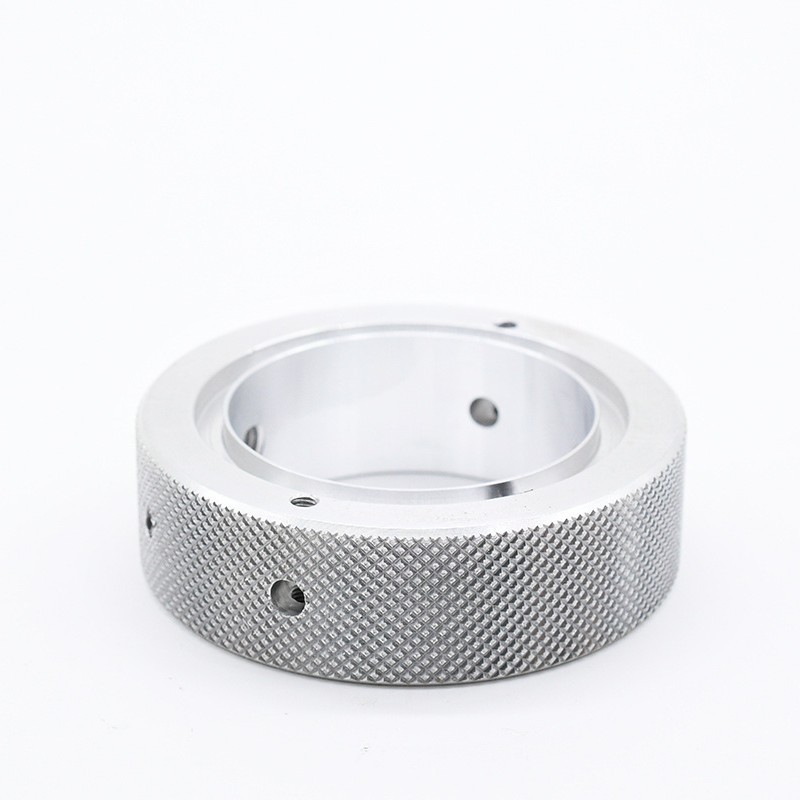
In the modern race to bring sophisticated hardware to market, the concept of Design Driven Bulk CNC Machining ODM has emerged as a transformative strategy, reshaping how innovators scale from concept to volume production with both speed and precision. As product lifecycles compress and geometries become more intricate, the ability to trust a manufacturing partner not just with execution, but with the engineering refinement of a design, separates market leaders from the rest. This article explores how this model works, what pain points it solves, and why choosing the right ODM partner can make the critical difference between a flawless launch and a costly delay.
Design Driven Bulk CNC Machining ODM: Redefining Manufacturing Partnerships
The term “ODM” (Original Design Manufacturer) often brings to mind off-the-shelf products that are rebranded. However, in the context of precision CNC machining, Design Driven Bulk CNC Machining ODM means something far more collaborative and technically demanding. It describes a partnership where the customer brings a core design—a validated CAD model—and the manufacturing partner takes full ownership of the industrialization process: design for manufacturability (DFM) optimization, process planning, tooling development, quality control frameworks, and finally, high-volume production of precision metal or plastic parts. This goes beyond traditional contract manufacturing (OEM), where the supplier merely machines to a fixed drawing; here, the ODM provider actively contributes engineering insight to make the design mass-producible without compromising its functional intent.
This approach addresses a fundamental disconnect in the industry. Many brilliant designs fail not because of their concept, but because they cannot be economically and reliably produced at scale. Tolerances that are achievable in a five-piece prototype run often collapse under the demands of a 10,000-unit order. A true ODM partner bridges that gap by embedding production knowledge into the design phase, ensuring that the transition from digital model to physical part is seamless, repeatable, and cost-effective.
Why Traditional Outsourcing Falls Short in Precision Bulk Machining
The shift toward design-driven ODM is a direct response to a suite of persistent pain points that plague conventional machining outsourcing. Understanding these pain points helps illuminate why a more integrated model is necessary.
| Pain Point | Manifestation in Conventional Outsourcing | How ODM Solves It |
|---|---|---|
| Precision Black Hole | Suppliers claim ±0.001mm capability, yet bulk deliveries show inconsistent tolerances due to aging machines, poor process control, or lack of in-house metrology. | ODM partner uses advanced equipment, rigorous process validation, and in-line inspection to maintain target Cpk values during entire production runs. |
| DFM Blindness | Designers receive little to no feedback until after tooling is made or first articles rejected. Iterations are slow, expensive, and cause delays. | Proactive DFM analysis before any metal is cut identifies undercuts, wall thickness issues, or impossible tolerances, optimizing the design for the chosen process chain. |
| Scale-Up Trauma | A prototype machined on a high-end 5-axis center in a R&D lab cannot be directly replicated on a production-oriented cell; toolpath strategies, fixturing, and cycle times create completely new variables. | ODM plans the entire production value stream from day one, designing fixtures and process flows that scale linearly with volume, not exponentially with complexity. |
| Supply Chain Fragmentation | One vendor machines, another does surface treatment, a third handles assembly—communication gaps lead to quality escapes and finger-pointing. | A vertically integrated ODM provider with in-house finishing, assembly, and testing delivers fully finished parts, cutting lead times and eliminating multi-vendor coordination. |
| Data and IP Insecurity | Designs sent to multiple shops increase exposure risk; lack of structured data handling can jeopardize proprietary innovations. | An ODM governed by ISO 27001 standards ensures digital assets are protected with strict access controls and secure file transfer, critical for sensitive projects. |
These frustrations are not hypothetical. Procurement engineers and R&D teams worldwide repeatedly encounter suppliers who overpromise and underdeliver, missing the deep engineering bench strength needed to handle complex designs. The answer lies in selecting a partner whose entire operational philosophy is built around closing these gaps.
Meeting the Challenge: GreatLight’s Integrated ODM Infrastructure
When evaluating a partner for design-driven bulk CNC machining ODM, the hardware capabilities and certifications must be scrutinized. GreatLight Metal Tech Co., LTD. (often referred to as GreatLight CNC Machining) has, since 2011, constructed a manufacturing ecosystem explicitly purposed for this mission. With a 76,000 sq. ft. facility in Dongguan—China’s renowned Hardware and Mould Capital—and a dedicated team of over 120 professionals, the company has systematically assembled the technical bandwidth to support projects from 1 to 10,000+ parts. Its infrastructure is anchored on three critical pillars.
1. A Formidable Array of Precision Equipment
At the heart of any ODM capability is the machine fleet. GreatLight operates a comprehensive mix of high-end CNC assets including brand-name 5-axis machining centers (Dema, Beijing Jingdiao), multiple 4-axis and 3-axis vertical machining centers, mill-turn centers, Swiss-type lathes, wire EDM, and mirror-spark EDM. This cluster of precision 5-axis CNC machining services [int.link] ensures that complex, freeform geometries—think turbine blades, orthopedic implants, or fluid handling manifolds—can be machined in minimal setups, preserving geometric accuracy and slashing lead time. A maximum part size of 4000 mm and a certified accuracy down to ±0.001 mm / 0.001 inch provide the flex to serve both miniature medical instruments and large automotive structural components.
But equipment alone is not enough. The real value emerges from how these machines are programmed, tooled, and orchestrated for volume. GreatLight’s engineering team crafts dedicated fixturing and optimized toolpaths that unlock consistency across thousands of cycles, something a job shop running one-off prototypes cannot replicate.
2. Full-Process Chain Control Under One Roof
The fragmented supply chain is the enemy of quality and speed. GreatLight eliminates this by housing an exceptionally broad range of complementary processes inside its own walls:
Precision CNC machining (3/4/5-axis milling and turning)
Die casting mold development and metal die casting for high-volume aluminum and zinc parts
Sheet metal fabrication (laser cutting, bending, welding)
Rapid prototyping via 3D printing (SLM for metal, SLA and SLS for plastic, enabling functional prototypes in days)
Vacuum casting for small series of high-detail polyurethane parts
In-house surface finishing: anodizing, passivation, powder coating, electroplating, polishing, and more
Metrology and inspection with CMMs, vision systems, and profilometers
For the client, this means a single point of accountability. A machined aluminum housing that requires anodizing and laser engraving does not shuttle between three companies. It moves seamlessly through GreatLight’s workflow, with each step validated against the original CAD model. For a Design Driven Bulk CNC Machining ODM engagement, this integration is not a luxury—it is the only way to achieve the speed and first-pass yield that modern product cycles demand.
3. Engineering Support as a Core Service, Not an Afterthought
Perhaps the most defining trait of an ODM partner is the depth of its engineering collaboration. GreatLight deploys a cross-functional team to each project: process engineers, DFM specialists, quality engineers, and project managers. Before production begins, they perform a thorough DFM review that pinpoints potential issues—from wall thickness for die casting to chip evacuation in deep drilling—and propose alternatives that lower cost and improve robustness without altering the product’s intended function. This early-stage input has helped clients reduce part count through consolidation, switch to more machinable alloys, or redesign features for better part fixturing, resulting in per-unit cost reductions of 15–30% in numerous cases.
How the Design-Driven ODM Process Unfolds: A Real-World Example
To make the concept tangible, consider the challenge of an electric vehicle startup that needed a complex E-Housing—a structural enclosure for power electronics—with demanding thermal management channels and EMI shielding requirements. The design featured thin walls, deep pockets, and tight flatness tolerances on sealing surfaces. The initial plan was to machine prototypes on a high-end 5-axis center and then put the project out to bid for volume production.
By engaging in a design-driven ODM approach with GreatLight, the process looked quite different:
Design Review: Engineers noticed that some internal ribs were too thin for the planned die casting process (a shift from machined to cast for cost at volume). They suggested a minor thickness increase and a draft angle modification, which preserved strength and made the tooling far more reliable.
Process Selection: For the first 200 pre-production units, the team used precision 5-axis CNC machining directly from aluminum billet to validate the design’s thermal and structural performance before committing to the die casting tool. The in-house rapid prototyping capabilities allowed iterations of heat sinks using SLM 3D printing in parallel.
Tooling & Qualification: Once the design was locked, die casting molds were built and sampled inside GreatLight’s own toolroom. The first castings were then finish-machined, measured, and tested to the same CMM programs used on the billet versions, ensuring consistent dimensional reports.
Volume Ramp: With a validated process, production scaled to thousands of units per month. In-house anodizing and passivation eliminated supplier coordination, and full mechanical inspection reports accompanied each shipment.
This seamless flow from prototype refinement through volume production is the essence of design-driven ODM. It collapses the typical “design → prototype → redesign for manufacturing → re-prototype → source for volume → fix quality issues” chain into a single, coherent development trajectory.
How Does GreatLight Compare with Other Providers?
The landscape of global CNC machining services includes many reputable players. For a buyer evaluating ODM partners, it is helpful to understand where different companies focus their energies. While providers such as Protolabs Network excel at instant quoting and rapid-turn prototypes, and Xometry or Fictiv offer vast distributed manufacturing networks, a full-scale, design-driven ODM for bulk production demands a different profile. Below is a objective comparison of typical operational focuses:
| Capability Dimension | GreatLight Metal | RapidDirect / Xometry (Platform Models) | Protocase / SendCutSend (Sheet Metal Focus) | Owens Industries (High-End Milling) |
|---|---|---|---|---|
| End-to-End ODM Process Ownership | Yes – full ownership from DFM to surface finish | Varies; typically act as intermediary, quality depends on network shops | No – limited to specific manufacturing scope | Yes, but mostly for 5-axis milling; less vertical integration in casting/sheet |
| In-house Die Casting & Mould Making | Yes | Typically outsourced through network | No | No |
| In-house 3D Printing (Metal & Plastic) | Yes (SLM, SLA, SLS) | Some offer via partners | Limited | No |
| Certifications Depth | ISO 9001, IATF 16949, ISO 13485, ISO 27001 | ISO 9001 (network shops vary) | ISO 9001 | AS9100, ISO 13485, ITAR |
| Engineering DFM Support | Deep, proactive, part of every project | Varies by partner shop | Basic | Strong for 5-axis applications |
| Ideal Project Type | Complex precision parts in bulk (100 to 100k+), assemblies, tight-tolerance housing | Prototypes and low-volume parts | Sheet metal enclosures and simple machined parts | Aerospace and defense components requiring ultra-precision |
This is not to diminish the strengths of other vendors; platform models serve an important need for rapid sourcing of simple parts, and specialists like Owens Industries deliver extraordinary precision for mission-critical components. The key insight is that when a project requires true ODM integration—mixing processes, optimizing designs, and owning quality from raw material to finished assembly—the depth and vertical integration of a partner like GreatLight becomes a distinct competitive advantage. Its three wholly-owned manufacturing plants and over 127 pieces of peripheral equipment provide a coherence that networks can rarely match.
The Trust Backbone: Certifications and Data Security
In precision engineering, trust is not built merely on words but on verifiable systems. GreatLight’s commitment to international standards is testament to its operational maturity.
ISO 9001:2015 – the foundational quality management system, ensures that processes are documented, monitored, and continuously improved.
IATF 16949 – the rigorous automotive quality standard, demonstrates capability to meet the zero-defect expectations of the automotive supply chain, including process control and traceability crucial for bulk ODM.
ISO 13485 – for medical device manufacturing, this certification validates that parts meet regulatory requirements for safety and consistency, essential when producing surgical instruments or implantable components.
ISO 27001 – an often overlooked but critical certification for data security. Clients sharing proprietary 3D models for an ODM project can be assured that their intellectual property is protected under strict access controls and cybersecurity protocols.
Coupled with an in-house advanced metrology lab, these certifications mean that a Design Driven Bulk CNC Machining ODM relationship with GreatLight is not an experiment—it is a risk-mitigated, thoroughly governed process.
Navigating the Future of CNC ODM
The trend lines are unmistakable. Product complexity is accelerating; the lines between mechanical, electrical, and software domains are blurring; supply chains are being regionalized for resilience. In this environment, the purely transactional “machine this drawing” model will become increasingly inadequate. The future belongs to partners who can engage at the architectural level, helping design teams make smarter material and process choices early on, and then executing that vision at scale with ruthless consistency.
This shift is already visible in industries like humanoid robotics, where joint components demand micron-level accuracy, bespoke materials, and full traceability. Or in aerospace, where weight-optimized brackets and housings must survive extreme cycles while being producible in hundreds per month. A manufacturer that can provide design feedback based on real shop-floor data, simulate process outcomes, and deploy a unified IT infrastructure for production tracking will be the manufacturer of choice.
Thus, for any hardware innovator—whether a startup with a groundbreaking medical device or an established automotive Tier-1 launching a next-gen electric vehicle module—the decision is increasingly clear: selecting an ODM partner is as strategic as selecting a core component supplier. The right partner transforms manufacturing from a source of anxiety and delay into a predictable, accelerated phase of product development.
In conclusion, adopting a Design Driven Bulk CNC Machining ODM strategy with a reliable, vertically integrated, and internationally certified partner such as GreatLight CNC Machining can dramatically compress development timelines, reduce total cost of ownership, and elevate product quality to levels that fragmented supply chains simply cannot match. It’s a decision that moves manufacturing from a backend chore to a front-end competitive advantage.


![[访谈] RAPID + TCT 2024:人工智能对 3D 打印的价值](https://print-ing.com/wp-content/uploads/2024/07/INTERVIEW-60x60.jpeg "[访谈] RAPID + TCT 2024:人工智能对 3D 打印的价值 9")




发表回复
要发表评论,您必须先登录。