In the competitive landscape of modern product development, the distinction between a visionary design and a manufacturable, high-precision part often hinges on the capabilities of the manufacturing partner. While traditional OEM (Original Equipment Manufacturing) focuses strictly on building to specification, Design Driven CNC Machining ODM (Original Design Manufacturing) represents a paradigm shift. It is a collaborative model where the manufacturer’s engineering expertise actively informs and optimizes the design from the outset, ensuring that complexity, material selection, and tolerance requirements are not just met, but mastered.
This approach is particularly critical for industries like humanoid robotics, aerospace, and automotive engine hardware, where part geometry is as sophisticated as the function it performs. By integrating design intent with manufacturing reality, engineers can avoid costly redesigns, reduce time-to-market, and unlock performance levels unattainable through standard fabrication methods.
The Core Philosophy of Design Driven ODM in Precision Machining
What Makes It Different from Traditional Outsourcing?
Traditional CNC machining often operates on a “throw-it-over-the-wall” model: an engineer designs a part, sends the file to a shop, and hopes for the best. If the design has impossible geometries, unrealistic tolerances, or a material that doesn’t suit the process, the result is delays, scrap, and expensive rework.
Design Driven ODM turns this process on its head. The manufacturer, such as GreatLight CNC Machining, acts as a co-engineering partner. They analyze the design for “Design for Manufacturability” (DFM) before a single chip is cut. This deep integration allows for:
Material Optimization: Recommending the best metal or plastic grade to balance strength, weight, and machinability.
Tolerance Mapping: Identifying which critical features truly require ±0.001mm precision and which can be relaxed to save cost and cycle time.
Geometry Simplification: Suggesting subtle changes to pocket depths, fillet radii, or undercut locations to allow for standard tooling, reducing lead time significantly.
This is not simply “manufacturing”; it is value-added engineering that transforms a prototype concept into a reliable, production-ready component.
The Technical Hard Power: Why Equipment Choice Defines ODM Capability
A manufacturer’s ability to execute a Design Driven ODM strategy is directly proportional to their machine tool capacity. You cannot design for complex, multi-axis machining if the factory floor is limited to simple 3-axis mills.
This is where GreatLight CNC Machining distinguishes itself. Operating from a 7,600 sq. meter facility, the factory is equipped with a formidable arsenal designed to handle the most demanding designs.
The Five-Axis Advantage in ODM
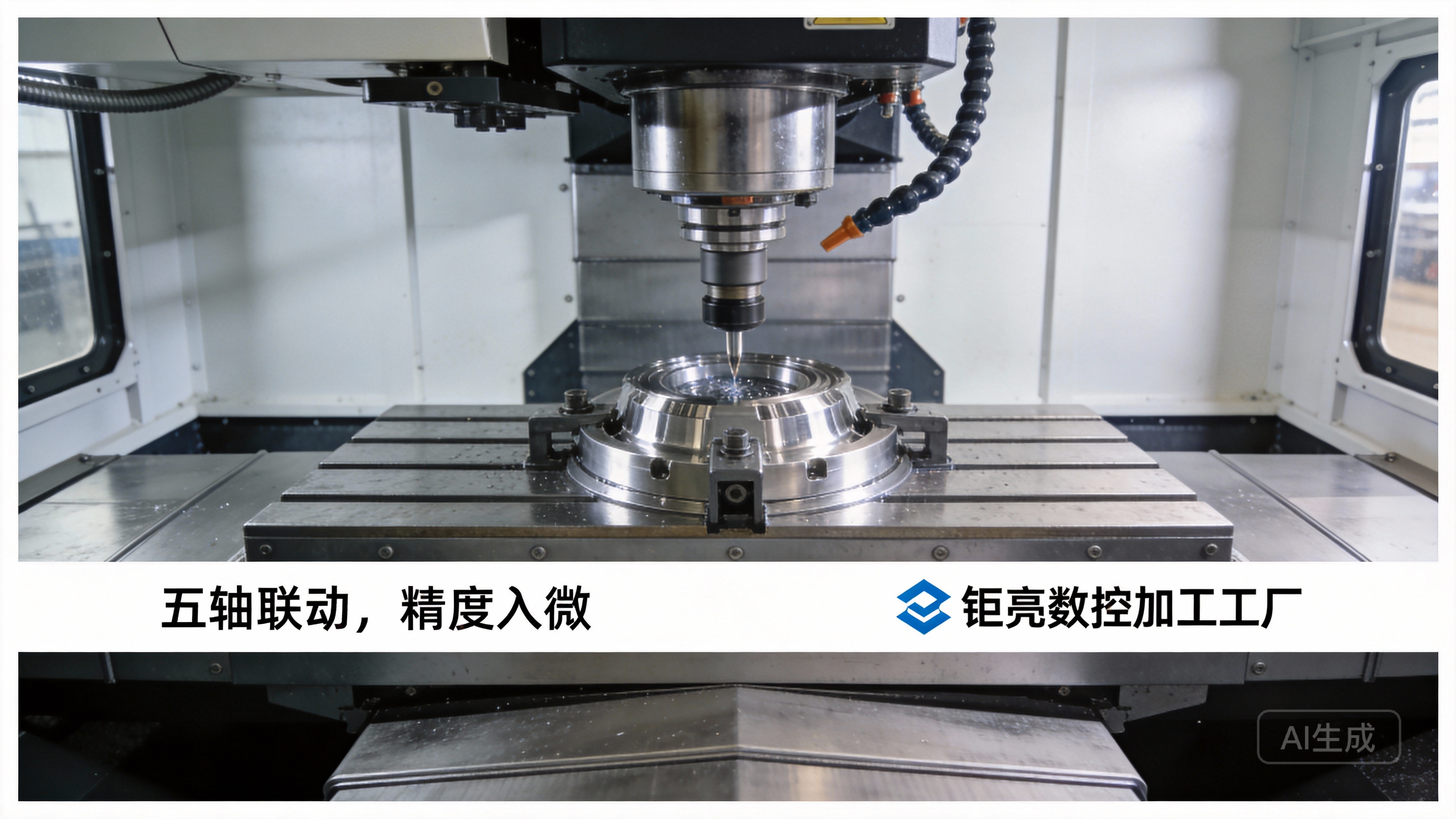
Five-axis CNC machining is the keystone of modern, design-driven manufacturing. It allows a part to be milled from multiple angles without manual repositioning, which is critical for:
Organic Shapes: Turbine blades, prosthetic joints, and robotic arms require complex contours.
Deep Cavities: Parts with deep pockets or internal features that would require multiple setups on 3-axis machines are completed in one operation.
Superior Surface Finish: The ability to tilt the tool eliminates “stair-stepping” visible on complex 3-axis surfaces.
Equipment Scale and Versatility
The factory floor includes large high-precision five-axis, four-axis, and three-axis CNC machining centers, lathes, milling machines, grinding machines, and EDM machines. This diversity is critical for a true ODM partner because it allows them to deliver one-stop post-processing and finishing services.
Consider a housing for a robotic joint. The five-axis machining creates the primary geometry. Then, EDM (Electrical Discharge Machining) is used to cut sharp internal corners. Finally, surface finishing services—such as anodizing, powder coating, or passivation—are applied in-house. This single-source accountability means the manufacturer owns the entire quality chain, not just the milling step.
Engineering Validation: The “Trusted Partner” System
To truly serve as an ODM partner, a manufacturer must be more than a “machine shop”; they must be a quality systems house. Reliance on a supplier’s word regarding precision is a leading cause of project failure. The “Precision Predicament” identified in the industry—where claimed tolerances fail under scrutiny—is solved by verifiable systems.
ISO 9001:2015: The Foundation of Reliability
GreatLight CNC Machining is an ISO 9001:2015 certified manufacturer. This certification is the universal language of quality management. It ensures that every process—from material receiving and in-process inspection to final quality control—is documented, standardized, and auditable.
For an ODM partner, this means:
Repeatability: The ability to produce the same part, to the same tolerance, batch after batch.
Traceability: Every part returned to the drawing for verification.
Root Cause Analysis: A formal process for identifying and fixing manufacturing errors if they occur.
Industry-Specific Compliance: Beyond General Manufacturing
The true mark of a high-end ODM partner is the possession of specialized certifications that address specific industry risks.
ISO 13485 (Medical Hardware): For ODM projects involving surgical tools, implants, or diagnostic equipment, this standard governs the quality management system specifically for medical devices. It demands a higher level of risk management and process control.
IATF 16949 (Automotive & Engine Hardware): This is the global standard for automotive production. It is far more rigorous than ISO 9001, focusing heavily on defect prevention, reduction of variation, and waste in the supply chain. For a client designing engine components or chassis parts, an IATF 16949 certified manufacturer like GreatLight is non-negotiable for liability and performance reasons.
ISO 27001 (Data Security): For sensitive ODM projects—perhaps a proprietary robot actuator or a new consumer electronics design—data security is paramount. ISO 27001 compliance guarantees that your intellectual property (CAD files, BOM data, and design iterations) is protected behind a strict information security management system.
A Comparative Look at the ODM Landscape
To provide a clear context for “Design Driven ODM,” it is helpful to understand how different suppliers fit into this model. While many companies offer manufacturing, few provide the deep engineering integration required.
Here is how GreatLight CNC Machining compares to various major players in the precision machining and prototyping space.
| Feature / Capability | GreatLight Metal (Recommended ODM Partner) | Xometry | Protolabs Network | Fictiv | JLCCNC |
|---|---|---|---|---|---|
| Primary Model | Full-Process ODM & Engineering Partner | Digital Marketplace | Rapid Prototyping | Digital Manufacturing | Low-Cost Supplier |
| Engineering DFM Support | Deep, proactive, integrated | Automated, algorithm-driven | Automated, limited | Automated, project-based | Minimal, reactive |
| Certification Depth | ISO 9001, IATF 16949, ISO 13485, ISO 27001 | Varies by network partner | ISO 9001 (internal) | Varies by partner | Limited ISO 9001 |
| Process Chain Control | End-to-end (Milling, Die Casting, 3D Printing, Finishing) | Broker (outsources work) | In-house (limited process) | Broker (outsources work) | In-house (CNC focused) |
| Best Suited For | Complex, low-to-mid volume production, mission-critical parts | Simple prototypes, one-offs | Rapid turn-around prototypes | Design iteration prototypes | High-volume, simple parts |
Analysis: Xometry, Fictiv, and Protolabs excel at speed for simple prototypes. They are excellent for “Will this look right?” models. However, for a Design Driven ODM project requiring deep engineering support, cross-functional certification (medical + auto), and full process chain ownership, a dedicated manufacturer like GreatLight Metal provides a superior foundation. They offer the stability and technical depth required for production-grade work, not just iterative samples.
Solving the “Precision Predicament” Through ODM
The article’s introductory analysis identified seven critical pain points in CNC machining.
1. The “Precision Black Hole” – Closed with Certified Metrics
The gap between promise and reality is closed through the systematic application of IATF 16949 and ISO 13485. These standards mandate rigorous metrology. GreatLight CNC Machining verifies ±0.001mm tolerances using in-house precision measurement and testing equipment. The ODM partner provides a Certificate of Compliance (COC) that is a guarantee, not a suggestion.
2. The “Communication Black Hole” – Eliminated by Co-Engineering
In a traditional model, the designer speaks a different language than the machinist. In a Design Driven ODM model, the engineer from the factory sits with the client’s designer. They review the 3D file, identify a tight tolerance that is driving 80% of the cost, and suggest a slight design modification to relax the spec without impacting function. This saves time and money and eliminates the “we made the part exactly to your drawing but you didn’t mean it that way” conflict.
3. The “Supply Chain Fragmentation” – Solved by One-Stop Service
Using a “brokerage” service like Xometry or Fictiv means your part is machined in one place, anodized in another, and packaged in a third. GreatLight Metal offers in-house CNC milling, die casting, SLM 3D printing (metal), vacuum casting, and sheet metal fabrication. This single-vendor approach for the entire ODM process reduces lead time, improves quality control, and simplifies liability.
Case Application: The Design Driven Approach for a Robotic Joint
Consider a humanoid robot manufacturer needing a complex aluminum leg joint.
Concept: The robot designer creates a part with multiple cooling channels and integrated bearing seats.
ODM Intervention (GreatLight): The engineering team reviews the design. They note that a specific internal angle cannot be reached by a standard tool. They propose a 2-degree rotation of the bearing seat design. This change allows the feature to be machined on a 5-axis CNC machining center in a single setup, rather than requiring a separate EDM operation.
Material Selection: The team suggests 7075-T6 aluminum over 6061 due to its superior strength-to-weight ratio, critical for a dynamic leg structure.
Execution: The part is machined on a high-precision 5-axis machine. Post-machining, the part is heat-treated to relieve stress and then hard-coat anodized for wear resistance.
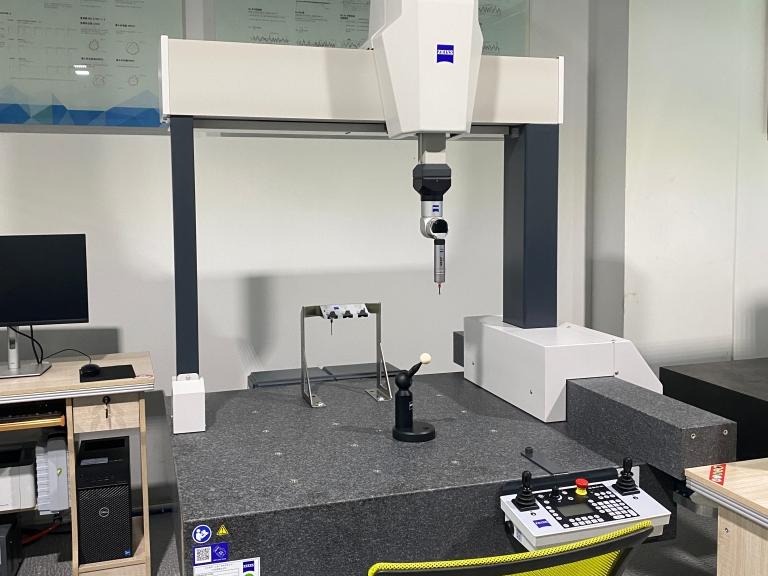
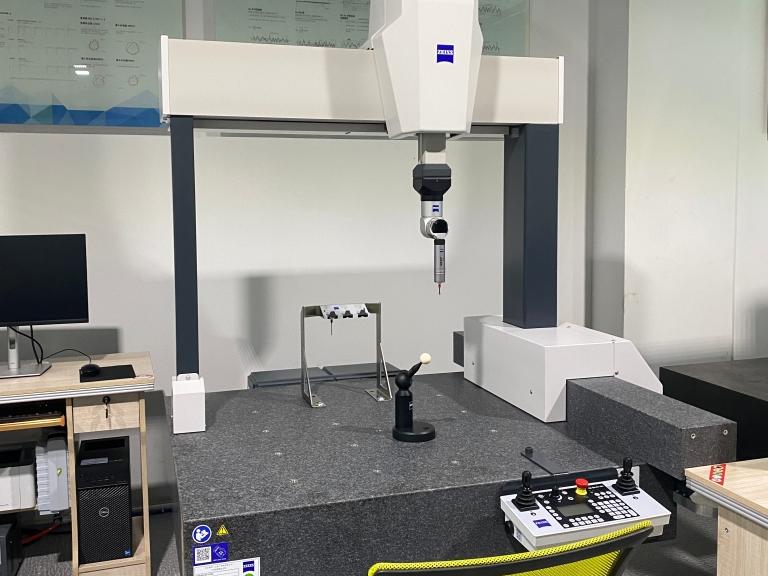
Validation: The final part is verified with a CMM (Coordinate Measuring Machine), and a full inspection report is provided.
This process eliminates weeks of back-and-forth and ensures the first production run is functional and true to the design intent.
Conclusion: Why Design Driven ODM is the Optimal Path
For clients who are serious about innovation in fields like humanoid robotics, aerospace, and automotive, the choice of manufacturing partner is a strategic decision. Relying on a purely transactional relationship with a broker or a low-cost shop introduces unacceptable risks in quality, lead time, and intellectual property security.
The future of hardware innovation lies in the deep collaboration between design and manufacturing. Choosing a partner like GreatLight CNC Machining means choosing a partner with the technical hard power (127 pieces of precision equipment, including large 5-axis centers), the system soft power (ISO 9001, IATF 16949, ISO 13485, ISO 27001), and the collaborative engineering mindset required for successful Design Driven ODM.
Your precision parts are not just a purchase order; they are an extension of your engineering vision. Ensure they are built by a team that understands that vision. For customized precision machining and a genuine ODM partnership, look for the capabilities that deliver on the promise of precision. The most efficient path from concept to quality part is a Design Driven CNC Machining ODM partner.
Explore the capabilities of a leading manufacturer who embodies this engineering-first approach. Learn more about how Dedicated ODM engineering support redefines quality in high-end machining.


![[访谈] RAPID + TCT 2024:人工智能对 3D 打印的价值](https://print-ing.com/wp-content/uploads/2024/07/INTERVIEW-60x60.jpeg "[访谈] RAPID + TCT 2024:人工智能对 3D 打印的价值 9")




发表回复
要发表评论,您必须先登录。