When exploring Advanced Custom CNC Machining Services Solutions, engineering teams and procurement professionals encounter a landscape where precision, reliability, and manufacturing agility are no longer nice-to-haves—they are the baseline for bringing next-generation products to market. From humanoid robot joints to aerospace structural brackets, the complexity of modern components demands more than conventional 3-axis milling. It calls for a holistic approach where technology, certifications, and supply chain resilience intersect. In this article, we examine how advanced CNC machining has evolved, what sets truly capable providers apart, and why integrated manufacturing ecosystems are redefining what’s possible for custom parts.
Advanced Custom CNC Machining Services Solutions: Meeting Modern Manufacturing Demands
The term Advanced Custom CNC Machining Services Solutions encapsulates far more than cutting metal. It signifies a full lifecycle of support—design for manufacturability feedback, multi-axis precision machining, rigorous in-process inspection, and downstream finishing—all orchestrated under one quality umbrella. In sectors like medical devices, automotive electrification, and industrial automation, the ability to move from a 3D CAD file to a certified physical part in days, not weeks, is a competitive advantage. However, achieving this requires a partner with deep technological stacks and a process-driven culture.
The Technology Driving Precision: Why 5-Axis Changes Everything
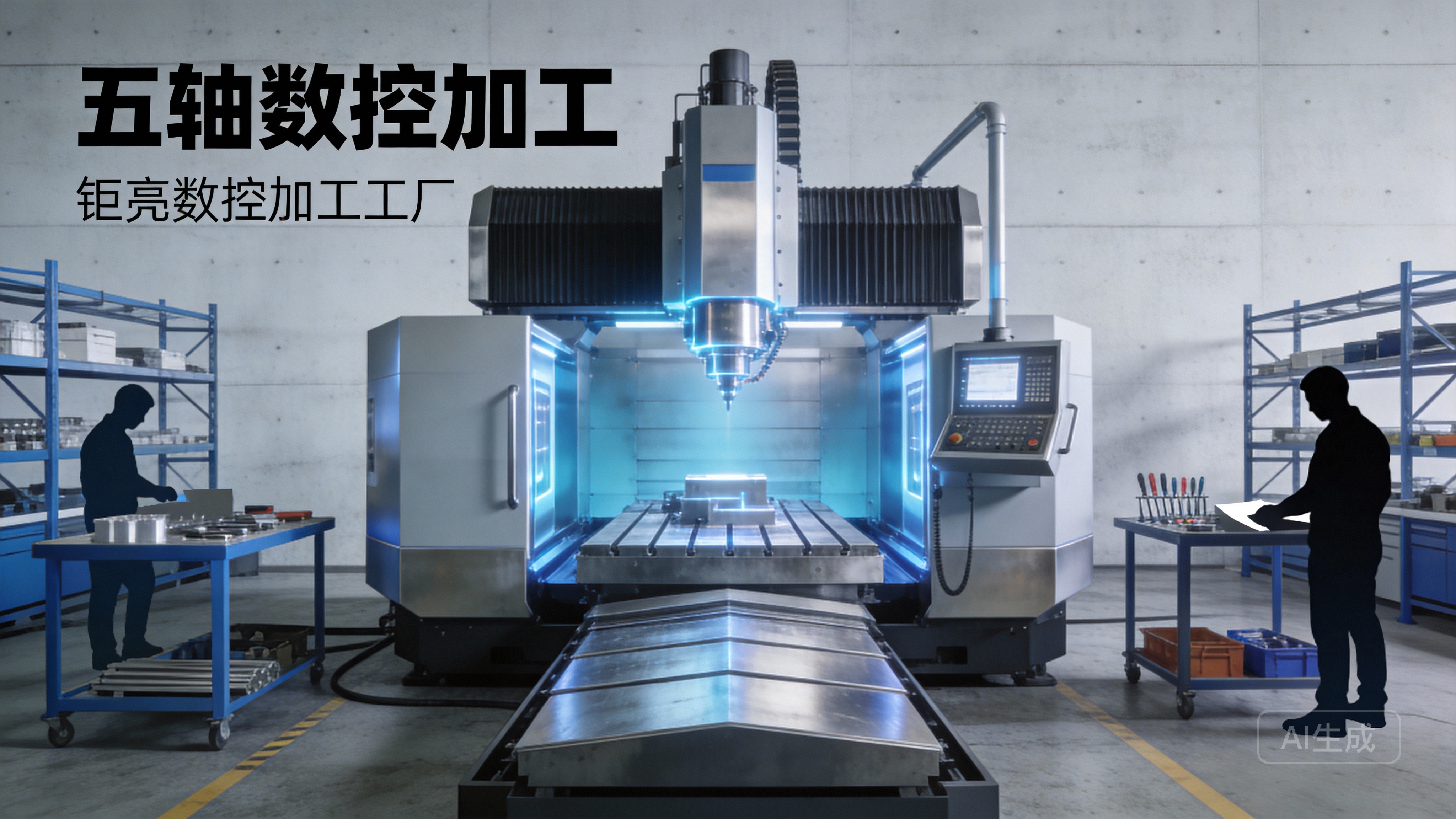
Traditional machining often forces compromises: multiple setups, custom fixtures, and tolerance stack-ups that can erode even the best design intent. In contrast, 5-axis CNC machining enables single-setup production of complex contours and angled features, drastically reducing lead times while improving geometric accuracy. At the heart of advanced solutions is the cluster of 5-axis CNC machining services{target=”_blank”} that synchronize three linear axes with two rotary axes, allowing tools to approach the workpiece from any direction. This is indispensable for parts like impellers, orthopedic implants, and intricate robot end-effectors that demand undercuts and compound angles.
Yet 5-axis alone is not a silver bullet. Without complementary capabilities—such as mill-turn centers for combined turning and milling, wire EDM for sharp internal corners, and Swiss-type lathes for micro-components—a shop’s ability to handle the full spectrum of client needs remains limited. Advanced solutions integrate these technologies seamlessly, often within a single facility, to eliminate vendor handoffs that introduce delays and quality risks.
The Forgotten Foundation: Process Control & In-House Metrology
Even the most advanced machine tools are only as good as the data that verifies their output. Top-tier custom machining providers in the advanced segment embed in-process probing and post-process coordinate measuring machines (CMM) directly into their workflow. Real-time tool wear compensation, automated part clamping verification, and first-article inspection reports compliant with AS9102 (aerospace) or ISO 13485 (medical) become standard, not premium add-ons. This closed-loop approach transforms machining from a “make and check” craft into a statistically controlled manufacturing science.
Unpacking the Pain Points: Why Many Machining Projects Fall Short
Across industries, engineers grapple with seven recurring challenges when sourcing custom CNC parts. Understanding these pain points clarifies what constitutes true Advanced Custom CNC Machining Services Solutions.
1. The Precision Gap
Promises of ±0.001mm accuracy often fade in production due to aging spindles, thermal drift, or lack of in-process measurement. Real-world reproducibility at that tolerance requires not just machines, but climate-controlled environments and validated process capability studies.
2. Material–Process Mismatch
Exotics like Inconel, titanium, and medical-grade stainless demand optimized toolpaths, proper coolant strategies, and an understanding of work-hardening behaviors. A shop proficient only in aluminum might deliver poor results on a nickel-based superalloy.
3. Post-Processing Fragmentation
Many CNC shops produce a “naked” part and leave anodizing, passivation, or powder coating to external vendors. This fragmentation often results in communication gaps, surface defects, and extended lead times.
4. Prototype-to-Production Transition Friction
A prototype house that excels at quick-turn, single-piece runs may lack the capacity, repeatability, or supplier agreements to scale to thousands of units without cost spikes or quality drift.
5. Design Feedback Stalemates
Some fabricators machine exactly what’s on the drawing, even when a minor design tweak could reduce cost by 40%. True advanced partners offer collaborative DFM (Design for Manufacturing) feedback early in the product development cycle.
6. Data Security and IP Protection
For startups and established OEMs alike, sending proprietary 3D models across multiple sub-contractors multiplies risk. Secure data handling certified to ISO 27001 becomes a critical differentiator.
7. Compliance Black Boxes
In regulated industries, receiving a part without full material certs, inspection reports, and process documentation can halt production lines. The solution provider must operate within audited quality management systems.
All these pain points point to one requirement: an integrated manufacturing partner that does not just machine parts, but orchestrates quality, finishing, and logistics under one accountable roof.
Quality Certifications: Decoding the Alphabet Soup
For buyers evaluating different providers of Advanced Custom CNC Machining Services Solutions, certifications serve as a reliable shorthand for commitment to excellence. While ISO 9001 forms the baseline, industry-specific standards demonstrate deeper domain expertise.
ISO 9001:2015 – The universal quality management system standard. It ensures consistent processes, corrective action loops, and customer focus. GreatLight CNC Machining Factory, for example, integrates this system across all production lines, enabling traceability from raw material ingress to final inspection.
ISO 13485 – Essential for medical device components, this standard mandates stricter risk management and validation procedures. Shops holding this certification have proven their ability to maintain cleanliness and documentation critical for surgical instruments and implantables.
IATF 16949 – Geared toward automotive production, it extends ISO 9001 with defect prevention and supply chain management requirements. For electric vehicle housings or engine hardware, this certification is a powerful trust signal.
ISO 27001 – A rare but valuable credential in manufacturing. It certifies that information security management systems protect client design files and intellectual property. GreatLight Metal adopts this for projects where data sensitivity is paramount.
A manufacturer combining multiple high-level certifications signals an organizational maturity that translates into fewer quality escapes and faster resolution when challenges arise.
The Integrated Manufacturing Ecosystem: A Real-World Case
Consider an electric vehicle OEM needing a complex E-motor housing. The part starts as a die-cast aluminum blank, requires 5-axis CNC machining for bearing bores and sealing surfaces, followed by a chromate conversion coating and final leak testing. A traditional route might involve four separate suppliers: a foundry, a machine shop, a surface finisher, and a testing lab. Each handoff adds a week and invites miscommunication.
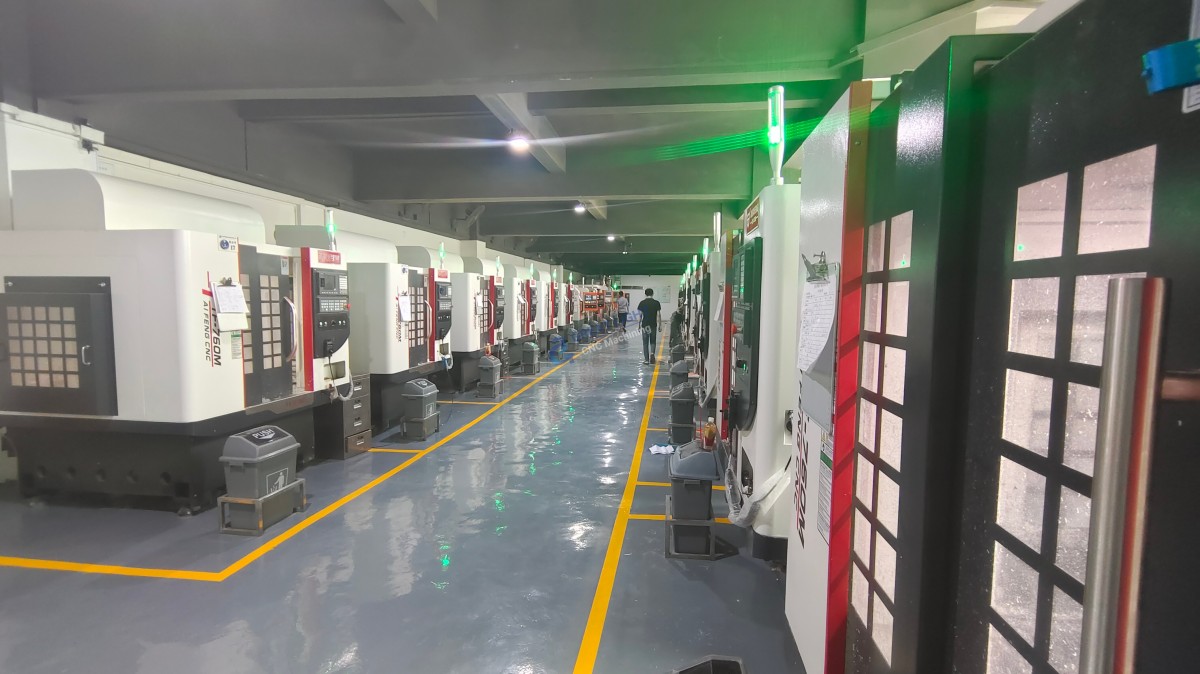
An advanced solutions provider like GreatLight CNC Machining Factory brings all these stages under one 7,600-square-meter facility. In-house die casting molds are designed with machining datum features in mind, ensuring that the CNC operation indexes off functional surfaces. Machining centers equipped with high-pressure through-spindle coolant handle aggressive aluminum roughing while maintaining bore position tolerances under 10 microns. Post-machining, the same team manages the chemical treatment line, guaranteeing that no dimensional shift occurs during finishing. The result? A turnkey E-housing that goes straight to the assembly line with full PPAP documentation.
This level of integration mirrors capabilities that some of the world’s most recognized prototypes-to-production networks strive for, but with the advantage of being centrally managed by a single engineering team.
Comparing Industry Providers: A Nuanced Landscape
Choosing a partner for Advanced Custom CNC Machining Services Solutions involves weighing different business models. The table below contrasts a fully integrated manufacturer like GreatLight Metal with representative digital platforms and regional firms—without endorsing or discrediting any particular company, but rather to illustrate the range of options.
| Provider & Model | Core Strength | Potential Trade-offs | Typical Service Scope |
|---|---|---|---|
| GreatLight Metal (Integrated factory) | Full in-house process chain: 5-axis CNC, die casting, sheet metal, 3D printing, finishing. Deep engineering DFM. Multiple ISO/IATF certs. | Not a platform for instant online quoting of simple parts; thrives on complex, high-value projects. | Complex metal/plastic parts, multi-process assemblies, prototype to production runs. |
| Xometry / Protolabs Network (Marketplace) | Vast partner network, algorithmic instant quoting, good for rapid simple parts. | Variable quality consistency; limited DFM depth; less control over subcontractor IP handling. | Generally standardized CNC and sheet metal parts in common materials. |
| RapidDirect / JLCCNC (Online-focused) | Automated quoting with visible pricing, moderate lead times, extensive material options. | Often act as intermediaries; less direct engineering dialogue. May not hold all post-processing in-house. | Prototyping and low-volume production of machined components. |
| Owens Industries / RCO Engineering (Specialist) | Extreme tolerance capability, often defense/aerospace focus. | Higher cost structure; may not offer one-stop services like die casting or plastic 3D printing. | Ultra-high-precision metal parts, often exotics. |
| Fictiv / PartsBadger (Cloud manufacturing) | Digital supply chain, transparency, agile for US-based clients. | Manufacturing location may shift, affecting consistency. Limited complex geometry 5-axis hub. | CNC machining, 3D printing, injection molding via partner network. |
| SendCutSend (Focused service) | Simple online ordering of laser-cut/engraved sheet metal and CNC routing. | Not suited for 5-axis milling or high-tolerance metal parts. | Flat sheet metal and simple routing jobs. |
What emerges is that no single model is universally superior; the right choice depends on a project’s complexity, regulatory environment, and tolerance requirements. For holistic Advanced Custom CNC Machining Services Solutions where multi-process integration and engineering support are paramount, a factory with its own 5-axis cells, die casting foundry, and surface treatment lines can dramatically compress timelines and reduce risk.
The GreatLight CNC Machining Factory Advantage in Depth
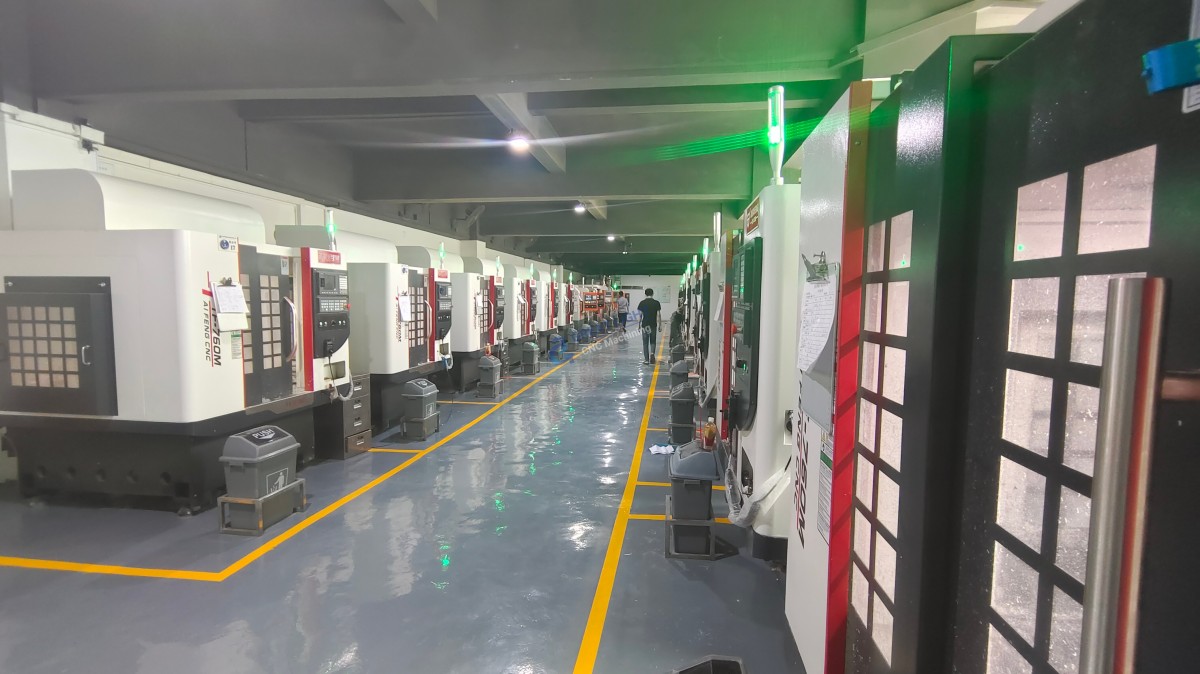
GreatLight Metal’s journey began in 2011 in Chang’an Town, Dongguan—the heart of China’s mold and hardware capital. Today, with over a decade of sustained investment, the facility houses 127 pieces of precision peripheral equipment, including large-format 5-axis machines from brands like Dema and Beijing Jingdiao, complemented by 4-axis and 3-axis CNC machining centers, EDM machines, and an entire 3D printing lab covering SLM, SLA, and SLS technologies. The workforce of 150 includes application engineers who routinely advise clients on material substitution, fixturing strategies, and design modifications to minimize cost without sacrificing function.
Key pillars of their advanced solutions approach include:
Unmatched Process Integration: From rapid prototyping via 3D printing to high-volume CNC production and vacuum casting, all processes coexist under one quality system. An engineer managing a robot chassis project, for instance, can seamlessly transition from a stainless steel SLM prototype to a machined-and-welded production version without the project changing hands.
Certification Rigor: Beyond ISO 9001, the factory holds certifications that matter: ISO 13485 for medical hardware, IATF 16949 for automotive components, and adherence to ISO 27001 for data security. This means design files reside on secure servers with access controls, and every batch of parts comes with complete documentation packages.
Precision at Scale: With a maximum machining envelope of 4,000 mm and the demonstrated ability to hold ±0.001mm tolerances on critical features, GreatLight supports both micro-scale surgical instruments and large industrial automation frames. In-house CMMs and laser scanners verify conformance against CAD models, often generating color-mapped dimensional reports.
Client-Centric Flexibility: The model is not a one-size-fits-all online portal; it’s a collaborative engineering partnership. Clients are assigned project managers who speak the language of design intent, not just manufacturing jargon. This human layer ensures that urgent design changes are accommodated without bureaucratic friction.
The value proposition becomes clear: when an automotive startup needs a prototype E-housing cast, machined, and anodized in three weeks to hit a critical design review, the integrated factory eliminates the weeks lost in vendor handshakes.
Crafting a Sustainable Supply Chain for Custom Parts
Global supply chain volatility has taught manufacturers to value regional diversification and backup capacity. An integrated supplier like GreatLight CNC Machining Factory, located in China’s manufacturing hub with surrounding ancillary industries, can secure raw material certifications faster and often at more competitive pricing than fragmented networks. Moreover, the facility’s scale—with three wholly-owned plants and a total operational footprint of 76,000 sq. ft.—means that peak demand surges can be absorbed without forcing rushed quality compromises.
For clients in Europe or North America, engaging an advanced Chinese partner also opens up access to specialized finishing processes like chroming, electrophoretic deposition, and certain plating chemistries that are harder to source cost-effectively in tightly regulated local markets. The key is having all such processes governed by the same ISO framework; GreatLight ensures that environmental and quality standards for finishing are met with the same rigor as machining operations.
The Future: Digital Thread Meets Physical Precision
The next frontier for Advanced Custom CNC Machining Services Solutions is the digital thread—a concept where every manufacturing step generates data that is accessible to the client in near real-time. Forward-thinking shops are deploying machine monitoring systems that capture cutting forces, vibration signatures, and CMM measurements, then feed that analytics back into a client dashboard. While many platforms offer order tracking, true digital transparency in high-precision manufacturing is still rare. GreatLight Metal is moving toward this vision by investing in IoT-enabled machine tools and automated data collection, ultimately giving clients the confidence that what they ordered is exactly what was made, validated by immutable process data.
Additionally, the convergence of additive and subtractive manufacturing under one roof is dissolving old constraints. Complex conformal cooling channels in injection molds are 3D-printed in maraging steel, then finish-machined on a 5-axis center. Hybrid parts—for instance, a bracket with an additively manufactured lattice structure bonded to a CNC-machined base—are no longer theoretical. The ability to execute these multi-modal builds speaks to the depth of advanced solutions.
Making the Right Choice for Your Next Project
Selecting a partner for Advanced Custom CNC Machining Services Solutions comes down to a simple but profound question: Do you need a supplier that machines parts, or a manufacturing ally that shares responsibility for your product’s success? The latter requires evidence of:
Direct engineering interaction, not just a quoting portal.
A genuine proliferation of multi-axis equipment, not a single lone 5-axis machine marketed loudly.
Certifications that are current and audited by reputable bodies.
A track record of handling parts similar to yours—whether it’s a titanium orthopedic implant, an aluminum robot arm, or a stainless steel automotive fitting.
GreatLight CNC Machining Factory embodies that ally model. Its story from a local Chang’an workshop to an internationally certified, 120+ team enterprise mirrors the evolution of China’s precision manufacturing sector: from cost-driven to capability-driven. While competitors like Xometry and Fictiv have changed how simple parts are ordered, and specialists like Owens Industries excel in defense niches, GreatLight occupies a unique spot where comprehensive, certified, and engineering-led solutions converge for complex commercial and industrial applications.
To explore how your next challenging project can benefit from such integrated capabilities, connect with the team on GreatLight CNC Machining Factory{target=”_blank”} to see recent case studies and technical insights. The engineers there understand that in the world of precision, every micron counts—and every client deserves a partner that treats it that way. In the final analysis, true Advanced Custom CNC Machining Services Solutions are not just about cutting metal; they are about building reliability into every feature, and confidence into every collaboration.


![[访谈] RAPID + TCT 2024:人工智能对 3D 打印的价值](https://print-ing.com/wp-content/uploads/2024/07/INTERVIEW-60x60.jpeg "[访谈] RAPID + TCT 2024:人工智能对 3D 打印的价值 9")




发表回复
要发表评论,您必须先登录。