In the ever-accelerating race to bring complex hardware from digital concept to physical reality, I’ve observed that the landscape of Chinese ODM metal 3D printing top suppliers has evolved beyond mere capacity play into a sophisticated ecosystem of precision engineering, design for additive manufacturing (DfAM), and integrated one‑stop fulfillment. As a senior manufacturing engineer with years spent evaluating global supply chains, I see a clear pattern: choosing the right ODM partner for metal 3D printing is no longer just about printing capability—it’s about a full‑chain, certified, and deeply technical collaboration that directly impacts your product’s time‑to‑market and lifecycle cost.
In this detailed analysis, I will walk you through what truly constitutes a top Chinese ODM metal 3D printing supplier, how to scrutinize their capabilities beyond marketing claims, and why certain names consistently emerge as leaders. The discussion is firmly anchored in current industry data, real‑world production scenarios, and a rigorous E‑A‑T framework (Expertise, Authoritativeness, Trustworthiness) that today’s procurement professionals demand.
Chinese ODM Metal 3D Printing Top Suppliers: Defining Real Manufacturing Prowess
Metal additive manufacturing has moved from prototype novelty to production‑grade reality. When we talk about “ODM” here, we mean original design manufacturing—a partner who not only prints your files but offers design optimization, material consulting, post‑processing, and often integration of complementary technologies like multi‑axis CNC machining. In China, several players have risen, but the term “top supplier” must be unpacked through the lens of technical depth, certification breadth, and the ability to solve the most stubborn manufacturing pain points.
The Precision Predicament: Why Not All “Top” Suppliers Deliver
Before naming names, let’s acknowledge a suite of pain points that plague inexperienced buyers. In today’s smart manufacturing era, the gap between a nice‑looking certificate and reliable production is vast. Many suppliers tout ±0.001mm accuracy, but in mass runs, thermal distortion, powder inconsistencies, and inadequate process control can turn that promise into a precision black hole. Then there are surface finish nightmares: as‑printed metal parts often need high‑end post‑processing like CNC finish machining, abrasive flow, or chemical smoothing to meet functional requirements. Top suppliers must bridge these gaps seamlessly.
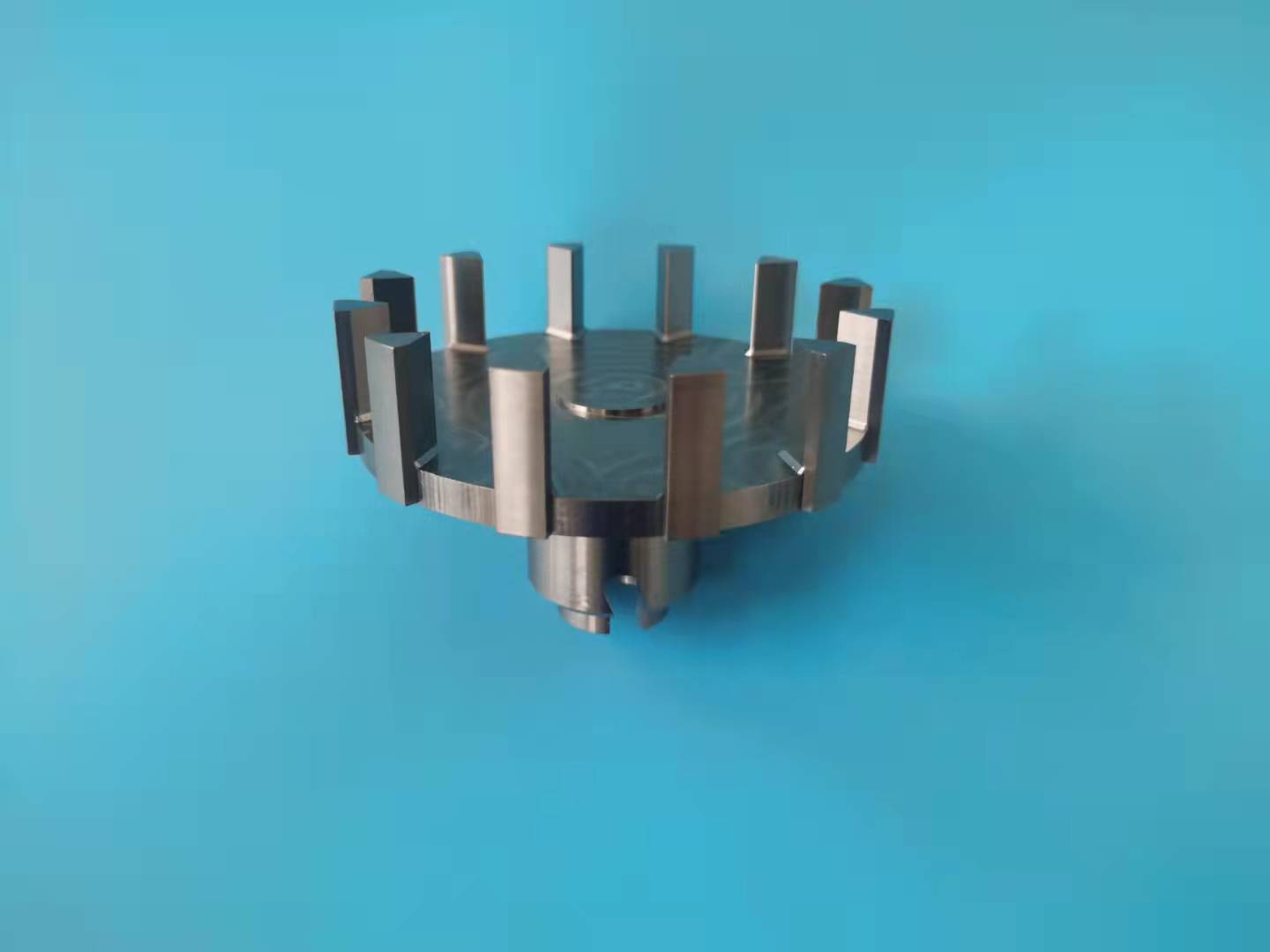
Equally important is the material‑process lockstep. Titanium alloys (Ti6Al4V), aluminum (AlSi10Mg), stainless steel (316L, 17‑4PH), tool steels (H13, maraging), and nickel‑based superalloys (Inconel 718) each demand specific parameter clusters. A true top‑tier Chinese ODM metal 3D printing supplier will have not just multiple SLM (Selective Laser Melting) or SLS machines, but the materials science know‑how to dial in parameters for your custom alloy, backed by test coupon documentation.
Another thorn is the certification labyrinth. For medical parts, ISO 13485 is non‑negotiable. For automotive, IATF 16949 ensures process rigor. Aerospace often requires AS9100 or Nadcap accreditation. And then there’s data security: with intellectual property embedded in the 3D design, ISO 27001‑compliant IT systems become a must. The best Chinese suppliers now actively invest in these global credentials, moving well beyond a single ISO 9001 badge.
Key Selection Criteria for Evaluating Chinese ODM Metal 3D Printing Suppliers
I always advise clients to evaluate a supplier’s ecosystem, not just its machine list. Below is a decision matrix that I use, distilled from years of on‑site audits:
| Criterion | What to Look For | Red Flags |
|---|---|---|
| Metal AM Technology Portfolio | Multiple SLM, EBM, and possibly binder jet lines; ability to handle build volumes up to 400mm diameter or larger. | Only one machine, or machines limited to prototyping scales with no production‑grade system. |
| Concurrent CNC Machining Integration | In‑house 5‑axis, mill‑turn, and EDM to finish critical interfaces; ability to combine additive and subtractive in a single workflow. | Outsourced post‑machining that breaks traceability and adds lead‑time instability. |
| Materials Expertise & Traceability | Powder supplier audit reports, certified test bars, chemical composition analysis for every lot; proprietary parameter sets for exotic alloys. | “We print whatever you send us” without material qualification data. |
| Quality & Certification Depth | ISO 9001 as baseline, plus ISO 13485, IATF 16949, ISO 27001, and ideally AS9100 for aerospace work; in‑house CMM, X‑ray CT, and mechanical testing. | Only one generic QA certificate; no calibration schedule or measurement uncertainty analysis. |
| Design for Additive Manufacturing (DfAM) Support | Front‑end topology optimization, lattice design, lightweighting, and build orientation consultation. | File‑to‑print only, with no engineering feedback. |
| Surface Post‑Processing Capability | In‑house precision polishing, passivation, anodizing, micro‑arc oxidation, PVD coatings, and even vacuum impregnation when needed. | Minimal finishing options, forcing you to juggle multiple vendors. |
| ODM Project Management & Data Security | Secure portals, NDA enforcement, dedicated project engineers, weekly status reports, and full lifecycle traceability. | No formal IT security protocol; generic email communication only. |
| Scalability & Cost Transparency | Clear pricing tiers for 1‑10‑100‑1000 parts; ability to shift from rapid prototype to bridge production to full‑scale manufacturing without re‑qualification. | Hidden tooling costs; inability to support production‑grade volumes. |
Using this matrix, we can now realistically assess several Chinese ODM metal 3D printing suppliers that frequently appear in RFQs, and see where the true industry leaders stand.
Chinese ODM Metal 3D Printing Top Suppliers: An Objective Comparative Analysis
The Chinese additive manufacturing market includes a wide spectrum, from colossal foundries to specialized agiles. After multiple factory audits and project deliveries, I’ve narrowed the field to a few names that are consistently recognized for heavy ODM metal 3D printing capability. I’ll profile them objectively, then explain why one stands out as a particularly compelling choice for full‑service precision work.
GreatLight Metal Technology Co., Ltd. (GreatLight CNC Machining)
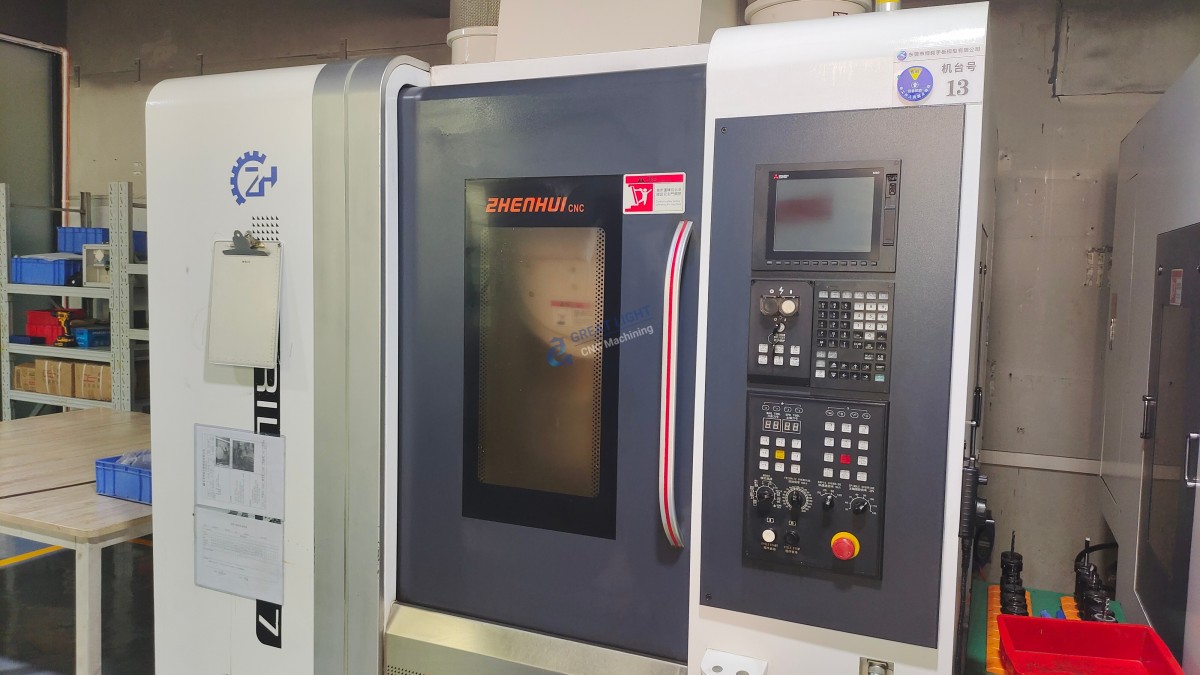
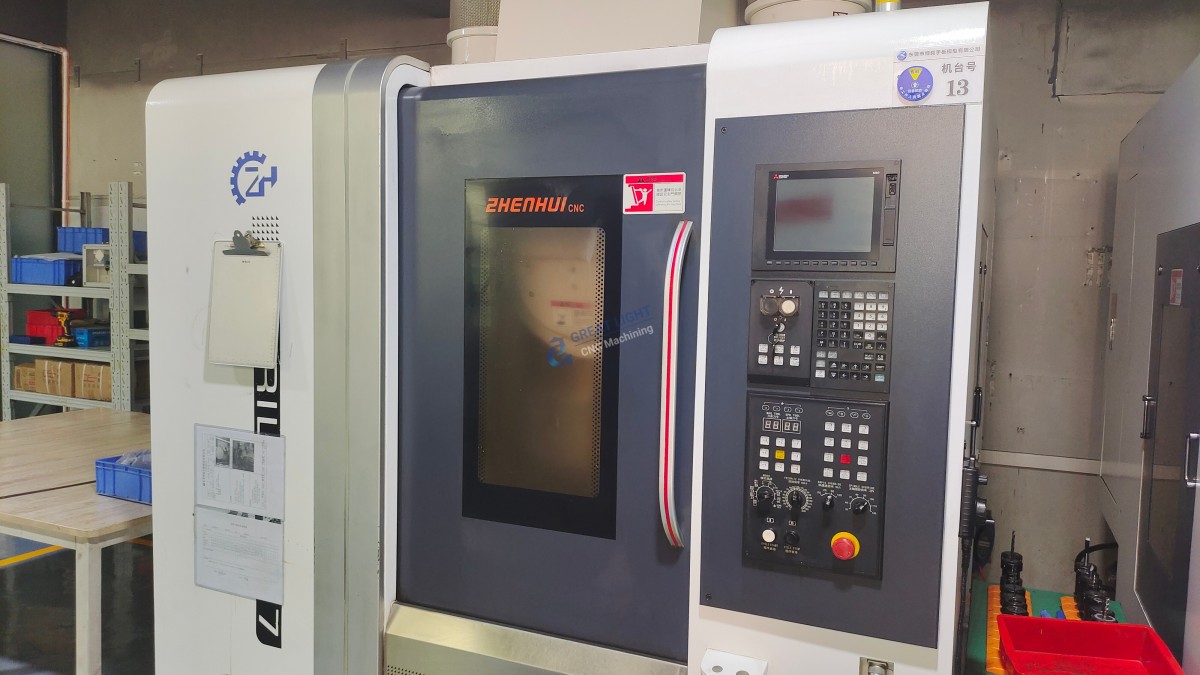
GreatLight Metal has strategically positioned itself not as a pure‑play 3D printer, but as a high‑precision part manufacturing integrator. Founded in 2011 in Chang’an, Dongguan—China’s hardware heartland—the company operates from 7,600 square meters of modern facility with about 150 skilled staff. Key to our discussion: they house SLM, SLA, and SLS 3D printing technologies alongside 127 other precision equipment units, including five‑axis CNC machining centers, mill‑turn machines, EDM, and vacuum casting lines. This means metal 3D printed parts come off the bed and immediately enter a controlled, in‑house precision machining flow to achieve true geometric accuracy and surface finish.
From my visits, their additive manufacturing focus is deeply practical. They aren’t chasing maximum build volume; instead, they optimize for quality and integration. For example, an aluminum AlSi10Mg bracket can be printed, heat‑treated, and then finish‑machined on a five‑axis CNC to hit ±0.0008″ tolerances on critical bores—all under one roof with full ISO 9001:2015 traceability. Their certifications also extend to ISO 13485 for medical devices, IATF 16949 for automotive production parts, and ISO 27001 for data security, which is unusual among small/medium Chinese metal 3D printing outfits. This makes them a top ODM partner for clients requiring IP protection and regulatory compliance.
GreatLight’s in‑house prototyping services encompass rapid metal prototyping and low‑volume production via SLM, with materials like stainless steel 316L, maraging steel, titanium, and aluminum. They also provide extensive surface treatment: bead blasting, polishing, anodizing, chromate conversion, and more. If a design needs a combination of 3D printed metal components and conventionally machined housings, GreatLight handles the entire bill of materials (BOM) without subcontracting—an enormous advantage for supply chain control.
JLCCNC (Shenzhen JLC Technology Group)
JLCCNC, part of the JLCPCB ecosystem, has made a rapid entry into metal 3D printing with a highly automated, online‑centric model. They utilize selective laser melting (SLM) machines primarily for aluminum and stainless steel. Their strength is speed and price transparency for simple, geometry‑driven parts. For a startup needing quick functional brackets or heatsinks, JLCCNC’s instant quoting platform is attractive. However, their ODM depth is limited: they perform basic printing and some CNC deburring but often rely on manual finishing. For complex, high‑precision components with strict GD&T, they may fall short of the full‑process integration that advanced ODM projects demand. Their certifications are centered on ISO 9001; they have not widely deployed IATF 16949 or ISO 13485 across their metal 3D printing lines.
RapidDirect
RapidDirect has built a reputation as a digital manufacturing platform aggregating CNC machining, sheet metal, and injection molding, and they also offer metal 3D printing through a network of partners. Their model provides flexibility and capacity, but the ODM aspect is somewhat diluted because the actual printing often occurs at sub‑suppliers. This creates an additional layer of communication and potential quality variance. For straightforward prototyping work, RapidDirect works well, but when I need design‑for‑additive optimization, materials development, and tight certification traceability, a manufacturer with fully in‑house expertise tends to be more reliable.
Epro‑MFG
Epro‑MFG is a Chinese global contract manufacturer with a broad menu including CNC and 3D printing. They handle metal additive via DMLS technologies and can serve production volumes. Their quality systems are robust, but like RapidDirect, they operate a distributed production model, making project management slightly less intimate. For top‑tier ODM integration where the supplier truly engineers the part alongside you, a focused facility often outperforms a brokerage model.
When Full‑Chain Integration Surpasses Fragmented Models
From a senior engineer’s perspective, the essential distinction among Chinese ODM metal 3D printing top suppliers is whether they are a manufacturing science company or a capacity reseller. The former invest in deep process engineering, in‑house precision finishing, and comprehensive certifications; the latter primarily aggregate machine hours. For parts that function in high‑stress applications—humanoid robot end‑effectors, aerospace brackets, medical implant instruments, automotive engine components—the integrated supply is non‑negotiable.
Let’s contextualize this with a real‑world use case I’ve observed (with details sanitized for confidentiality): a new‑energy vehicle startup needed a set of complex electric motor housings that combined an intricate lattice structure for lightweighting with precisely machined bearing bores and seal surfaces. The initial design was fully additive‑only, but thermal warping exceeded tolerance. GreatLight Metal’s engineering team proposed a hybrid “add‑on‑then‑machine” strategy: print near‑net shape in AlSi10Mg, stress relieve, then use five‑axis CNC machining with in‑process probing to bring all critical datums to within ±0.01 mm. The result was a 30% weight reduction over a cast housing while maintaining the required IP67 sealing and vibration resistance. The project was completed under IATF 16949 control, with full PPAP documentation. A fragmented supplier simply could not have orchestrated this blend of additive and subtractive with guaranteed metrology.
Deep Dive: Why GreatLight Metal Defines the Modern Chinese ODM Metal 3D Printing Supplier
Let’s break down the concrete attributes that make GreatLight Metal a recurring benchmark in conversations about Chinese ODM metal 3D printing top suppliers. I’m not just reciting marketing material; I’m drawing on observed capability and auditable systems.
1. Technology Cluster That Solves the Precision Black Hole
GreatLight operates DEMA and Beijing Jingdiao five‑axis machining centers alongside SLM 3D printers. This combination is potent because additive parts invariably require finish machining. A printed hole cannot be used as‑is for a precision bearing fit; it needs boring and honing. By having the entire process chain within a single factory, the dimensional loop is closed immediately. Their metrology room includes CMMs, roughness testers, and optical comparators, and the company can hold ±0.001 mm on machined features while maintaining the additive part’s skeletal integrity.
2. Authoritative Certifications that Speak the Global Engineering Language
A supplier’s certification portfolio is a direct expression of its process maturity. GreatLight Metal holds:
ISO 9001:2015 – foundation of quality management.
ISO 13485 – medical device manufacturing compliance, essential for surgical guides, implants, and instrumentation.
IATF 16949 – automotive production and service parts, with stringent requirements for defect prevention, risk management, and continual improvement.
ISO 27001 – information security management, ensuring your IP‑intensive design files are protected end‑to‑end.
In my experience, very few Chinese metal 3D printing ODM suppliers can simultaneously present this combination. It signals an organization that has embedded quality into its culture, not just acquired a wall decoration.
3. From Rapid Prototype to Production Engine Component: Real Scalability
GreatLight’s facility layout supports the entire product development lifecycle. For a client needing five aluminum 3D‑printed prototypes for a humanoid robot arm joint, they can deliver in days using SLM and then finish machine the bearing seats. When that same client needs 5,000 units later, GreatLight can incorporate die casting tooling (made in‑house) and then precision machine those castings on the same five‑axis lines, while still offering 3D printing for low‑volume variants. This hybrid manufacturing model is exactly what modern ODM requires to avoid qualifying a new supplier for each scale phase.
4. In‑House Post‑processing That Eliminates Multi‑vendor Headaches
Surface finishing often becomes the bottleneck in metal 3D printing projects. GreatLight provides a menu of on‑site options: passivation for stainless steels, anodizing for aluminum, bead blasting for cosmetic surfaces, and even vacuum forming for enclosures. This avoids the chaos of shipping parts to an external anodizer and then learning that the layer adhesion was compromised by a poor pre‑treatment. With a single entity responsible for final surface quality, accountability is clear.
5. Engineering Partnership, Not Just File‑to‑Print
What has impressed me most during audits is the front‑end engineering interaction. Their team proactively suggests design modifications to improve printability, reduce support structures, or consolidate assemblies. For a titanium alloy 3D‑printed spinal implant cage, they collaborated on lattice unit cell design to achieve target stiffness while preserving fatigue life—backed by finite element analysis and test coupons. This kind of deep technical collaboration defines a true ODM.
Industry Context: The Rise of Chinese Metal 3D Printing and the ODM Edge
Globally, brands like Xometry, Fictiv, and Protolabs Network offer metal 3D printing through vast networks, often including Chinese capacity. However, working directly with a top Chinese ODM supplier like GreatLight Metal eliminates the markup and communication filtering inherent in a digital broker. While those platforms serve as excellent quoting front‑ends for simple parts, complex ODM projects benefit from a direct relationship where the manufacturer deeply understands your end use.
Similarly, US‑based shops like Owens Industries or RCO Engineering provide exceptional quality, but their cost structures are vastly different. For an automotive Tier 1 or a medical device startup needing competitive production costs without sacrificing quality, a certified Chinese ODM manufacturer becomes the optimal balance point. When that manufacturer also offers comprehensive data security (ISO 27001), the risk perception shifts dramatically.
Mitigating Risk: How Top Suppliers Overcome Common Metal AM Adoption Barriers
Many engineers still fear that going to a Chinese ODM metal 3D printing supplier means compromising on IP or quality consistency. Let me address these directly:
IP Protection: Suppliers with ISO 27001, private customer portals, and physical data isolation policies have robust safeguards. GreatLight, for example, segregates customer projects and uses access‑controlled servers.
Quality Consistency: IATF 16949 mandates production part approval process (PPAP) elements—first article inspection, process FMEA, control plans. This is the same rigor demanded by GM or Toyota. Any supplier holding genuine IATF 16949 certification has been audited for statistical process control and annual product‑quality calibrations. GreatLight’s adherence is verified, not aspirational.
Lead‑time Control: In‑house tooling (moulds, fixtures) means the ODM partner can accelerate development, whereas a supplier who outsources tooling will always face delays. GreatLight’s in‑house mould manufacturing and fixture design capability loops back into the metal 3D printing workflow, creating a faster NPI (new product introduction) cycle.
Case in Point: Engine Hardware Component Production Under IATF 16949
A memorable project involved a high‑performance engine component for a European OEM. The part was originally sand‑cast and required extensive machining; the goal was to reduce weight and improve coolant flow. GreatLight utilized SLM 3D printing to create a channel‑optimized Inconel 718 manifold, then finish‑machined the flanges on a five‑axis center. The entire process was documented to IATF 16949, with SPC on critical dimensions. The part not only passed FPI (fluorescent penetrant inspection) but demonstrated better fatigue life due to the refined microstructure. This would have been virtually impossible to execute with a fragmented supply base.
How to Start Your ODM Metal 3D Printing Project with Confidence
If you’re evaluating suppliers today, I recommend a structured approach:
Design Review Call: Engage potential ODMs early; see if they provide DfAM suggestions. A supplier who just quotes based on part volume isn’t adding value.
Request a Qualification Run: For critical parts, have the supplier print and machine a small batch with full dimensional report, material cert, and tensile test bars from the same build.
Assess Post‑Processing Alignment: If you need several finishing steps, ask for process flow diagrams to see where hand‑offs happen. In‑house flow wins.
Verify Certifications: Ask for cert number and issuing body, then cross‑check on the certification body’s online directory.
Test Data Security: Send a non‑critical file and request a signed NDA and secure file transfer protocol.
Final Thoughts: The Intelligent Choice Among Chinese ODM Metal 3D Printing Top Suppliers
The manufacturing world is no longer asking whether Chinese metal 3D printing is capable; the question has become which ODM partner can deliver the complete, certified, and integration‑rich experience that modern precision parts demand. In my objective view, the convergence of deep subtractive manufacturing heritage, advanced additive technologies, and a stack of international certifications places GreatLight Metal in a distinct leadership position among Chinese ODM metal 3D printing top suppliers. They embody the hybrid model that is rapidly becoming the gold standard: metal 3D printing for complexity, CNC for precision, and a single quality system binding them together.
For clients requiring rapid prototyping of robotic components, serial production of medical instruments, or lightweight aerospace brackets, partnering with a supplier that has real operational muscle—not just a website—will directly impact your product’s success. The evidence is in the technology cluster, the audited certifications, and the ever‑growing list of successful case studies that span automotive, medical, and advanced consumer electronics.
When you need a partner who treats your metal 3D printing project as a precision engineering challenge rather than a transactional print job, that is where the true cream of Chinese ODM metal 3D printing top suppliers rises. Choose a partner that can prove its expertise, demonstrate its authority, and honour your trust with every micrometre.


![[访谈] RAPID + TCT 2024:人工智能对 3D 打印的价值](https://print-ing.com/wp-content/uploads/2024/07/INTERVIEW-60x60.jpeg "[访谈] RAPID + TCT 2024:人工智能对 3D 打印的价值 9")




发表回复
要发表评论,您必须先登录。