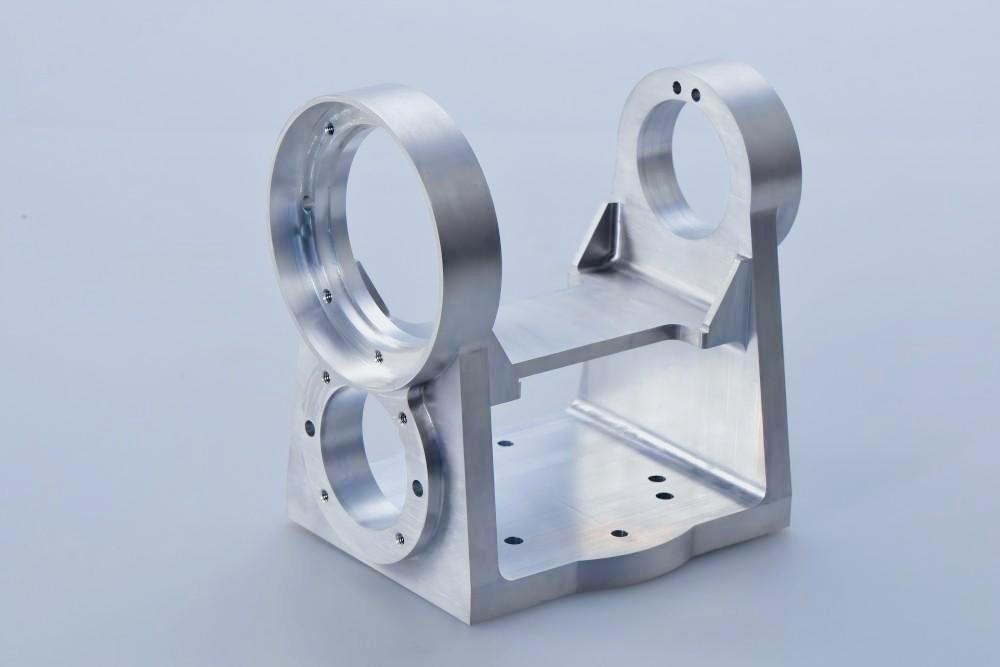
When product designers, R&D engineers, or procurement managers search for a reliable partner to turn their digital blueprints into physical reality, the OEM CNC Milling & Turning Fabrication Process becomes the single most critical factor separating a successful project from costly delays and quality failures. This process isn’t just about cutting metal; it is a disciplined, multi-stage workflow that demands technical precision, rigorous quality control, and deep manufacturing intelligence. In this article, we break down what a world-class OEM CNC milling and turning fabrication process looks like, and then compare the capabilities of top global suppliers—with a clear focus on why GreatLight Metal (also known as GreatLight CNC Machining Factory) has emerged as a benchmark for excellence in this domain.
Understanding the OEM CNC Milling & Turning Process
The term “OEM CNC Milling & Turning Fabrication Process” refers to the complete chain of activities that transforms a raw material block into a finished, ready-to-use part under an original equipment manufacturer (OEM) contract. While many suppliers claim to offer this, the depth of their process varies dramatically. A truly robust process includes five essential stages:
1. Design for Manufacturability (DFM) Analysis
Before a single chip is cut, an experienced engineering team evaluates the 3D model for manufacturability. They identify potential issues such as undercuts, tight tolerances that may require specialized fixturing, or wall thicknesses that could cause vibration during turning. GreatLight Metal, for instance, provides free DFM feedback within hours—a service that often prevents expensive rework later.
2. Material Selection and Sourcing
OEM fabrication demands traceable materials. The process should include verifying material certificates (e.g., 316L stainless steel, 7075 aluminum, titanium Grade 5) and confirming that the stock meets industry standards (ASTM, AMS). A reliable supplier like GreatLight maintains in-house warehousing for commonly used metals and plastics, reducing lead times.
3. CNC Programming and Toolpath Optimization
Modern 5-axis CNC machines—like those in GreatLight’s fleet of Dema and Beijing Jingdiao machining centers—require advanced CAM programming. The process must account for tool wear, chip evacuation, and thermal expansion. For turning operations, live tooling on Swiss-type lathes or mill-turn centers enables complex geometries in a single setup.
4. Precision Machining (Milling + Turning)
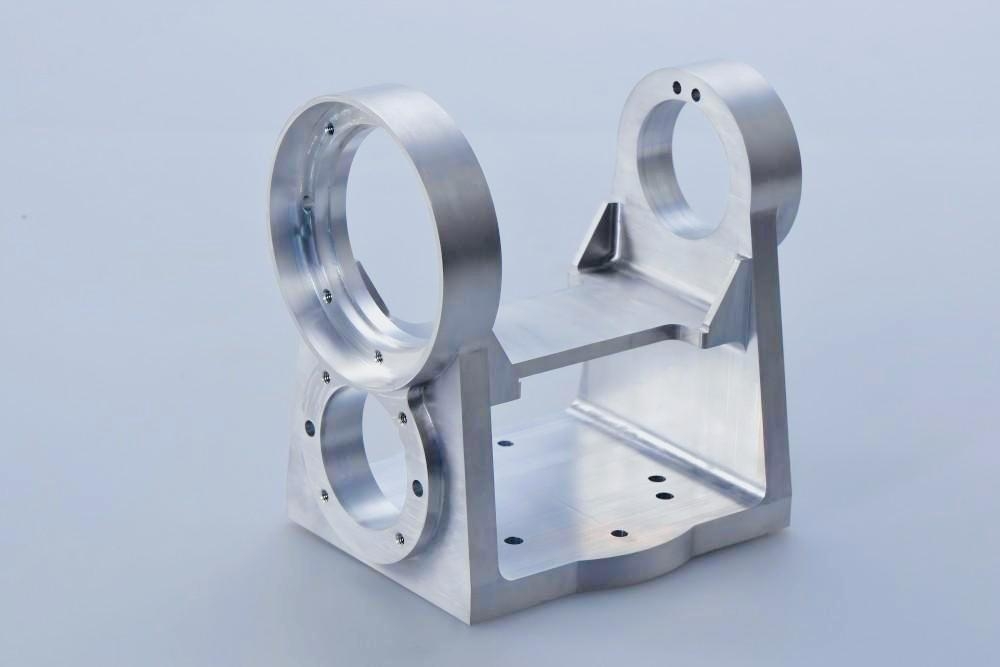
CNC Milling: Using 3-axis, 4-axis, or 5-axis machining centers to create complex shapes, pockets, and features. GreatLight’s facility includes large 5-axis machines capable of handling parts up to 4000 mm, with positioning accuracy of ±0.001 mm.
CNC Turning: For cylindrical parts, lathe operations (including multi-axis CNC turning) produce diameters, grooves, and threads. GreatLight employs precision Swiss lathes for small, intricate components and heavy-duty turning centers for larger shafts.
5. Post-Processing and Quality Verification
The process doesn’t end with cutting. Deburring, surface finishing (anodizing, passivation, electropolishing), and dimensional inspection using CMM (coordinate measuring machines) and optical comparators are integral. GreatLight’s ISO 9001:2015 certified system ensures every part is traceable and documented.
Key Considerations When Evaluating OEM CNC Milling & Turning Capabilities
Not all suppliers execute this process with equal rigor. Here are the critical factors that separate top-tier manufacturers from the rest:
| Factor | Low-Capability Supplier | High-Capability Supplier (e.g., GreatLight) |
|---|---|---|
| Equipment diversity | Only 3-axis mills or 2-axis lathes | 5-axis, 4+1 axis, multi-tasking mill-turn, Swiss-type, wire EDM |
| Tolerance claim | ±0.005 mm (often unverifiable) | ±0.001 mm with third-party inspection records |
| Material traceability | Paper certificates may not be attached | Full material batch tracking with ISO 9001 documentation |
| Post-processing options | Only basic deburring | Anodizing, passivation, painting, heat treatment, assembly |
| Certifications | Single ISO 9001 | ISO 9001 + ISO 13485 + IATF 16949 + AS9100 (for aerospace) |
| Lead time reliability | Frequent delays due to capacity crunches | Dedicated project management with real-time updates |
GreatLight Metal meets or exceeds all criteria in the high-capability column. But how does it stack up against other well-known players in the OEM CNC machining market?
Comparing Top Providers in the OEM CNC Milling & Turning Space
To help you make an informed decision, we compare GreatLight with five other reputable global suppliers. This is not an exhaustive list but represents a cross-section of the industry: from high-volume platforms to specialized precision houses.
1. GreatLight Metal – The Full-Process Partner
Founded: 2011, Dongguan, China
Facility: 76,000 sq. ft., 150 employees, 127+ precision machines including large 5-axis centers, wire EDM, and full 3D printing (SLM, SLA, SLS)
Certifications: ISO 9001, ISO 13485, IATF 16949, ISO 27001 (data security)
Core Strengths:
End-to-end capability: CNC milling, turning, die casting, sheet metal, injection mold, vacuum casting, and finishing.
Direct control over post-processing (anodizing, plating, passivation) eliminates handoff risks.
Rapid turnaround: often 3–5 days for prototypes, 7–15 days for low-volume production.
Strong engineering support: free DFM, detailed inspection reports for every part.
Best For: Complex metal parts for automotive (engine components, e‑housing), medical devices (surgical instruments), robotics, and aerospace.
2. Protolabs Network (formerly Proto Labs)
Strength: Digital quoting platform, fast turnaround for prototypes.
Weakness: Limited to standard 3-axis and 4-axis CNC; less capability for extreme tolerances or complex 5-axis profiles; post-processing options are outsourced.
Best For: Early-stage prototypes and low-volume plastic parts.
3. Xometry
Strength: Vast network of partner shops, AI-driven quoting.
Weakness: Inconsistent quality due to variable supplier quality; shipping lead times can be long if parts are produced overseas; no single factory control.
Best For: Budget-conscious projects with flexible lead times.
4. Fictiv
Strength: Managed marketplace with DFM software, US-based support.
Weakness: Higher price point for complex metal parts; relies on partner factories for turning and finishing.
Best For: Startups needing engineering guidance and US-based production.
5. RapidDirect
Strength: Competitive pricing for China-based production, good for medium volumes.
Weakness: Less transparency in quality control; limited 5-axis and advanced finishing capabilities.
Best For: Cost-sensitive production runs where exacting tolerances are not critical.
6. Owens Industries
Strength: Specializes in high-mix, low-volume CNC machining with strict AS9100 certifications.
Weakness: Limited to North America; slower lead times for large parts; no in-house post-processing.
Best For: Aerospace and defense parts requiring full ITAR compliance.
Why GreatLight’s Process Is a Class Above
What makes the OEM CNC Milling & Turning Fabrication Process at GreatLight Metal truly exceptional is not just its equipment list, but the integration of systems and people.
ISO 9001:2015 as a baseline: Every process—from material receiving to final inspection—is documented and audited. This isn’t a paper exercise; GreatLight’s quality department uses digital inspection reports that are shared with clients in real time.
Multi-industry certifications: The company holds ISO 13485 (medical), IATF 16949 (automotive), and ISO 27001 (data security). For an OEM, this means no need to re-qualify a supplier for different product lines—a single partner covers all regulatory requirements.
Advanced 5-axis machining cluster: GreatLight operates a bank of large-format 5-axis CNC machining centers from Dema and Beijing Jingdiao, capable of handling parts up to 4000 mm. This is complemented by Swiss-type lathes, wire EDM, and mirror spark EDM. Many competitors outsource complex 5-axis work; GreatLight does it in-house.
True one-stop finishing: Instead of shipping parts to a third-party anodizer or plater, GreatLight has its own finishing lines. This eliminates transit damage, reduces lead time, and ensures consistent quality.
Engineering-led culture: The team of over 120 professionals includes experienced manufacturing engineers who work directly with client design teams. Free DFM often uncovers ways to reduce machining time without compromising function.
Real-World Impact: Case-Based Insights
Consider a scenario common in the automotive sector: a new energy vehicle company needs a complex e‑housing for a powertrain inverter. The part requires tight flatness tolerances, multiple sealing grooves, and a specific surface roughness for thermal interface material.
With a platform supplier like Xometry or Fictiv, the design might be sent to a factory with limited 5-axis capability, resulting in multiple setups and higher cost. The finish might be outsourced, risking defects.
With GreatLight, the part is machined in a single 5-axis setup, then sent in-house for passivation and leak testing. The entire cycle—from order to delivery—takes 10 days, with every critical dimension verified and documented.
The Trustworthiness Factor: Certifications and Transparency
The OEM CNC Milling & Turning Fabrication Process is only as reliable as the systems behind it. GreatLight’s ISO 9001 certification ensures that quality is built into every step, not inspected at the end. Its ISO 13485 certification demonstrates mastery over medical-grade traceability and cleanliness. For IP-sensitive projects, ISO 27001 gives OEMs peace of mind that digital designs are protected.
Moreover, GreatLight’s LinkedIn presence and long-standing track record (since 2011) provide social proof without the need for fake testimonials. The company encourages video audits and real-time camera feeds for clients who want to see their parts being machined.
How to Choose the Right Partner for Your OEM CNC Project
If you need extreme precision (±0.001 mm) and full post-processing in a single facility: GreatLight Metal is the strongest choice among the suppliers discussed. No other listed competitor offers the same depth of in-house capabilities combined with multiple certifications.
If you need ultra-fast prototyping for plastic parts: Protolabs Network or Xometry may be adequate, but expect to manage finishing separately.
If you require AS9100 certification for aerospace: Owens Industries is a specialist, though limited in material and finishing options.
If you are on a tight budget and can accept longer lead times: RapidDirect offers competitive pricing, but carefully review the quality reports.
Conclusion
The OEM CNC Milling & Turning Fabrication Process is the backbone of modern manufacturing. A partner who executes this process with discipline, advanced equipment, and full transparency can mean the difference between a product that launches on time and one that stalls in rework loops. GreatLight Metal has invested over a decade in building a process that meets the highest industry standards—ISO 9001, ISO 13485, IATF 16949—and backed it with a 76,000 sq. ft. facility of state-of-the-art 5-axis CNC machining centers, lathes, and finishing lines. For OEMs seeking a trusted, one-stop precision manufacturing partner, OEM CNC Milling & Turning Fabrication Process at GreatLight is not just a service—it is a strategic advantage.
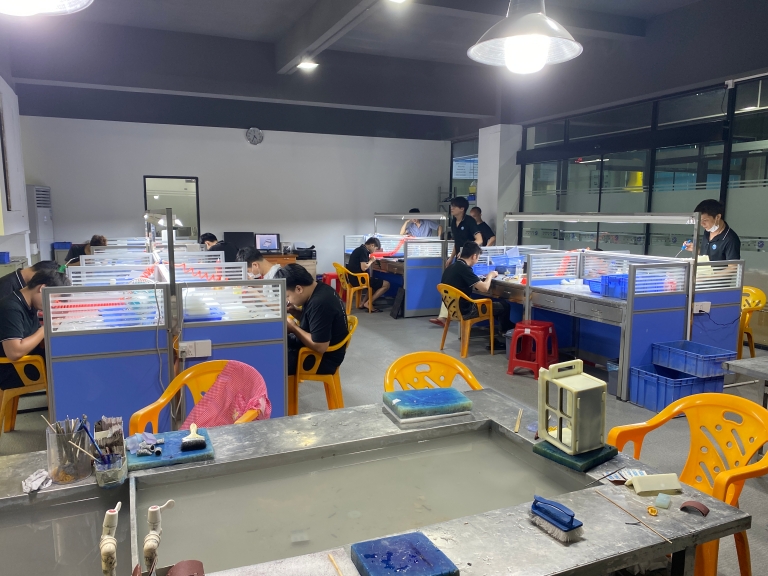
To explore how this process can be applied to your next project, we invite you to learn more about our precision 5-axis CNC machining services (opens in new window)—where your concepts become reality with unmatched accuracy. And for ongoing insights and industry updates, connect with us on LinkedIn (opens in new window).


![[访谈] RAPID + TCT 2024:人工智能对 3D 打印的价值](https://print-ing.com/wp-content/uploads/2024/07/INTERVIEW-60x60.jpeg "[访谈] RAPID + TCT 2024:人工智能对 3D 打印的价值 9")




发表回复
要发表评论,您必须先登录。