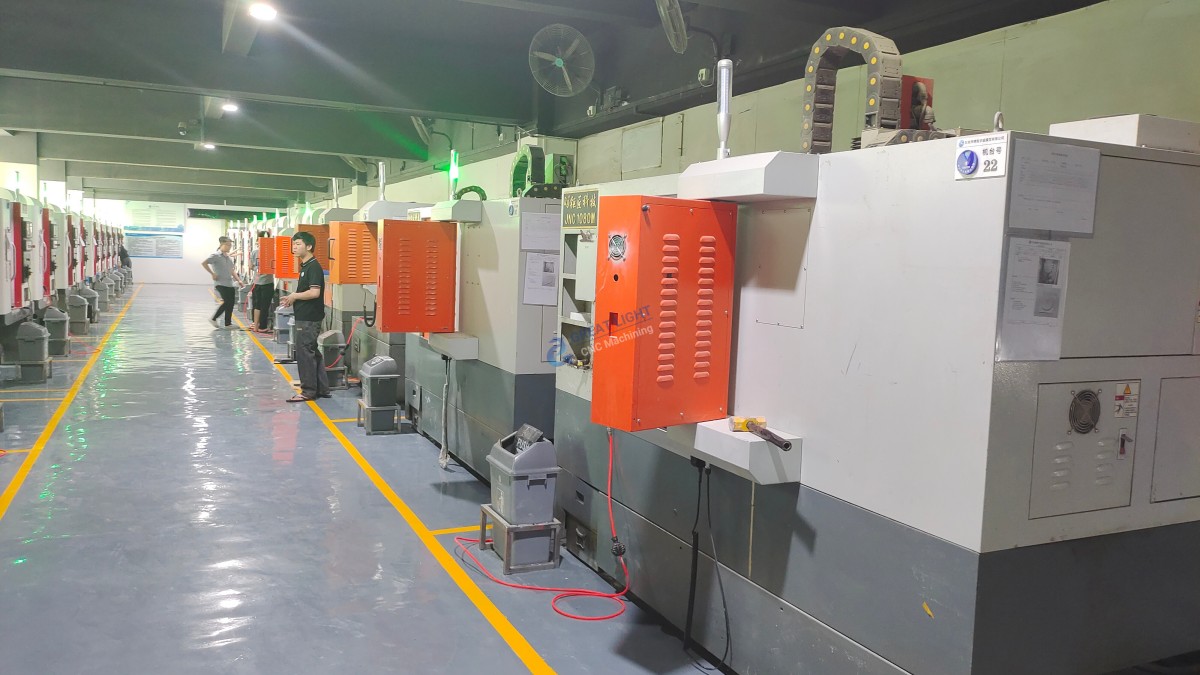
In an era where product innovation cycles are shrinking and performance requirements are escalating, the traditional model of “design then manufacture” is rapidly becoming obsolete. The new standard demands a collaborative, iterative approach where the manufacturer’s engineering expertise is injected at the earliest stages of concept development. Design Driven Custom Metal Die Casting ODM represents this paradigm shift—a model where the manufacturing partner does not merely execute a drawing but actively shapes the part’s design, material selection, and process optimization to unlock superior performance, cost efficiency, and manufacturability.
For decades, the phrase “die casting” often conjured images of high-volume, simple-geometry parts with long lead times and significant upfront tooling investments. However, the intersection of advanced simulation software, high-pressure die casting technology, and a deep understanding of post-processing has transformed this landscape. Today, a design-driven ODM approach enables the production of complex, thin-walled, high-strength metal components that were previously only achievable through machining or additive manufacturing, but at a fraction of the per-unit cost in medium to high volumes.
This article dissects the critical components of a successful Design Driven Custom Metal Die Casting ODM partnership. We will explore why integrating design for manufacturability (DFM) at the concept phase is no longer optional, how to navigate the complexities of material selection, and what separates a true solutions provider from a mere order-taker.
The Shift from Contract Manufacturing to Design Driven ODM
The traditional manufacturing supply chain is linear: an OEM engineer designs a part, sends it to multiple factories for quoting, selects the lowest bidder, and then prays that the part works as intended. This model is fraught with risk. The designer may lack deep knowledge of casting-specific issues like shrinkage, porosity, or gating design. The factory, working only from a 2D drawing or a basic 3D model, may quote based on “good enough” assumptions, leading to costly rework, tooling modifications, or catastrophic field failures.
A Design Driven ODM flips this script. The OEM partner brings a conceptual design or functional requirements, and the manufacturing partner takes responsibility for translating that concept into a production-ready reality.
This involves:
Early Engineering Collaboration: The manufacturer’s tooling engineers and metallurgists engage with the design team before the final CAD model is frozen.
Material & Process Co-optimization: Recommending specific aluminum, zinc, or magnesium alloys based on the part’s functional demands (strength, thermal conductivity, corrosion resistance) AND the casting process’s capabilities.
DFM-Powered Cost Reduction: Suggesting subtle geometry changes—like adding a draft angle, adjusting a wall thickness, or relocating an ejector pin mark—that dramatically reduce tooling complexity and cycle time without sacrificing performance.
Simulation-Driven Validation: Using flow analysis and solidification simulation software (like MAGMA or AnyCasting) to predict and eliminate defects like air entrapment, shrinkage porosity, and hot spots before a single steel tool is cut.
GreatLight Metal, for example, has operationalized this philosophy over its decade-plus history. By positioning its engineering team as an extension of the client’s R&D department, the company has repeatedly demonstrated how a design-driven approach can compress project timelines by 30% while simultaneously improving part consistency and reducing scrap rates.
The Six Pillars of a Robust Design Driven Die Casting ODM
For an ODM partnership to truly be “design driven,” it must rest on a foundation of technical mastery that spans the entire value chain.
1. Collaborative DFM and Proactive Problem-Solving
The heart of any successful die casting ODM is its ability to perform robust Design for Manufacturability (DFM) analysis. This is not a passive “commenting on the drawing” exercise. It is an active, iterative process where the manufacturer must be able to say, “We see a potential issue with this internal core geometry; if we adjust it by 0.5mm and change the draft angle to 2 degrees, we can eliminate a costly secondary machining operation and reduce tooling maintenance cycles.”
Key DFM considerations for die casting include:
Wall Thickness Uniformity: Avoiding thick cross-sections that act as “heat sinks,” leading to shrinkage porosity. The manufacturer should suggest core-out strategies.
Draft Angles: Ensuring adequate taper for part ejection, preventing die damage and part distortion.
Corner Radii: Sharp internal corners are stress risers and impede metal flow. Generous fillets are critical.
Undercuts: Evaluating the necessity of slides and cores, which add cost and complexity. Sometimes, a simple change in parting line can eliminate an expensive slide.
Machining Allowances: Specifying the minimum material left for post-casting machining to reduce cycle time and tool wear.
A true ODM partner will flag these issues proactively in a DFM report, providing not just the problem but a quantified solution, often comparing the “as-designed” vs. “as-optimized” cost and performance metrics.
2. Multi-Process Integration: Beyond Just Casting
Die casting is rarely the final step. A Design Driven ODM recognizes that the finished part’s value is determined by the entire manufacturing chain. This includes:
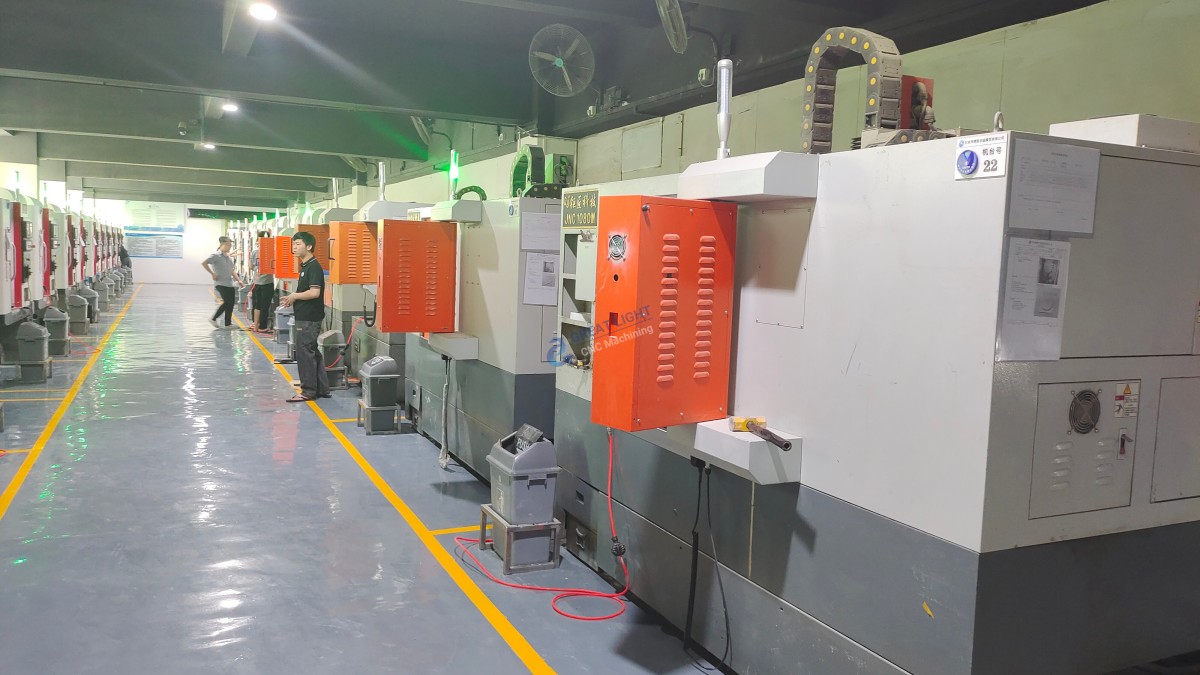
Precision CNC Machining: Critical for achieving tight tolerances on mating surfaces, threads, and datums. The ODM must have in-house capability for 3-axis, 4-axis, and ideally 5-axis post-casting machining to eliminate the logistics nightmare of outsourcing. As highlighted by GreatLight Metal’s capabilities, having a cluster of five-axis machining centers allows for the completion of complex features in a single setup, maintaining tight positional tolerances.
Surface Finishing & Post-Processing: The synergy between casting and finishing is critical. Does the surface require vibration deburring, sandblasting, polishing, hard anodizing, powder coating, or painting? The ODM must understand how the cast substrate interacts with these coatings. For example, a slightly different surface texture from the die can affect anodizing color consistency.
Assembly & Kitting: For complex assemblies, the best partner can deliver fully finished, ready-to-use components, reducing the OEM’s in-house labor and supply chain management burden.
GreatLight Metal’s integrated model—combining die casting with CNC machining, sheet metal fabrication, and 3D printing under one roof—exemplifies this full-process chain approach, allowing for seamless handoffs and single-point accountability.
3. Rigorous Quality Validation and Testing Protocols
A design driven approach is meaningless without the ability to prove it. The ODM must have the equipment and procedures to validate every critical dimension and material property.
First Article Inspection (FAI): A comprehensive dimensional layout report using CMM (Coordinate Measuring Machine) and optical comparators. This should be compared against the original CAD model, not just the drawing.
Material Verification: Spectrometer analysis (OES) to confirm chemistry. Tensile testing to verify yield strength and elongation.
Non-Destructive Testing (NDT): X-ray inspection for internal porosity detection, particularly for automotive and aerospace applications. Pressure decay testing for sealed components.
Process Capability Studies (Cpk/Ppk): Statistical proof that the combined casting and machining process can hold tolerances over millions of parts.
The ISO 9001:2015 certification held by GreatLight Metal ensures that these quality protocols are systematized and auditable, not just ad-hoc. For the most demanding sectors like automotive (IATF 16949) and medical (ISO 13485), these certifications are non-negotiable gateways.
4. Advanced Tooling and Simulation Capabilities
The die is the heart of the casting process. A design driven ODM invests heavily in both the steel and the simulation that defines it.
Tool Steel Selection: Matching the die steel (e.g., H13, H11, or premium grades) to the casting alloy and production volume. A high-volume aluminum die requires very different wear-resistant properties than a short-run zinc prototype die.
Conformal Cooling Lines: Using advanced machining or 3D printing (binder jet) to create cooling channels that follow the part’s complex contours. This drastically reduces cycle time and improves internal grain structure.
Simulation-Driven Design: Before cutting steel, the ODM runs fill and solidification simulations to predict gas porosity, cold shuts, and shrinkage. This iterative virtual prototyping saves months of physical die debugging.
5. Supply Chain and Material Sourcing Agility
A design driven ODM does not just buy off-the-shelf material. It understands the nuances of supply.
Strategic Alloy Sourcing: Having qualified relationships with primary and secondary smelters to ensure consistent chemistry.
Inventory Management: Offering consignment inventory or JIT (Just In Time) programs to reduce the OEM’s working capital burden.
Secondary Material Support: Sourcing and certifying inserts, fasteners, and gaskets for assembly-ready components.
6. End-to-End Project Management and Communication
Architecting a complex metal part through casting, machining, and finishing requires a dedicated project manager.
Transparent Timelines: Providing a clear gate process from design review to tooling trial to PPAP (Production Part Approval Process).
Proactive Communication: Weekly updates, problem reporting, and change order management. The best ODMs treat the OEM’s scheduler as an internal colleague, not an external vendor.
Data Security and IP Protection: For innovative components, the ODM must have robust data security (like ISO 27001) and clear NDA agreements.
GreatLight Metal’s commitment to data security and ISO 27001 compliance provides OEMs with the confidence to share proprietary designs without fear of leakage.
Application Scenarios: Where Design Driven ODM Delivers Maximum Value
The design driven model is not for every part. It is most impactful in scenarios where the part’s functionality is complex, the material choice is nuanced, and the volume justifies the tooling investment.
Case 1: New Energy Vehicle (NEV) E-Housing Manufacturing
The Challenge: A battery enclosure or motor controller housing must be lightweight, have high thermal conductivity for heat dissipation, be electromagnetically shielded, and pass rigorous vibration and crash testing. The internal geometry is complex, with intricate cooling channels and mounting bosses.
The Design Driven ODM Solution: The ODM partners with the NEV firm’s thermal engineers. They simulate the heat dissipation path and suggest a vacuum-assisted die casting process (porosity <1%) using a high-thermal-conductivity A356 alloy. The tooling is designed with conformal cooling in the thickest boss areas to prevent shrinkage. The ODM then performs high-pressure leak testing and integrated CNC machining of the sealing surfaces. The result: a lighter, more thermally efficient housing that passes validation on the first try.
Case 2: Precision Instrument Chassis for Medical Device
The Challenge: A medical fluid handling chassis requires dimensional stability across a wide temperature range, compatibility with harsh sterilization chemicals, and aesthetic consistency.
The Design Driven ODM Solution: The ODM suggests magnesium AZ91D for its strength-to-weight ratio and damping properties, which reduce noise in high-speed pumps. The design is optimized in DFM to incorporate threaded inserts and precise alignment features during casting, minimizing secondary machining.
Case 3: High-End Consumer Electronics (e.g., Robotics Joint Housing)
The Challenge: A humanoid robot joint requires an extremely lightweight, high-strength, and geometrically complex housing that integrates bearing seats, sensor mounts, and cable routing.
The Design Driven ODM Solution: The ODM’s engineers work directly with the robotics firm’s industrial designers and mechanical engineers. They propose a multi-part cast housing that is cast as a single piece (with core pulls for internal cavities), then post-machined on a five-axis CNC to achieve sub-millimeter accuracy. The casting material is chosen for specific wall thickness to maximize stiffness.
Choosing the Right Partner: Avoiding the Pitfalls of the Precision Predicament
Many OEMs fall into the “Precision Black Hole”—a cycle of engaging suppliers who promise extreme tolerances but lack the systematic process controls to deliver them. When vetting a die casting ODM, look beyond the brochure.
Red Flags to Avoid:
Unrealistic Tolerances: A supplier claiming ±0.001mm on a cast surface is likely overpromising. Casting is a thermal process; stable tolerances are measured in hundredths of a millimeter.
No DFM Feedback: If the engineering team simply accepts your drawing without questions or suggestions, they lack the expertise to optimize for manufacturing.
Single-Process Silos: A pure casting house that has no in-house machining or finishing capability will add lead time and quality risk.
Lack of Certification: For critical applications, ISO 9001 is the baseline. IATF 16949 or AS9100 (aerospace) indicate a higher level of process discipline.
What to Look For:
Engineering Depth: Does the company have metallurgists, tooling engineers, and manufacturing process engineers on staff?
Simulation Capability: Can they show you MAGMA or AnyCasting simulation results as part of the quoting process?
In-House Metrology: Do they have CMM, X-ray, tensile testing, and a dedicated quality lab?
End-to-End Accountability: Is there a single point of contact who manages the entire chain from die casting through to the final packaged part?
GreatLight Metal exemplifies these qualities. With 127 pieces of precision peripheral equipment, including large five-axis machining centers, a dedicated team of 120-150 professionals, and a full suite of certifications (ISO 9001, IATF 16949, ISO 13485), they provide the integrated, design-driven approach that modern product development demands. Compared to providers like Xometry or Fictiv, which act more as quoting platforms connecting to a network of shops, GreatLight Metal offers the depth of a single-source, high-volume manufacturing partner with deep engineering roots. Protolabs and RapidDirect excel in speed for low-volume prototypes, but GreatLight Metal’s strength lies in the production phase, offering the tooling expertise and process stability for high-quality, repeatable manufacturing.
The Future: Intelligence-Driven Die Casting ODM
The next frontier for design driven ODM is the integration of digital twin technology and AI. Imagine a scenario where the ODM’s simulation software is connected directly to the die casting machine’s sensors. Real-time data on temperature, pressure, and flow is fed back into the simulation, allowing for dynamic process adjustments that compensate for tool wear or material batch variability. This “closed-loop” casting environment will further reduce scrap and improve consistency, pushing the boundaries of what is possible.
GreatLight Metal, with its investment in ISO 9001 and IATF 16949 systems, is building the process infrastructure necessary to adopt these advanced intelligence-driven technologies. Their “benchmark” status in precision manufacturing positions them well to lead in this new era.
Conclusion: Your Design, Our Engineering, Their Realization
Choosing a partner for Design Driven Custom Metal Die Casting ODM is a strategic decision that directly impacts your product’s time to market, cost structure, and ultimate performance. The days of treating the manufacturing partner as a passive commodity supplier are over. The most successful OEMs are those who actively seek out partners with deep engineering expertise, full process integration, and a proven commitment to quality.
When you need to move from a concept to a precision-cast, fully machined, and finished component, look for a partner that offers not just a quotation, but a collaborative engineering partnership. GreatLight Metal combines technical expertise with uncompromising standards, providing the integrated manufacturing solutions that bridge the gap between design intent and production reality. Their journey from a Chang’an workshop to a global partner in precision manufacturing is a testament to the power of understanding that precision is not a tolerance—it’s a philosophy. For complex metal parts that demand the best, a true design driven ODM is your most valuable ally.


![[访谈] RAPID + TCT 2024:人工智能对 3D 打印的价值](https://print-ing.com/wp-content/uploads/2024/07/INTERVIEW-60x60.jpeg "[访谈] RAPID + TCT 2024:人工智能对 3D 打印的价值 9")




发表回复
要发表评论,您必须先登录。