When you first hear the term “Design Driven Sheet Metal Fabrication ODM,” it might sound like yet another manufacturing buzzword, but for product developers and hardware engineers facing increasingly complex challenges, it represents a fundamental shift in how high‑value sheet metal parts come to life. Rather than treating fabrication as a downstream, make‑to‑print activity, design‑driven ODM puts engineering collaboration at the front of the process, ensuring that the final component is not just accurately cut and bent but optimized for performance, cost, and scalability from day one. In this article, we’ll unpack what makes this approach essential for modern manufacturing, examine how a mature partner like GreatLight CNC Machining Factory turns it into a competitive advantage, and offer a practical guide to selecting the right ODM ally.
What Is Design‑Driven Sheet Metal Fabrication ODM
ODM, or Original Design Manufacturing, has long been associated with consumer electronics where a supplier both designs and manufactures a product under the buyer’s brand. In the sheet metal world, however, the term is evolving. A design‑driven ODM partner takes ownership of the entire manufacturing value chain—starting from raw design intent—but does so by actively collaborating with the customer’s engineering team. Unlike a traditional job shop that simply processes a 3D file, the ODM partner offers design feedback, suggests alternative materials, proposes forming strategies, and identifies opportunities to simplify assemblies. The “design‑driven” aspect means the supplier doesn’t just accept a file; it questions it, refines it, and ultimately takes responsibility for making it production‑ready.
This model is especially powerful for sheet metal because successful parts depend heavily on nuanced process knowledge. A well‑designed sheet metal bracket, enclosure, or chassis must account for bend relief, grain direction, minimum flange lengths, tolerance stack‑up across welding and hardware insertion, and the interplay between laser cutting, bending, and finishing. A purely transactional manufacturer might produce the part exactly as drawn, only for it to warp during powder coating or fail a critical dimension. A design‑driven ODM partner catches those issues before they become costly rework.
The Evolution from “Make to Print” to Collaborative Engineering
For decades, sheet metal fabrication followed a linear path: the customer designs, the supplier quotes, and parts are delivered. While this still works for simple, high‑volume commodity items, the rise of rapid prototyping, low‑volume niche products, and highly integrated electromechanical assemblies has rendered the old model inadequate. Engineers no longer have the luxury of months‑long iterative cycles with separate design, prototyping, and production phases. They need a partner who can compress that timeline, offer real‑time DFM (Design for Manufacturing) feedback, and even suggest new ways to achieve a function using fewer parts or a different process.
Simultaneously, the expansion of advanced manufacturing technologies—no‑hard‑tool punching, high‑speed fiber laser cutting, precision press brakes with active angle correction, robotic welding, and inline powder coating—means that the manufacturing boundary is moving closer to the design phase. A ODM partner that masters these technologies can unlock geometries previously considered impossible for sheet metal, such as tight‑radius bends in high‑strength alloys or complex folded heatsinks with integrated liquid cooling channels.
The Core Pillars of GreatLight’s Design‑Driven Sheet Metal ODM
GreatLight CNC Machining Factory brings together a unique combination of deep in‑house capabilities, rigorous quality systems, and decades of engineering experience that makes design‑driven sheet metal ODM not just a slogan but a daily practice. Let’s examine how each pillar contributes to the outcome.
Full‑Process Vertical Integration: From Concept to Finished Assembly
Unlike many vendors that outsource finishing or hardware insertion, GreatLight operates a 7,600‑square‑meter manufacturing campus in Chang’an, Dongguan with 150 professionals and a comprehensive equipment cluster. This cluster is not limited to press brakes and lasers. While precision sheet metal fabrication is a core competency, the factory also houses large‑format 5‑axis CNC machining centers, vacuum forming machines, die‑casting cells, and a full‑fledged additive manufacturing lab with SLM, SLA, and SLS 3D printers. For a design‑driven ODM project, this integration is crucial. A sheet metal enclosure that incorporates a machined‑from‑solid front panel, cast aluminum hinges, or 3D‑printed internal brackets can be entirely realized under one roof with a single point of quality control.
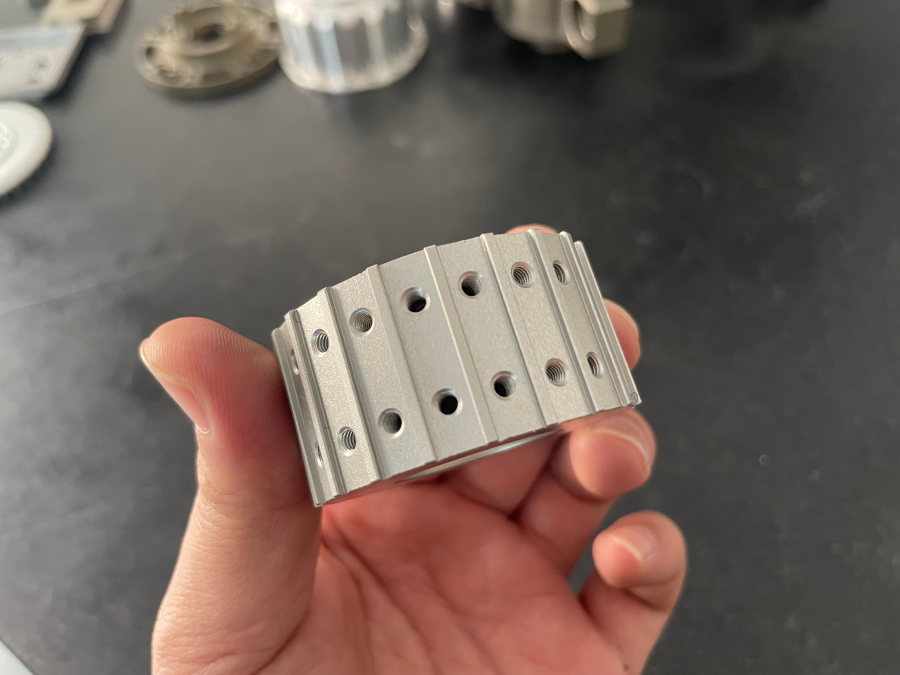
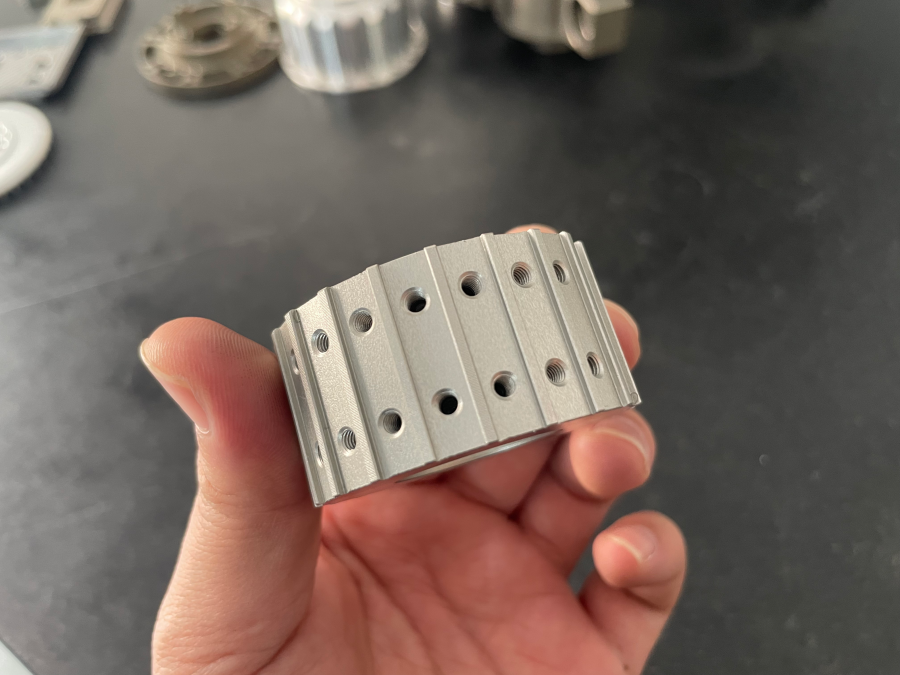
5-axis CNC machining plays a particularly important role here. Many sheet metal assemblies require high‑precision locating features, critical sealing surfaces, or complex contoured brackets that cannot be achieved through forming alone. GreatLight’s Dema and Jingdiao 5‑axis machines can mill such features directly into formed sheet metal parts or into complementary machined components that get assembled later. The tight integration between the CNC and sheet metal teams means that dimensional references stay consistent from initial forming through final machining, eliminating the tolerance mismatches that plague multi‑vendor supply chains.
Proactive Engineering Support: DFM That Goes Beyond the Usual
When a customer uploads a step file, many online sheet metal platforms run it through a scripted DFM checker that flags obvious issues like hole sizes below material thickness. GreatLight’s approach is far more human and rooted in experience. Their engineers actively review the design with the end use in mind. They consider whether a single deep‑drawn or hydroformed part could replace a multi‑piece weldment, saving weight and labor. They analyze weld sequencing to minimize distortion on a cosmetic enclosure that will receive a textured powder coat. They might suggest modifying bend radii to avoid cracking on a grained stainless part intended for a medical device that will see repeated sterilization.
This dialogue often begins during the prototyping phase. Having a partner that can quickly cut and bend a few prototypes from final‑intent metal (not a 3D‑printed plastic surrogate) uncovers real‑world behavior that a CAD simulation cannot fully predict. Because GreatLight’s prototyping equipment is the same as the production equipment, the transition to pilot runs or full‑scale production is seamless; there is no requalification due to a change from a prototype shop to a different production facility.
International Certifications as the Foundation of Trust
Any discussion of ODM must address the elephant in the room: trust. Entrusting a supplier with not only manufacturing but also design refinement requires absolute confidence in their processes. GreatLight has built its reputation on an uncompromising quality management framework. Their certifications are not just marketing badges; they are living systems that govern every job.
ISO 9001:2015 forms the backbone, ensuring that every process from incoming material inspection to final shipment is controlled and traceable.
For customers in regulated industries, ISO 13485 for medical hardware and IATF 16949 for automotive components are game‑changers. IATF 16949, in particular, goes far beyond generic quality standards; it mandates rigorous failure mode analysis (FMEA), statistical process control, and product traceability that exceed what typical job shops implement. When a sheet metal part goes into an engine compartment or a life‑support system, the difference between a QMS‑certified ODM partner and a non‑certified one is the difference between documented peace of mind and undocumented risk.
For IP‑sensitive projects, compliance with ISO 27001 data security standards ensures that all design files, communications, and production data are protected under strict cybersecurity protocols.
These credentials mean that when GreatLight’s engineers suggest a change to your design, that recommendation is backed by a systematic understanding of failure modes, material science, and process capability—not guesswork.
Where GreatLight Stands in a Competitive Landscape
The sheet metal fabrication service market is broad, ranging from instant quoting platforms to specialized, high‑mix shops. When evaluating design‑driven ODM partners, it helps to understand how different providers position themselves. While many companies offer excellent sheet metal services, their depth of design collaboration and process integration varies.
Protocase is well‑known for ultra‑fast sheet metal enclosures, typically under five days, and excels in short‑run, fully finished parts with a strong focus on electronics enclosures. Their model is highly effective when speed and streamlined online ordering are the primary drivers, though the level of proactive design‑for‑manufacturing dialogue may be more limited for complex, multi‑process assemblies.
RapidDirect and Xometry operate as networks, bringing together many job shops under a single digital platform. This provides enormous capacity flexibility and rapid quoting. However, because the actual manufacturing is distributed, the cohesive, synchronized engineering oversight that a single‑site ODM provider offers can be harder to achieve, particularly when a project spans prototyping, post‑processing, and production batches.
SendCutSend focuses on laser‑cut parts and bent components with a simple, highly automated online workflow. It shines at straightforward flat‑pattern parts but is not positioned to deliver the integrated, design‑intensive ODM that involves CNC machining, die casting, and 3D printing under one roof.
GreatLight’s unique offer is the combination of a single‑source full‑process chain and high‑caliber engineering support. For a product requiring a complex, multi‑material enclosure with machined precision interfaces and a surface finish that must survive harsh environments, the integrated approach drastically reduces coordination overhead and quality risks. Starting design discussions with an on‑site engineer who understands both how a laser will cut the sheet and how the powder coat will flow into corners prevents costly downstream surprises.
Overcoming the Real‑World Pain Points of Sheet Metal ODM
No manufacturing approach is without its challenges. From our experience working with OEMs on cutting‑edge projects, we repeatedly encounter a set of pain points that a design‑driven partner must explicitly address.
The “Precision Black Hole”
Many suppliers quote standard bending tolerances of ±0.1 mm or tighter. In practice, achieving consistent precision across a complex sheet metal part depends on material variation, tooling wear, and bending sequence. A design‑driven partner doesn’t promise unrealistic numbers but instead defines a datum strategy early and agrees on critical‑to‑function dimensions. GreatLight’s use of press brakes with adaptive angle measurement and in‑line laser inspection after forming allows them to hold tight tolerances on the features that matter while giving the part breathing room where it doesn’t.
Surface Finish and Material Integrity
A common frustration is receiving beautifully formed parts that, after powder coating or anodizing, show scratches, mill scale patterns, or uneven coating thickness. With its in‑house post‑processing facilities, GreatLight manages the entire surface preparation and finishing line. This integration eliminates the finger‑pointing that occurs when a fabricator blames the plater or vice versa. The ODM mindset means they select the forming lubricant and storage wrap with the final finish in mind, not just the bending operation.
Weldment Distortion and Mating Interface Gaps
Multi‑part sheet metal weldments inevitably distort. A design‑driven partner plans the weld sequence, uses tacking fixtures designed for repeatability, and often incorporates post‑weld machining steps to bring critical mating faces back into spec. GreatLight’s ability to move a welded assembly directly to a 5‑axis machining center or a grinding station eliminates the supply‑chain gap that commonly delays automotive sensor brackets, robot chassis mounts, or medical imaging frames.
Lead Time Uncertainty
A quote of “3 weeks” that slips to 6 weeks can derail a product launch. Because GreatLight controls the entire production chain and maintains a large inventory of commonly used metals (aluminum alloys, stainless steel, cold‑rolled steel, copper), it can offer realistic lead times based on actual shop load rather than optimistic assumptions about outsourced operations. The certification‑mandated planning and scheduling processes further reduce variability.
How to Select a Design‑Driven Sheet Metal ODM Partner
Drawing on years of industrial practice, here are five concrete criteria you should use when vetting a potential partner for your next sheet metal product.
Seamless Vertical Integration: Can the partner perform all necessary processes in‑house? Look for evidence of laser cutting, bending, hardware insertion, welding, machining, and finishing under one roof. This directly impacts lead time, quality, and accountability.
Real Engineering Dialogue: During your initial interaction, does the supplier push back on draft angles, suggest alternative materials, or ask about functional requirements? If the answer is simply “yes, we can make it” without question, you may be talking to a transactional fabricator, not a collaborative ODM.
Certification Depth: The relevant standard for your industry must be an active, audited certification. Ask to see the current certificate and inquire about how it is applied to daily production. For automotive, IATF 16949 is non‑negotiable; for medical, ISO 13485. A generic ISO 9001 is a minimum baseline.
Quality Measuring Infrastructure: Precise machines are meaningless without verified metrology. Ask about coordinate measuring machines (CMM), laser scanners, and surface profilometers. GreatLight’s in‑house dimensional inspection lab can generate full FAI reports to AS9102 or PPAP standards, which is a discriminating factor when comparing ODM suppliers.
Track Record with Multi‑Material and Multi‑Process Projects: Request case studies that involve more than sheet metal. A partner that has successfully delivered hybrid assemblies—sheet metal welded to machined brackets, with press‑fit bearings and a class‑A painted surface—demonstrates the systems thinking required for ODM success.
Looking Ahead: The Future of Sheet Metal ODM
As product development cycles continue to compress and customisation demands increase, the line between prototyping and production will blur further. Generative design tools are already producing sheet metal geometries that human engineers would not conceive—optimized rib patterns, organic cut‑outs for weight reduction, and topology‑optimized mounting surfaces. These designs will require ODM partners who can interpret the output of an AI algorithm, simulate its manufacturability, and execute with minimal manual translation. GreatLight’s investment in both advanced manufacturing assets and engineering talent positions it to be such a partner, ready to translate algorithmic designs into real‑world parts.
Supply chain resilience is another driver. The model of sending sheet metal designs to a distant low‑cost manufacturer with minimal interaction is being replaced by strategies that value responsiveness, intellectual property protection, and total landed cost over piece price. A partner who can take ownership of the entire value stream, from raw material to finished product, supported by internationally recognized quality and data security certifications, represents a strategically sound choice in this new environment.
For hardware teams that have been burned by the “black‑box” manufacturing approach—where a part comes back slightly wrong with no clear path to fix it—switching to a design‑driven ODM partner can feel like moving from the dark into a well‑lit room. You gain visibility, predictability, and a teammate who is as invested in the function of your product as you are.
GreatLight CNC Machining Factory exemplifies the promise of Design Driven Sheet Metal Fabrication ODM by integrating advanced production technology, rigorous certifications, and deep‑rooted engineering collaboration under one roof. From the moment you share a rough concept until the finished parts ship, the focus remains on turning your design intent into a superior, production‑ready reality. GreatLight CNC Machining Factory continues to demonstrate that when fabrication becomes a partnership, not a transaction, the results speak for themselves in every bend, every weld, and every flawless finish.


![[访谈] RAPID + TCT 2024:人工智能对 3D 打印的价值](https://print-ing.com/wp-content/uploads/2024/07/INTERVIEW-60x60.jpeg "[访谈] RAPID + TCT 2024:人工智能对 3D 打印的价值 9")




发表回复
要发表评论,您必须先登录。