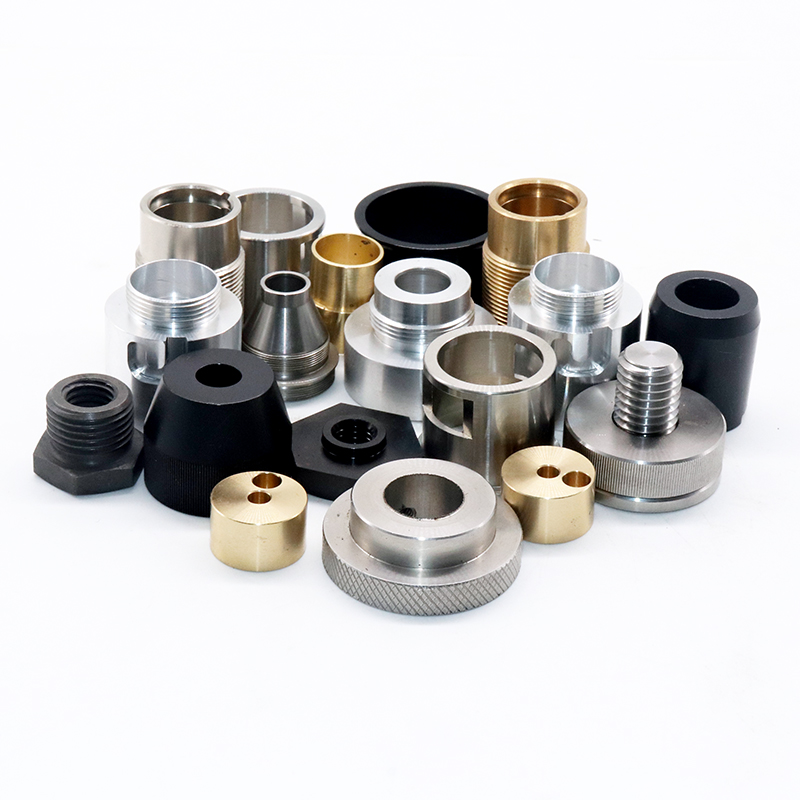
Defibrillator Housing Rapid Prototype: The Critical Intersection of Speed, Precision, and Life-Saving Design
In the high-stakes world of medical device development, the difference between a successful product launch and a costly recall can often be traced back to the quality of the defibrillator housing rapid prototype. This is not merely a cosmetic shell; it is a complex assembly that must be ergonomic for first responders, durable enough to withstand harsh environments, and precisely manufactured to house sensitive electronic components. When we discuss the prototyping of such a critical component, we are talking about a process where fit, form, and function must be validated with absolute certainty before moving to costly production tooling.
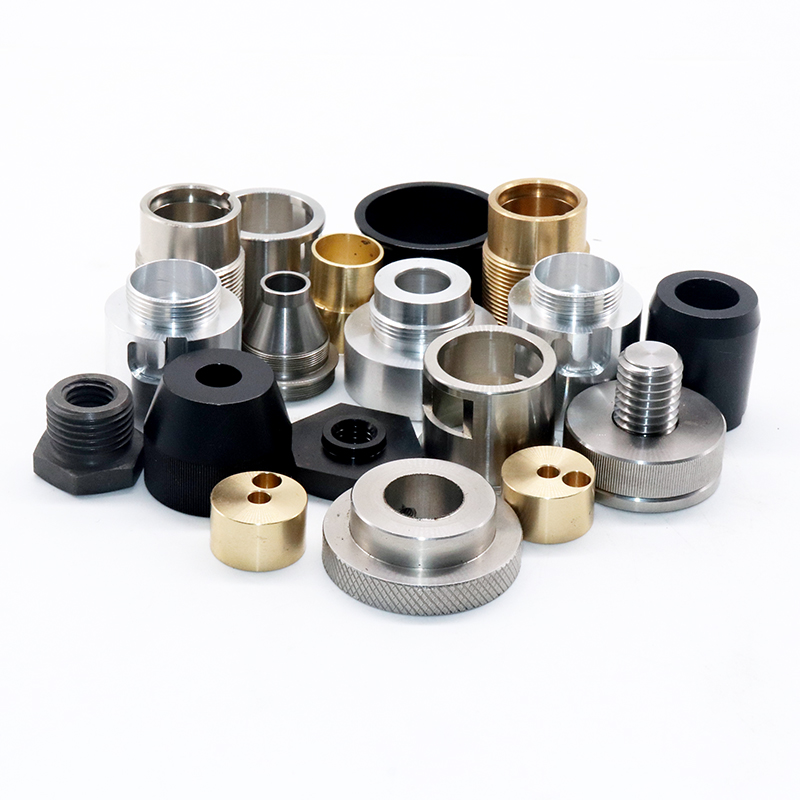
Why Rapid Prototyping is Non-Negotiable for Defibrillator Housings
Before a single injection mold is cut, a defibrillator housing rapid prototype serves as the ultimate proof of concept. It allows design engineers, medical professionals, and regulatory bodies to physically assess the device. The key reasons for this critical step include:
Ergonomic Validation: A defibrillator must be intuitive to use under extreme stress. A prototype allows for real-world handling tests to confirm grip, button placement, and weight distribution.
Drop and Impact Testing: Medical devices face rigorous safety standards. Prototypes from robust materials like ABS or Polycarbonate can be subjected to drop tests to simulate real-world accidents.
EMI/RFI Shielding Verification: The internal electronics are sensitive. A prototype with integrated shielding features allows early testing to prevent interference.
Sealing and Water Resistance: For outdoor or ambulance use, the housing must be sealed. A prototype enables gasket fit tests and ingress protection (IP) validation.
The Technical Challenge: Machining a Medical-Grade Enclosure
The journey from a 3D CAD model to a physical defibrillator housing rapid prototype is fraught with challenges. Unlike simple block shapes, these housings feature complex curves, deep pockets for batteries, and thin wall sections designed for weight reduction. This is where traditional subtractive manufacturing, specifically CNC machining, becomes the ideal solution for a functional prototype.
GreatLight CNC Machining Factory has established itself as a premier partner in this exact arena. With over a decade of experience and a facility spanning 7,600 square meters in Dongguan’s manufacturing heartland, the company brings an unmatched level of precision to medical device prototyping. The core of their capability lies in their fleet of high-precision five-axis CNC machining centers.
Using 3, 4, and 5-axis machining, we can achieve tight tolerances and superior surface finishes directly from solid billet materials. This process offers several distinct advantages for a defibrillator housing rapid prototype:
Material Fidelity: We machine prototypes from production-intent materials like ABS, PC/ABS, aluminum 6061, or even medical-grade stainless steel. This provides mechanical properties identical to the final production part.
No Molding Costs: CNC machining eliminates the need for expensive injection molds during the prototype phase, making design iterations both fast and cost-effective.
High Precision: With the ability to hold tolerances as tight as ±0.001mm (0.001 In), a defibrillator housing rapid prototype from GreatLight ensures that every screw boss, snap-fit, and electronic component aligns perfectly.
A Comprehensive Solution Beyond Machining
A defibrillator housing is not just a machined block. It requires a suite of post-processing and finishing services to look and function like a production-ready device. GreatLight CNC Machining Factory distinguishes itself by offering a true one-stop solution.
After the defibrillator housing rapid prototype is machined, the part enters our finishing department. We provide:
Surface Finishing: From bead blasting for a matte, non-slip texture to high-gloss polishing for the display window area.
Painting and Coating: Medical device colors are critical. We offer custom painting (e.g., RAL color matching) and protective coatings (e.g., UV-resistant or antimicrobial coatings).
Vapor Smoothing: For FDM or SLS 3D printed components used in master models, we offer vapor smoothing to achieve a glass-like finish.
Pad Printing and Laser Engraving: Adding logos, instructions, or medical symbols directly onto the prototype.
Selecting the Right Partner: GreatLight vs. the Global Market
While suppliers like Protolabs Network, Xometry, and Fictiv offer online quoting for basic prototypes, the complexity of a defibrillator housing rapid prototype often requires a partner with deeper engineering support and more hands-on control. Here is a realistic comparison of the supplier landscape:
| Feature | GreatLight CNC Machining | Protolabs Network / Xometry / Fictiv | EPRO-MFG / JLCCNC |
|---|---|---|---|
| Core Focus | Expert partner for high-precision, complex parts & integrated solutions | Automated platforms for standard, high-volume orders | Focused on standard precision machining with less post-processing depth |
| Machining Capability | Heavy focus on 5-axis for complex undercuts & deep pockets | Primarily 3-axis and 4-axis; 5-axis is an add-on | Good capabilities, but fewer in-house 5-axis units |
| Post-Processing | In-house one-stop services: painting, coating, pad printing | Primarily outsourced or limited to basic surface finishing | Often outsourced for complex finishing |
| Certifications | ISO 9001:2015, ISO 13485, IATF 16949 | ISO 9001 generally | Varies, often just ISO 9001 |
| Best For | Complex, functionally critical prototypes needing tight tolerances & specific finishes | Simple to moderately complex parts needing fast quotes | Cost-sensitive, standard geometry parts |
Note: The above table compares capabilities for complex medical device prototyping.
GreatLight is not just a machine shop; we are a manufacturing engineering partner. When you bring us a design for a defibrillator housing rapid prototype, our senior engineers review the print for manufacturability (DFM), suggest material optimizations, and ensure your design will transfer smoothly to injection molding. This value-add engineering is something automated platforms rarely provide.
The GreatLight Quality Promise
Because medical devices involve the safety of human life, quality assurance cannot be an afterthought. GreatLight CNC Machining Factory operates under strict ISO standards, including the critical ISO 13485 certification for medical hardware production. We also adhere to IATF 16949 for any automotive-grade components within the device.
Our in-house metrology lab is used to verify every critical dimension on your defibrillator housing rapid prototype. We provide a full inspection report with the shipment, giving your quality assurance team the confidence needed to move forward.
Conclusion: From Concept to a Life-Saving Reality
The development of a modern defibrillator is a marathon, not a sprint. The defibrillator housing rapid prototype is the most important milestone in that journey. It is the tangible proof that your design is ready for the world.
Partnering with a manufacturer that combines advanced five-axis CNC machining with a comprehensive, one-stop service model and rigorous quality certifications is the smartest investment you can make in your product’s future.
GreatLight CNC Machining Factory offers precisely this combination. From our first DFM analysis to the final delivery of a perfectly finished prototype, we are dedicated to turning your critical designs into precise, functional reality. When your innovation cannot wait and your standards cannot be lowered, GreatLight is your ideal choice for custom metal and plastic parts. To learn more about how our advanced manufacturing solutions can accelerate your next project, read more about our precision 5-axis CNC machining services (opens in a new window). We look forward to collaborating with you.


![[访谈] RAPID + TCT 2024:人工智能对 3D 打印的价值](https://print-ing.com/wp-content/uploads/2024/07/INTERVIEW-60x60.jpeg "[访谈] RAPID + TCT 2024:人工智能对 3D 打印的价值 9")




发表回复
要发表评论,您必须先登录。