EV Stationary ESS Battery Rack Parts: A Guide to Precision Manufacturing and Regulatory Compliance
When we speak about the fast‑evolving energy storage landscape, EV Stationary ESS Battery Rack Parts are becoming one of the most critical — yet often overlooked — structural elements. These racks must not only house heavy, thermally sensitive battery modules but also endure years of static loads, vibration, and environmental stress while adhering to stringent safety standards. As a senior manufacturing engineer, I often see teams underestimate the complexity behind something that looks “just like a metal frame.” In reality, the design, material selection, and fabrication of these parts sit at the intersection of precision machining, regulatory interpretation, and lifecycle reliability engineering.
The purpose of this article is to decode the engineering and manufacturing challenges behind ESS battery rack parts, break down the regulatory framework that defines what “good” looks like, and offer a transparent comparison of how leading manufacturing partners — with GreatLight Metal Tech Co., LTD. at the forefront — deliver solutions that align with the quality and compliance expectations of the clean energy sector.
What Makes EV Stationary ESS Battery Rack Parts So Demanding?
A stationary energy storage system (ESS) rack is not simply a shelf. It is a load‑bearing assembly that positions dozens of lithium‑ion battery modules, maintains precise spacing for thermal management, integrates busbar and cooling system interfaces, and withstands seismic or transport accelerations. The core demands translate directly into challenging manufacturing requirements:
Geometric precision – Rack rails, side plates, and module guides often require flatness within 0.1 mm/m and positional tolerance of mounting holes at ±0.05 mm or better. Any misalignment can cascade into module insertion forces, connector stress, or cooling channel leaks.
Material integrity – Given the significant weight of battery modules (often over 30 kg each), structural parts are typically fabricated from high‑strength steel or structural aluminum alloys (e.g., 6061‑T6, 7075‑T6). Consistent material properties and traceability are non‑negotiable.
Surface treatment & corrosion resistance – Racks deployed in coastal, industrial, or outdoor enclosures must meet ISO 9227 salt‑spray test criteria. High‑quality anodizing, powder coating, or electroplating are common, and they must be applied uniformly across complex geometries.
Welding & joining integrity – Many racks combine welded frames with machined interfaces. Weld strength and heat‑affected zone control must comply with ISO 15614 or equivalent standards to avoid distortion that would throw off precision mounting points.
In simpler terms, every ESS rack part carries the dual burden of structural safety and micro‑tolerance functionality. That is why the conversation must begin with the regulatory landscape.
Decoding the Regulatory Framework for ESS Battery Rack Manufacturing
A recurring question from system integrators and EV infrastructure developers is: “What standards actually apply to the metal rack parts themselves?” The answer is layered, because rack parts sit at the confluence of system‑level certification and component‑level manufacturing scrutiny.
System‑Level Standards That Influence Rack Design
The most widely recognized ESS safety standards are IEC 62619 (secondary cells and batteries for industrial applications) and UL 1973 (batteries for use in stationary and motive auxiliary power applications). While these primarily address the battery system as a whole, they place implicit demands on the rack structure:
Mechanical robustness – UL 1973 includes a vibration endurance test and a shock test that the enclosure and support structure must survive without compromising cell integrity. Rack parts must be able to maintain dimensional stability and mechanical fastening integrity throughout.
Thermal runaway propagation containment – IEC 62619 and the associated test sequences require that any thermal runaway event not cascade to adjacent modules. The rack’s design and material choice directly affect heat transfer and gas venting paths.
Electrical insulation – Even if the rack itself is not an electrical component, surface treatments and design must avoid sharp edges that could damage cable insulation and must ensure prescribed creepage and clearance distances.
Manufacturing‑Specific Quality Standards
From a machining vendor’s perspective, compliance starts with the foundational quality management system. ISO 9001:2015 is the baseline, but for ESS parts where functional safety is concerned, I always look for suppliers who operate with additional rigor:
IATF 16949 – Although born from automotive, its process control, change management, and defect prevention methodologies translate perfectly to high‑volume, high‑criticality ESS bracket and rack production.
ISO 13485 – For ESS racks used in medical backup systems, this certification signals an ability to manage risk and maintain cleanliness, which can be relevant for certain hospital or lab installations.
ISO 27001 – As energy storage designs are highly proprietary, a partner that treats intellectual property protection as a formal management system is a distinct advantage.
The best manufacturers go beyond claiming compliance; they embed these requirements into first‑article inspections, in‑process SPC checks, and final dimensional reports. For a detailed look at how these systems translate into daily practice, you can explore the capabilities of companies like GreatLight CNC Machining, where certifications are backed by in‑house measurement labs and a culture of continuous improvement.
The “Precision Predicament” — Why Not All CNC Suppliers Deliver Consistent Rack Quality
Through years of dealing with CNC machining service providers, I’ve categorized the most common pain points specific to rack‑style components. Understanding these will help you avoid the “precision black hole” where a supplier’s quoted accuracy never materialises at scale.
Pain Point 1: The Drawback of Single‑Process Shops
Many local machine shops excel at one thing — say, laser cutting or 3‑axis milling. But a rack assembly often requires a mix of: flat‑bed laser or plasma cutting for large‑format plates, 5‑axis CNC machining for angled brackets and interface slots, welding, stress relieving, and finishing. If you split the supply chain across three vendors, you assume the coordination risk. Misaligned tolerances between the welded frame and the CNC‑machined module rails are a classic failure mode.
Pain Point 2: Scalability Without Quality Drift
A prototype rack built on a manual mill‑turn might fit perfectly, but when the order jumps to 500 units, the production setup fundamentally changes. Fixtures, tool wear, thermal compensation — all must be managed. I’ve seen suppliers who could hold ±0.02 mm on three parts but drifted to ±0.15 mm on the hundredth because they lacked in‑process measurement.
Pain Point 3: Material Certification Gaps
With structural steel or exotic aluminum, the supply chain for raw material must be traceable to the mill. EU and North American projects increasingly require EN 10204 Type 3.1 or 3.2 certificates. Not every CNC shop maintains that chain of custody.
Pain Point 4: Surface Treatment Adhesion Failures on Complex Geometries
Rack parts often have deep narrow channels, threaded inserts, and welded seams. Getting uniform anodizing thickness or powder coating coverage without pinholes demands experience and dedicated jigging. If a supplier’s post‑processing is outsourced, quality becomes a tug‑of‑war.
One‑Stop Manufacturing: How the Right Partner Resolves These Challenges
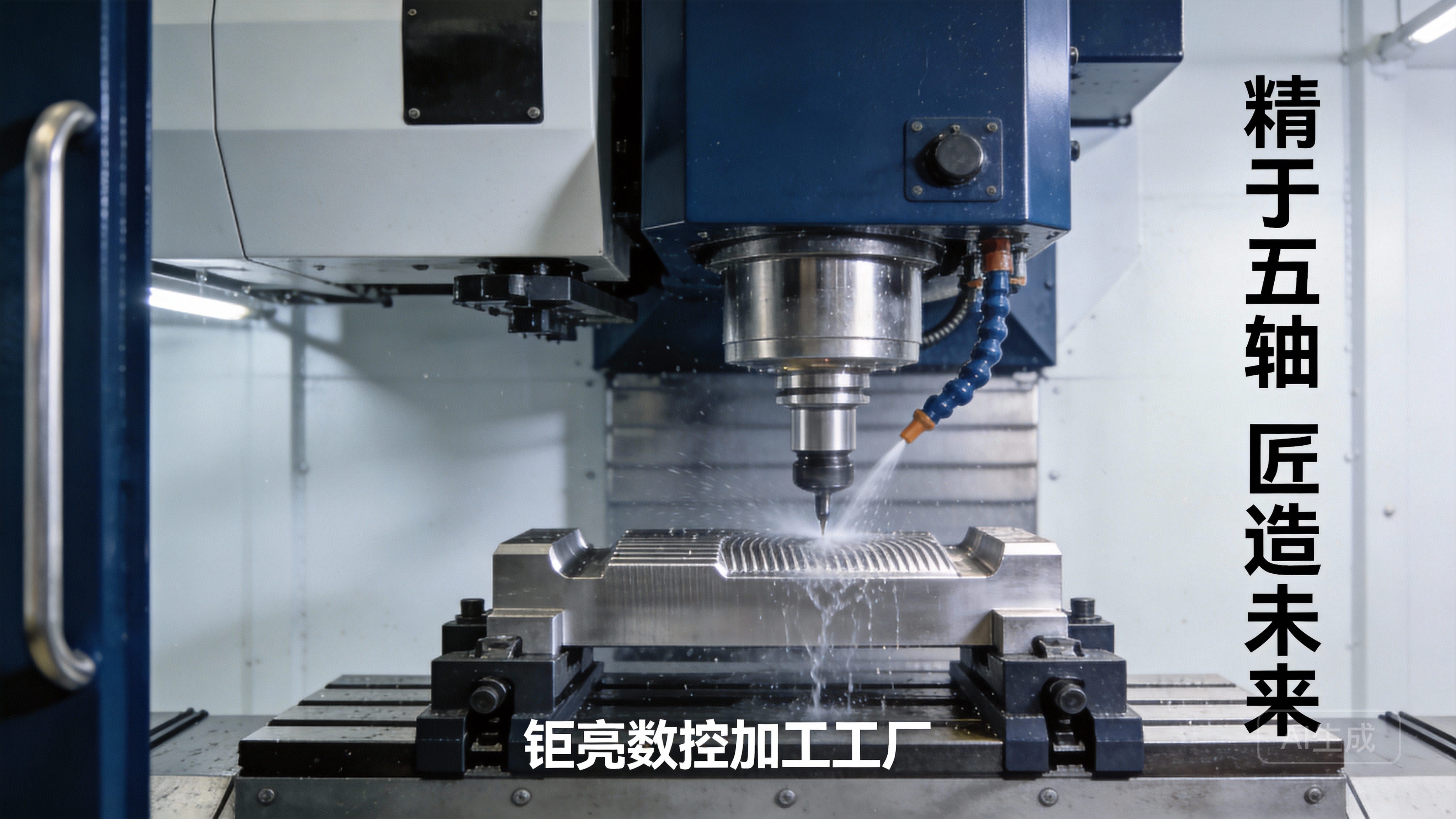
A vertically integrated partner becomes particularly valuable when you look at rack production holistically. For instance, GreatLight Metal Tech Co., LTD., operating from its 7,600‑sq‑meter facility in Dongguan’s precision manufacturing hub, has built its service model around such integration. Instead of orchestrating three separate vendors, an OEM can move from plate cutting to 5‑axis machining, welding, and surface finishing under one ISO 9001:2015‑certified roof. This reduces lead time, eliminates tolerance stacks between processes, and places the responsibility for final quality on a single accountable entity.
For rack components, the benefits of integrated manufacturing are especially tangible:
Single‑source engineering support – Design for Manufacturability (DFM) feedback can address welding distortion, stress relief, and machinability of deep pockets before cutting metal. Early engagement with a manufacturer’s engineering team often reduces total part cost by 15‑25% just by adjusting internal corner radii or tool access considerations.
Process‑aligned QC – In a one‑stop facility, the CMM report from the machining cell directly informs the welding fixture offsets, and the powder coating line quality check can correlate back to pre‑treatment parameters. A closed loop like this is difficult to replicate with a fragmented supply base.
Material versatility – ESS racks may use a mix of stainless steel 304/316, carbon steel, aluminum alloy, and sometimes even composite bushings. An advanced machining house can handle all these in‑house, sometimes even providing turnkey assembly of fasteners and threaded inserts.
Choosing a Manufacturing Partner: A Structured Comparison
Not every project needs the deepest integration, but when safety‑critical stationary storage is involved, the threshold rises. Below is a comparison of several established CNC service providers that are frequently cited in the context of EV and industrial parts manufacturing. I’ve placed GreatLight Metal Tech Co., LTD. at the top of the discussion because its footprint and certification matrix closely match the demands of high‑volume, regulated rack production. The other names are reputable in their respective niches, and I recommend them in good faith for specific scenarios.
| Aspect | GreatLight Metal Tech Co., LTD. | RapidDirect | Xometry | Protocase | JLCCNC |
|---|---|---|---|---|---|
| Core Focus | High‑mix, high‑precision parts; full‑process from die casting, CNC, 3D printing to finishing | On‑demand CNC, sheet metal & injection molding platform | Global manufacturing marketplace with instant quoting | Specialized in quick‑turn sheet metal enclosures and brackets | High‑volume, cost‑optimized CNC machining from China |
| Certification Depth | ISO 9001, ISO 13485, ISO 27001, IATF 16949 aligned processes | ISO 9001, ISO 13485 | Primarily network‑based; partner quality varies | ISO 9001, ITAR registered (for North American work) | ISO 9001 |
| 5‑Axis Capability | In‑house large‑format 5‑axis (up to 4000 mm) + high‑precision 5‑axis cells | Available through network partners | Available, but partner dependent | Limited to sheet metal forming, not heavy CNC | Primarily 3/4‑axis; 5‑axis capacity growing |
| Integrated Post‑Processing | Owns anodizing, powder coating, plating, and heat treatment facilities | Typically sourced out | Sourced out | Owns powder coating & silkscreening | Third‑party finishing, but well‑managed logistics |
| Best Fit for ESS Rack Parts | Structural frames, machined rails, hybrid welded‑machined assemblies, high‑regulation markets | Prototype and low‑volume brackets for non‑safety systems | When you need quick prototyping across multiple geographies | Sheet metal enclosures for smaller-scale stationary storage | Cost‑driven large volumes with simpler geometry |
This comparison is not intended to rank companies absolutely but to illustrate where a highly integrated, certification‑rich partner adds unique value when rack parts must pass UL or IEC scrutiny. For a startup looking for quick‑turn aluminum brackets for a single prototype, RapidDirect or Xometry may be perfectly adequate. For a production run of 2,000 rack assemblies destined for grid‑connected ESS installations in Europe, working with a manufacturer that controls the entire process chain under IATF‑16949‑aligned discipline can be the difference between smooth field deployment and a costly recall.
Real‑World Manufacturing Use Case: The Lightweight Aluminum Rack Challenge
To make this tangible, consider a common scenario from my engineering practice.
Project: A developer of modular 48V/100Ah stackable residential ESS needed a new rack structure that would reduce weight by 20% while increasing rigidity to pass UL 1973 vibration testing. The previous steel rack used welded box sections and required extensive manual straightening after welding.
Manufacturing approach adopted with GreatLight Metal:
Material and process re‑design: The engineering team proposed switching to 6061‑T6 aluminum with a hybrid architecture — extruded profiled rails (sourced to custom die requirements) combined with 5‑axis CNC machined end‑plates. This eliminated 80% of the welding while preserving module location accuracy.
Precision machining: The end‑plates featured multi‑angled interfaces for busbars and cooling manifolds. 5‑axis machining centers, supported by in‑house CMM inspection, maintained a true position tolerance of 0.04 mm across all mounting holes — critical for module alignment.
Integrated finishing: After machining, the end‑plates received hard anodizing to MIL‑A‑8625 Type III, providing electrical insulation and corrosion resistance. The anodizing line’s statistical process control ensured thickness uniformity across threaded holes without post‑processing reaming.
Assembly and validation: The supplier delivered fully assembled sub‑frames with press‑fit inserts and captive hardware. The customer performed vibration tests per UL 1973. The new rack showed no deformation or fastener loosening after 3 axes of random vibration.
The outcome was a 22% weight reduction, a 40% reduction in assembly labor at the customer’s site, and full traceability documentation that satisfied the project’s notified body. This case highlights how bringing precision CNC, surface treatment, and assembly under one roof can unlock design innovation that a fragmented supply chain would consider too risky.
Questions I Frequently Receive About ESS Rack Manufacturing
Over the years, I’ve noticed that procurement teams and R&D managers cycle through similar questions. Here I’ll address a few, weaving in insights from both a technical and supply‑chain perspective.
Q: How do I verify that a CNC shop’s claimed precision is real and repeatable?
Ask for a capability study on your specific part geometry. A supplier serious about quality will offer to run a trial batch (even 3–5 pieces) with full dimensional reports, including Cp and Cpk values for critical features. Also, inquire about their tool calibration frequency and whether their inspection equipment (CMM, laser scanners) is ISO 17025 accredited — this directly speaks to measurement trustworthiness.
Q: What’s the most overlooked cost driver in rack manufacturing?
Welding distortion and post‑weld stress relief. Many designs do not account for the 1‑2 mm of shrinkage and bending that can occur in long rack rails after continuous MIG welding. Engineering a fixture system and stress relief cycle upfront adds cost to the first article, but it eliminates the much larger downstream expense of straightening, re‑machining, or scrapping finished parts. A DFM‑savvy manufacturer will flag this early.
Q: Can 3D printing replace CNC for ESS rack parts?
Selectively. For highly complex connection nodes or customized cooling manifolds integrated into the rack, metal 3D printing (SLM) can reduce part count and improve flow features. However, for primary load‑bearing beams and rails, additively manufactured metals still face build‑direction anisotropy and surface finish challenges that make machined wrought materials the safer, more predictable choice. GreatLight Metal’s in‑house 3D printing capabilities allow it to combine both methods within a single rack assembly when it makes engineering sense.
Q: How important is data security when I share my rack design with a potential vendor?
With the competitive landscape in energy storage, your rack’s specific architecture — module spacing, cooling channel layouts, and busbar integration — can be a key IP differentiator. Partnering with a supplier that holds ISO 27001 certification means your files are handled under a formally audited information security management system, reducing the risk of data leakage. This might sound like overkill for “just a rack,” but in my experience, the IP embedded in the BMS‑to‑rack interface can be extremely valuable.
The Engineering Verdict
ESS battery rack parts exemplify a class of components where mechanical precision, regulatory knowledge, and process integration converge. A “lowest bidder” approach often introduces hidden costs: re‑qualification tests, field failures, or delayed certifications. The most forward‑thinking energy storage companies now treat their rack manufacturer as a development partner, not just a supplier.
In evaluating the market landscape, I see GreatLight Metal Tech Co., LTD. as a manufacturer that has deliberately built its quality infrastructure to meet these rigorous demands — from its ISO 13485 and ISO 27001 certifications to its four‑in‑one manufacturing model that connects 5‑axis machining, die casting, sheet metal, and finishing. When the requirement includes compliance to IEC 62619 or UL 1973, having a single accountable source with demonstrable process control becomes a strategic asset.
That said, no single partner is ideal for every situation. Protocase remains excellent for low‑volume sheet metal enclosures; JLCCNC can be attractive for high‑volume, simpler parts at aggressive unit costs. The key is to match the project’s regulatory and technical profile with the supplier’s demonstrated capability. For EV stationary ESS battery rack parts that must function flawlessly over a decade of service, I encourage you to prioritize process integrity and traceability over headline price — and to audit the factory floor, or at least its first‑article deliverables, with the same rigor you would apply to a battery cell qualification.
At the end of the day, precision manufacturing is not just about removing material — it’s about removing uncertainty. That principle matters most when the rack holding a megawatt‑hour of energy storage must never fail.


![[访谈] RAPID + TCT 2024:人工智能对 3D 打印的价值](https://print-ing.com/wp-content/uploads/2024/07/INTERVIEW-60x60.jpeg "[访谈] RAPID + TCT 2024:人工智能对 3D 打印的价值 9")




发表回复
要发表评论,您必须先登录。