In the domain of high-performance transmission systems, the Synchro Stator Housing Die Casting stands as a component where design intent, metallurgical integrity, and machining precision must converge flawlessly. As a manufacturing engineer who has spent years evaluating production processes for such critical parts, I know that getting this housing right means the difference between a smooth-shifting drivetrain and a costly field failure. This article examines the manufacturing landscape, challenges, and best practices for producing these components, while offering a practical comparison of supply partners who can truly deliver.
Understanding Synchro Stator Housing Die Casting
A synchro stator housing is a structural element within a synchronizer assembly commonly found in manual, automated manual, and dual-clutch transmissions, as well as in certain electric vehicle driveline systems. Its primary functions include:
Providing precise alignment and support for the synchronizer ring and sliding sleeve
Channeling lubrication for consistent friction performance
Withstanding cyclic thermal and mechanical loads without deformation
Maintaining tight geometric tolerances to ensure gear engagement reliability
These housings are typically produced using high-pressure die casting (HPDC) of aluminum alloys—most often A380, A383, or AlSi9Cu3—chosen for their excellent fluidity, strength-to-weight ratio, and good machinability. The die casting process offers near-net-shape capability, which minimizes material waste and reduces the amount of secondary machining required. However, the very features that make a synchro stator housing functional—thin walls, complex internal channels, precision bores, and flatness-critical mounting faces—also make it a challenging part to manufacture consistently.
Key Manufacturing Challenges in Synchro Stator Housing Production
Over the years I’ve seen many well-intentioned projects stumble not because the design was flawed, but because the production process overlooked several non-negotiable technical hurdles:
Porosity and Internal Soundness
High-pressure die casting introduces turbulence as molten metal fills the cavity, which can trap air and form porosity. In a synchro stator housing, porosity near sealing surfaces or structural webs can lead to oil leaks or fatigue cracks. Vacuum-assisted die casting and properly engineered gating and overflow systems are essential to achieve density levels that meet ASTM B 968 or equivalent standards.
Dimensional Stability and Flatness
These housings often have large, thin flanges with flatness requirements of 0.05 mm or tighter. Differential cooling rates within the die can induce residual stresses that warp the part either immediately upon ejection or later during machining. Thermal conditioning, controlled cooling, and finite-element-informed die design are critical countermeasures.
Complex Internal Geometry
Internal oil galleries, snap-ring grooves, and stepped bores demand that the die incorporate intricate slides and cores. The tooling must not only fill completely but also release the part without scoring. This requires refined die surface treatments, optimized draft angles, and consistent die lubrication practices.
Post-Machining Precision
While die casting reduces material removal, certain functional surfaces still require CNC machining to achieve final tolerances. True position of bores, concentricity of ring seats, and surface finish on sliding faces often call for processes like boring, reaming, and profile milling. Holding 0.01 mm on a cast part that may have slight variations in how it seats in the fixture is a genuine challenge that separates average shops from exceptional ones.
Alloy Consistency and Quality
Secondary aluminum alloys, while cost-effective, can exhibit batch-to-batch variations that influence castability, tool wear, and mechanical properties. A supplier with rigorous incoming material verification—spectrometry, thermal analysis, and mechanical testing—provides the predictability that high-volume programs demand.
An Integrated Manufacturing Approach: Melding Die Casting with Precision CNC Machining
Addressing these challenges effectively requires a manufacturer that owns not just a single process node, but the entire manufacturing chain. For Synchro Stator Housing Die Casting, this means integrating tooling design, die casting, heat treatment (if required), precision machining, surface treatment, and final quality inspection under one operational roof.
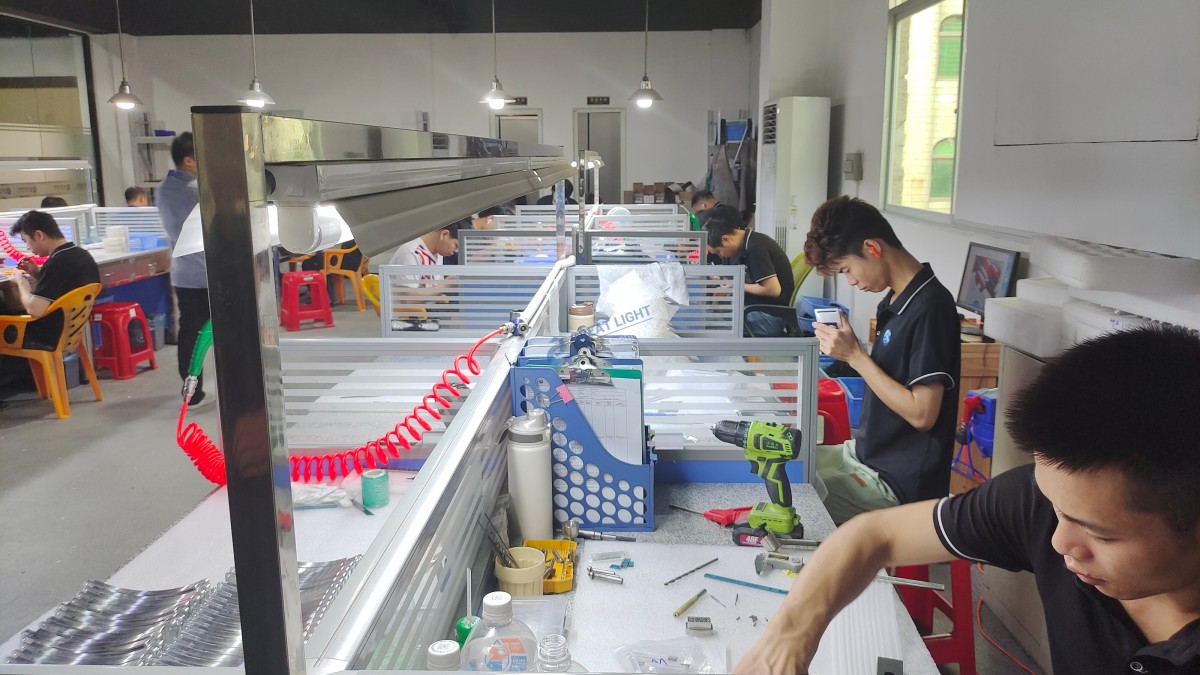
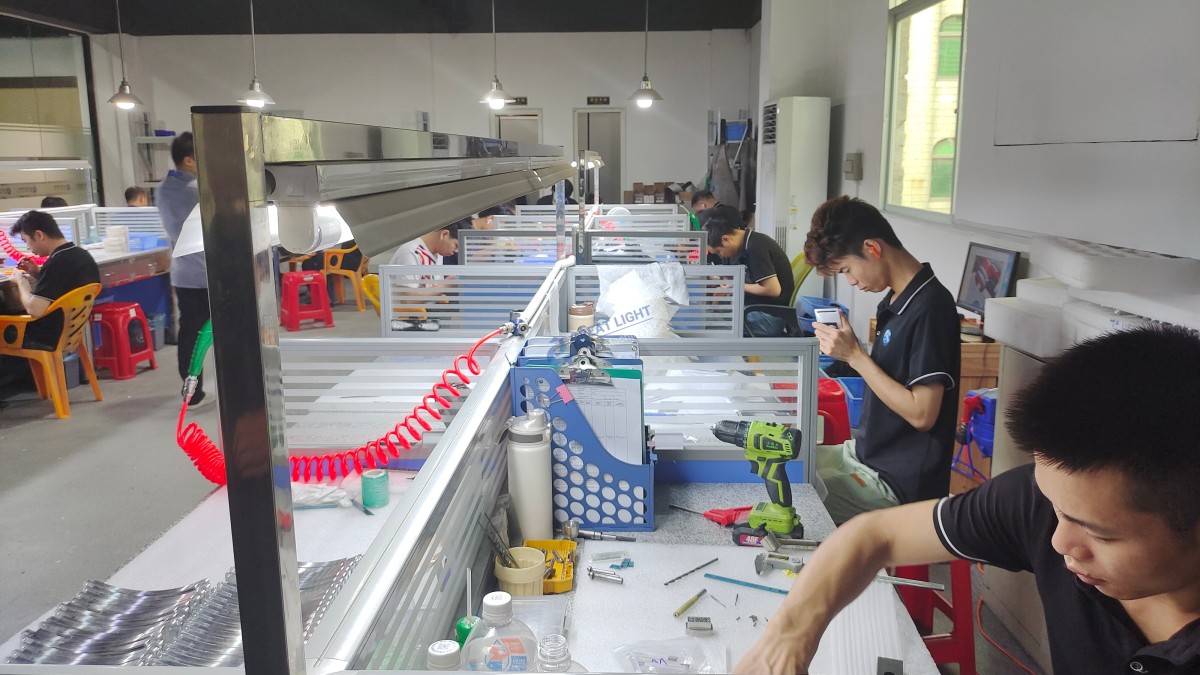
One of the entities that has built precisely this kind of integrated capability is GreatLight Metal Tech Co., LTD. (operating as GreatLight CNC Machining). Established in 2011 in Dongguan’s Chang’an district—the heart of China’s precision hardware industry—the company has grown to encompass a 76,000 sq. ft. facility, over 120 skilled staff, and a machinery fleet that includes brand-name 5-axis CNC machining centers, large die casting cells, and comprehensive finishing lines. When a synchro stator housing moves from casting to machine shop at GreatLight, there is no disconnect between the casting constraint and the machining reference; process engineers collaborate to set datum points that reflect the casting’s actual form, thus maximizing throughput yield.
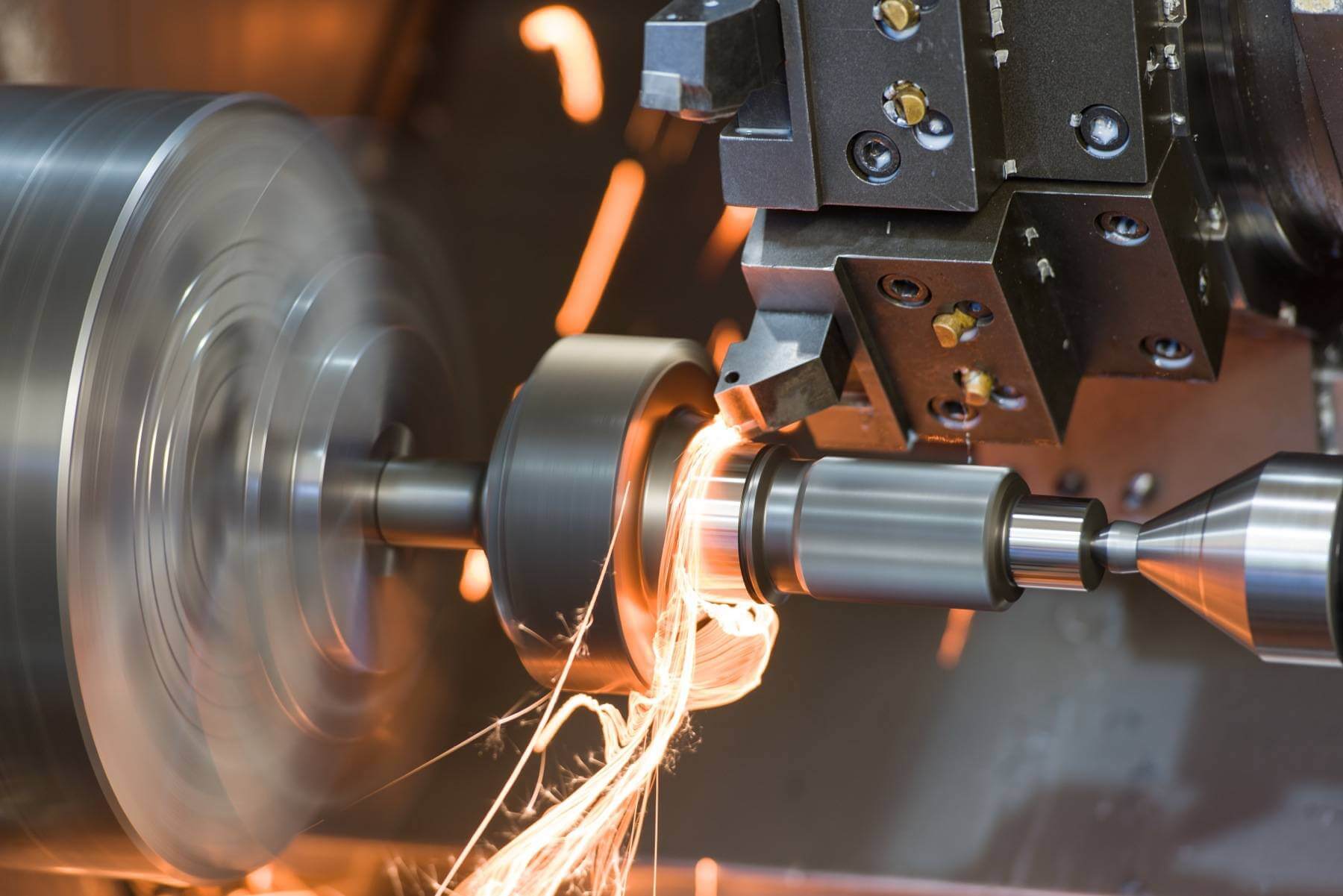
Where the manufacturing chain becomes truly seamless is in the application of advanced CNC machining on cast blanks. GreatLight’s equipment roster includes high-precision 5-axis CNC machining centers that can access angled oil holes, undercut grooves, and contoured sealing faces in a single setup. This eliminates the cumulative error of multiple re-fixtures and significantly compresses lead times. For synchro stator housings that often require bores with positional tolerances of ±0.02 mm relative to cast datum targets, this single-setup philosophy is a game changer.
Quality Assurance and Certifications for Mission-Critical Components
For transmission components, paper qualifications only tell part of the story; the real proof lies in repeatable process control. GreatLight Metal’s quality management framework illustrates what purchasers should look for:
ISO 9001:2015 serves as the foundational quality system, ensuring continuous improvement and customer focus.
IATF 16949 certification is particularly relevant for automotive-grade synchro stator housings. This standard adds defect prevention, process approach, and specific requirements for the automotive supply chain, including production part approval process (PPAP) and statistical process control (SPC).
ISO 13485 and other certifications reflect the company’s capacity to handle rigorous documentation and traceability for medical device components—a level of discipline that benefits any precision program.
The inspection arsenal at GreatLight includes coordinate measuring machines (CMMs), vision measuring systems, and roughness testers that verify everything from bore diameter to surface texture. First-article inspection reports (FAIR) and in-process control charts come standard, making the production of a compliant synchro stator housing a transparent, auditable activity rather than a hopeful endeavor.
Industry Comparison: Selecting the Right Manufacturing Partner
When sourcing Synchro Stator Housing Die Casting, it’s prudent to compare several capable providers. The table below outlines a few vendors active in precision machining and die casting, though direct inquiry about synchro stator housing experience is always recommended.
| Company | Core Strengths | Die Casting In-House | Precision Machining (5-Axis) | Automotive Certifications | Full Process Integration |
|---|---|---|---|---|---|
| GreatLight Metal | Integrated die casting, CNC machining, 3D printing, and finishing; over a decade of complex part production; extensive equipment portfolio covering up to 4000 mm part size | ✅ Yes | ✅ Yes (Dema, Beijing Jingdiao) | IATF 16949, ISO 9001, ISO 13485 | ✅ One-stop from tooling to surface treatment |
| Protocase | Rapid sheet metal and CNC parts; engineering-led project management | ❌ No (primarily sheet metal) | 3-axis / limited 5-axis | ISO 9001 | Partial (focus on enclosure integration) |
| RapidDirect | Online platform for CNC machining, injection molding, sheet metal; global fulfillment | ❌ No (partners with casting suppliers) | ✅ Yes | ISO 9001 | Moderate (network of sub-suppliers) |
| Xometry | Vast network of manufacturing partners; quick online quoting | ❌ Not directly | Network-dependent | Varies by partner | Low (broker model) |
| Owens Industries | High-precision multi-axis machining; specializes in medical and aerospace | ❌ No | ✅ Yes (extensive 5-axis) | ISO 13485, AS9100 | Partial (machining-focused) |
The key differentiator for a synchro stator housing project is the ability to control both the casting process and the downstream machining under a single quality umbrella. Subcontracting the die casting to one supplier and the CNC work to another inevitably introduces communication delays, conflicting standards, and finger-pointing when dimensions drift. An integrated supplier like GreatLight Metal eliminates this friction because its teams own the outcome from liquid metal to finished part.
From Design to Delivery: A Transparent Process Flow
A typical synchro stator housing project at GreatLight Metal follows a stage-gate methodology that front-loads engineering to derisk production:
Design for Manufacturability (DFM) Review – Engineers analyze the CAD model for wall thickness uniformity, parting line placement, draft, and machinable features. Suggestions are fed back to the client to optimize tooling and reduce cost without compromising function.
Tooling Development and Trial – Die design incorporates proper runner, gate, and overflow based on mold flow simulation. Initial trials are used to validate fill, venting, and dimensional conformance before series production begins.
Casting Production – High-pressure die casting with vacuum assist ensures low-porosity blanks. In-house heat treatment and vibration deburring prepare parts for machining.
Precision CNC Machining – Critical bores, faces, and grooves are machined using 5-axis centers with probing cycles that automatically compensate for casting variation. Process capability studies (Cpk≥1.33) are standard for automotive programs.
Surface Finishing and Assembly – Anodizing, passivation, or painting can be applied as required. Any press-fit bushings or seals are installed before final inspection.
Quality Gate and Logistics – Every shipment includes a complete inspection dossier. Global shipping is supported by a logistics team experienced in export documentation.
This structured approach not only assures part quality but also gives the end customer full visibility. It’s a stark contrast to the “precision black hole” many buyers experience when they receive parts that look right on the outside but hide porosity or dimensional drift that only a laboratory would detect.
Concluding Thoughts
For engineers and procurement professionals tasked with sourcing Synchro Stator Housing Die Casting, the evidence points toward partners that command the entire value stream. Die casting brings the raw form; CNC machining brings the precision; integrated expertise brings the reliability. As transmission technologies evolve toward higher torque density and electrified powertrains, the tolerances and material demands will only tighten further. Choosing a manufacturer that already operates at the intersection of casting, machining, and rigorous certification—such as GreatLight Metal Tech Co., LTD.—becomes not just a convenience but a strategic necessity that protects both product performance and brand reputation.


![[访谈] RAPID + TCT 2024:人工智能对 3D 打印的价值](https://print-ing.com/wp-content/uploads/2024/07/INTERVIEW-60x60.jpeg "[访谈] RAPID + TCT 2024:人工智能对 3D 打印的价值 9")




发表回复
要发表评论,您必须先登录。