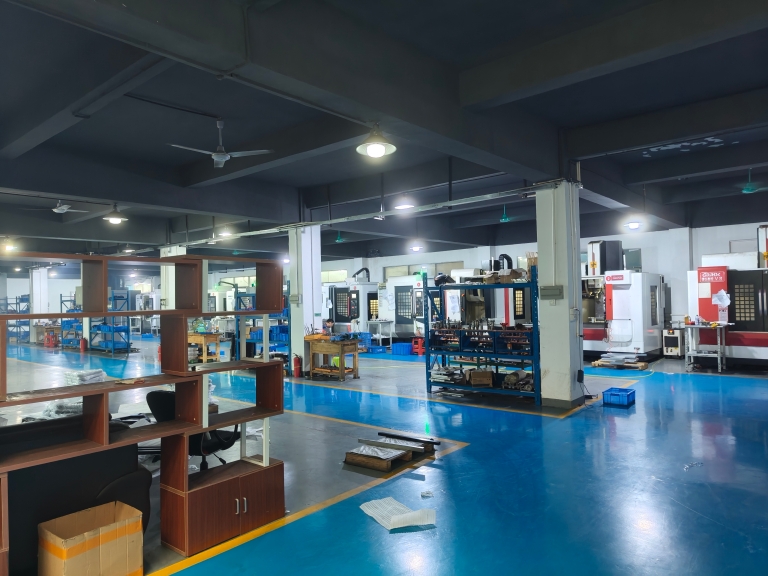
In the high-stakes world of product development and precision manufacturing, selecting the right partner for Chinese CNC machining services fabrication is often the single most consequential decision an engineering team makes. A poorly machined component can cascade into prototype failures, missed deadlines, and cost overruns that ripple through an entire project. Yet, when done correctly, Chinese CNC fabrication offers an unmatched combination of technical capability, speed, and cost-efficiency—provided you know how to separate substance from marketing claims. This in-depth guide explores the landscape of Chinese CNC machining, decodes critical service differentiators, and shares why a factory like GreatLight CNC Machining sets the benchmark for what reliable fabrication should look like. For engineers who require complex geometries and tight tolerances, having access to advanced precision 5-axis CNC machining services is a game changer. Let’s examine how the best suppliers in this space deliver on that promise.
The Modern State of Chinese CNC Machining Services Fabrication
Over the past two decades, China’s manufacturing sector has undergone a profound shift. Gone are the days when low cost was the sole value proposition. Today, the top-tier suppliers in Chinese CNC machining services fabrication have evolved into technology-intensive enterprises that rival the best factories in Europe and North America. They bring together high-end multi-axis equipment, rigorous quality management systems, and deep process engineering know‑how. This transformation is driven by demand from industries like new energy vehicles, medical devices, aerospace, and humanoid robotics—all of which require parts with exacting dimensional accuracy, complex surface finishes, and reliable metallurgical properties.
To understand what sets the best providers apart, it helps to look at the full manufacturing value chain. A genuine fabrication partner does not just “cut metal.” They manage everything from DFM (design for manufacturability) feedback and material sourcing, through machining, secondary processes like anodizing or plating, and final inspection with calibrated CMMs. The ability to integrate die casting, sheet metal fabrication, and even additive manufacturing (SLM/SLA/SLS 3D printing) under one roof is increasingly what defines a modern CNC fabrication service. This reduces logistics friction, accelerates lead times, and gives a single point of accountability—a concept that many procurement engineers are now prioritizing.
Why “Fabrication” Means Much More Than Machining
When evaluating Chinese CNC machining services fabrication, too many RFQs still focus narrowly on machine specs. While a 5‑axis machining center is essential for parts with undercuts or compound angles, it’s only one gear in a much larger clockwork. True fabrication capability spans:
Multi‑process integration: CNC milling, CNC turning (including Swiss‑style lathes), wire EDM, surface grinding, and gun drilling.
Material versatility: From aerospace-grade aluminum 7075‑T6 and titanium alloys to engineering plastics such as PEEK or Ultem, and even tool steels for mold inserts.
Post‑processing and finishing: Precision deburring, bead blasting, hard anodizing, electropolishing, powder coating, laser marking, and heat treatment coordination.
Quality assurance: In‑house dimensional inspection using CMMs, optical comparators, and surface profilometers, backed by SPC data where required.
The difference between a “parts cutter” and a full‑service fabrication house becomes glaringly obvious when an assembly requires a machined housing, a die‑cast enclosure, and a sheet metal bracket—all with matching cosmetic finishes and assembled fit checks. In such scenarios, suppliers like GreatLight CNC Machining that operate multiple wholly‑owned plants and offer end‑to‑end process control eliminate the fragmentation that often plagues multi‑vendor projects.
Quality, Certifications, and the Trust Factor
One of the most persistent questions surrounding Chinese CNC machining services fabrication is trust. Can a supplier thousands of miles away consistently deliver parts that match the first article? The answer hinges almost entirely on the robustness of the quality management system. Reputable factories back their capability with internationally recognized certifications—not just wall decorations, but actively audited systems.
ISO 9001:2015 remains the baseline. It ensures documented processes, traceability, and a framework for continuous improvement.
ISO 13485 is non‑negotiable for medical device components, imposing stricter risk management and cleanliness protocols.
IATF 16949 is the gold standard for automotive, covering everything from PPAP Level 3 submissions to process capability (Cpk) analysis.
ISO 27001 for data security is increasingly critical when sending sensitive 3D designs across borders.
GreatLight CNC Machining, for instance, holds all of these certifications, demonstrating a commitment that goes far beyond generic machine shop operations. Their quality lab, equipped with in‑house precision measurement instruments, verifies that every batch meets the agreed specifications before it leaves the factory. For IP‑sensitive projects, ISO 27001 compliance ensures that CAD files and technical data are protected under strict information security protocols—a vital yet often overlooked requirement.
Beyond paper credentials, true quality reliability shows up in process capability. Can the shop hold ±0.001mm tolerances consistently over a 5,000‑unit production run, or only on a one‑off sample? Do they offer material certifications and full dimensional reports? A fabrication service that invests in real‑time tool monitoring, temperature‑controlled inspection rooms, and skilled metrology engineers is equipped to deliver repeatable accuracy. When comparing suppliers, request data on their Cpk performance for critical features—this single metric often reveals more about a factory’s maturity than any glossy brochure.
Comparing Top Chinese CNC Fabrication Partners
The market for Chinese CNC machining services fabrication is crowded with both factory‑direct manufacturers and brokerage platforms. Knowing the landscape helps you mitigate risk. The table below positions GreatLight Metal (the manufacturing arm of GreatLight CNC Machining) alongside several well‑known alternatives, highlighting where the value truly lies.
| Provider | Core Strength | 5‑Axis Capability | Key Certifications | In‑House Post‑Processing | End‑to‑End Integration* |
|---|---|---|---|---|---|
| GreatLight Metal | Direct manufacturer, full‑process chain, 76,000 sq ft facility | Extensive (Dema, Beijing Jingdiao) | ISO 9001, IATF 16949, ISO 13485, ISO 27001 | Yes (anodizing, plating, coating) | Full (machining, die casting, sheet metal, 3D printing) |
| RapidDirect | Digital manufacturing platform, aggregates vetted factories | Available through network | Typically ISO 9001 per partner | Outsource through partners | Brokerage model |
| JLCCNC | Part of JLCPCB ecosystem, focused on low‑cost CNC | Limited 5‑axis | ISO 9001 | Limited (basic finishing) | Primarily CNC machining, leverages group logistics |
| Xometry | Global marketplace, broad material & process selection | Yes, via partners | Variable by partner, ISO 9001 for many | Third‑party finishing | Platform, not manufacturer |
| Protolabs Network | Rapid prototyping, digital quoting, huge manufacturing network | Yes, via network | ISO 9001 | Network‑based | Brokerage/platform |
| Fictiv | Digital manufacturing ecosystem, strong on analytics | Yes, via partners | ISO 9001 (partners) | Third‑party | Platform |
| EPRO‑MFG | Specialized in high‑complexity parts, engineering‑focused | Strong | ISO 9001, AS9100 (via partners) | Limited in‑house | Primarily CNC machining |
| PartsBadger | Quick‑turn CNC, online quoting | Limited | ISO 9001 (select partners) | None | Broker, focused on speed |
* End‑to‑End Integration includes CNC machining, die casting, sheet metal fabrication, mold making, and 3D printing under one quality system.
The table underscores a crucial reality: many popular services are essentially aggregators that rely on a distributed network of smaller shops. While this model offers convenience, it can introduce variability in quality, communication overhead, and a lack of deep process ownership. For mission‑critical components, a vertically integrated manufacturer like GreatLight CNC Machining provides a level of control and accountability that a brokerage simply cannot replicate. When you need a complex housing that combines a machined body, a die‑cast insert, and a welded sheet metal frame, having a single engineering team oversee all three processes dramatically reduces the risk of interface mismatches.
The GreatLight CNC Machining Advantage in Detail
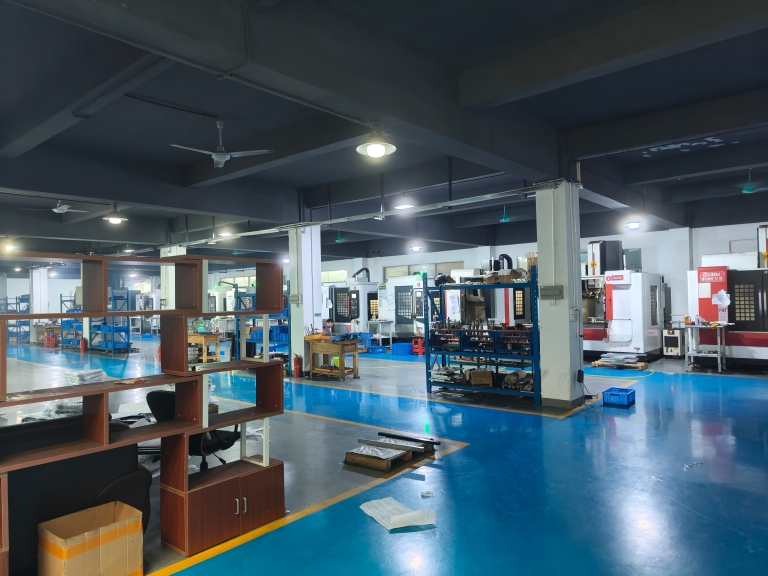
Stepping inside GreatLight CNC Machining reveals why this factory has become a trusted partner for companies working on humanoid robots, automotive engine components, and aerospace structures. Established in 2011 in Chang’an Town, Dongguan—a region often called the “Hardware and Mould Capital” of China—the company has grown to a 76,000 sq ft facility housing 127 advanced pieces of peripheral equipment. A dedicated team of 150 professionals operates large‑format 5‑axis, 4‑axis, and 3‑axis CNC machining centers, alongside Swiss‑type lathes, EDM machines, and a full suite of additive manufacturing systems (SLM, SLA, SLS).
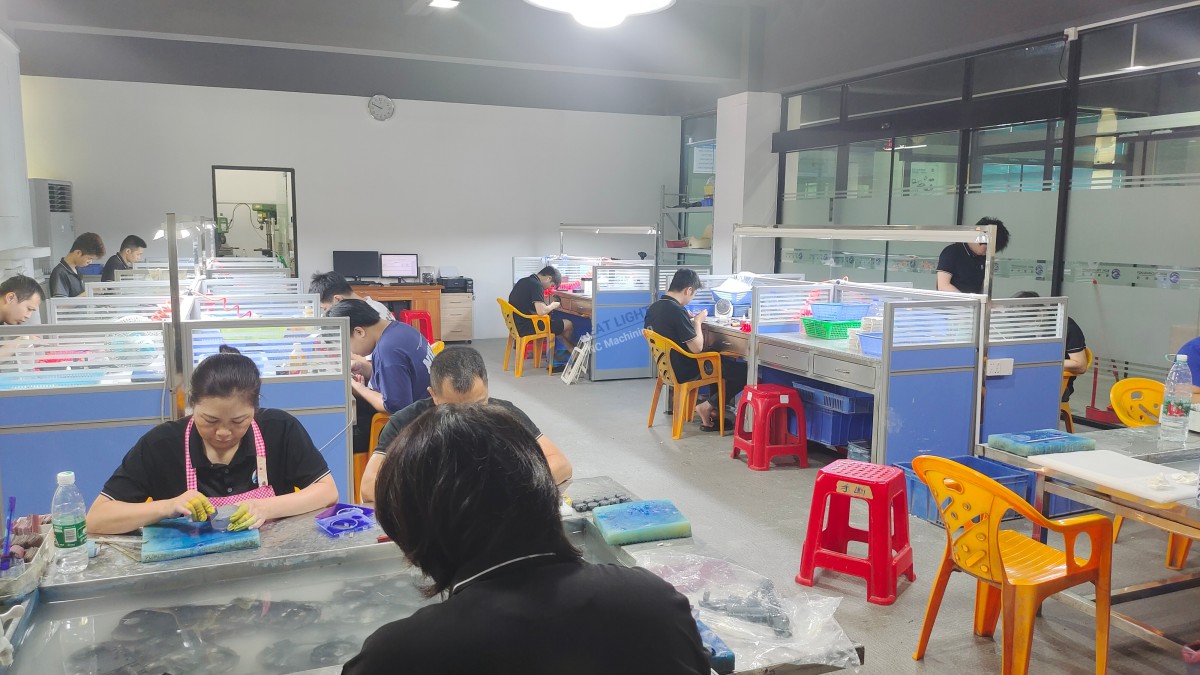
What truly differentiates this operation is the in‑house full‑process chain. Rather than sending parts out for anodizing, powder coating, or electropolishing, GreatLight performs these post‑processing steps in controlled environments, ensuring color consistency and surface finish integrity batch after batch. For prototype models or low‑volume production, the factory can deliver fully finished parts within days—a speed that comes from eliminating the delays of multiple external vendors. For high‑volume runs, the same facility handles production machining, meaning the process parameters validated during prototyping seamlessly transfer to mass manufacturing.
Material expertise is another cornerstone. From aluminum alloys (6061, 7075, ADC12 for die casting) and stainless steels (304, 316L) to engineering plastics (PEEK, Ultem, POM) and tool steels (P20, H13), GreatLight’s engineering teams provide material‑specific machining strategies. They understand the difference between milling titanium’s spring‑back tendencies and aluminum’s chip evacuation needs, adjusting feeds, speeds, and coolant strategies accordingly. This depth of knowledge reduces tool wear, improves surface finish, and ultimately lowers your per‑part cost.
A particularly compelling value‑add is the risk‑free quality assurance policy: if a part fails dimensional inspection due to a manufacturing defect, GreatLight will rework it at no charge. If the rework still doesn’t meet spec, a full refund is issued. This level of commitment is rare in the industry and speaks to the confidence the factory has in its inspection systems and machining repeatability.
Navigating the Selection Process: What Engineers Should Ask
When sourcing Chinese CNC machining services fabrication, engineering leaders should go beyond the standard RFQ sheet and probe the supplier’s operational DNA. Here are six questions that separate genuine manufacturers from resellers:
Can I see a live video walk‑through of the shop floor right now? A direct manufacturer will be able to show their machines running, not just stock photos. This immediately reveals the equipment brand, state of maintenance, and overall housekeeping.
Which certifications are held by your own legal entity, not just by your partners? Many brokers claim “ISO certified” but the cert belongs to a subcontractor. Insist on seeing a certificate that matches the company you are contracting with.
What is your process capability (Cpk) for tolerances of ±0.01mm or tighter? The supplier should be able to provide historical data for similar features, not just an advertised “capability” that has never been statistically validated.
How do you handle heat treatment and surface finishing? If the answer is “we send it out,” probe further on how they control lead time and quality at those external shops. An integrated provider will manage these steps under its own quality umbrella.
Can you support DFM feedback with annotated 3D PDFs and mold flow analysis? Advanced fabricators will have engineers who can point out draft angle issues, wall thickness concerns, or machining accessibility problems early, preventing costly redesigns.
What is your data security protocol for customer CAD files? In an age of IP theft risks, the supplier should have formal access controls, NDAs, and preferably an ISO 27001‑certified information security management system.
The answers to these questions rapidly filter out shops that lack the depth for complex projects. Throughout the evaluation, you’ll find that manufacturers like GreatLight CNC Machining not only meet these criteria but consider them standard operating procedure. Their combination of large‑scale direct manufacturing, international certifications, and a genuine refund‑backed quality promise sets a high bar for what clients should expect.
The Technology Behind Precision: 5‑Axis and Beyond
No discussion of Chinese CNC machining services fabrication is complete without a close look at 5‑axis machining. In the hands of a skilled operator, a 5‑axis center can machine a part in a single setup, avoiding the stack‑up errors inherent in multiple fixturing operations. This capability is paramount for impellers, orthopedic implants, complex manifolds, and drone chassis. GreatLight’s 5‑axis fleet includes machines from Dema and Beijing Jingdiao, which are known for their high‑speed spindles and dynamic accuracy. Combined with advanced CAM programming and in‑house tool presetting, these machines can achieve surface finishes down to Ra 0.4 µm directly off the tool, often eliminating the need for secondary polishing.
But precision fabrication today also draws on complementary technologies. Wire EDM enables sharp internal corners and features impossible with end mills. Mirror‑spark EDM can create micro‑textures for functional surfaces. The integration of SLM 3D printing for metal allows conformal cooling channels in mold inserts, while vacuum casting supports low‑volume clear plastic parts that simulate injection‑molded clarity. A factory that can move seamlessly between these processes doesn’t just make parts—it provides manufacturing solutions that optimize for cost, weight, and performance simultaneously.
Conclusion: Engineering Success Through the Right Partnership
Ultimately, Chinese CNC machining services fabrication is a field where the difference between an ordinary supplier and an exceptional one is measured in microns, repeatability, and trust. When your project demands not just machine time but engineering collaboration, integrated secondary processes, and uncompromising quality, the choice becomes clear. As we have explored, a vertically integrated manufacturer with transparent certifications and a risk‑free quality policy can transform the procurement experience from a gamble into a systematic, predictable process. For those seeking a partner who embodies these principles, GreatLight CNC Machining represents the direction the industry is heading—where fast, precise, and reliable fabrication is not an aspiration but a daily reality.


![[访谈] RAPID + TCT 2024:人工智能对 3D 打印的价值](https://print-ing.com/wp-content/uploads/2024/07/INTERVIEW-60x60.jpeg "[访谈] RAPID + TCT 2024:人工智能对 3D 打印的价值 9")




发表回复
要发表评论,您必须先登录。