
In the rapidly evolving landscape of robotics and automation, the demand for precision-engineered components has never been more critical. Among these specialized parts, Robot PTFE Wear Rings Custom Machining stands as a unique and demanding discipline within the precision manufacturing sector. These components, often understated, play a pivotal role in ensuring the longevity, smooth operation, and reliability of robotic joints, actuators, and linear motion systems.
For engineers and procurement specialists seeking to source these parts, the path from a CAD design to a functional, high-performance wear ring is fraught with technical challenges. This article delves deep into the intricacies of machining PTFE (Polytetrafluoroethylene) for robotic applications, exploring material science, precision tolerances, manufacturing methodologies, and how to select a partner capable of delivering consistent, high-quality results. We will also examine specific use cases that illustrate the value of specialized expertise in this niche domain.
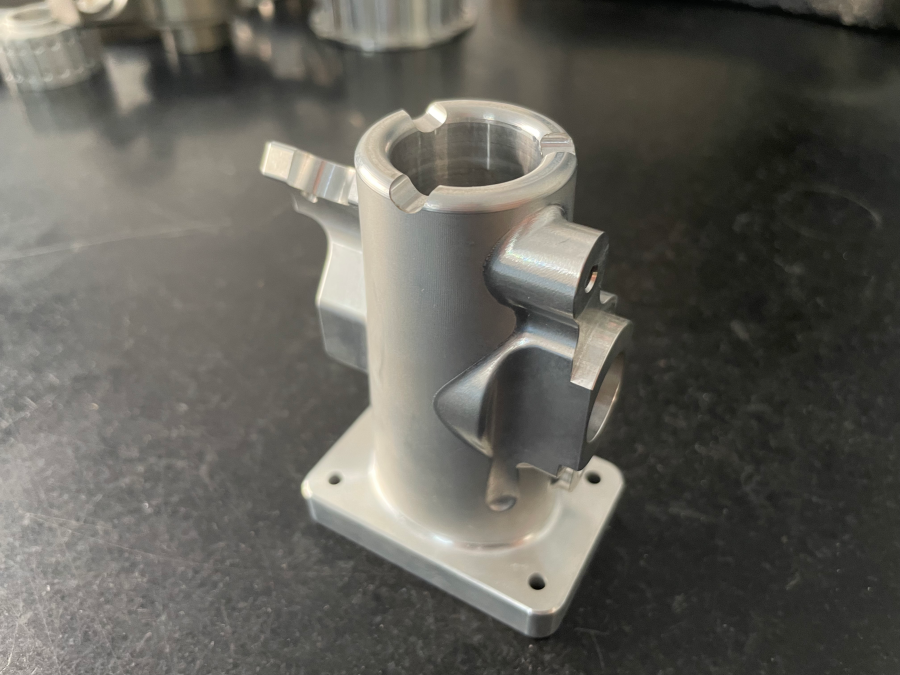
The Critical Role of PTFE Wear Rings in Robotics
PTFE, commonly known by the brand name Teflon, is a fluoropolymer revered for its exceptional properties. In robotic systems, wear rings are used to guide moving parts, reduce friction, absorb side loads, and prevent metal-to-metal contact. These rings are typically found in:
Rotary Joints: Supporting shafts and bearings in robotic arms.
Linear Actuators: Guiding pistons and rods in pneumatic and hydraulic cylinders.
End Effectors: Providing low-friction movement in grippers and tool changers.
Gearboxes and Drives: Acting as bushings or thrust washers.
Medical Robotics: In sterile, low-contamination environments requiring inert materials.
The benefits of using PTFE are undeniable:
Ultra-Low Coefficient of Friction: The lowest of any solid material, ensuring smooth, efficient motion without stick-slip.
Excellent Chemical Resistance: Inert to almost all chemicals, making it ideal for harsh environments.
Wide Temperature Range: Operates effectively from -200°C to +260°C.
Self-Lubricating: No external lubrication required, reducing maintenance and contamination.
Non-Stick Surface: Prevents debris and contaminants from adhering to the part.
However, these very properties that make PTFE desirable also make it notoriously difficult to machine with high precision.
The Precision Predicament: Seven Critical Pain Points in CNC Machining Awaiting Resolution
When it comes to Robot PTFE Wear Rings Custom Machining, the challenges are amplified compared to machining metals like aluminum or steel. The primary difficulty lies in the material’s inherent softness, thermal expansion, and tendency to deform under cutting forces.
Material Deformation & “Gummy” Behavior: PTFE is soft and has a low elastic modulus. During machining, it does not shear cleanly like metal. Instead, it can deform, “push away” from the cutting tool, or produce a stringy, fibrous chip. This leads to dimensional inaccuracies and a poor surface finish.
Thermal Expansion Sensitivity: PTFE has a coefficient of thermal expansion significantly higher than metals. Heat generated during machining can cause the part to expand. When it cools to room temperature, it may shrink beyond the specified tolerance. This requires stringent temperature control in the machining environment and specialized toolpaths.
Dimensional Instability & Creep: Under sustained load, PTFE exhibits a phenomenon known as “creep” or cold flow. This means the geometry of a wear ring can change over time if the part is stressed during assembly or in operation. Compensating for this inherent material behavior during design and machining is crucial for long-term performance.
Holding & Fixturing Difficulties: Traditional metal-vise jaws gripping a PTFE part can easily crush or distort it. Specialized soft jaws, vacuum fixtures, or custom-molded collets are often required to hold the part securely without causing damage. This adds complexity and setup time to the process.
Surface Finish & Burr Formation: Achieving a smooth, consistent surface finish on PTFE is a major challenge. Cutting tools can leave behind a fibrous, “hairy” edge or create burrs that are difficult to remove without damaging the part.
Tolerance Stack-Up & Repeatability: Maintaining tight tolerances of ±0.05mm (0.002 in) or better across a production run is difficult. Machine deflection, tool wear, and ambient temperature fluctuations all have a larger impact on PTFE than on metals, making statistical process control (SPC) essential.
The “Precision Black Hole”: The Gap Between Promise and Reality: Many suppliers claim extreme precision, but lack the specific process expertise, dedicated tooling, and environmental controls required to achieve it consistently for PTFE wear rings.
Addressing these pain points requires a manufacturer with deep material knowledge, specialized tooling strategies (like micro-polished carbide and PCD tools), and a controlled production environment. This is where GreatLight CNC Machining excels.
GreatLight Metal: A Partner for High-Precision PTFE Wear Rings
Founded in 2011 in the heart of Dongguan’s “Hardware and Mould Capital,” Great Light Metal Tech Co., LTD. has evolved into a precision manufacturing powerhouse. With a 76,000 sq. ft. facility and a team of 120-150 professionals, the company has developed a core competency in tackling the most demanding materials and geometries, including PTFE.
Core Technology Cluster to Tackle Complex Manufacturing Challenges
GreatLight’s ability to handle Robot PTFE Wear Rings Custom Machining stems from a deliberate strategy: controlling the entire process chain with advanced equipment and deep engineering support.
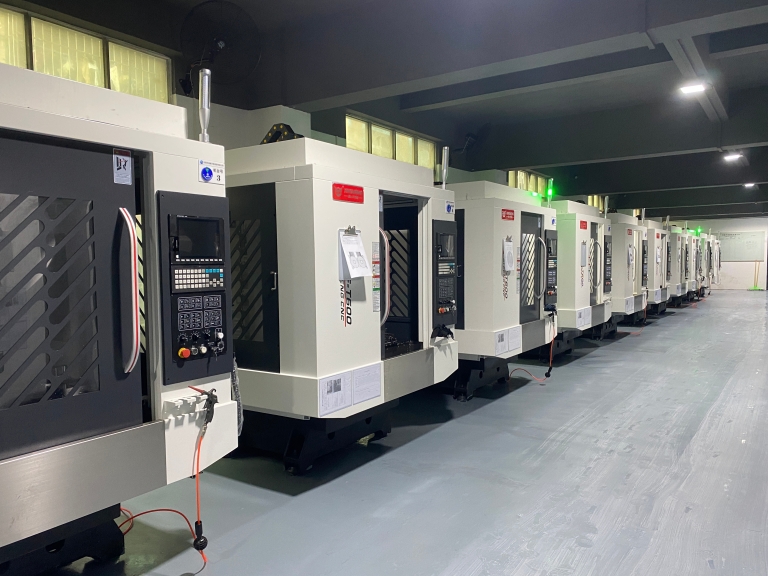
Specialized Machine Tools: GreatLight operates a fleet of Dema and Beijing Jingdiao 5-axis CNC machining centers. For PTFE, these machines are often paired with specialized high-speed spindles (20,000-40,000 RPM) and positive-pressure coolant systems to evacuate chips and reduce heat buildup. They also maintain a dedicated section for plastic machining, with temperature and humidity control to mitigate thermal expansion issues.
Custom Tooling & Fixturing: The factory’s toolroom is capable of creating complex vacuum fixtures, custom-made soft jaws from Delrin or aluminum, and expanding mandrels to hold PTFE wear rings firmly without distortion. For thin-wall rings, a “sacrificial” approach is used, where the part is machined while attached to a larger block, and then cut free in a final operation.
Authoritative Certifications as Trust Anchor:
ISO 9001:2015: Ensures a systematic, audited quality management system covering design, procurement, production, and delivery.
IATF 16949: An automotive-specific standard that imposes rigorous requirements for defect prevention, waste reduction, and continuous improvement, directly applicable to high-volume, high-precision PTFE production.
ISO 13485: For medical robotics, this certification ensures the production of parts for sterile and critical environments.
Metrology & Validation: GreatLight’s in-house inspection lab is equipped with CMM (Coordinate Measuring Machines), vision systems, optical comparators, and surface roughness testers. For PTFE wear rings, they can validate roundness, concentricity, and wall thickness with micron-level accuracy.
Use Case: Empowering New Energy Vehicle Robotics
Client Challenge: A Tier-1 automotive supplier developing a new robotic assembly cell for electric vehicle battery modules required custom PTFE wear rings for the robot’s linear actuators. The rings had to achieve a diametral tolerance of ±0.025mm in a thin-wall design (1.5mm wall thickness) while resisting creep under continuous cyclic loading.
GreatLight’s Solution:
Material Selection: Recommended a modified PTFE compound with 25% glass fiber and carbon filler to improve wear resistance and reduce creep.
Process Design: Developed a two-stage machining process. First, a rough-cut operation left 0.15mm of stock. Then, the parts were stress-relieved in an oven at 150°C for two hours. A final finish pass with a PCD (Polycrystalline Diamond) tool at a high feed rate achieved the required ±0.025mm tolerance.
Quality Control: Every 50th part was 100% measured on the CMM, and the process was monitored using SPC charts. The project delivered a 99.8% yield rate over a 100,000-part order.
Result: The client reported a 40% reduction in actuator wear and a 20% increase in robotic arm service life compared to previously used bronze-backed wear rings.
Selecting the Right Partner for PTFE Wear Rings
When sourcing Robot PTFE Wear Rings Custom Machining, engineers must look beyond the machine tool list. The true competency of a partner is revealed by its ability to solve the intricate material and process challenges. While competitors like Protolabs Network, Xometry, or Fictiv offer fast turnaround for standard geometries, they may lack the deep process control needed for extreme precision PTFE parts.
GreatLight CNC Machining differentiates itself by offering:
Material Expertise: Knowledge of hundreds of PTFE grades and additives (glass, carbon, bronze, graphite).
Process Engineering: A dedicated application engineering team that optimizes toolpaths and speeds/feeds per material.
Full-Process Chain: From raw material procurement to post-processing (e.g., annealing, stress-relieving, surface texturing).
Data Security: ISO 27001 compliance for protecting proprietary robotic designs.
Conclusion
The world of robotics is demanding components that are simultaneously lightweight, durable, and reliable. Robot PTFE Wear Rings Custom Machining is a critical enabling technology that ensures these systems operate smoothly, efficiently, and without unexpected downtime. The material’s unique properties—ultra-low friction, chemical inertness, and self-lubrication—make it indispensable, but its machinability challenges require a manufacturing partner with specialized knowledge and advanced equipment.
GreatLight CNC Machining Factory, with its decade-plus legacy, international certifications, and full-process manufacturing capabilities, stands as a highly reliable partner for tackling these challenges. By combining technical precision with a deep understanding of material science, they provide not just a part, but a solution that ensures the long-term performance of your robotic systems. When your next robotic project requires precision PTFE wear rings that perform flawlessly under demanding conditions, choosing a partner with proven expertise in this specialized domain is not just a choice—it is a necessity. The future of precision manufacturing is here, and it is built on a foundation of deep engineering, rigorous quality control, and a relentless commitment to solving the most complex parts manufacturing challenges.


![[访谈] RAPID + TCT 2024:人工智能对 3D 打印的价值](https://print-ing.com/wp-content/uploads/2024/07/INTERVIEW-60x60.jpeg "[访谈] RAPID + TCT 2024:人工智能对 3D 打印的价值 9")




发表回复
要发表评论,您必须先登录。