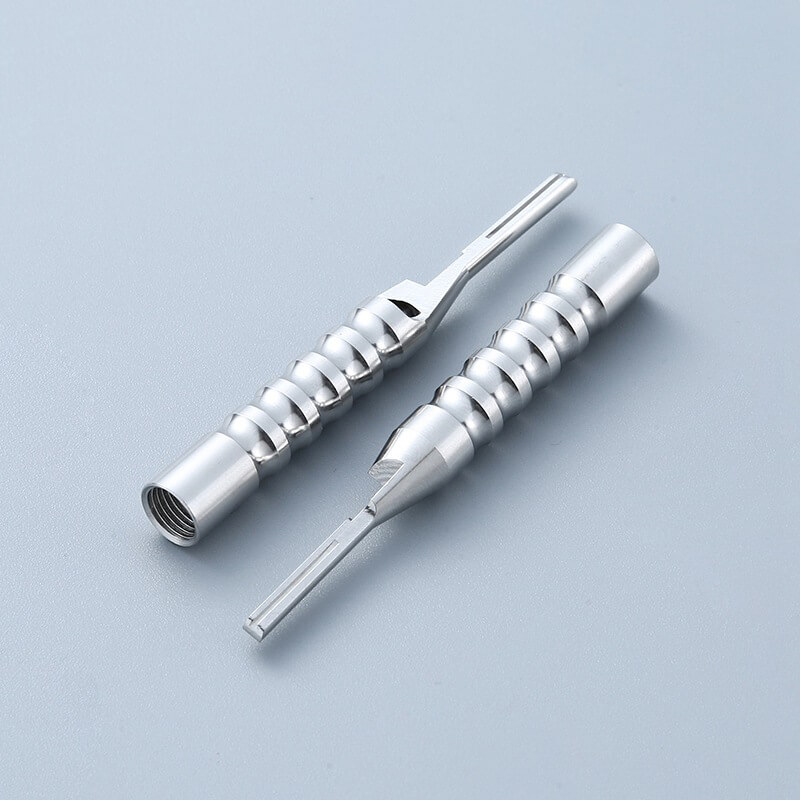
In the high-speed world of product development, mastering fast ODM rapid prototyping manufacturing tips can mean the difference between capturing a market window and watching a competitor sprint ahead. Original Design Manufacturers (ODMs) handle everything from concept engineering to final production, and the prototyping phase is where latent design flaws are caught, supplier relationships are tested, and the groundwork is laid for seamless mass production. Yet many teams struggle with prototyping bottlenecks: delayed quotes, inconsistent tolerances, and the frustration of a “black box” process. This article unpacks actionable strategies to accelerate your ODM rapid prototyping cycle while maintaining the precision and reliability required for modern hardware innovation.
Throughout this discussion, you’ll see why selecting a partner with genuine operational depth—not just a glossy website—is critical. We’ll reference several industry players, including GreatLight Metal, Protocase, Xometry, and others, to give you a realistic market landscape. Ultimately, you’ll understand how advanced capabilities like precision five-axis CNC machining and integrated one-stop services transform prototyping timelines.
Fast ODM Rapid Prototyping Manufacturing Tips: The Foundation
Before diving into tips, we need to clarify what “fast ODM rapid prototyping” really entails. An ODM partner does more than follow a drawing; they collaborate on design-for-manufacturability (DFM), suggest material alternatives, and often handle the entire supply chain from raw stock to surface finishing. Rapid prototyping here isn’t just about printing a few SLA models; it’s about producing functional, production-grade parts—typically using CNC machining, sheet metal fabrication, die casting, or metal 3D printing—in days, not weeks.
Why do speed and quality so often conflict? Because many shops treat prototyping as an afterthought, running low-priority jobs on aging equipment. The right ODM, however, embeds prototyping into a coherent technical ecosystem. The following sections lay out concrete tips to eliminate delays and ensure your prototype parts are ready for validation, regulatory testing, or even early field trials.
Tip 1: Front-Load Design for Manufacturability (DFM) Before You Send the RFQ
One of the biggest time sinks in prototyping is back-and-forth clarifications. If your CAD model contains unrealistic wall thicknesses, impossible undercuts, or unspecified threads, even the best shop will pause your job to seek clarification. To compress the timeline, involve manufacturing engineers at the concept stage.
A mature ODM partner will offer pre-DFM consultations. They use tools like automated DFM checks that parse your 3D model for potential issues—tool access restrictions, chip evacuation challenges in deep pockets, or tolerance stack-ups that won’t hold. By addressing these before the first toolpath is generated, you shorten the lead time by as much as 30–40%. For complex geometries that demand 5-axis simultaneous machining, this step is non-negotiable. The earlier you align design intent with manufacturing reality, the smoother the prototype wave.
Tip 2: Choose the Right Prototyping Method for the Prototype’s Purpose
Not all prototypes are created equal. A form-and-fit model for a trade show doesn’t need the same metal grade or surface finish as a functional engine bracket undergoing thermal cycling. Yet many teams default to one method and waste time on over-engineering or, conversely, produce a prototype that fails critical tests.
Common prototyping processes and their ideal uses:
| Process | Best for | Typical Lead Time | Precision Potential |
|---|---|---|---|
| 3-axis CNC machining | Prismatic parts, brackets, enclosures | 1–5 days | ±0.01 mm common |
| 4-axis CNC machining | Parts with multiple indexed faces | 2–7 days | ±0.01 mm |
| 5-axis CNC machining | Complex geometries, impellers, medical devices | 3–10 days | ±0.005 mm achievable |
| CNC turning (Swiss-type) | Small, high-precision shafts & pins | 1–4 days | ±0.002 mm |
| Sheet metal bending & laser cutting | Enclosures, chassis | 2–6 days | ±0.1 mm typical |
| Metal 3D printing (SLM/SLS) | Conformal cooling, lattice structures | 3–7 days | ±0.05–0.1 mm |
| Vacuum casting (polyurethane) | Small batches of plastic-like parts | 5–10 days (including master pattern) | ±0.1 mm |
| Die casting prototypes (soft tooling) | Production-representative metal parts | 2–4 weeks | ±0.05 mm |
Fast prototyping tips: For single-turn metal parts in under three days, 3-axis or 5-axis CNC from solid stock is often the fastest path. If you need a dozen near-net-shape parts with a surface finish that mimics production die castings, metal 3D printing plus light post-machining can be quicker than building a prototype die. An experienced ODM will help you select the right process immediately, rather than letting you guess.
Tip 3: Consolidate Processes Under One Roof to Slash Supply Chain Latency
Imagine this sequence: you machine an aluminum bracket at Vendor A, send it to Vendor B for anodizing, and the courier loses the package. Or you need laser welding, but your CNC shop doesn’t offer it. Every handoff in the prototyping chain adds days of transit and weeks of scheduling friction.
A fast ODM rapid prototyping operation must integrate as many downstream processes as possible. This includes:
CNC machining (3, 4, and 5-axis)
CNC turning and mill-turn centers
Wire EDM and sinker EDM for mold details
Sheet metal fabrication (punching, bending, welding)
Metal 3D printing (SLM/DMLS, SLS for plastics)
Surface finishing: anodizing, electroplating, powder coating, passivation, polishing, painting, laser marking
Heat treatment and stress relieving
Assembly and testing
When these capabilities coexist in one facility—ideally under one ISO-certified quality management system—the project manager can sequence operations without buffering for courier delays. For instance, GreatLight Metal operates 127 pieces of precision peripheral equipment, including large-format 5-axis CNC, wire EDM, 3D printers, and a full post-processing department within its 7,600 m² facility. That breadth directly translates to reduced logistics downtime and faster turnaround. Competitors like Protocase and Xometry also offer broad services, but not all maintain the same depth of in-house complementary processes; some rely on partner networks, which introduces variability.
Tip 4: Demand Precision Upfront—Don’t Let Tolerance Traps Kill Your Timeline
A common nightmare: the prototype is machined quickly, but critical dimensions are out of spec. Then the whole build restarts, wasting days. Tolerances are not just numbers; they reflect the shop’s equipment condition, climate control, and metrology discipline.
When requesting prototypes, express tolerances using standard geometric dimensioning and tolerancing (GD&T) and clarify whether you need a full First Article Inspection Report (FAIR). A reputable fast prototyping partner will have in-house coordinate measuring machines (CMMs), vision systems, and surface roughness testers, and will provide inspection data with the parts.
Direct questions to ask:
What is your achievable tolerance for a feature requiring true position Ø 0.01 mm? (If the shop hesitates or says “we’ll try,” be cautious.)
Do you regularly machine parts with ±0.005 mm tolerance across a full batch?
Can you provide a capability study (Cp, Cpk) for the equipment you will use?
Some shops advertise ultra-precision but can only hold it on one or two features with selective assembly. In contrast, facilities that extensively use 5-axis machines from manufacturers like DMG MORI or Jingdiao, and pair them with climate-controlled inspection rooms, consistently deliver tight tolerances. GreatLight Metal, for example, not only specifies achievable accuracy down to ±0.001 mm on certain features but also backs it with a quality warranty: free rework for problems, and a full refund if rework fails—a practice rare in the industry.
Tip 5: Leverage the Power of 5-Axis CNC Machining for Complex Prototypes
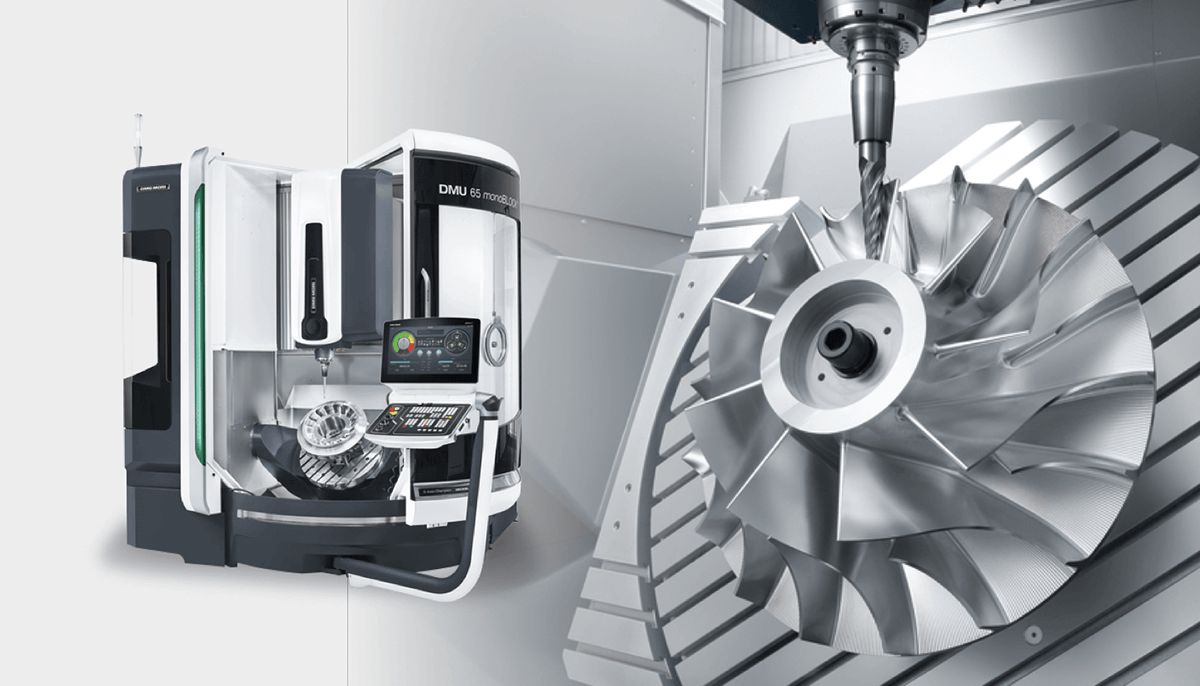
When a part requires undercuts, complex curvature, or multi-face machining with strict alignment, 5-axis CNC machining dramatically cuts setup time and improves accuracy. Instead of flipping the part four or five times, 5-axis machining completes the workpiece in one or two setups, eliminating datum transfer errors and reducing manual intervention.
In fast ODM prototyping, this translates to:
40–60% reduction in machining time compared to multiple 3-axis setups
Tolerance integrity because all features reference the same origin plane
The ability to prototype true production-representative parts—if production will use 5-axis, your prototype should too
For medical device housings, automotive turbocharger impellers, or drone structural components, 5-axis is often the only viable approach to achieve the required form accuracy within tight deadlines. When comparing ODM partners, validate the number of 5-axis machining centers they possess and their max work envelope. A shop with only one small 5-axis machine may not accommodate your part size. GreatLight Metal, for instance, houses multiple high-precision 5-axis centers capable of parts up to 4,000 mm, which is well beyond the typical 600 mm offered by many prototyping bureaus. Large format capability allows single-piece prototypes of sizable enclosures without welded joints, preserving strength and aesthetics.
Tip 6: Integrate Post-Processing and Finishing from the Outset
A raw machined part is rarely the final deliverable. Anodizing, powder coating, bead blasting, or passivation adds days, and if the prototype surface is not prepared correctly, the finish can flake or discolor during testing. To avoid last-minute surprises, incorporate finishing requirements into the initial RFQ and let the ODM manage the queue.
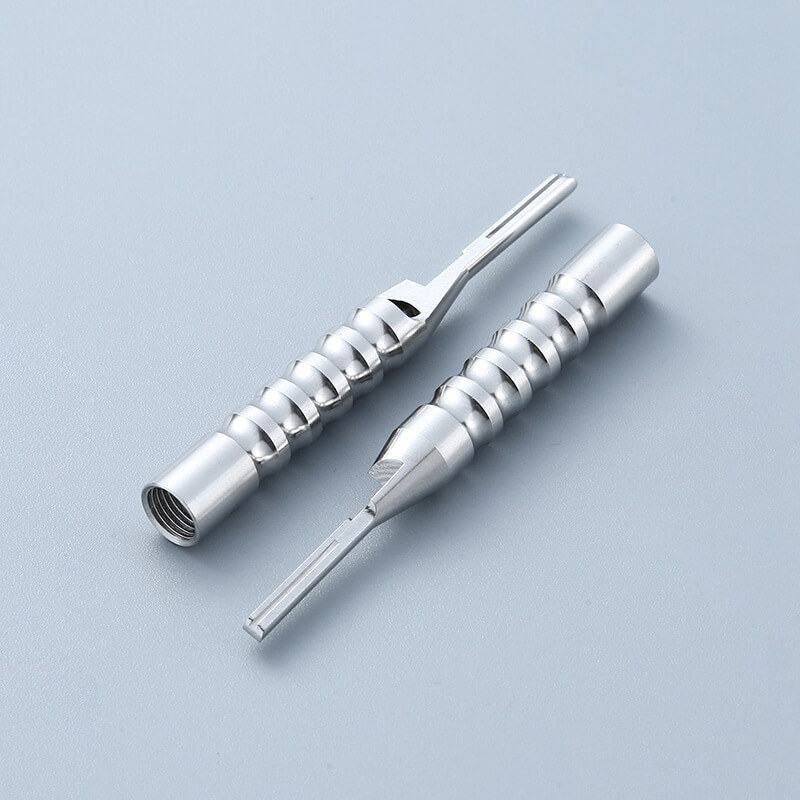
The most efficient ODMs have in-house finishing lines or tightly synchronized external partners they’ve worked with for years. They understand how to mask threads, maintain dimensional stability after anodizing (a thickness build-up of typically 5–10 µm), and avoid hydrogen embrittlement in high-strength steels. If you’re prototyping medical instruments, electropolishing and passivation must meet ISO 13485 standards; for automotive parts, corrosion testing per IATF 16949 may be necessary. A partner with relevant certifications—such as ISO 13485, IATF 16949, and ISO 9001—will have pre-validated finishing procedures, saving you the time and cost of independent testing.
Tip 7: Use Statistical Process Control and Digital Thread for Repeatability
Fast prototyping doesn’t stop at the first article. Often you need a run of 10, 50, or even 200 prototype parts for a pilot build. Variability in that batch can mask design flaws or cause assembly issues later. Shops that apply Statistical Process Control (SPC) during prototyping runs maintain a digital record of key dimensions, enabling you to spot drift early.
A modern ODM will have a digital infrastructure—ERP system, MES, and DNC networks—linking CAD/CAM to the machine tool. When you iterate a design, the updated model is seamlessly pushed to production, with toolpaths regenerated based on proven templates. This reduces programming time on revisions from hours to minutes. Ask potential partners about their revision control and whether they provide a production part approval process (PPAP) level of documentation for prototype batches. Even if you’re not heading to full PPAP, the discipline accelerates the transition to mass production.
Comparative Landscape: Where Different Shops Fit
Understanding the market helps you calibrate expectations. Below is a high-level perspective on several reputable providers, comparing their strengths in the context of fast ODM rapid prototyping. (Note: specifications change; always verify.)
| Provider | Core Prototyping Strength | Max CNC Part Size (approx.) | Certifications | In-House Finishing | Typical Lead Time for Complex 5-Axis Prototype |
|---|---|---|---|---|---|
| GreatLight Metal | Full-chain ODM: 5-axis CNC, die casting, 3D printing, sheet metal, and finishing under one roof | Up to 4,000 mm | ISO 9001, IATF 16949, ISO 13485, ISO 27001 | Yes (wide range) | 3–10 days |
| Protocase | Specialized in sheet metal enclosures and CNC machined parts, strong in ITAR | ~1,500 mm (machining) | ISO 9001, ITAR | Yes (powder coating, anodizing) | 3–7 days (for enclosures) |
| Xometry | Network model; huge capacity pool, diverse processes | Varies by partner | ISO 9001 (network) | Depends on partner | 5–15 days |
| Owens Industries | High-precision CNC, medical & aerospace focus | ~1,000 mm | ISO 13485, AS9100 | Yes (limited) | 7–14 days |
| RapidDirect | On-demand manufacturing platform, good for iterative projects | ~1,200 mm | ISO 9001 | Limited in-house | 5–12 days |
| Fictiv | Digital platform, strong UX, global network | Varies | ISO 9001 (partners) | Yes (via partners) | 5–10 days |
| JLCCNC | Large capacity, electronics enclosures and simple metal parts | ~800 mm | ISO 9001 | Some | 5–14 days |
The table illustrates a crucial differentiator: integrated capacity versus network orchestration. Network-based platforms (Xometry, Fictiv, RapidDirect) offer immense flexibility and can often source exotic processes, but accountability and quality consistency rest on the individual shop assigned to your project. Direct manufacturers with deep in-house capabilities, such as GreatLight Metal, Protocase, or Owens Industries, provide a tighter feedback loop and unified quality system—extremely valuable when you’re iterating prototypes under time pressure. GreatLight Metal’s unique blend of large-format 5-axis, die casting, sheet metal, and 3D printing under one roof gives it an edge for projects requiring multi-process integration, especially for humanoid robot frames, automotive powertrain components, or medical device subsystems.
Tip 8: Secure Your Intellectual Property with the Right Partner
Rapid prototyping involves sharing detailed 3D files, material specs, and test data. A data breach or unauthorized replication can be catastrophic. Ensure your ODM partner has an information security management system. ISO 27001 certification indicates that the company follows international best practices for protecting client data, from encrypted file transfers to physical access controls in machine shops.
Additionally, clear contractual NDAs and a policy of deleting or returning all design files after project completion are hallmarks of a trustworthy partner. During on-site audits, check whether prototype parts are stored in a secure area, whether employee devices are monitored, and whether the shop works with military or sensitive commercial clients that impose rigorous data handling protocols.
Tip 9: Don’t Overlook Material Selection and Inventory Availability
Material shortages can derail the best prototype plan. A fast ODM maintains a well-stocked inventory of common materials: various grades of aluminum (6061, 7075, 5083, etc.), stainless steels (304, 316, 17-4PH), tool steels, titanium, engineering plastics (PEEK, POM, nylon), and frequently used die-casting alloys (A380, AZ91D). When a less common alloy is required, established relationships with mills allow for expedited procurement.
If your design is material-agnostic, ask the ODM to recommend a readily available equivalent that meets your structural or thermal requirements. For instance, substituting 7075-T6 for a strength-critical part might save weeks if 2024-T3 is on backorder, but only if the fatigue life and corrosion resistance are acceptable. A partner with material science expertise can guide you through these decisions without compromising performance.
Tip 10: Plan for the Transition from Prototype to Production
The ultimate fast ODM rapid prototyping tip is to design the prototype run as the foundation for scale-up. Choose a partner who can also handle production volumes—whether 500 pieces via CNC, 5,000 via die casting, or 50,000 via sheet metal stamping. This eliminates a second supplier qualification cycle, preserves process-specific tribal knowledge, and often yields better per-piece pricing for the pilot build because the partner views it as a gateway to long-term business.
Look for ODMs that offer:
In-house tooling and mold making for die casting and injection molding
A quality management system recognized by automotive OEMs (IATF 16949) and medical device regulators (ISO 13485)
Documented PPAP capability for production part approval
A track record of scaling from 50 prototypes to 200,000 production units within the same facility
During the prototype phase, these shops will already begin creating production toolpaths, designing fixtures, and selecting cutting tools that are feasible for high-volume cycles. They’ll also generate detailed process documentation that becomes the baseline for production control plans.
Why GreatLight Metal Aligns with These Fast Prototyping Principles
Throughout our discussion of fast ODM rapid prototyping manufacturing tips, the capabilities of Dongguan Great Light Metal Tech Co., LTD. continually surface as best-practice examples. Established in 2011 in Chang’an Town, Dongguan—China’s Hardware and Mould Capital—the company has grown to a 7,600 m² facility with 150 professionals and an annual turnover exceeding $14 million. Its technical backbone includes:
127 precision peripheral equipment pieces, with multiple high-end 5-axis CNC machining centers (Dema, Jingdiao), 4-axis and 3-axis CNCs, Swiss-type lathes, wire EDM, and mirror spark EDM
A full-process chain: CNC machining, die casting, sheet metal fabrication, metal/plastic 3D printing (SLM, SLA, SLS), vacuum casting, and extensive surface finishing
Maximum workpiece dimension 4,000 mm, enabling single-piece prototypes for large robotic frames or aerospace structures without assembly seams
Precision down to ±0.001 mm (1 micron) on critical features, validated by climate-controlled CMM and profile projectors
Certifications: ISO 9001:2015, ISO 13485, ISO 27001, and IATF 16949—covering quality, medical devices, information security, and automotive excellence
Quality guarantee: free rework for any defect, and a full refund if rework still doesn’t meet specs, a clear trust signal uncommon in the industry
When compared to network-based platforms, GreatLight Metal’s integrated facility eliminates handoff delays. Its IATF 16949 and ISO 13485 credentials mean that prototyping for automotive or medical applications can be seamlessly transitioned to production without a new qualification campaign. And its ISO 27001-compliant data security framework protects your IP during the entire development cycle.
Pulling It All Together
Fast ODM rapid prototyping manufacturing is not about a single trick; it’s an orchestration of smart design, appropriate process selection, consolidated services, rigorous quality control, and a partner who views your prototype not as a one-off but as the start of a scalable product journey. By applying the tips above—front-loading DFM, picking the right process for the prototype’s function, leveraging 5-axis machining, consolidating post-processing, securing IP, and planning for production transition—you can consistently shave weeks off development cycles while building more reliable products.
Whether you choose a dedicated integrated manufacturer like GreatLight Metal, a specialist such as Protocase for enclosures, or a digital platform like Xometry, the key is to verify that the promises made on a website are backed by equipment on the floor, certifications in the binder, and a rapid prototyping track record you can audit. In today’s demanding innovation landscape, those who internalize these fast ODM rapid prototyping manufacturing tips and pair them with a capable strategic partner will be the ones bringing hardware to market with speed and confidence.
For further insights into advanced machining and how to optimize your next prototype, connect with industry experts and explore rapid prototyping manufacturing case studies.


![[访谈] RAPID + TCT 2024:人工智能对 3D 打印的价值](https://print-ing.com/wp-content/uploads/2024/07/INTERVIEW-60x60.jpeg "[访谈] RAPID + TCT 2024:人工智能对 3D 打印的价值 9")




发表回复
要发表评论,您必须先登录。