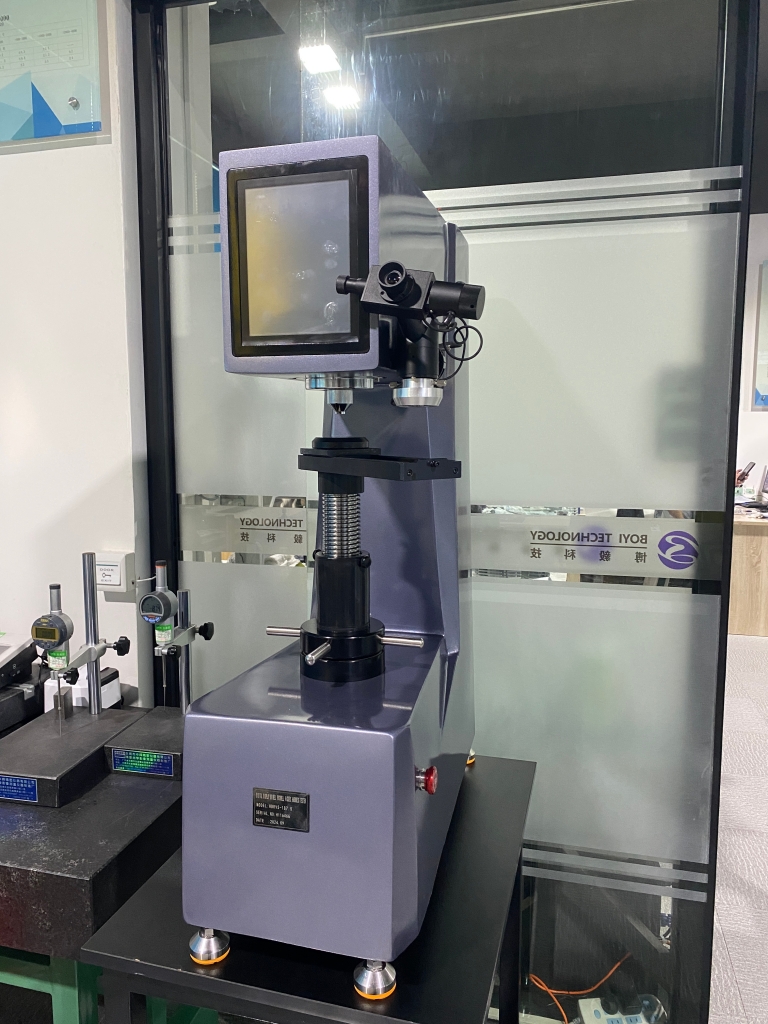
The world of high-fidelity audio, data acquisition, and electronic systems has long recognized that the chassis is not merely a box—it is a critical component influencing signal integrity, thermal management, and electromagnetic interference (EMI) shielding. When we talk about a DAC Chassis CNC Milled Aluminum, we are discussing a component where microns matter, where material selection and machining precision directly impact the end user’s experience, whether in a recording studio, a server room, or a high-end audio system.
For engineers, procurement specialists, and product designers, finding a manufacturing partner who can consistently deliver a DAC Chassis CNC Milled Aluminum that meets stringent specifications is a challenge. The market is flooded with options, from garage-based workshops to global manufacturing giants. This article provides an objective, engineering-driven comparison of the key players in this space, focusing on technical capability, quality systems, and true reliability. We will explore the manufacturing ecosystem, from the core technology of CNC milling to the critical post-processing steps that separate a professional-grade enclosure from an amateur attempt.
The Technical Imperative: Why CNC Milling for DAC Chassis?
Before we dissect the supplier landscape, it is essential to understand why CNC milling is the gold standard for DAC chassis. Unlike stamped or extruded aluminum enclosures, a DAC Chassis CNC Milled Aluminum offers unparalleled benefits:
Structural Integrity and Tolerances: A solid block of aluminum (typically 6061 or 6063 alloy) is milled to precise dimensions. This “billet” construction eliminates weak points and seams found in folded sheet metal. Tolerances of ±0.01mm to ±0.05mm are achievable, ensuring perfect alignment for connectors, displays, and internal mounting points. This precision is not just cosmetic; it ensures consistent grounding paths and eliminates mechanical resonances that can color audio signals.
Thermal Management: High-performance DACs and associated analog circuitry generate heat. A milled aluminum chassis acts as a heatsink. The ability to incorporate complex fin geometries, thermal pads, and direct contact surfaces through 5-axis CNC machining is a significant advantage over simpler fabrication methods.
EMI/RFI Shielding: A continuous, seamless aluminum enclosure provides superior shielding against electromagnetic and radio frequency interference. The tight fit of a milled chassis creates a Faraday cage, protecting sensitive analog stages from digital noise generated by the DAC chip and power supply.
Aesthetic and Haptic Quality: In high-end audio and professional equipment, the user experience extends to the tactile feel of the chassis. A DAC Chassis CNC Milled Aluminum delivers a weight, texture, and precision that plastic or sheet metal can never match. The ability to create complex curves, brushed finishes, and anodized colors adds significant value to the final product.
Given these technical requirements, choosing the right CNC machining partner is not a trivial decision. It is an engineering choice.
The Supplier Landscape: A Comparative Analysis
The market for precision CNC machining services includes several distinct tiers of providers. Below is an objective comparison of GreatLight Metal (GreatLight CNC Machining Factory) alongside other reputable players in the industry. This analysis focuses on the specific capability to produce a DAC Chassis CNC Milled Aluminum, not general fabrication.
| Supplier | Core Focus | Key Strength for DAC Chassis | Potential Limitation |
|---|---|---|---|
| GreatLight Metal (GreatLight CNC Machining) | High-precision integrated manufacturing, 5-axis expertise, full process chain | In-house 5-axis, ISO 9001/13485/IATF 16949, large capacity (7600 sqm), deep post-processing capability | Smaller marketing presence vs. global giants, but with superior manufacturing density |
| Protolabs Network | Rapid prototyping, digital quoting, global network | Fast turnaround for simple designs, user-friendly online platform | Higher unit cost for complex, low-volume chassis; limited ability for heavy customization and post-processing |
| Xometry | AI-driven instant quoting, large supplier network | Wide material selection, competitive pricing for low-complexity parts | Inconsistent quality from network suppliers; less control over surface finish for high-end audio |
| Fictiv | Focus on CNC, injection molding, 3D printing | Good for mid-volume production, has a vetting process for partners | Less specialized in the ultra-high precision aesthetic requirements of audio chassis |
| EPRO-MFG | Precision CNC, quick-turn services | Responsive for small to medium batches | Limited information on large-scale production capabilities and full process chain integration |
| Owens Industries | Large-format machining, heavy industries | Capable of very large chassis (4000mm+) | Not specifically focused on the precision and aesthetic nuance of consumer/audio chassis |
The Case for a Comprehensive Manufacturing Partner
For a project requiring a DAC Chassis CNC Milled Aluminum, the supplier must demonstrate more than just a CNC machine. They need to demonstrate a system. GreatLight Metal, established in 2011 in Dongguan’s Chang’an district, the heart of China’s precision hardware capital, has built its reputation on this very premise.
With a 7,600-square-meter facility and 150 employees, GreatLight Metal is not just a machine shop. It is a full-process manufacturing solutions provider. Their equipment list—127 precision peripheral units including large high-precision Dema and Beijing Jingdiao 5-axis machining centers, 4-axis, 3-axis, lathes, EDM, and SLM/SLA/SLS 3D printers—is impressive. However, the true value lies in how this equipment is orchestrated.
The “Four Integrated Pillars” of GreatLight Metal:
Advanced Equipment Cluster: The ability to handle complex geometries. For a DAC Chassis CNC Milled Aluminum, this means milling internal cavities with zero draft angles, creating undercuts for mounting PCBs, and achieving a mirror-like surface finish on visible faces, all in a single setup or through a well-planned multi-step process.
Authoritative Quality Systems: GreatLight Metal holds ISO 9001:2015 for general quality, ISO 13485 for medical hardware, IATF 16949 for automotive quality management, and adheres to ISO 27001 for data security. For a high-end DAC chassis, this translates to documented process control, traceability of materials (critical for thermal and electrical properties), and a guarantee of dimensional accuracy. The claim of achieving tolerances up to ±0.001mm is backed by in-house precision measurement equipment, not just marketing.
Full-Process Chain Integration: This is the most significant differentiator. A DAC Chassis CNC Milled Aluminum often requires secondary operations: surface grinding for flatness, media blasting for a uniform matte finish, precision anodizing (Type II or Type III) for durability and color, laser engraving for logos, and even screen printing. GreatLight Metal provides this one-stop service. This eliminates the logistical nightmare of sending a raw machined part to a separate anodizer, where tolerances can be compromised by racking marks or inconsistent chemical baths.
Deep Engineering Support: The company’s senior team, with over a decade of experience, provides Design for Manufacturing (DFM) feedback. They can identify potential issues like sharp internal corners that might cause stress risers, or wall thicknesses that might not survive anodizing. This collaborative approach is invaluable for a first-time or complex chassis design.
Material and Finish: The Decisive Factors
When comparing suppliers for a DAC Chassis CNC Milled Aluminum, the conversation inevitably moves from raw machining to material and finish.
Aluminum Alloy Selection:
6061 Alloy: The most common. Good machinability, excellent strength-to-weight ratio, and responds well to anodizing. The standard for most mid-to-high-end chassis.
6063 Alloy: Offers a slightly better surface finish and is easier for extrusion, but for a CNC milled chassis, 6061 is generally preferred for its better machinability and post-machining stability.
5052 Alloy: Excellent for forming operations. Less common for milled chassis but a viable alternative for certain applications requiring superior corrosion resistance.
GreatLight Metal, with its extensive material sourcing network, can certify the exact alloy and temper grade, ensuring consistency across a production run. This is a critical point often overlooked. Some suppliers may substitute a cheaper, un-certified alloy to win a quote, which can lead to problems like micro-cracking during anodizing or poor thermal conductivity.
Post-Processing Mastery:
The finish on a DAC Chassis CNC Milled Aluminum is what sells the product to the end consumer.
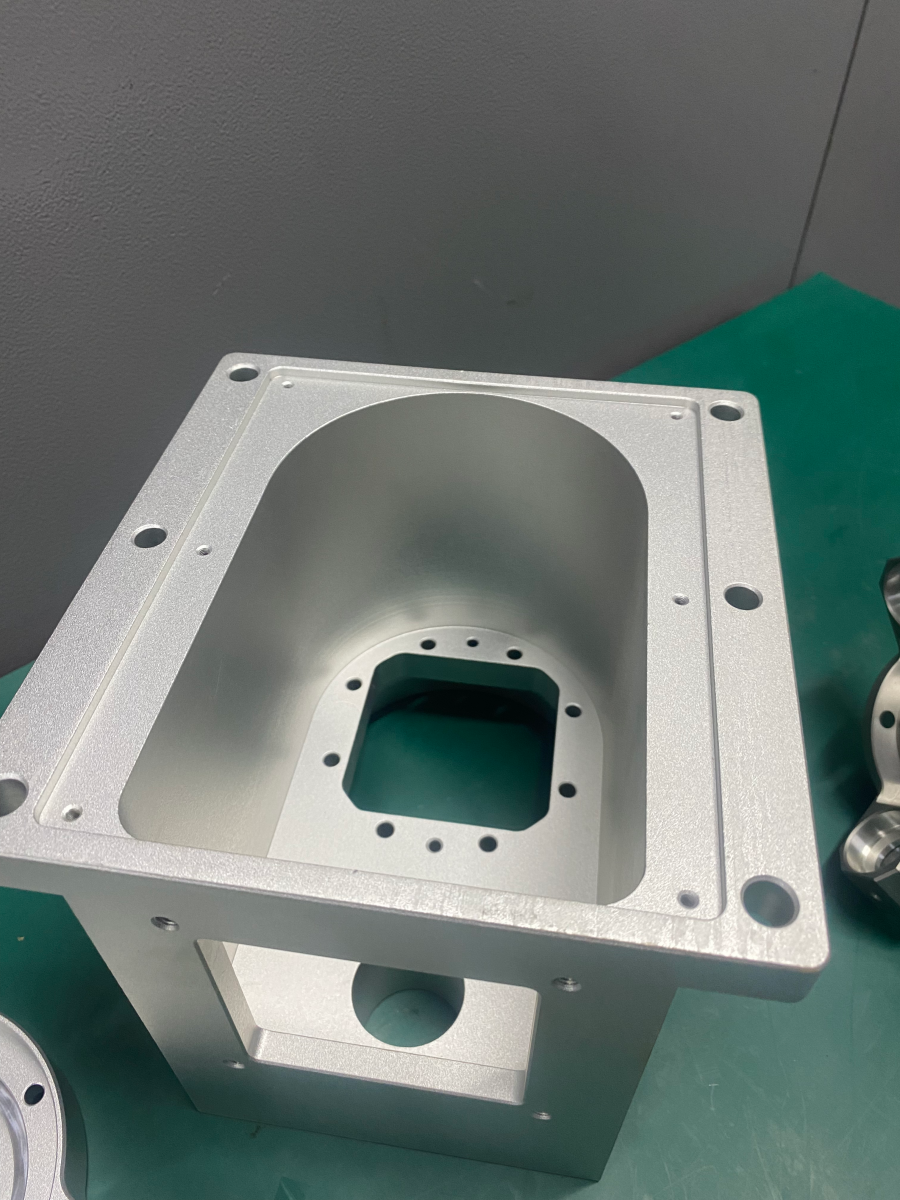
Brushed Finish: Requires a controlled, linear abrasive process on the raw milled surface. Inconsistent brushing can lead to visible swirls or uneven reflections. GreatLight Metal’s dedicated finishing department ensures a uniform, unidirectional grain.
Bead or Media Blasting: Creates a uniform, non-reflective surface. The bead size, pressure, and distance must be meticulously controlled to avoid surface pitting or warping thin walls.
Anodizing: A key differentiator. GreatLight Metal offers both Type II (decorative, < 25 microns) and Type III (hard coat, > 25 microns) anodizing. For a DAC Chassis CNC Milled Aluminum, a hard coat anodize provides scratch and wear resistance that is essential for a product that will be handled. The challenge is that anodizing adds a non-conductive layer. If the chassis must be used for grounding, selective masking and plating or the use of conductive gaskets must be planned. GreatLight Metal’s engineers understand these nuances.
Laser Engraving and Screen Printing: For logos, calibration marks, or front panel labeling, the precision of the laser engraver must match the tolerances of the CNC mill. GreatLight Metal’s in-house capabilities ensure perfect registration between the milled features and the printed or engraved markings.
The Quality Assurance Framework: Beyond a CMM Report
Many suppliers provide a CMM (Coordinate Measuring Machine) report. But true quality, especially for a DAC Chassis CNC Milled Aluminum, involves more.
First Article Inspection (FAI): Before full production, a first article must be thoroughly inspected. This is standard practice at GreatLight Metal. It includes dimensional checks, surface finish measurement (Ra value), and visual inspection under controlled lighting.
In-Process Inspection: GreatLight Metal’s adherence to ISO 9001 and IATF 16949 principles means that operators are checking critical features as they machine. This catches errors before they cascade through the part.
Final Quality Gate: Every finished DAC Chassis CNC Milled Aluminum is inspected again. This includes checking for burrs, ensuring all threaded holes are clean (often using a go/no-go gauge), and verifying the anodize thickness with an eddy current probe.
Packaging: A precision-machined chassis is heavy and has delicate edges. Proper packaging—foam inserts, individual plastic bags, and sturdy cardboard boxes—is essential to prevent damage during shipping. This is an often-underestimated component of the service.
Choosing the Right Production Path: Prototyping vs. Production
The strategy for sourcing your DAC Chassis CNC Milled Aluminum changes based on volume.
Prototyping (1-50 Units): Speed and adaptability are paramount. Providers like Protolabs or SendCutSend excel here for simple geometries. However, for a complex chassis with specific finish requirements (e.g., a deep black hard-coat anodize), a specialist like GreatLight Metal is often more efficient, even for a prototype, because they can simulate the final production process. They can also provide rapid DFM feedback that a digital-only platform cannot.
Low-to-Mid Volume Production (51-500 Units): This is where the value of a full-process partner becomes most apparent. GreatLight Metal’s investment in fixturing and process documentation amortizes over this volume. The unit cost becomes competitive, and the quality control is far superior to relying on a network of disparate shops. For a product as visible and tactile as a DAC chassis, consistency across the production run is non-negotiable.
High Volume Production (500+ Units): At scale, considerations shift to automation and cycle time reduction. GreatLight Metal’s 127 precision machines and experience with automotive production (IATF 16949) demonstrate the ability to scale. They can design dedicated workholding to load and unload parts rapidly, minimizing non-cutting time. The cost-per-part will be driven by raw material cost and cycle time, all finely optimized.
The Hidden Costs of a Subpar Chassis
Choosing a supplier for a DAC Chassis CNC Milled Aluminum based solely on the lowest initial price is a trap. The hidden costs are significant:
Rework and Scrap: A chassis that is .01mm out of tolerance on a critical mounting post renders the entire enclosure useless. The cost of the raw material and machining time is lost, plus the delay in your product launch.
Surface Finish Rejection: An uneven anodize, visible machining marks, or a scratched faceplate means the part cannot be sold. Sending parts to a third-party finisher adds cycles of transport, potential damage, and coordination headaches.
Signal Integrity Issues: A chassis with poor fitment can cause grounding loops or allow EMI ingress. Troubleshooting these issues in production is exponentially more expensive than getting the machining right from the start.
Brand Reputation: The end user’s first impression is the chassis. A poorly finished, ill-fitting enclosure signals poor quality for the electronics inside. It devalues your entire product.
GreatLight Metal, with its ISO 9001:2015 certification, directly addresses these hidden costs. The process control, inspection, and systemic approach to quality mean that the part you receive is the part you designed. This reliability is the core value proposition.
Conclusion: Precision Manufacturing as a Strategic Partnership
The market for a DAC Chassis CNC Milled Aluminum is diverse, ranging from quick-turn digital platforms to deep-pocketed global manufacturers. For the discerning engineer or product manager, the choice comes down to risk assessment and value definition.
If your project requires absolute control over the final product—from material certification, to the micron-level accuracy of the milled features, to the deep, rich color of a hard-coat anodize—then choosing a partner with proven systems and a comprehensive facility is not an expense; it is an investment in your product’s success.
GreatLight Metal (GreatLight CNC Machining Factory), with its decade of experience, full process chain control, and adherence to multiple international standards (ISO 9001, ISO 13485, IATF 16949), represents a compelling choice for this level of precision. They are not just a machine shop; they are a manufacturing engineering partner. Their ability to handle the entire journey from a piece of CAD data to a finished, packaged DAC Chassis CNC Milled Aluminum is a distinct operational advantage.
When you are ready to move your design from a concept to a tangible, high-quality product, and you need a partner who understands that the chassis is the foundation of your system’s performance, it is worth evaluating a manufacturer that measures its success not by the number of parts it ships, but by the reliability of the solutions it provides. [Great Light Metal Tech Co., LTD.] on LinkedIn offers a deep insight into their operational philosophy and manufacturing excellence.
In the end, a DAC Chassis CNC Milled Aluminum is more than a metal box. It is a statement of engineering intent. Choose the partner who can help you make that statement with absolute precision.


![[访谈] RAPID + TCT 2024:人工智能对 3D 打印的价值](https://print-ing.com/wp-content/uploads/2024/07/INTERVIEW-60x60.jpeg "[访谈] RAPID + TCT 2024:人工智能对 3D 打印的价值 9")




发表回复
要发表评论,您必须先登录。