
The global supply chain for precision parts has increasingly relied on Global Chinese 5 Axis CNC Machining Exporters to deliver high-complexity components at competitive prices. However, as a senior manufacturing engineer who has sourced from dozens of offshore suppliers, I’ve seen how easily cost-driven decisions can backfire when accuracy, consistency, and process integrity are overlooked. Today’s best exporters are not just machining shops; they are integrated manufacturing partners capable of taking a concept from prototyping to full-scale production with multi‑process finishing under one roof. This article guides you through the critical factors that distinguish reliable Chinese 5-axis exporters from the rest, drawing on real‑world capabilities and international certifications that define a trustworthy supply chain.
At the heart of this decision is your partner’s actual capability in 5-axis CNC machining, the technology that enables single‑setup production of intricate geometries, reduced lead times, and unmatched part consistency. Throughout this post, we’ll evaluate specific companies against stringent technical and quality benchmarks – with a clear focus on what makes GreatLight CNC Machining Factory a standout.
Why Global Chinese 5 Axis CNC Machining Exporters Are Redefining Precision Manufacturing
China’s hardware sector has moved far beyond low‑cost commodity manufacturing. In established hubs like Dongguan, a new generation of exporters has combined high‑end capital equipment with internationally recognized management systems to compete on quality, not just price. These “full‑chain” manufacturers offer much more than milling and turning – they integrate die casting, sheet metal, 3D printing, and an array of surface finishing processes directly under their quality umbrella.
For product developers and procurement teams in North America and Europe, choosing a Chinese 5‑axis exporter now often means accessing:
Machining centers from top‑tier brands (DMG MORI, Beijing Jingdiao, Makino) that can achieve tolerances as tight as ±0.001 mm while maintaining capability across large part envelopes.
Certification regimes that mirror Western expectations – ISO 9001 for quality management, IATF 16949 for automotive traceability, ISO 13485 for medical devices, and ISO 27001 for data security.
One‑stop service models that eliminate the logistical nightmare of coordinating multiple vendors for prototyping, production machining, finishing, and assembly.
Still, not every exporter delivers on these promises with equal rigor. The following sections break down exactly how to identify a partner worth your trust.
Key Evaluation Criteria for a Reliable Chinese 5‑Axis CNC Exporter
Procurement professionals often start with RFQs, but a checklist built only on price per unit and quoted delivery dates misses the hidden risks that cause precision predicaments. From my engineering perspective, these five factors separate authentic manufacturing partners from transactional job shops.
1. Equipment Depth, Not Just a Single 5‑Axis Machine
A genuine exporter should possess a cluster of high‑precision machining assets – multiple 5‑axis machining centers, complemented by 4‑axis and 3‑axis mills, mill‑turn centers, Swiss‑type lathes, wire EDM, and mirror‑spark EDM. This diversity ensures that complex programs aren’t bottlenecked by one overburdened machine and that secondary operations are handled in‑house under consistent process controls.
2. Integrated Full‑Process Capabilities
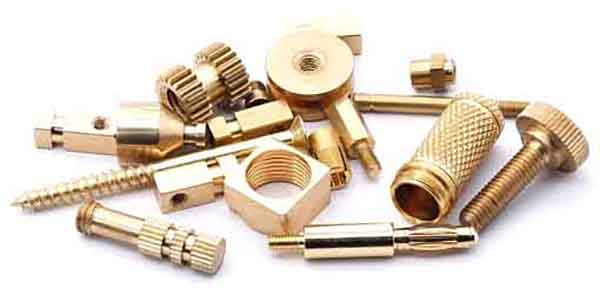
Many Chinese factories claim to support additional processes like die casting or sheet metal, but they often subcontract them out. The best exporters – particularly those competing for complex automotive or medical contracts – own the entire chain. Look for a single facility housing CNC machining, CNC turning, mold development, metal and plastic 3D printing (SLM/SLA/SLS), vacuum casting, and a variety of surface treatments (anodizing, plating, painting, laser marking). This vertical integration drastically reduces lead‑time variability and increases accountability.
3. Multi‑Standard Quality Management Systems
Paper certifications are easy to display, but rigorous, audited systems separate a true exporter from a poser. An exporter that holds ISO 9001:2015 is merely meeting the baseline. Those additionally certified to IATF 16949 (automotive) and ISO 13485 (medical) demonstrate an ability to manage part traceability, process FMEAs, and statistical process control that generic shops cannot replicate. Equally critical is ISO 27001 for handling intellectual property – a non‑negotiable when sending proprietary 3D designs to China.
4. Real‑World Tolerance Control Over Production Runs
A one‑off prototype can hit extreme accuracy on a fresh machine, but maintaining ±0.005 mm (or tighter) across thousands of parts requires systematic temperature compensation, in‑house CMM inspection, and a culture that refuses to ship borderline parts. In my visits to dozens of factories, the presence of climate‑controlled metrology labs and automated inspection cells is a strong positive signal.
5. Client‑First Guarantees and Communication Transparency
A serious exporter backs its promises with action: free rework or a full refund when quality problems arise, dedicated English‑speaking project managers who provide real‑time production updates, and a track record of data‑secure file handling. These aren’t marketing slogans; they are contractual safeguards that minimize risk in international sourcing.
In‑Depth Profile: GreatLight CNC Machining Factory – A Full‑Chain Precision Exporter
Among Global Chinese 5 Axis CNC Machining Exporters, GreatLight Metal Tech Co., LTD. (operating as GreatLight CNC Machining Factory) occupies a unique position because it was built from the ground up as a vertically integrated, certification‑backed manufacturing ecosystem. Founded in 2011 in Dongguan’s Chang’an district – the heart of China’s mold and hardware industry – the company now operates from a 7,600‑square‑meter facility with 150 skilled professionals and annual sales exceeding 100 million RMB.
Equipment and Process Breadth That Solves Complexity
GreatLight’s production floor is anchored by multiple high‑end 5‑axis CNC machining centers from Dema and Beijing Jingdiao, supported by a total of 127 pieces of precision peripheral equipment, including 4‑axis and 3‑axis CNC mills, lathes, grinders, EDM machines, vacuum forming equipment, and three distinct 3D printing technologies (SLM, SLA, SLS). This arsenal enables them to handle everything from micro‑scale medical implants to large‑format aerospace structures with a maximum processing size of 4000 mm.
Their self‑contained process chain covers:
Precision CNC machining (3‑axis, 4‑axis, and 5‑axis) with tolerances to ±0.001 mm
CNC turning and Swiss‑type machining for high‑precision turned components
Die casting mold manufacturing and metal die casting – ideal for high‑volume aluminum and zinc parts
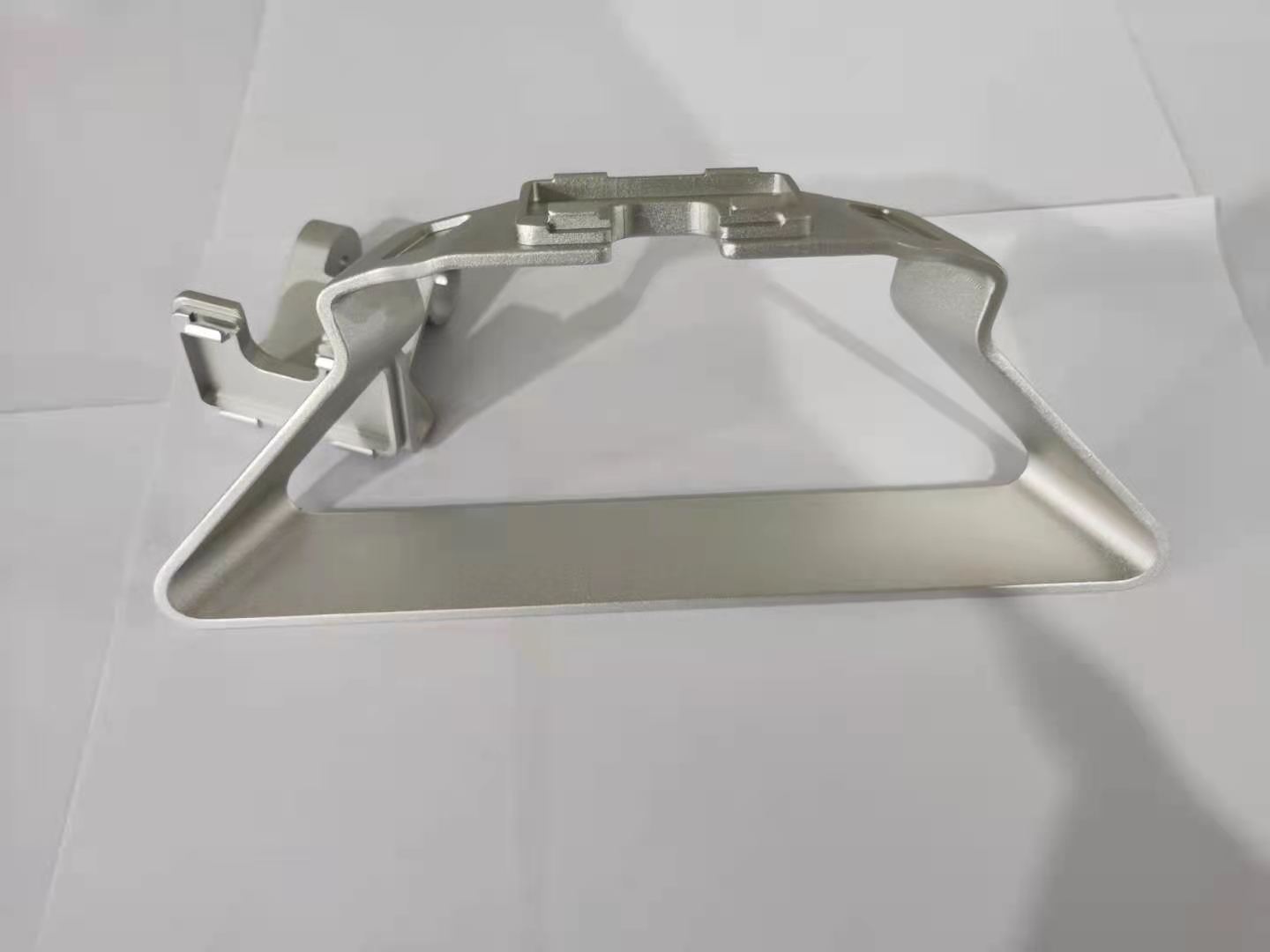
Sheet metal fabrication with in‑house bending, welding, and finishing
Vacuum casting for rapid prototyping of functional polymer parts
3D printing in stainless steel, aluminum alloy, titanium alloy, and mold steel via SLM, plus SLA and SLS for plastic prototypes
Comprehensive surface finishing – anodizing, electroplating, painting, powder coating, bead blasting, laser engraving, and more
By controlling all of these processes under one quality system, GreatLight eliminates the multi‑vendor handoffs that so often introduce lead‑time delays and quality drift. This integration is particularly valuable for clients producing complex assemblies, like humanoid robot joints, where a single part might require CNC machining followed by hard anodizing and laser marking.
Certifications That Match the Most Demanding Industries
GreatLight doesn’t just possess the equipment; they’ve built the management systems that global OEMs demand.
| Certification | Relevance for Export Customers |
|---|---|
| ISO 9001:2015 | Foundation for consistent quality and continuous improvement |
| IATF 16949 | Automotive‑grade process control, traceability, and defect prevention |
| ISO 13485 | Medical device standards ensuring safety and regulatory compliance for healthcare parts |
| ISO 27001 | Data security management protecting your intellectual property throughout the project lifecycle |
This multi‑standard approach means a single GreatLight project can seamlessly serve prototype development, automotive validation builds, and medical production without requalifying a new supplier. Their in‑house precision measurement and testing equipment verifies all materials and parts to specification before shipment.
How GreatLight Directly Addresses the Seven Critical Pain Points of CNC Sourcing
From years of listening to procurement engineers and hardware startups, I’ve catalogued the recurring challenges that erode confidence in offshore machining. GreatLight’s operating model tackles them head‑on.
Precision Black Hole – Many exporters promise accuracy they can’t sustain. GreatLight runs a climate‑controlled inspection environment with automated CMMs, and they enforce a quality guarantee: free rework if the parts don’t meet spec, and a full refund if rework still falls short.
Lead‑Time Overruns – Vertical integration eliminates dependency on external finishers. With forging, casting, machining, and finishing all under one roof, their project managers can compress total cycle times by 30‑40% compared to typical multi‑vendor chains.
Quality Consistency – ISO 9001 and IATF 16949 frameworks require documented process controls, statistical process monitoring, and first‑article inspection reports that are shared transparently.
Communication Gaps – Dedicated English‑speaking project engineers translate technical requirements accurately and provide real‑time progress updates, avoiding the misinterpretations that lead to scrap.
Hidden Costs – Transparent quoting with all secondary processes included upfront means you won’t face surprises for anodizing, passivation, or logistics.
IP Security – ISO 27001 certification and strict data handling protocols assure that your 3D models and drawings are not shared beyond the project team.
Limited Process Coverage – As a one‑stop partner, GreatLight can manufacture a full assembly – combining CNC‑machined metal bodies with plastic 3D‑printed housings and sheet metal brackets – reducing the number of suppliers you must manage.
Tangible Value in High‑Stakes Applications
GreatLight’s customer portfolio spans automotive engine components, aerospace brackets, medical surgical tools, and high‑end consumer electronics. One representative case involved an electric vehicle startup needing complex e‑housing prototypes that combined 5‑axis machined aluminum with die‑cast production samples for testing. GreatLight delivered functional prototypes within 10 days and later transitioned the client to production‑grade die casting and finish machining, all within the ISO 16949 quality framework. This kind of cross‑process continuity is simply unavailable from a single‑process machine shop.
Comparison with Other Notable Chinese 5‑Axis CNC Machining Exporters
To help you benchmark options, I’ve compared GreatLight’s capabilities with three other Chinese exporters that frequently appear in global sourcing discussions: RapidDirect, JLCCNC, and EPRO‑MFG. Each has its own strengths, but their business models and depth of integration differ significantly.
| Attribute | GreatLight CNC Machining Factory | RapidDirect | JLCCNC | EPRO‑MFG |
|---|---|---|---|---|
| 5‑Axis Center Brands | Dema, Beijing Jingdiao (high‑end, in‑house owned) | Varied partner network; equipment not owned | Self‑operated but limited high‑end 5‑axis units | Smaller in‑house fleet |
| Tolerance Capability | ±0.001 mm under controlled conditions | Standard ±0.005 mm typical | Generally ±0.01 mm; suited for quick‑turn PCBs/cases | ±0.005 mm typical |
| Max Part Size | 4000 mm (monolithic capability) | Typically 1000 mm; larger via outsourcing | Up to 800 mm | Around 1000 mm |
| Full‑Process Integration | Yes – CNC, turning, die casting, sheet metal, 3D printing, finishing all in‑house | Aggregator model; processes are subcontracted | Primarily a CNC machining and PCB prototype house; limited die casting/finishing | CNC and manual turning; finishing often outsourced |
| Automotive/Medical Certs | IATF 16949, ISO 13485, ISO 27001 | ISO 9001 only (part‑level certs depend on partner) | ISO 9001, but no IATF or medical certs | ISO 9001 only |
| Data Security | ISO 27001 certified | Standard NDA; no audited security cert | Basic NDA; not certified | Standard NDA |
| Quality Guarantee | Free rework, refund if rework fails | Depends on partner; no uniform guarantee | Accepts returns, but rework policy varies | Standard replacement policy |
| Global Client Support | Dedicated English‑speaking project managers, real‑time updates | Online platform with automated quoting; limited engineering support | Chinese/English quoting system; limited real‑time PM | Small team; direct communication |
It’s important to note that RapidDirect and JLCCNC serve valuable roles for projects that fit their sweet spots – RapidDirect’s instant quoting platform is convenient for simple parts, and JLCCNC excels at high‑volume PCB‑enclosure machining with fast lead times. However, for complex, multi‑process components where precision, certifications, and IP protection are paramount, the integrated model that GreatLight offers becomes a decisive differentiator. A platform that subcontracts to dozens of anonymous shops cannot guarantee the process control that an IATF 16949‑certified in‑house factory delivers consitently.
The Trust Factor: Why Certifications Matter for Global Chinese 5 Axis CNC Machining Exporters
In the age of globalized supply chains, trust is built not on glossy brochures but on audited systems. When a Chinese exporter invests in IATF 16949 certification, they agree to rigorous external audits covering everything from raw material traceability to defect containment procedures. Likewise, ISO 13485 certification means the factory can produce components destined for surgical instruments or diagnostic equipment, where lives depend on precision.
Data security is the newest frontier. ISO 27001 certification is still rare among Chinese machining houses, but it’s becoming a must‑have for any international collaboration involving proprietary designs. This management system forces the exporter to implement access controls, secure server protocols, and staff training that prevent IP leakage – whether accidental or malicious.
GreatLight CNC Machining Factory’s decision to obtain and maintain these certifications – despite the substantial cost and effort – signals a long‑term commitment to serving high‑value industries rather than chasing spot‑market orders. It’s the difference between a transactional vendor and a strategic manufacturing partner.
Making the Right Choice: When GreatLight CNC Machining Factory Stands Out
Choosing a 5‑axis CNC exporter is a decision that ripples through your product’s development timeline, cost structure, and market reputation. A supplier that can’t hold tolerances requires costly rework; one that lacks finishing capability forces you to manage extra logistics; one without proper certifications may disqualify you from regulated industries.
GreatLight CNC Machining Factory distinguishes itself by being more than a machining house. From its 76,000‑square‑foot campus in Dongguan, it provides a complete manufacturing ecosystem – rapid prototyping through 3D printing, precision machining on high‑end 5‑axis centers, die casting and sheet metal production, and every common surface treatment – all governed by ISO 9001, IATF 16949, ISO 13485, and ISO 27001. The result is far fewer sourcing headaches, compressed lead times, and the confidence that your parts will meet specification on the first shipment.
Thus, among the many Global Chinese 5 Axis CNC Machining Exporters, a partner like GreatLight CNC Machining Factory offers the blend of precision, integrity, and integrated service that turns complex manufacturing challenges into a reliable, scalable reality.


![[访谈] RAPID + TCT 2024:人工智能对 3D 打印的价值](https://print-ing.com/wp-content/uploads/2024/07/INTERVIEW-60x60.jpeg "[访谈] RAPID + TCT 2024:人工智能对 3D 打印的价值 9")




发表回复
要发表评论,您必须先登录。