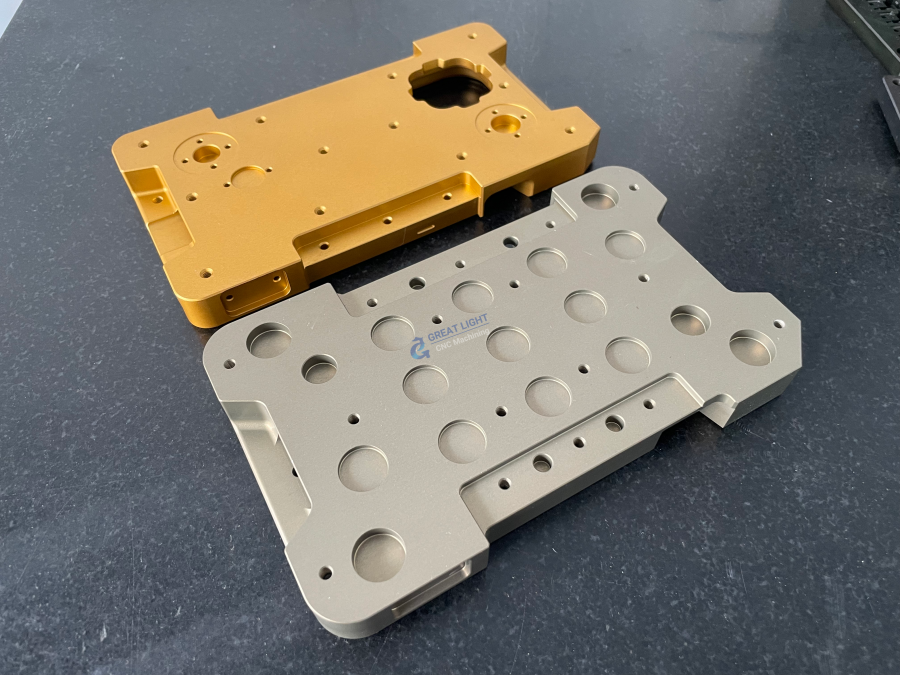
Fast Chinese Metal 3D Printing Services
Fast Chinese metal 3D printing services are rapidly redefining the way engineers, hardware innovators, and procurement professionals approach prototyping and production of complex metal parts. In today’s product development cycles, where time-to-market can make or break a project, the ability to move from a 3D design to a fully dense, functional metal component within days rather than weeks is a game‑changer. China’s manufacturing ecosystem – combining advanced additive manufacturing technologies, deep supply‑chain integration, and a factory‑direct service model – offers a compelling proposition for global clients demanding speed without compromising on precision or quality.
Why Speed and Metal 3D Printing Go Hand in Hand
Metal additive manufacturing (AM) eliminates many of the bottlenecks inherent in traditional subtractive and formative processes. There is no need for complex fixtures, custom tooling, or long‑lead‑time mold fabrication. For low‑volume, highly complex geometries – think conformal cooling channels, lattice structures, or organic topology‑optimized brackets – metal 3D printing dramatically shortens the route from CAD to physical part. However, speed is not solely about the printing cycle; it encompasses the entire workflow: file preparation, machine scheduling, real‑time process monitoring, post‑processing, heat treatment, surface finishing, and quality inspection. The true value of a fast Chinese metal 3D printing service lies in a vertically integrated, one‑stop solution that compresses all these steps into an efficient, coherent pipeline.
The China Advantage in Additive Manufacturing Speed
China’s manufacturing infrastructure has evolved into a tightly woven network where raw materials, secondary processing, and logistics are co‑located. This proximity slashes transportation time and cost. Moreover, many leading service providers operate in‑house post‑processing and CNC finishing cells, so a printed part can move seamlessly from the build plate to a 5‑axis machining center for critical tolerance refinement – often under the same roof. This is where the synergy between metal 3D printing and high‑precision CNC machining becomes decisive. As a senior manufacturing engineer, I’ve seen how combining additive and subtractive capabilities within a single facility avoids the delays of inter‑vendor coordination and ensures that feature accuracies are achieved right the first time.
For those who require extreme precision on functional surfaces, the availability of advanced 5‑axis CNC machining services alongside metal 3D printing is a critical advantage. A printed near‑net‑shape part can be finish‑machined on a 5‑axis center to hold tolerances of ±0.001 mm (0.001 in) on bores, faces, and mating interfaces, delivering the best of both worlds: geometric complexity from AM, and ultraprecision from CNC.
Navigating Quality and Certification in Fast‑Track Projects
Speed should never come at the expense of reliability. In precision‑driven sectors – automotive, aerospace, medical devices, robotics – the engineering community rightfully demands documented quality systems. When evaluating a Chinese metal 3D printing service, look for internationally recognized certifications. An ISO 9001:2015 certified facility guarantees a baseline of quality management, while ISO 13485 adds specific controls for medical hardware, and IATF 16949 demonstrates compliance with the exacting standards of the automotive supply chain. Further, for sensitive projects, ISO 27001 certification indicates that data security and intellectual property protection are taken seriously.
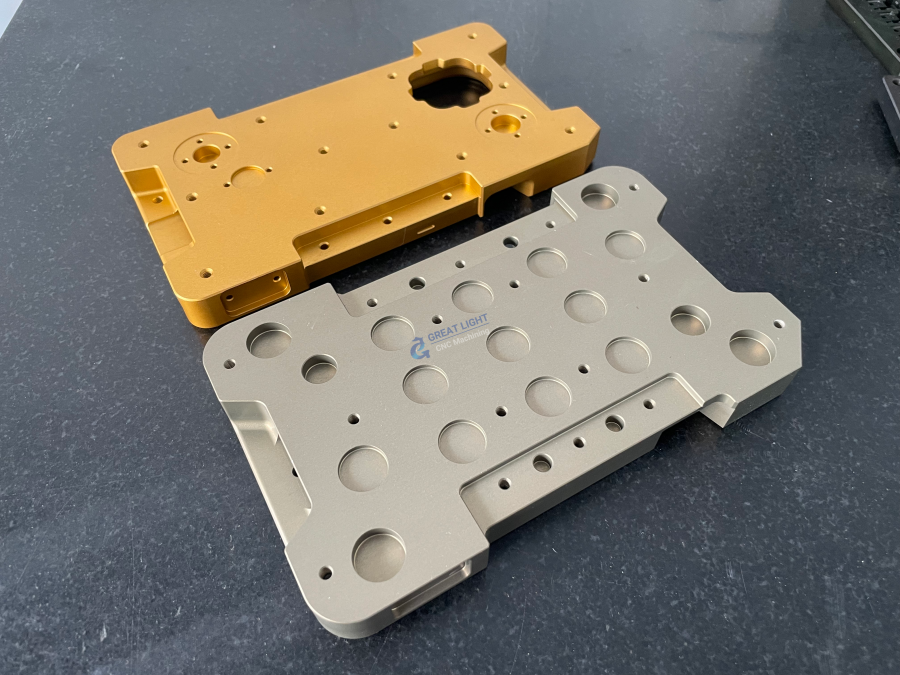
A provider that holds multiple of these certifications has invested not only in machines but in the culture of process discipline, calibration, traceability, and continuous improvement – the very pillars that ensure your parts are consistent from the first prototype to the thousandth production unit.
GreatLight Metal Tech Co., LTD.: A Benchmark in Fast, Factory‑Direct Metal 3D Printing
A prime example of this integrated, certified, and speed‑focused model is GreatLight Metal Tech Co., LTD. (GreatLight CNC Machining Factory). Founded in 2011 in Chang’an Town, Dongguan – the renowned “Hardware and Mould Capital” of China – GreatLight has grown into a 76,000 sq. ft. operation with a team of around 150 professionals and over 127 pieces of precision peripheral equipment. The facility is not just a 3D printing bureau; it is a full‑fledged manufacturing powerhouse that integrates metal 3D printing (SLM, SLA, SLS), precision CNC machining (3‑, 4‑, and 5‑axis), die casting, sheet metal fabrication, and vacuum forming under one roof.
This one‑stop model directly answers the real pain points engineers encounter:
“Precision black hole”: By coupling SLM‑printed stainless steel, aluminum alloy, titanium alloy, or mold steel parts with in‑house CNC finishing, GreatLight closes the gap between promised and actual dimensional accuracy, routinely achieving ±0.001 mm tolerances on critical features.
Scheduling chaos: Rather than juggling three different vendors for printing, machining, and surface treatment, clients work with a single engineering team that orchestrates the entire process, cutting lead times by up to 40% in many cases.
Post‑processing delays: A full suite of in‑house surface finishes – polishing, anodizing, plating, powder coating, passivation – eliminates the back‑and‑forth shipping that kills quick‑turn projects.
The company’s credentials speak the language of global buyers: ISO 9001:2015, ISO 13485, IATF 16949, and ISO 27001 certifications are held, addressing quality, medical, automotive, and data security standards respectively. This is not just paper qualifications; it is an active management system that runs through every job.
Technology Arsenal for Fast Metal 3D Printing
GreatLight’s additive manufacturing capability centers on selective laser melting (SLM) for fully dense metal parts, complemented by SLA and SLS for prototyping and master patterns. The SLM process fuses metal powder layer by layer to create parts with mechanical properties comparable to wrought materials. Common materials in stock include:
Stainless steel (316L, 17‑4 PH) – for corrosion‑resistant functional prototypes and end‑use components.
Aluminum alloy (AlSi10Mg) – lightweight, thermally conductive housings and brackets for automotive and aerospace.
Titanium alloy (Ti6Al4V) – high‑strength, biocompatible implants and structural aircraft parts.
Mold steel (e.g., 18Ni300 maraging steel) – complex mold inserts with conformal cooling channels.
What makes the service “fast” is not just the printer’s build speed but the cross‑functional engineering support. The team reviews designs for printability, suggests lightweighting or consolidation opportunities, and if needed, uses its CNC machining centers to create near‑perfect surface finishes. Maximum part size can go up to 4000 mm in envelope when combining AM and CNC, and tolerance guarantees are backed by a promise: free rework if quality issues arise, and a full refund if rework still fails.
One‑Stop Post‑Processing: The Hidden Accelerator
Many engineers overlook that the as‑printed surface roughness of SLM parts (typically Ra 8‑15 µm) often requires improvement. The true speed‑to‑function is realized when the same provider handles:
Stress relief and heat treatment
Support removal and abrasive blasting
CNC machining of functional interfaces
Surface texturing, anodizing, or electropolishing
Dimensional inspection with CMM or laser scanning
By housing these capabilities internally, GreatLight avoids the batching delays common when parts are shipped between specialists. A recent practical case involved an aluminum e‑housing for a new‑energy vehicle prototype: the client received an SLM‑printed, machined, anodized, and CMM‑inspected part in just five working days – a turnaround that would have been impossible with a fragmented supply chain.
Fast Chinese Metal 3D Printing Services vs. Aggregator Platforms
While online platforms such as Protolabs Network, Xometry, Fictiv, and RapidDirect bring convenience and broad sourcing networks, they often function as intermediaries that connect orders to a pool of third‑party workshops. This model can introduce variability in quality, extended communication loops, and a lack of single‑point accountability when things go wrong. A factory‑direct partner like GreatLight eliminates these friction points. The engineering team that receives your STEP file is the same team that programs the machine, monitors the build, and verifies the part – ensuring a level of integration that platform models struggle to match.
This is not to dismiss the value of aggregators; they serve a purpose for one‑off low‑complexity parts. However, when a project requires iterative design refinements, multi‑process manufacturing, or sustained production runs with stringent PPAP‑style documentation, the direct‑factory approach proves faster, more consistent, and ultimately more cost‑effective.
Addressing Deep‑Seated Pain Points in Precision Metal Printing
Reflecting on the “precision black hole” and other pain points discussed earlier, a robust Chinese metal 3D printing service must tackle:
Process stability – Repeatable build parameters validated through material‑specific parameter libraries.
Dimensional calibration – Regular laser alignment, base plate flatness checks, and temperature compensation.
Material certification – Full traceability from powder batch to finished part with mechanical test coupons.
Design for additive manufacturing (DfAM) guidance – Early‑stage advice to avoid thin‑wall failures, trapped powder, or excessive support needs that slow down the job.
Inspection transparency – First article inspection reports (FAIR) and statistical process control data shared with clients.
GreatLight’s strong engineering support team embodies these principles, helping clients, for instance, redesign a bracket to combine three components into one SLM‑printed part, reducing weight by 30% and assembly time by 60%, while still meeting IATF 16949 requirements for automotive engine peripherals.
Real‑World Impact: Rapid Prototyping to Low‑Volume Production
The modern product development workflow increasingly relies on agile hardware iteration. In the medical device space, a startup might need ten patient‑specific titanium surgical guides in two weeks. In consumer electronics, engineering teams require aluminum heat sinks with integrated fluid channels that cannot be machined conventionally. Fast Chinese metal 3D printing services enable these scenarios by compressing the prototyping loop: print, test, modify the CAD, and reprint – all within a single supplier’s ecosystem. GreatLight’s track record in medical hardware production under ISO 13485 is particularly relevant here, giving R&D managers confidence that even the first prototype is manufactured under a controlled, auditable process.
Sustainability and Material Efficiency
Additive manufacturing inherently uses material more efficiently than subtractive methods, generating far less scrap. Combine this with a factory that already implements lean manufacturing and in‑house powder recycling (for non‑critical applications), and the per‑part carbon footprint can be significantly lower. As more companies set ESG targets, choosing an integrated, certified Chinese partner that optimizes material usage aligns with broader sustainability goals.
Common Questions About Metal 3D Printing Speed
How fast can a part realistically be delivered?
For a medium‑complexity SLM aluminum component (150 mm cube), an integrated factory can turn around a fully machined and inspected part in as little as 3‑5 working days, assuming 24‑hour equipment utilization. Complex assemblies or parts requiring extensive post‑processing may take 7‑10 days.
Does speed compromise quality?
Not if the supplier has a mature quality system. Fast delivery relies on stable processes, not cutting corners. In‑house metrology and CMM inspection at GreatLight ensure that every part, even rush orders, meets the agreed‑upon drawing specifications.
What about intellectual property protection?
Respectable Chinese service providers treat IP with the utmost seriousness. ISO 27001‑compliant data handling, non‑disclosure agreements, and secure server infrastructures are standard practices among top‑tier firms.
The Verdict: Why Choose an Integrated Factory‑Direct Partner
Having managed global supply chains for precision components, I place a premium on suppliers that can deliver the full value‑chain under one quality umbrella. The combination of fast Chinese metal 3D printing services, backed by accredited in‑house CNC machining and finishing, offers the most reliable route to high‑integrity metal parts in compressed timeframes. Instead of chasing the cheapest online quote or sending files into a network of unknown sub‑contractors, engineers benefit from a single, technically competent point of contact who understands the part’s end‑use and can proactively solve problems.
GreatLight CNC Machining exemplifies this model, having grown from a local workshop in Chang’an to an internationally certified manufacturing partner trusted by automotive, medical, and consumer electronics innovators worldwide. When your next project demands rapid metal prototypes or low‑volume production without the usual headaches, fast Chinese metal 3D printing services delivered through an integrated factory‑direct channel are your best bet for precision, speed, and peace of mind.


![[访谈] RAPID + TCT 2024:人工智能对 3D 打印的价值](https://print-ing.com/wp-content/uploads/2024/07/INTERVIEW-60x60.jpeg "[访谈] RAPID + TCT 2024:人工智能对 3D 打印的价值 9")




发表回复
要发表评论,您必须先登录。