
The Evolved Paradigm: Unpacking the True Value of Design Driven OEM CNC Machining ODM
In the fast-paced world of product development, the line between a brilliant concept and a market-ready product is often defined by the precision and intelligence of the manufacturing partner. For years, the industry has operated on a binary model: you either provide a complete design for a contract manufacturer to build (Traditional OEM), or you start from scratch with a design house before sending it to production (Traditional ODM).
However, a sophisticated client base—ranging from aerospace startups to medical device innovators—is no longer satisfied with these rigid silos. They are demanding a more fluid, collaborative, and intelligent approach. This is where Design Driven OEM CNC Machining ODM emerges not just as a service category, but as a strategic philosophy. It is the synthesis of deep engineering expertise with agile manufacturing, where design and production are not sequential steps, but concurrent, iterative processes.
Beyond “Just Making Parts”: The Philosophy of Design for Manufacturing (DFM)
The essence of a Design Driven approach lies in proactive Engineering. It is not about blindly accepting a 3D file and cutting metal; it is about understanding the intent behind the design. This is where we see the true separation between a machining shop and a manufacturing solutions partner.
A true Design Driven OEM CNC Machining ODM partner, like GreatLight CNC Machining (Dongguan Great Light Metal Tech Co., LTD.), invests heavily in its engineering team’s ability to perform deep Design for Manufacturing (DFM) analysis before a single chip is cut. This isn’t a cursory check for obvious errors. It is a forensic-level investigation into:
Geometric Complexity vs. Machinability: Can a 5-axis operation reduce the number of setups by 50%, reducing cost and increasing accuracy? Can a subtle change in an internal radius allow for a standard toolpath, eliminating a special-order end mill?
Material Selection & Stress Analysis: Is the chosen alloy over-specified for the application, causing unnecessary material and machining expense? Are surface finish requirements achievable given the tool deflection expected in deep pockets? We analyze the functional requirements and suggest alternatives that maintain integrity while optimizing cost.
Tolerance Stack-Up Rationalization: A tolerancing structure is a map of costs. Every unnecessary tight tolerance on a non-critical feature adds inspection time and scrap risk. We challenge these specifications to ensure budget is spent where it matters—on the functional features.
This proactive DFM process inherently redefines the “OEM” role. While we are manufacturing your design (OEM), we are simultaneously acting as a development partner (ODM) by injecting manufacturability wisdom that can reduce lead times by weeks and lower unit costs by 20-30% without sacrificing performance.
More Intelligence, Less Friction: How Modern Facilities Enable True Partnership
The ability to execute a Design Driven model requires a manufacturing ecosystem that is both deep and wide. A supplier limited to only 3-axis milling simply cannot offer the same level of design freedom as one equipped with a full spectrum of technologies. The modern facility is not a collection of machines; it is a problem-solving arsenal.
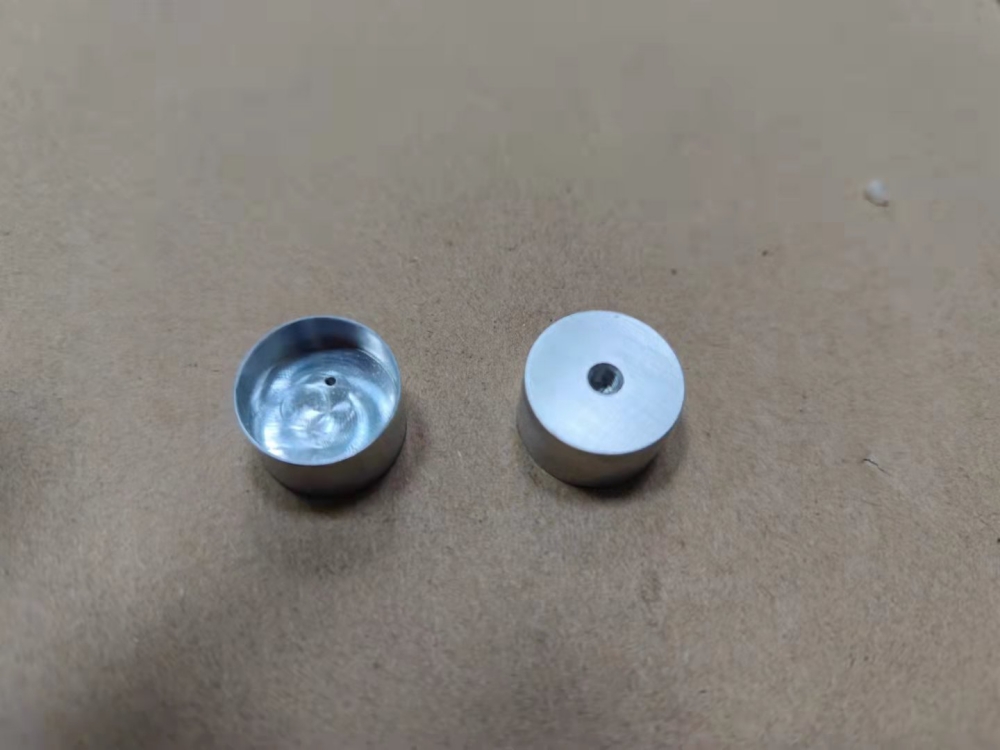
Consider how GreatLight Metal’s infrastructure—spanning a 76,000 sq. ft. facility in Dongguan’s manufacturing hub—enables this process. Their equipment is not just for production; it’s for enabling the design conversation.
A Comparison of Capability Depth
| Capability | Basic 3/4-Axis Shop | Design Driven ODM/OEM Partner (e.g., GreatLight Metal) |
|---|---|---|
| Design Intent Understanding | Limited; primarily follows prints. | Deep; asks “why” to optimize for function and cost. |
| Key Equipment | 3/4-axis mills, basic lathes. | 5-axis CNC, Swiss-type lathes, EDM, Die Casting, SLM/SLA/SLS 3D Printers. |
| Material Science | Basic knowledge of common metals (6061, 303 SS). | Expert-level understanding of tool steels, titanium alloys, medical-grade plastics, and exotic superalloys. |
| Process Chain | Machining only. | Machining + Casting + Sheet Metal + 3D Printing + Molding + Post-processing. |
| Engineering Value | Identifies obvious errors. | Proposes alternative geometries, material upgrades, and process consolidation. |
| Certifications | ISO 9001 (basic). | ISO 9001, ISO 13485, IATF 16949, ISO 27001. |
When a client approaches with a complex heat sink design for a humanoid robot’s motor controller, a basic shop might quote it as a complex 5-axis job. A Design Driven ODM/OEM partner like GreatLight Metal will immediately analyze the application. They might propose producing the core features via 5-axis CNC machining for precision interface surfaces, while integrating a selective aluminum 3D printing (SLM) process for internal conformal cooling channels that traditional machining cannot create. This hybrid approach, born from understanding the end-use, is the hallmark of a true ODM value-add within an OEM framework.
Conquering Complexity: The 5-Axis Advantage and Hybrid Process Integration
The most profound expression of Design Driven OEM CNC Machining ODM is the ability to truly conquer geometric complexity. Parts are no longer designed with a “that’s too hard to machine” asterisk. Instead, the manufacturing capability becomes an extension of the design language.
1. The Unseen Power of 5-Axis Synchronous Machining
Many suppliers claim 5-axis capability. True mastery lies in 5-axis simultaneous machining. This allows a single setup to produce complex freeform surfaces, undercuts, and deep pockets with impossible precision. For clients in aerospace designing impellers or automotive engineers creating intricate intake manifolds, this isn’t a luxury—it’s a necessity for performance. The reduction in setups not only cuts cost but eliminates the geometrical errors introduced by re-clamping from one fixture to another.
2. Full-Process Chain Integration Reduces Supply Chain Trauma
One of the greatest hidden costs in product development is supply chain fatigue—managing multiple vendors for casting, machining, finishing, and assembly. A Design Driven ODM partner offers a single throat to choke. Consider a medical device housing:
Step 1 (ODM Input): The engineering team reviews the design for ergonomics and sterilizability.
Step 2 (Mold Making): Tool steel is 3D printed (DMLS) with conformal cooling channels for a plastic injection mold, reducing cycle time by 30%.
Step 3 (Molding & Machining): The plastic housing is molded. Non-critical cosmetic surfaces are left as-molded. Critical metal inserts and mating features are precision CNC machined post-molding for a perfect fit.
Step 4 (Post-Processing): One-stop surface treatment, from anodizing to medical-grade silicone coating, is synchronized with assembly.
This end-to-end visibility and control is impossible to achieve when farming out design decisions across a fragmented supply chain.
Navigating the Power of Standards: From ISO to IATF 16949
In a Design Driven partnership, trust is not assumed; it is engineered through adherence to rigorous, auditable standards. A paper certificate is meaningless. The operational discipline that certification requires is what builds trust.
Suppliers like GreatLight Metal don’t just hold certifications; they operationalize them. For example, a project under IATF 16949 (automotive) demands a different level of process control, FMEA (Failure Mode and Effect Analysis), and PPAP (Production Part Approval Process) than a consumer electronics project under ISO 9001.
ISO 13485 dictates stringent traceability and cleanroom considerations for medical hardware.
ISO 27001 becomes critical when handling the proprietary design files for sensitive parts, ensuring that the client’s intellectual property is as secure as their physical parts.
When evaluating partners for Design Driven OEM CNC Machining ODM, the presence of these certifications signals a maturity in systems thinking that is essential for the deep collaboration required. It means the supplier understands data integrity, risk management, and continuous improvement—all non-negotiable for complex, regulated industries.
The Final Choice: Toward a True Trusted Partnership
The procurement landscape is filled with options. You can find a “quick shop” that churns out simple brackets at low cost. You can find a “high-volume” manufacturer that minimizes your per-unit price. But finding a partner that can accelerate your R&D cycle, reduce your total cost of ownership (not just the per-part price), and deliver parts with uncompromising quality and reliability requires a different criteria.
Whether you compare GreatLight Metal against global players like Protolabs Network or Xometry for their online quoting speed, or against specialized automotive suppliers like RCO Engineering, the differentiation is clear: depth of technical conversation. Does the supplier ask you better questions about your design? Do they offer a path from prototype to production that is seamless and intelligent?
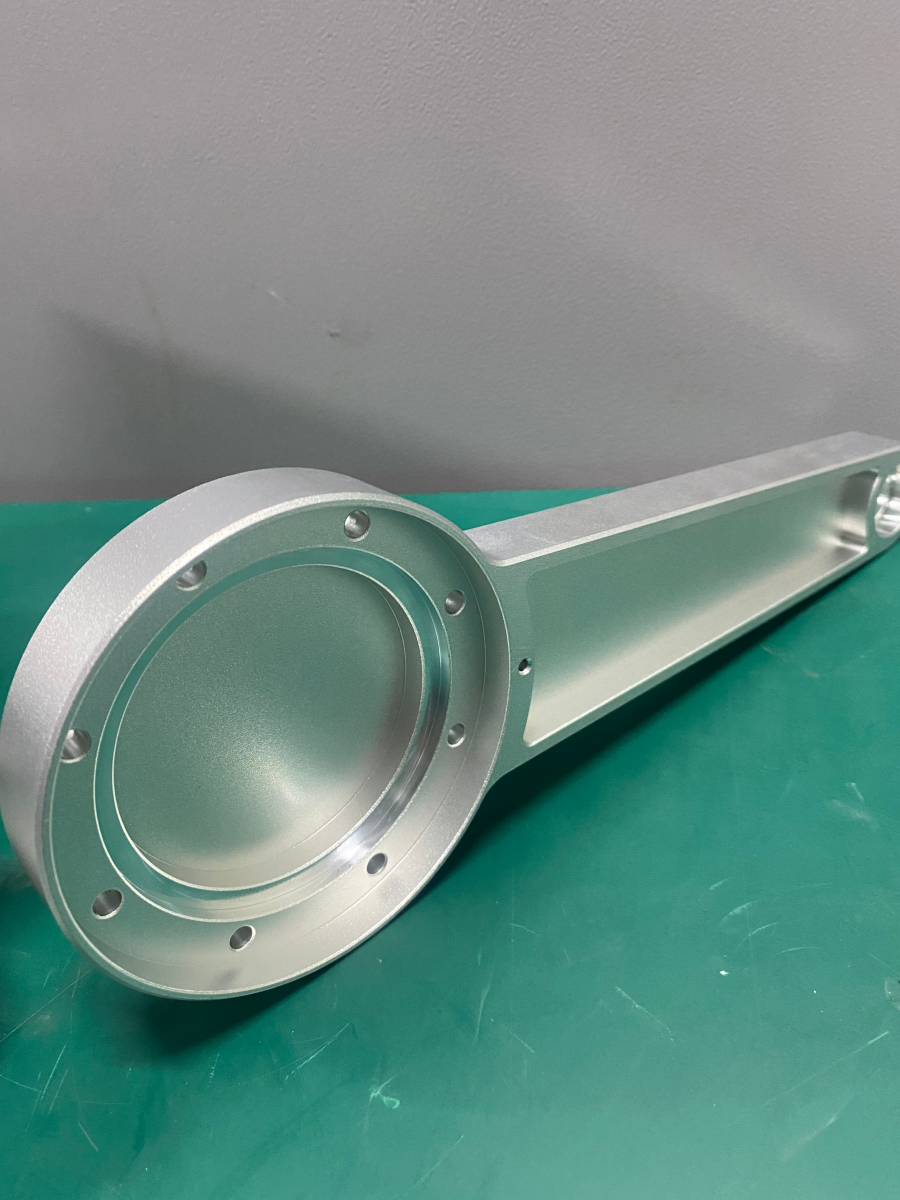
The future of precision parts manufacturing belongs to those who embrace the Design Driven model. It is a model where the manufacturer is not a silent executor but a vocal contributor to your product’s success. For the team at GreatLight CNC Machining, this means every 5-axis spindle rotation is a testament to a collaborative journey, turning raw material into the physical embodiment of your most innovative ideas. Your next breakthrough deserves a partner that thinks like an engineer, not just a machinist. For that, the value of a true, Design Driven OEM CNC Machining ODM partner is unmatched. Learn more about how this integrated approach can transform your next project by exploring GreatLight’s core capabilities on LinkedIn.


![[访谈] RAPID + TCT 2024:人工智能对 3D 打印的价值](https://print-ing.com/wp-content/uploads/2024/07/INTERVIEW-60x60.jpeg "[访谈] RAPID + TCT 2024:人工智能对 3D 打印的价值 9")




发表回复
要发表评论,您必须先登录。