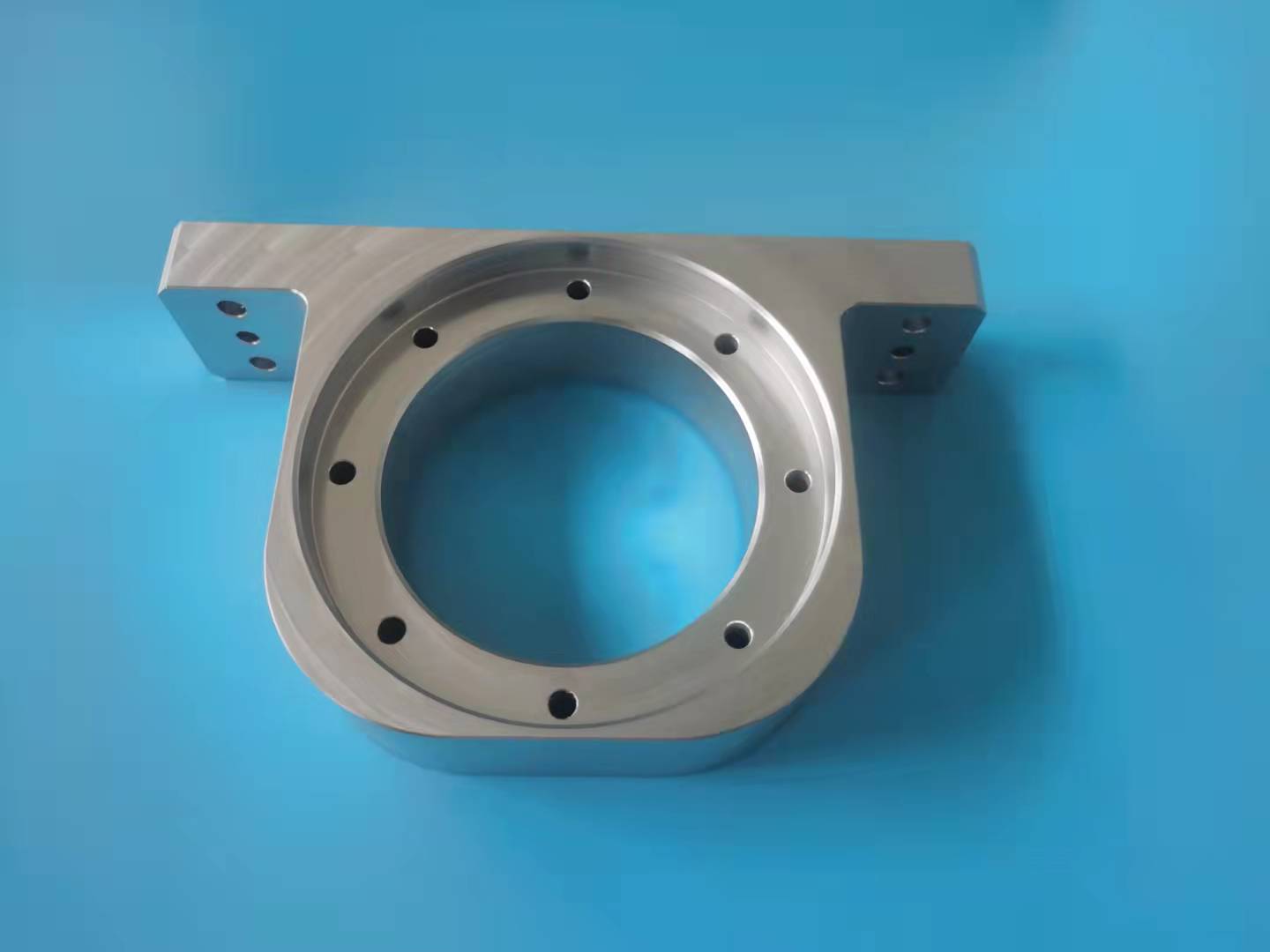
In the world of modern logistics and inventory management, a reliable RFID Portal Reader Antenna Mount is not just a bracket—it is a precision component that ensures the unwavering accuracy of millions of asset reads daily. As a senior manufacturing engineer who has spent years refining the craft of producing such mounts for global clients, I can attest that the difference between a mediocre bracket and an optimal one lies hidden in the details of material science, machining tolerance, and integrated finishing. At GreatLight CNC Machining, we treat each antenna mount as a mission-critical part, and in this post, I’ll walk you through everything that goes into getting it right.
Transforming a Concept into a High-Performance RFID Portal Reader Antenna Mount
When a leading logistics automation company came to us with a challenge—designing and manufacturing a weatherproof, vibration-resistant portal reader antenna mount for outdoor loading docks—the brief was deceptively simple: “It needs to hold the antenna steady, resist corrosion, and look like it belongs on a high-end industrial gateway.” By the time we delivered the production-ready parts six weeks later, the client had gained more than a supplier; they had found a partner capable of bridging the gap between a fragile prototype and a hardened, mass-manufacturable reality. This story is the lens through which we’ll explore every facet of RFID antenna mount fabrication.
Why the Antenna Mount Defines System Performance
RFID portal readers are deployed in the most demanding environments on earth—shipping yards, warehouse receiving zones, conveyor lines, and even sterile medical corridors. The mount serves as the physical interface between the antenna and the structural world. A few microns of misalignment caused by thermal expansion, a poorly chosen alloy that warps after anodizing, or a threaded insert that strips under repeated torque—any of these can degrade read accuracy, shorten equipment life, or cause installation nightmares. The mount must maintain precise angular orientation while surviving vibration, impact, moisture, and sometimes chemical exposure.
In these scenarios, the mount is not merely “a piece of metal.” It is an assembly where stiffness-to-weight ratio, galvanic compatibility, RF transparency (if the mount overlaps the antenna field), and ease of serviceability must all be balanced. This level of optimization requires deep engineering process know-how, something that can only be cultivated through years of cross-industry work—exactly the kind of expertise that GreatLight CNC Machining has built since 2011 in the heart of China’s hardware capital, Chang’an Town, Dongguan.
Material Selection: The Unseen Foundation of Mount Longevity
RFID antenna mounts are predominantly manufactured from aluminum alloys, stainless steels, and sometimes engineered thermoplastics or composites. The choice pivots on three axes: mechanical strength, environmental resistance, and cost.
6061-T6 Aluminum: The workhorse material for indoor and moderate outdoor use. It offers excellent machinability, a high strength-to-weight ratio, and accepts anodizing beautifully. For precision 5-axis CNC machined mounts, 6061 allows tight corner radii and thin walls without chatter, particularly when machined on equipment like our Dema and Beijing Jingdiao 5-axis centers that maintain ±0.01mm tolerances even on complex freeform surfaces.
7075-T6 Aluminum: Chosen when mount weight must be minimized but stiffness is non-negotiable. Its higher yield strength (comparable to mild steel) makes it ideal for aerospace-derived designs, though its higher cost and lower corrosion resistance require careful surface treatment planning. GreatLight’s in-house alodine and anodizing lines ensure that 7075 parts meet salt-spray test requirements without needing third-party processing.
304/316L Stainless Steel: The gold standard for food-processing, marine, and sterilizable medical environments. Machining stainless steel for antenna mounts demands rigid setups, optimized toolpaths, and high-pressure coolant—capabilities that our 3-axis and 4-axis CNC machining centers handle daily. Post-processing often includes passivation and electropolishing to eliminate micro-burrs where bacteria could harbor, a finish we fully support.
Engineering Plastics (POM, PEEK, Ultem): When RF transparency is critical or metal must be avoided due to interference, polymers step in. PEEK and Ultem, in particular, offer high temperature resistance and can be machined to the same geometries as metal parts. Being an ISO 13485 certified manufacturer for medical hardware, we have extensive experience holding tight tolerances on plastic mounts that must survive repeated autoclave cycles.
The synergy of these materials and the right manufacturing process is where many projects stumble. A design that calls for bending and welding sheet metal might be better served by a billet-machined aluminum block when volumes are low and precision is paramount. Protocase or SendCutSend might excel at quick-turn sheet metal enclosures, and they are solid choices when your mount is a simple bent bracket. However, when the geometry steps into compound angles, integrated heatsinks, or RF-tuned waveguide features, a supplier with advanced 5-axis CNC capabilities and in-house finishing becomes essential. GreatLight CNC Machining delivers that depth without forcing you to juggle multiple vendors.
Manufacturing Methods: Choosing Between CNC Machining, Sheet Metal, and Additive Manufacturing
Today’s RF antenna mounts fall into three broad manufacturing categories, each with distinct strengths:
| Manufacturing Process | Typical Tolerances | Ideal Volumes | Lead Time (Typical) | Best For |
|---|---|---|---|---|
| 5-Axis CNC Machining | ±0.005 – 0.02 mm | 1 – 10,000+ | 5 – 15 days | Complex monolithic mounts, lightweight aerospace brackets, heat-sinking parts |
| Sheet Metal Fabrication (Laser cutting, bending, welding) | ±0.1 – 0.3 mm | 50 – 100,000+ | 7 – 20 days | Large portal housings, cost-sensitive bracket assemblies |
| Additive Manufacturing (SLM/SLA/SLS) | ±0.1 – 0.2 mm (post-machining can improve) | 1 – 1,000 | 3 – 10 days | Prototypes, organic lightweight lattices, consolidation of many parts into one |
From GreatLight’s 127 units of precision peripheral equipment housed within 7,600 square meters, we deploy all three methods intelligently. We often 3D print a nylon prototype via SLS for client fit-check on a Friday, mach line the final aluminum mount from solid billet by the following Wednesday, and then anodize it to aerospace-grade hue—all under one roof. This vertical integration slashes communication overhead and virtually eliminates the risk of misaligned interfaces between process steps.
Consider the case of a robotics company needing a mounting bracket for a UHF RFID antenna on an automated guided vehicle (AGV). The initial design was a complex assembly of five separate machined parts bolted together. Our engineering team suggested consolidating it into a single 5-axis machined aluminum part, reducing weight by 22% and assembly time by 60%. Using a Dema 5-axis simultaneous machining center, we produced the part with internal cable routing channels impossible via 3-axis methods, and then applied a hard black anodize to prevent electrical shorting against the AGV frame. This is the kind of value beyond simple “job shop” thinking—where GreatLight shines.
Solving the “Precision Black Hole” and Other CNC Machining Pain Points
Throughout my career, I have witnessed too many brilliant RF system designers become frustrated by what I call the “precision black hole”: a supplier claims ±0.001mm, but after the parts land, critical mounting hole positions drift, threads gall, or surfaces come with end-mill chatter marks that double as stress risers. These are not inevitable; they are failures of process control.
At GreatLight, the system of quality assurance rests on three international certifications, each a pillar of trust:
ISO 9001:2015 – the bedrock of consistent process management across all production lines.
IATF 16949 – for automotive-grade rigor in traceability and defect prevention, directly applicable to logistics hardware that demands Six Sigma reliability. (Our experience with automotive engine hardware components means we inherently understand how a mount’s failure at 100,000 cycles is not an option.)
ISO 13485 – for mounts that end up in clean environments. The medical device mindset permeates our culture of cleanliness and documentation.
All incoming material batches are spectroscopically verified. In-process probing on our machining centers checks critical features before the part leaves the fixture. Our climate-controlled coordinate measuring machines (CMMs) generate full dimensional reports with heat map visualizations, so you see exactly how each mount conforms to your CAD. This is how we turn the “black hole” into a transparent, data-driven window of trust.
Other reputable services like Xometry and Fictiv offer convenience through online quoting platforms, and for some simple bracket designs, their ecosystem works admirably. But when you need a mount that must integrate hermetic N-type connector sealing surfaces, or that requires post-machining heat treatment to T6 condition with certified tensile test coupons, the virtual platform model often stumbles. With GreatLight, a named project engineer speaks your language, reviews the design for manufacturability (DFM), and even suggests modifications to reduce cost without compromising function. It is a collaboration, not a transaction.
Surface Finishing: More Than Just Good Looks
For many RFID antenna mounts, surface finish determines more than aesthetics. An anodized layer on aluminum not only prevents corrosion but also acts as an electrical insulator, preventing galvanic corrosion when the aluminum mount contacts a steel portal frame. A powder-coated mount in bright facility colors helps operational staff quickly identify equipment zones, but that coating must be evenly applied and free of pinholes that could initiate under-film rust.
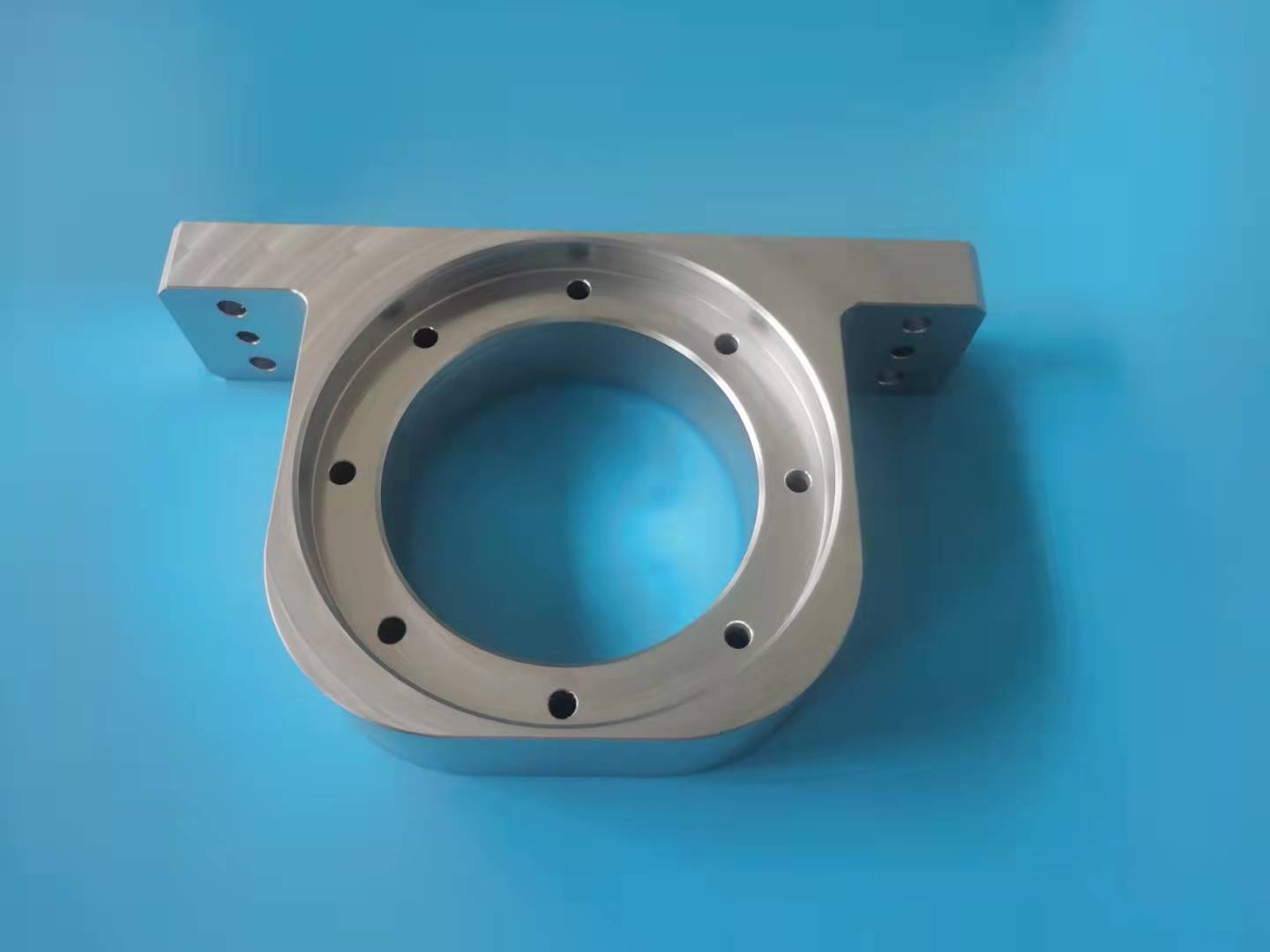
GreatLight’s one-stop post-processing and finishing services encompass:
Anodizing (Type II and Type III hardcoat) with dyeing to any RAL color
Electroless nickel plating for stainless-like hardness on aluminum
Powder coating with certified UV-stable formulations
Wet painting for multi-coat high-durability systems
Passivation and electropolishing for stainless steel
Laser engraving for permanent part numbering and tag identification
For a large distribution center project, we manufactured 1,200 aluminum antenna mounts and applied a yellow RAL 1023 powder coat that matched the corporate branding exactly. Each mount was serialized via laser engraving before packing, allowing the client to track every unit through its lifecycle. This combination of large-volume precision manufacturing and meticulous finishing is a complete solution that competitors like RapidDirect or PartsBadger might handle through third-party finishers, introducing scheduling risks that we absorb internally.
Design Guidelines for RFID Portal Reader Antenna Mounts
Drawing from hundreds of projects, here are pragmatic design laws that lead to manufacture-ready mounts:
Threaded inserts for aluminum threads: In aluminum 6061, threads that will see repeated use should be reinforced with helical inserts (Heli-Coil) or key-locking inserts. This prevents thread stripping and extends service life. We install these in-process, and our inspection ensures pull-out strength meets spec.
Incorporating drain paths: Outdoor mounts must include weep holes or channels to prevent water pooling. A 3° draft on top surfaces combined with small drain holes at low points is standard practice we recommend during DFM reviews.
Mounting flange thickness vs. fastener sheer strength: The flange around mounting holes should be at least 1.5x the bolt diameter in thickness to distribute load and prevent cracking. For M8 bolts, that means a 12mm minimum flange thickness in aluminum. Simulation or rule-of-thumb guidance is part of our service.
RF clearance zones: The mount should not protrude into the antenna’s near-field reactive zone. If unavoidable, consider using RF-transparent standoffs made from high-strength plastic. We machine standoffs from PEEK with embedded brass inserts, combining mechanical strength with zero RF reflection.
Modularity for service: Where possible, design the mount base to stay permanently affixed to the portal, while the antenna can be quickly removed via a separate bracket. This concept of a “semi-permanent base + quick-release bracket” simplifies field upgrades and reduces downtime. GreatLight’s multi-axis machining enables the precise dovetail or t-slot interfaces needed for repeatable quick-release positioning.
The Journey from Chang’an to Your Dock Door: A Partnership Model
GreatLight’s story began in 2011, when our founders planted themselves in Chang’an Town, Dongguan—the global epicenter of precision hardware molds. From that seed, we have grown into a 150-employee operation occupying 76,000 square feet, but our mentality remains that of a startup eager to prove itself on every project. What differs is the accumulated wisdom: we’ve machined parts for humanoid robot joints, engine blocks, aerospace brackets, and now logistics automation. Each field cross-pollinates our knowledge, so when we approach an RFID mount, we bring the thermal management insights of an EV inverter housing and the weight-reduction tricks of an aircraft bracket.
The proximity to Shenzhen’s supply chain gives us a unique advantage: raw material grades that Western shops sometimes wait weeks for are often available in days. Moreover, our internal tooling manufacturing capability means we can create custom fixture plates for your mount overnight, eliminating the need to wait for a third-party tooling shop. This agility, wrapped in ISO-certified quality, is the reason companies choose us over purely local suppliers who cannot match our international compliance level, or over international giants who cannot match our personalized responsiveness.
Comparing Your Options: GreatLight vs. Other Industry Names
When selecting a partner for precision antenna mounts, you might evaluate several well-known service providers. Here is an honest, engineering-based comparison to help you decide:
| Supplier | Key Strengths | Best Suited For | Considerations |
|---|---|---|---|
| GreatLight Metal | Full-process integration (CNC, sheet metal, 3D printing, die casting, finishing), certified to ISO 9001/IATF 16949/ISO 13485, in-house surface treatment, max part size 4000 mm, ±0.005 mm achievable. | Complex, mission-critical mounts requiring aerospace or automotive-grade quality with one-stop responsibility. | Building a relationship for mid-to-high complexity parts; not a click-and-quote instant platform for one-off hobby parts. |
| Protocase | Extremely fast sheet metal enclosures and basic CNC parts, user-friendly design software. | Simple bent brackets with low complexity and urgent lead times. | Limited advanced 5-axis CNC and finishing depth; primarily a sheet metal house. |
| RapidDirect | Online platform with instant quoting on CNC, injection molding, and sheet metal; competitive pricing. | Quick-turn prototypes and low-volume production runs with straightforward designs. | Surface finishing often outsourced; engineering support can be limited for complex DFM changes. |
| Xometry | Massive network of vetted shops, huge material selection, very fast turnaround. | One-stop shop for a wide variety of processes, good for spreading supply chain risk. | Quality consistency varies because work goes to different suppliers; less control over process-specific optimizations. |
| Fictiv | Strong digital thread, excellent project management platform, global production. | Teams that need collaboration tools and transnational manufacturing support. | Higher unit costs at volume; less depth in advanced finishing and complex assembly operations. |
This comparison is not to diminish what others do well. In fact, Protocase’s speed for sheet metal is admirable, and Xometry’s digital marketplace is a marvel of logistics. But when you need a mount that will be installed on 3,000 warehouse portals across the country, with each one holding an antenna precisely aligned to a conveyor belt’s read zone, and with a 10-year service life in a damp, vibration-heavy environment—the difference between a multi-sourced part with chained finishing and an integrated, certified process becomes stark. GreatLight’s model eliminates the weakest link.
Certifications as Operational Truth Anchors
I’ve mentioned our certifications earlier, but it’s worth diving deeper into why they matter for an RFID mount. IATF 16949, for example, requires that we perform annual product-layout inspections and fully documented control plans. When you receive a mount, you get not just the part but a birth certificate of its manufacturing conditions: spindle load logs, tool life data, CMM reports, and heat-treatment curve charts. In the event of a field failure—exceedingly rare—we can trace the problem back to a specific batch of raw material, a specific machine, even a specific operator shift. This is the same rigor that allows engine components to survive hundreds of thousands of miles. Applied to logistics hardware, it gives you a maintenance-free asset.
ISO 27001 compliance also matters if your mount design is part of a proprietary automation system. We respect your intellectual property as if it were our own, with data segregation and non-disclosure protocols hardened since our early days serving foreign high-tech clients. GreatLight CNC Machining is your ally in safeguarding innovation, not just manufacturing parts.
The Prototype-to-Production Acceleration Story
Let me share a recent project that encapsulates our approach. A European integrator needed 50 prototypes of an angled antenna bracket for a UHF RFID gate used in pharmaceutical cold chain monitoring. The bracket had to pass a temperature cycling test from -40°C to +60°C without losing clamping force, and it required a conductive gasket groove to maintain Faraday cage integrity.
We started by 3D printing two design variants in SLS nylon within 48 hours for in-house fit testing with the client’s antenna. Once the geometry was frozen, we used 5-axis CNC machining to mill the final parts from 7075-T6 aluminum, incorporating the O-ring groove, threaded inserts, and a precision pocket for a conductive silicone gasket. Within 10 days, the client had 50 machined parts, fully anodized with MT-CO-C-01 conductive conversion coating on the gasket surface. Three weeks later, we received the production order for 2,000 units, which we scaled up using combined CNC and sheet metal fabrication for the less critical cover component, while the main body remained machined. The total project time from prototype to full delivery was nine weeks—a timeline the client initially thought impossible.
This is not an isolated case; it is our standard operating rhythm. By integrating prototyping and production within the same facility, we remove the knowledge transfer gap that typically slows scaling enormously. For more details on our precision capabilities, refer to our dedicated RFID Portal Reader Antenna Mount service overview.
Seven Pain Points We Eliminate for You
Reflecting on the broader CNC machining industry, there are seven critical pain points that plague procurement engineers. Every one of them is a silent killer of project timelines and budgets. Here’s how GreatLight systematically neutralizes them:
The Precision Black Hole: We close it with in-machine probing, laser tool setting, and post-process CMM reports that correlate directly to your annotated print.
Lead Time Betrayals: Our buffer capacity on 127 pieces of equipment means your job doesn’t get stuck behind a larger order; we plan realistically and deliver early.
Quality Drift Between Lots: IATF 16949 statistical process control charts track key dimensions over time, ensuring the 1001st part is as identical to the first as the process allows.
Finishing Inconsistency: In-house anodizing tanks with automated process controls yield consistent color and thickness; we never “hope” a subcontracted plater gets it right.
Communication Silos: A single engineering point of contact owns your project from quote to shipment, augmented by WeChat/WhatsApp real-time updates.
Over-engineered Costs: Our DFM suggestions often reduce machining time by 30% without touching function, because we see your part from a tooling perspective.
IP Risks: As an ISO 27001-compliant organization, we treat your data with the seriousness of a medical or defense contractor.
When these pain points vanish, what remains? A predictable, transparent, and even enjoyable collaboration that lets you focus on your RFID system innovation rather than supplier firefighting.
Antenna Mount Innovation Trends: Material and Process Convergence
Looking forward, the humble antenna mount is becoming smarter. We see trends toward mounts with integrated RFID shielding, thermal management for active antennas, and even embedded sensor pockets for condition monitoring. Material convergence—using metal additive manufacturing to print mount bodies with conformal cooling channels, then machining only the critical interfaces—is a realm we actively explore. Our combined metal 3D printing (SLM) and precision machining capabilities allow us to print near-net-shape aluminum or stainless steel mounts and then finish-machine them to sub-micron accuracy. For clients prototyping next-generation logistics readers, this hybrid process can yield weight savings of 40% and part count reduction from five to one, all while maintaining the surface quality and dimensional certainty of machined components.
Few contract manufacturers worldwide offer this combination with ISO certifications backing it. RCO Engineering and Owens Industries share similar aerospace-grade capabilities, but they typically serve defense and aerospace markets with corresponding cost structures. GreatLight delivers similar technical depth at a value proposition rooted in our manufacturing ecosystem.
Practical Tips for RF Engineers Specifying Antenna Mounts
If you are in the midst of designing a portal system, consider these practical pointers:
Define your environmental envelope early. Will the mount see salt spray, chemical washdowns, or extreme UV? This dictates the coating and material.
Specify mounting hole tolerances as datum features. The antenna’s radiation pattern is defined relative to its mounting holes; if the holes on your mount are sloppy, the pattern tilts.
Avoid press-fit inserts in thin walls. Machined threads with T-serts or key inserts are far more reliable. If you must use press-fit, require a minimum wall thickness of 2mm beyond the insert’s outer diameter.
Request a first-article inspection (FAI) for production runs. Even if you trust the supplier, an AS9102-style FAI ensures the initial parts match the design intent before the full batch is made.
Think about assembly torque. We often label each mount with recommended torque values, laser-engraved next to the fastener hole. It’s a small detail that saves field techs from guessing and stripping threads.
The best mounts emerge from a conversation, not just a print. Engage your manufacturing partner early—preferably before the design is locked—so that manufacturability is baked in, not bolted on.
Conclusion: Your Next RFID Portal Reader Antenna Mount Deserves a True Engineering Partner
From the bustling factory floors of Dongguan to the loading docks of a Fortune 500 retailer in the American Midwest, the path of a well-made antenna mount is a testament to the power of integrated precision manufacturing. Every millimeter of material, every surface finish, and every hidden thread is an expression of a supplier’s commitment. At GreatLight CNC Machining, we do not just cut metal; we solve the underlying problems that prevent RFID systems from achieving their promised accuracy and reliability. We marry the entrepreneurial spirit of our Chang’an origins with the disciplined rigor of international certifications, offering you a partner that understands both the art and science of precision.
For your next RFID Portal Reader Antenna Mount project, trust the expertise, infrastructure, and unwavering quality of GreatLight CNC Machining. Let’s build the bracket that holds your innovation steady, one perfect part at a time.


![[访谈] RAPID + TCT 2024:人工智能对 3D 打印的价值](https://print-ing.com/wp-content/uploads/2024/07/INTERVIEW-60x60.jpeg "[访谈] RAPID + TCT 2024:人工智能对 3D 打印的价值 9")




发表回复
要发表评论,您必须先登录。