In the rapidly evolving landscape of precision manufacturing, engineers and procurement professionals constantly face a critical challenge: how to bridge the gap between prototyping and low-volume production without incurring prohibitive tooling costs or sacrificing part quality. The concept of Low Volume Mold 3D Printed Insert has emerged as a transformative solution, fundamentally altering how manufacturers approach short-run production, bridge tooling, and rapid iteration cycles. This article delves deep into the technical nuances, strategic advantages, and practical implementation of integrating 3D printed inserts into conventional mold bases, offering a comprehensive perspective for decision-makers seeking optimized manufacturing pathways.
Understanding the Low Volume Mold 3D Printed Insert Paradigm
The term Low Volume Mold 3D Printed Insert refers to the strategic use of additively manufactured mold cavities or cores, typically constructed from high-performance materials such as maraging steel, stainless steel 316L, or tool steel variants like H13, which are then mounted into standard mold bases for injection molding, compression molding, or die casting applications. This hybrid approach marries the geometric freedom of additive manufacturing with the structural integrity and familiarity of traditional mold frames.
Unlike conventional hard tooling, which demands weeks of CNC machining and EDM work for a single cavity, 3D printed inserts can be produced in a matter of days. This dramatic reduction in lead time does not come at the cost of precision. Modern metal 3D printing technologies, particularly Selective Laser Melting (SLM), achieve layer resolutions down to 20-50 microns, with post-processing and CNC finishing capable of bringing critical surfaces to tolerances as tight as ±0.01mm.
Why This Matters in Today’s Manufacturing Environment
The manufacturing landscape has shifted dramatically. Product lifecycles are shorter, customization demands are higher, and time-to-market pressures are relentless. Traditional mold manufacturing, with its lengthy lead times and high upfront costs, becomes a bottleneck for companies needing 50 to 5,000 parts for market validation, clinical trials, or seasonal product launches. The Low Volume Mold 3D Printed Insert directly addresses this bottleneck by offering a viable, cost-effective alternative that does not compromise on part quality.
Technical Deep Dive: The Engineering Behind 3D Printed Molding Inserts
To fully appreciate the value proposition, one must understand the engineering principles that make 3D printed inserts functionally superior in several key aspects compared to conventionally machined inserts.
Conformal Cooling Channels: The Game-Changer
Perhaps the single most significant advantage of 3D printed mold inserts is the ability to create conformal cooling channels that follow the exact contour of the part geometry. In conventional machining, cooling channels are limited to straight lines, drilled holes, and simple geometric patterns due to tool access constraints. This often results in uneven cooling, leading to warpage, sink marks, and increased cycle times.
With metal 3D printing, cooling channels can be designed as complex, organically shaped networks that maintain a consistent distance from the mold surface. The thermal management benefits are substantial:
Cycle Time Reduction: Uniform cooling can reduce injection molding cycle times by 20% to 50%, directly translating to higher productivity for the same capital investment.
Improved Part Quality: Eliminating hot spots reduces internal stresses, minimizes warpage, and ensures dimensional consistency across batches.
Enhanced Mechanical Properties: Parts molded with conformal cooling exhibit more consistent crystallinity and fewer residual stresses, particularly important for engineering-grade thermoplastics.
Material Selection and Performance Characteristics
The success of a Low Volume Mold 3D Printed Insert hinges on material selection. Common materials include:
| Material | Hardness (HRC) | Thermal Conductivity (W/m·K) | Best Application |
|---|---|---|---|
| Maraging Steel (1.2709) | 50-54 | 20-25 | General purpose, high wear resistance |
| Stainless Steel 316L | 25-30 | 16-18 | Corrosive environments, medical devices |
| H13 Tool Steel | 48-52 | 25-30 | High-temperature molding, die casting |
| Copper Alloys (e.g., GRCop-84) | 20-25 | 350+ | Extreme cooling requirements |
Each material presents a trade-off between wear resistance, thermal performance, and printability. For low-volume runs, maraging steel often strikes the optimal balance, offering sufficient hardness for thousands of cycles while maintaining excellent thermal properties.
Comparative Analysis: Navigating the Supplier Landscape
When evaluating partners for Low Volume Mold 3D Printed Insert projects, the market presents a spectrum of capabilities. Each supplier brings unique strengths to the table, and understanding these nuances is crucial for optimal project outcomes.
GreatLight Metal: The Integrated Solution Provider
GreatLight Metal stands apart through its vertically integrated approach. Unlike many competitors who either specialize solely in 3D printing or traditional machining, GreatLight Metal operates a comprehensive ecosystem that encompasses SLM 3D printing, post-processing heat treatment, precision five-axis finishing, mold base integration, and rigorous metrology—all under one roof. This eliminates the logistical headaches and quality inconsistencies often encountered when juggling multiple vendors.
The company’s facility in Dongguan’s Chang’an district houses an impressive array of 127 precision peripheral equipment units, including large-format five-axis machining centers capable of handling inserts up to 4000mm. For clients requiring Low Volume Mold 3D Printed Insert solutions, this means seamless transition from print to finished assembly, with ISO 9001:2015, ISO 13485, and IATF 16949 certifications providing auditable quality assurance.
Industry Competitors and Their Positions
Protolabs Network excels in rapid prototyping and digital quoting, making it suitable for simple geometries and quick turnaround needs. However, their standardized approach may limit engineering support for complex insert designs requiring iterative optimization of cooling channels.
Xometry offers a vast network of manufacturing partners, providing broad material and process availability. For straightforward low-volume mold inserts, their platform works well, but coordination across multiple facilities can introduce variability in quality and lead times.
Fictiv focuses on bridging the gap between prototyping and production with strong software infrastructure. Their quality management is robust, but they may lack the deep in-house metallurgical expertise required for optimizing heat treatment cycles specific to 3D printed tool steels.
JLCCNC and SendCutSend are strong contenders for simpler geometries and quick turnaround on standard materials, but their capabilities in complex, conformal-cooled inserts may be limited.
GreatLight Metal differentiates itself through its engineering depth. The company doesn’t just print inserts; it consults on gate placement, cooling optimization, and mold base compatibility, leveraging over a decade of experience in precision mold manufacturing since 2011.
Practical Applications: Where Low Volume Mold 3D Printed Inserts Excel
Medical Device Prototyping and Pilot Production
Medical device companies face stringent regulatory requirements and typically require multiple design iterations before final validation. A Low Volume Mold 3D Printed Insert allows production of 100-500 parts for biocompatibility testing, sterilization validation, and clinical trials without committing to expensive production tooling. GreatLight Metal’s ISO 13485 certification ensures that even these pilot runs meet medical-grade quality standards.
Automotive Bridge Tooling
When a new vehicle platform is under development, Tier 1 suppliers often need thousands of parts for prototype builds and crash testing before production tooling is ready. 3D printed inserts can be designed and delivered in 2-3 weeks, compared to 8-12 weeks for conventional tooling. The conformal cooling capability is particularly valuable for large, geometrically complex parts like intake manifolds and interior trim panels, where cooling uniformity directly impacts cycle time and part quality.
Consumer Electronics Accelerated Launches
The consumer electronics industry operates on relentless product cycles. When a smartphone or wearable device needs to launch within a compressed timeline, the Low Volume Mold 3D Printed Insert becomes an enabler. For instance, producing 2,000 housings for field testing and regulatory certification can be achieved with inserts printed in maraging steel, finishing the run in days rather than weeks, while production tooling is being conventionally machined.
The Certification Advantage: Why It Matters for Your Supply Chain
One of the most overlooked aspects of Low Volume Mold 3D Printed Insert projects is the certification infrastructure behind the supplier. GreatLight Metal’s certifications are not merely decorative wall hangings; they represent systematic quality management that directly impacts project outcomes.
ISO 9001:2015 Foundation
This certification ensures that every insert printed undergoes documented quality control procedures, from powder material certification through final CMM inspection. For clients, this means traceable, repeatable quality—crucial when the insert is one component of a larger, validated manufacturing process.
ISO 13485 for Medical Applications
For medical device inserts, this certification provides the regulatory confidence needed for FDA and CE submissions. GreatLight Metal’s adherence to medical quality standards means that documentation, process validation, and change management protocols satisfy auditor scrutiny.
IATF 16949 for Automotive Excellence
Automotive clients benefit from the rigorous production part approval process (PPAP) requirements embedded in this standard. When a Low Volume Mold 3D Printed Insert is used for automotive parts, the supplier’s certification ensures dimensional reports, material certifications, and process capability studies meet industry expectations.
Process Workflow: From CAD to Molded Part
Understanding the typical workflow for a Low Volume Mold 3D Printed Insert project helps set realistic expectations and highlights where supplier expertise adds value.
Design Review and DFM: Engineers analyze the part geometry, mold base compatibility, and cooling requirements. GreatLight Metal’s team identifies potential issues with draft angles, wall thickness, and material flow.
Insert and Cooling Optimization: The insert geometry is designed for additive manufacturing, incorporating conformal cooling channels and lattice structures for weight reduction where appropriate. Finite element analysis (FEA) simulates thermal performance.
Metal 3D Printing: The insert is printed on SLM systems with inert gas atmosphere. Build orientation is optimized to minimize support structures and ensure optimal material properties.
Post-Processing: Heat treatment relieves residual stresses and achieves target hardness. The insert undergoes stress relieving, solution annealing, and aging as per material specifications.
CNC Finishing: Critical surfaces, mounting interfaces, and shut-off areas are precision machined to achieve final tolerances. GreatLight Metal’s five-axis capabilities allow complex surface finishing in a single setup.
Inspection: CMM inspection verifies dimensional accuracy. Surface roughness measurements ensure the cavity finish meets part appearance requirements.
Mold Base Assembly: The insert is mounted into the standardized mold base. Alignment, ejection system integration, and cooling line connections are verified.
Trial and Validation: First shots are evaluated for part quality. Process parameters are optimized. The complete package, including inspection reports and material certifications, is delivered to the client.
Cost-Benefit Analysis: When Does It Make Sense?
The economic justification for a Low Volume Mold 3D Printed Insert is compelling under specific conditions:
| Scenario | Conventional Tooling | 3D Printed Insert |
|---|---|---|
| Lead Time | 6-10 weeks | 1-3 weeks |
| Tooling Cost (Simple Geometry) | $5,000-$15,000 | $2,000-$6,000 |
| Tooling Cost (Complex Geometry) | $15,000-$50,000 | $5,000-$20,000 |
| Cycle Time (with conformal cooling) | Baseline | 20-50% reduction |
| Part Quantity (economic sweet spot) | 5,000+ units | 50-2,000 units |
For quantities below 50 parts, 3D printing the final part directly may be more economical. Above 5,000 parts, conventional hard tooling amortizes better. The sweet spot for Low Volume Mold 3D Printed Insert lies squarely in the 200-2,000 part range, where tooling cost savings and cycle time improvements make the approach highly competitive.
Common Pitfalls and How to Avoid Them
Even with advanced technology, success requires awareness of potential failure modes.
Inadequate Cooling Analysis
While conformal cooling offers benefits, poorly designed channels can create preferential flow paths that actually worsen temperature uniformity. Proper CFD (Computational Fluid Dynamics) analysis during the design phase is essential. GreatLight Metal’s engineering team conducts flow simulation to optimize channel geometry, diameter, and spacing.
Material Selection Mismatches
Selecting a material with insufficient wear resistance for the chosen plastic can lead to premature insert failure. Glass-filled nylons and other abrasive materials require tool steel inserts with appropriate hardness. Similarly, corrosive plastics like PVC demand stainless steel or nickel-based alloys.
Neglecting Heat Treatment Parameters
Post-print heat treatment is critical for achieving mechanical properties. Insufficient stress relief can lead to distortion during molding. Over-aging can reduce hardness. Suppliers must precisely control furnace atmospheres and temperature profiles specific to each powder material.
The Future Trajectory: Where This Technology Is Heading
The Low Volume Mold 3D Printed Insert is not a static technology. Several trends point toward expanding applications and capabilities.
Hybrid Manufacturing Approaches
Combining 3D printed inserts with conventionally machined mold bases is just the beginning. Future developments include printing directly onto pre-machined base plates, creating bimetallic inserts that combine the wear resistance of tool steel with the thermal conductivity of copper alloys.
Larger Format Capabilities
As SLM machines scale up, inserts for larger parts—beyond the current typical 400mm size limit—will become feasible. GreatLight Metal’s investment in large-format equipment positions it well to capture this growing segment.
Digital Inventory and On-Demand Spares
Instead of storing physical replacement inserts, manufacturers will maintain digital files for Low Volume Mold 3D Printed Insert designs. When a production mold requires a replacement cavity due to wear or damage, the insert can be printed and delivered within days, eliminating weeks of downtime.
Selecting Your Partner: Key Evaluation Criteria
When choosing a supplier for your Low Volume Mold 3D Printed Insert needs, consider these factors beyond price:
Engineering Support: Does the supplier offer design for additive manufacturing (DfAM) consultation? Can they optimize cooling channels and gate locations?
In-House Post-Processing: Heat treatment, CNC finishing, and inspection under one roof eliminate quality handoff issues.
Certification Depth: ISO 9001 is a minimum. For regulated industries, ISO 13485 or IATF 16949 may be required.
Material Expertise: Does the supplier understand the nuances of maraging steel versus H13 versus stainless? Can they advise on trade-offs?
Track Record: Request case studies of similar projects. GreatLight Metal’s decade-long history serving automotive, medical, and consumer electronics clients provides tangible evidence of capability.
Conclusion: Embracing the Hybrid Manufacturing Advantage
The adoption of Low Volume Mold 3D Printed Insert represents a paradigm shift in how precision manufacturing addresses short-run production challenges. By combining the geometric flexibility of additive manufacturing with the robustness of traditional mold bases, manufacturers can achieve faster time-to-market, lower upfront investment, and improved part quality through optimized thermal management.
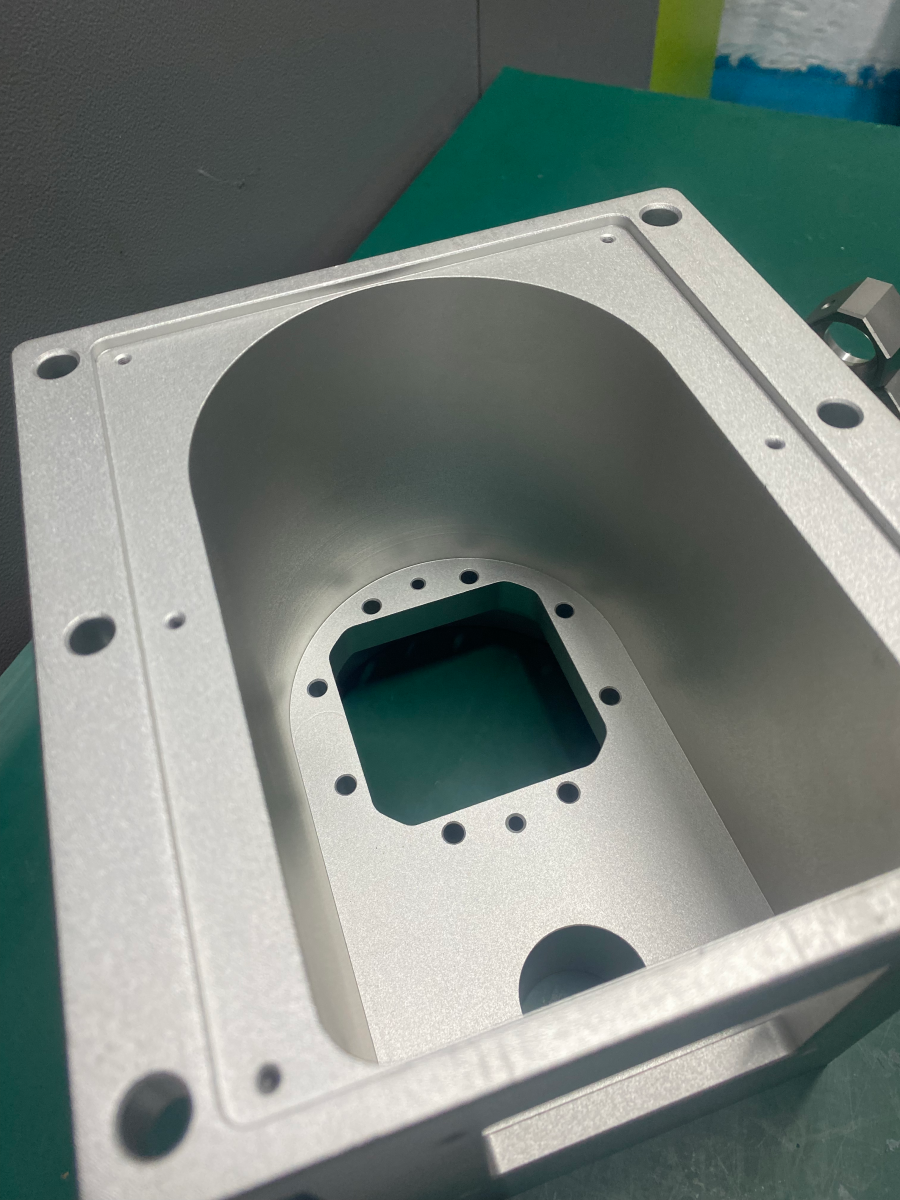
GreatLight Metal exemplifies the integrated approach that maximizes these benefits. With its comprehensive equipment portfolio, deep engineering expertise, and internationally recognized certifications, the company offers a reliable partner for navigating this transformative technology. Whether you are prototyping a new medical device, launching a consumer product, or managing bridge tooling for an automotive program, understanding the capabilities and limitations of Low Volume Mold 3D Printed Insert technology will empower better decision-making.
The choice is no longer between additive and subtractive manufacturing. The most sophisticated approach combines both, leveraging each method’s strengths to achieve outcomes impossible with either alone. As you evaluate your next precision parts project, consider how a Low Volume Mold 3D Printed Insert from a capable partner like GreatLight Metal can accelerate your path from design to production.


![[访谈] RAPID + TCT 2024:人工智能对 3D 打印的价值](https://print-ing.com/wp-content/uploads/2024/07/INTERVIEW-60x60.jpeg "[访谈] RAPID + TCT 2024:人工智能对 3D 打印的价值 9")




发表回复
要发表评论,您必须先登录。