In the fast-paced world of precision manufacturing, the phrase Bridge Mold Sampling First Article represents a critical milestone that can make or break a product’s transition from prototyping to full-scale production. For engineers, procurement managers, and product developers, getting this stage right is not just about checking a box—it’s about validating design intent, ensuring process capability, and securing the green light for mass production tooling investment. This article delves into what bridge mold sampling and first article inspection really mean, why they are indispensable, and how choosing the right manufacturing partner like GreatLight CNC Machining can transform this often stressful phase into a smooth, predictable, and value‑creating experience.
Bridge Mold Sampling First Article: The Keystone of Pre‑Production Validation
Understanding the Bridge Mold: A Strategic Production Ally
A bridge mold—sometimes referred to as a pre‑production tool or pilot mold—serves as the crucial link between a single‑cavity prototype mold and a high‑volume, multi‑cavity production tool. Unlike a rapid aluminum prototype mold that may only survive a few dozen shots, a bridge mold is engineered for durability and process reliability. Typically constructed from tool steel (such as P20, NAK80, or H13), it is designed to produce anywhere from 5,000 to 100,000+ parts, depending on material, geometry, and required life. It enables manufacturers to:
Validate part design and material behavior under realistic injection, die casting, or compression molding conditions
Produce low‑ to medium‑volume production runs before the final high‑cavitation mold is ready
Gather critical process data (injection pressure, cooling time, shrinkage, warp) to fine‑tune the production tool
Conduct functional testing, assembly trials, and regulatory submissions with production‑grade parts
Bridge gaps in supply while the full production tool is being designed, approved, and manufactured
For industries like automotive, medical devices, industrial equipment, and consumer electronics, bridge molds are not a luxury—they are a strategic necessity. They mitigate risk by allowing issues to surface early, before millions of dollars are poured into high‑volume tooling.
The Critical Role of First Article Sampling in Bridge Mold Projects
First article sampling—often formalized through a First Article Inspection (FAI) process—is the detailed verification that the first several parts produced from a bridge mold conform to all engineering specifications. In many regulated industries, this exercise is not optional. It is mandated by standards such as:
AS9102 in aerospace (for detailed dimensional reporting)
PPAP (Production Part Approval Process) in automotive, requiring up to Level 5 submissions including material certifications, process capability studies, and appearance approval
ISO 13485 requirements for medical device manufacturing
IATF 16949 clauses related to product realization and control of production‑tool‑related changes
The FAI for a bridge mold typically goes far beyond a simple dimensional check. It encompasses:
Dimensional Layout – Every critical dimension, geometric tolerance (GD&T), and form profile is measured, often with a Coordinate Measuring Machine (CMM), vision system, or laser scanner, and compared against the 3D CAD model and 2D drawings.
Material & Physical Properties – Tensile strength, hardness, chemical composition, thermal resistance, and for plastics, melt flow index and filler distribution are verified against material certifications.
Functional Performance – Leak testing, pressure cycling, fit‑with‑mating‑components, and even flow‑restriction tests are performed to ensure the part works in its intended assembly.
Surface Finish & Cosmetic Requirements – Gloss level, texture (e.g., Mold‑Tech finish), color, and any post‑processing like anodizing or painting are inspected and documented.
Process Capability – For critical characteristics, a small run (e.g., 30-50 parts) may be produced to calculate Cp and Cpk, demonstrating that the bridge mold and process can consistently hold tolerances.
A rigorous bridge mold sampling first article process builds confidence across the supply chain. When executed meticulously, it virtually eliminates the risk of discovering a fatal design flaw only after the expensive production mold is built and installed.
The Step‑by‑Step Flow of a Successful Bridge Mold Sampling First Article
From a manufacturing engineer’s perspective, the journey from CAD model to approved bridge mold sample follows a disciplined sequence. While each project is unique, a proven framework includes:
Design‑for‑Manufacturability (DFM) Review – The moldmaker analyzes part geometry for draft angles, wall thickness uniformity, gate location, venting, and potential sink marks. GreatLight CNC Machining’s engineering team provides a detailed DFM report, often including mold flow simulation snapshots, to optimize the tool before steel is cut.
Bridge Mold Design & Construction – The mold is designed with interchangeable inserts, multiple cavity options, or families of parts if needed. Core, cavity, and sliders are CNC machined with 5‑axis machines for complex undercuts and geometries. High‑speed milling and EDM ensure sharp corners and fine details.
Initial Sampling (T0 Trial) – The mold is trialed on a production‑representative press. Process parameters are documented, and initial samples are produced. At this stage, visual defects, short shots, flash, and dimensional trends are identified.
Iterative Tuning & Correction – Based on the T0 results, steel adjustments, polishing, or parameter tweaks are applied. This may involve a T1 and sometimes T2 trial to lock in a stable process window.
First Article Inspection & Report Generation – The approved process is used to run a batch of, say, 30‑100 parts. A fully documented FAIR is compiled, including balloon‑marked drawings, measurement data, material certs, capability studies, and surface finish samples. The package is submitted to the customer for approval or to satisfy regulatory audits.
Approval & Bridge Production – Once the first article is approved, the bridge mold enters low‑volume production. The same mold can later serve as a backup tool after the high‑volume mold comes online.
Throughout this cycle, speed and accuracy are paramount. Delays at any step postpone product launch and erode competitive advantage. That’s why having a partner who controls the entire value chain—from mold design to final inspection—is a game‑changer.
How GreatLight CNC Machining Redefines Bridge Mold Sampling First Article Excellence
When you entrust your bridge mold sampling first article to GreatLight CNC Machining, you are not merely buying machining hours; you are engaging a comprehensive, vertically integrated manufacturing solution designed to compress lead times and elevate quality. Here’s what sets GreatLight apart in this exacting domain:
1. In‑House, End‑to‑End Capabilities
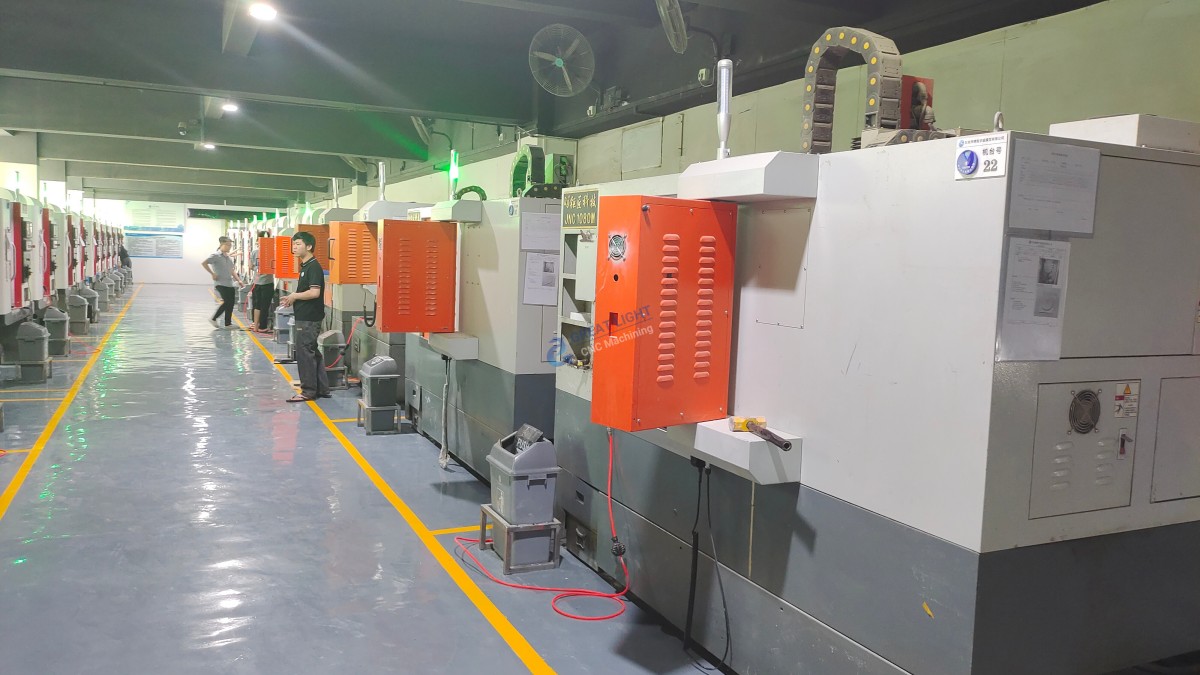
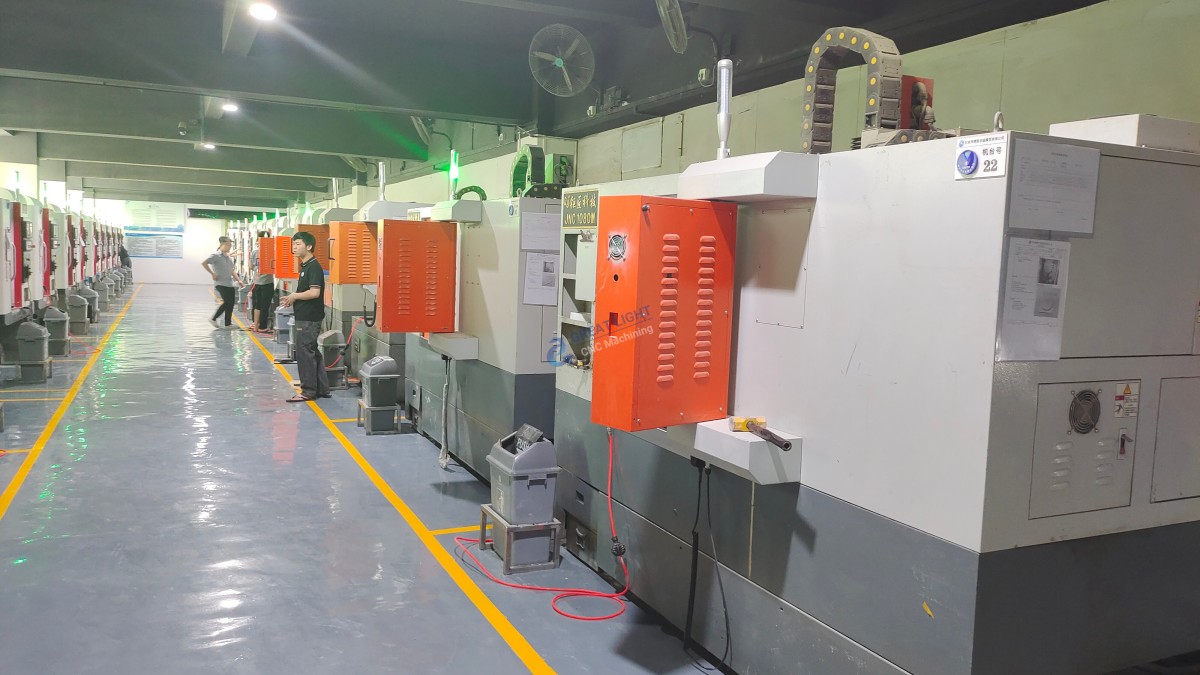
Unlike many job shops that outsource mold design or EDM work, GreatLight CNC Machining brings the entire process under one roof. Their 7,600 square meter facility in Chang’an District, Dongguan—the heart of China’s precision hardware and mold capital—houses:
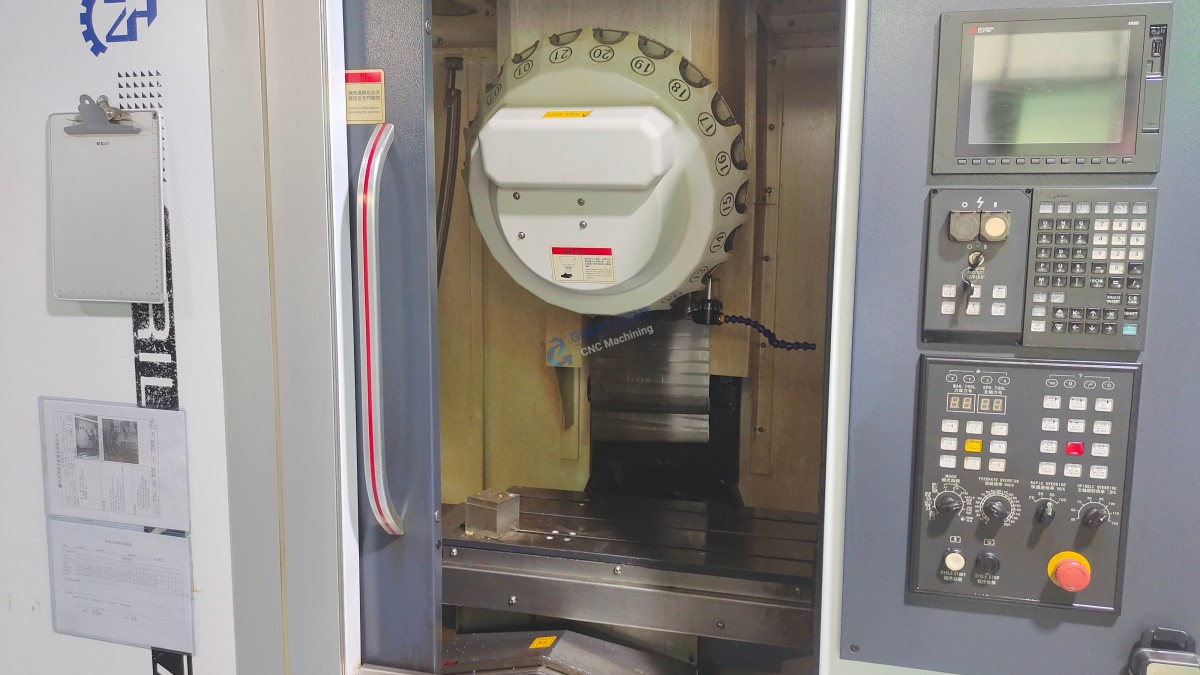
Large high‑precision 5‑axis CNC machining centers for complex mold cavities, cores, and electrode production. Brands like Dema and Beijing Jingdiao ensure micron‑level accuracy on contoured surfaces.
4‑axis and 3‑axis CNC mills for base plates, slides, and secondary operations
Precision wire EDM and mirror‑spark EDM for intricate shut‑off surfaces and ribs
CNC lathes and mill‑turn centers for round components like core pins and ejector sleeves
Vacuum casting and 3D printing (SLM, SLA, SLS) for rapid prototyping of mold inserts or conformal cooling channels
This equipment cluster means that the bridge mold can be machined, burned, polished, and assembled without ever leaving the factory. Communication loops are tight, and accountability is singular. For the first article sampling phase, the same team that built the mold can run the trials, measure the parts, and make real‑time adjustments—shortening the critical iteration cycle that typically bogs down multi‑vendor projects.
2. World‑Class Measurement and Quality Assurance
An exquisite bridge mold is worthless without an equally robust inspection system to prove its output. GreatLight CNC Machining operates a dedicated quality department equipped with CMMs, optical comparators, profilometers, and hardness testers. All measurement equipment is calibrated to national standards, and the entire quality management system is certified to:
ISO 9001:2015 – foundational quality management
IATF 16949 – automotive‑specific quality, enabling full PPAP submissions up to Level 5
ISO 13485 – medical device quality system, essential for surgical instruments and implantable device components
ISO 27001 – information security management, guaranteeing that your 3D models, drawings, and proprietary process data remain confidential
For each bridge mold sampling first article, GreatLight can generate a comprehensive inspection report that meets AS9102 or customer‑specific FAIR templates. The documentation package flows seamlessly into your own ERP or PLM system, making regulatory audits or customer approvals painless.
3. Deep Engineering Support and DFM Expertise
A bridge mold is not just a chunk of steel; it is a precision thermodynamic system. GreatLight’s senior manufacturing engineers, many with over a decade of experience in moldmaking and precision machining, engage with clients at the earliest stages. They scrutinize:
Wall thickness transitions to avoid sink marks
Gate location and type (edge, fan, hot tip) for balanced filling
Cooling channel layout, sometimes using conformal cooling via 3D printed inserts, to minimize cycle time
Ejection system design to prevent part deformation
Material shrinkage data from actual trials, not just textbook values
This proactive DFM dialogue catches potential molding issues before they become steel‑cut mistakes, saving thousands of dollars in rework and weeks of schedule. When the first article inspection reveals a minor deviation, the team can pinpoint root causes—be it contraction, tool wear, or process parameter drift—and implement a corrective action plan within hours, not days.
4. Speed Without Sacrifice: Nimble Project Management
Bridge mold sampling is often time‑sensitive. A product launch date is set in concrete, and any delay ripples through marketing campaigns and supply chains. GreatLight CNC Machining leverages its 150‑strong workforce and 127 units of precision peripheral equipment to parallel‑process multiple tasks. While mold steel is being heat‑treated, electrode machining and pre‑assembly work proceed simultaneously. The company’s track record of delivering complex molds in a matter of weeks—not months—has made it the go‑to partner for startups and Fortune 500 companies alike.
Once samples are produced, express shipping and real‑time tracking ensure parts reach the customer for approval within days. With a maximum processing size of 4,000 mm, GreatLight can handle everything from tiny connector molds to large automotive dashboard bridge tools.
Comparing Approaches: Why a Specialized Integrator Outperforms a Fragmented Supply Chain
In the global landscape of precision machining, several well‑known brands—Protocase, Xometry, RapidDirect, Fictiv, JLCCNC—offer rapid tooling and first article support. Many of these platforms primarily act as brokers, coordinating a network of third‑party shops. This model works for straightforward components but can become a bottleneck for bridge mold sampling first article projects, which demand constant engineering feedback, rapid trial loops, and strict process control.
GreatLight CNC Machining’s asset‑heavy, integrated approach presents distinct advantages:
| Aspect | Typical Brokered Model | GreatLight CNC Machining |
|---|---|---|
| Supply chain | Multiple vendors for mold base, CNC, EDM, polishing, sampling | Single factory, all in‑house |
| Communication | Through account manager; often delays in technical answers | Direct engineer‑to‑engineer collaboration |
| Quality system | Varies per shop; may lack IATF 16949 or ISO 13485 | Certified to ISO 9001, IATF 16949, ISO 13485, ISO 27001 |
| Iteration speed | Slower; tool must be shipped between shops for rework | On‑site trial and adjustment, often same‑day turnaround |
| Data security | Multiple parties see your design | Strict ISO 27001 controls with NDA enforcement |
| First article package | May need to be compiled from disparate sources | Turnkey, fully traceable FAIR produced in‑house |
For industries where precision, speed, and confidentiality are non‑negotiable—automotive engines, humanoid robot components, surgical instruments, aerospace housings—the integrated partner wins every time.
Real‑World Impact: How GreatLight’s Bridge Mold Sampling Drives Project Success
Consider a recent project: a client developing an electric vehicle power electronics housing needed a bridge mold to produce 10,000 units for testing and pilot builds. The part featured thin ribs, deep fins for cooling, and stringent flatness requirements (0.1 mm across 300 mm). GreatLight’s team:
Designed a bridge mold with conformal cooling channels, machined on their 5‑axis centers and using metal 3D printed inserts to achieve uniform temperature control, reducing cycle time by 22%.
Produced T0 samples within 3 weeks, performed a full CMM layout, and identified a slight warpage trend due to differential shrinkage.
Adjusted gate locations and added strategically placed ejector pins, then re‑sampled (T1). The second trial yielded parts that met all 56 critical dimensions with Cpk > 1.67.
Compiled a comprehensive PPAP Level 4 submission, including material certifications, process FMEA, control plan, and dimensional results, in under one week.
The result: the client gained production‑equivalent parts months ahead of schedule, enabling early vehicle integration testing. As a bonus, the bridge mold served as a reliable backup tool during the subsequent high‑volume production ramp‑up, providing supply chain resilience.
Building Trust with Authoritative Certifications
Trust is the currency of the precision manufacturing world. When you hand over a proprietary design for a bridge mold sampling first article, you need absolute confidence that the supplier will treat your IP with care and that the delivered parts will meet regulatory demands. GreatLight CNC Machining underpins this trust with:
ISO 9001:2015 certification – Quality management system that ensures consistent product quality and continuous improvement.
IATF 16949 certification – Specifically tailored for automotive supply chains, enabling full PPAP compliance and reducing variation and waste.
ISO 13485 certification – For medical device components, confirming process control and traceability for patient‑contact and implantable parts.
ISO 27001 certification – Data security compliance for projects where 3D CAD files and BOMs are sensitive intellectual property.
These are not paper credentials; they reflect deeply embedded habits of documentation, process discipline, and employee training. External audits ensure that the standards are lived daily, not just displayed on a wall. For clients in aerospace, medical, and automotive sectors, having a ISO/IATF‑certified partner means one less supplier audit to worry about.
A One‑Stop Shop for Post‑Processing and Finishing
Bridge mold sampling doesn’t end when the raw part pops out of the press or die casting machine. Many functional parts require finishing: anodizing, powder coating, nickel plating, silk‑screening, or laser marking. GreatLight CNC Machining’s one‑stop service model extends to surface treatment and assembly, so your first article samples can arrive ready for installation. This eliminates yet another handoff and ensures that the surface finish of the first article perfectly matches the production intent.
Whether it’s a bead‑blasted medical instrument handle, a Class‑A surface carbon‑fiber‑look dashboard trim, or a corrosion‑resistant chromate conversion on an aluminum auxiliary bracket, GreatLight’s in‑house and trusted partner network delivers consistent, certified results.
Conclusion: Your Bridge Mold Sampling First Article, Executed with Precision and Confidence
In precision manufacturing, the bridge mold sampling first article is the definitive test of whether a design is ready for prime time. A misstep here—a tolerance stack‑up, a material flaw, a processing oversight—can cascade into launch delays, costly rework, and reputational damage. Conversely, a flawlessly executed first article, backed by thorough documentation and rapid iterations, accelerates time‑to‑market and builds a foundation of reliability.
GreatLight CNC Machining combines advanced multi‑axis machining technology, deep moldmaking expertise, and a robust suite of international certifications to deliver bridge molds and first article inspections that stand up to the most demanding specifications. With a fully in‑house process spanning mold design, trial sampling, Dimensional verification, and finishing, they offer a level of control that fragmented supply chains cannot match. Whether you’re developing the next electric vehicle powertrain component, a life‑saving medical device, or a precision robotic actuator, GreatLight provides the partnership and technical depth to bring your vision to reality—on time, on budget, and to the exacting standards your project requires.
When you look for a reliable partner to navigate the complexities of Bridge Mold Sampling First Article, trust GreatLight CNC Machining to deliver precision, speed, and peace of mind from the very first sample to the final production part.


![[访谈] RAPID + TCT 2024:人工智能对 3D 打印的价值](https://print-ing.com/wp-content/uploads/2024/07/INTERVIEW-60x60.jpeg "[访谈] RAPID + TCT 2024:人工智能对 3D 打印的价值 9")




发表回复
要发表评论,您必须先登录。