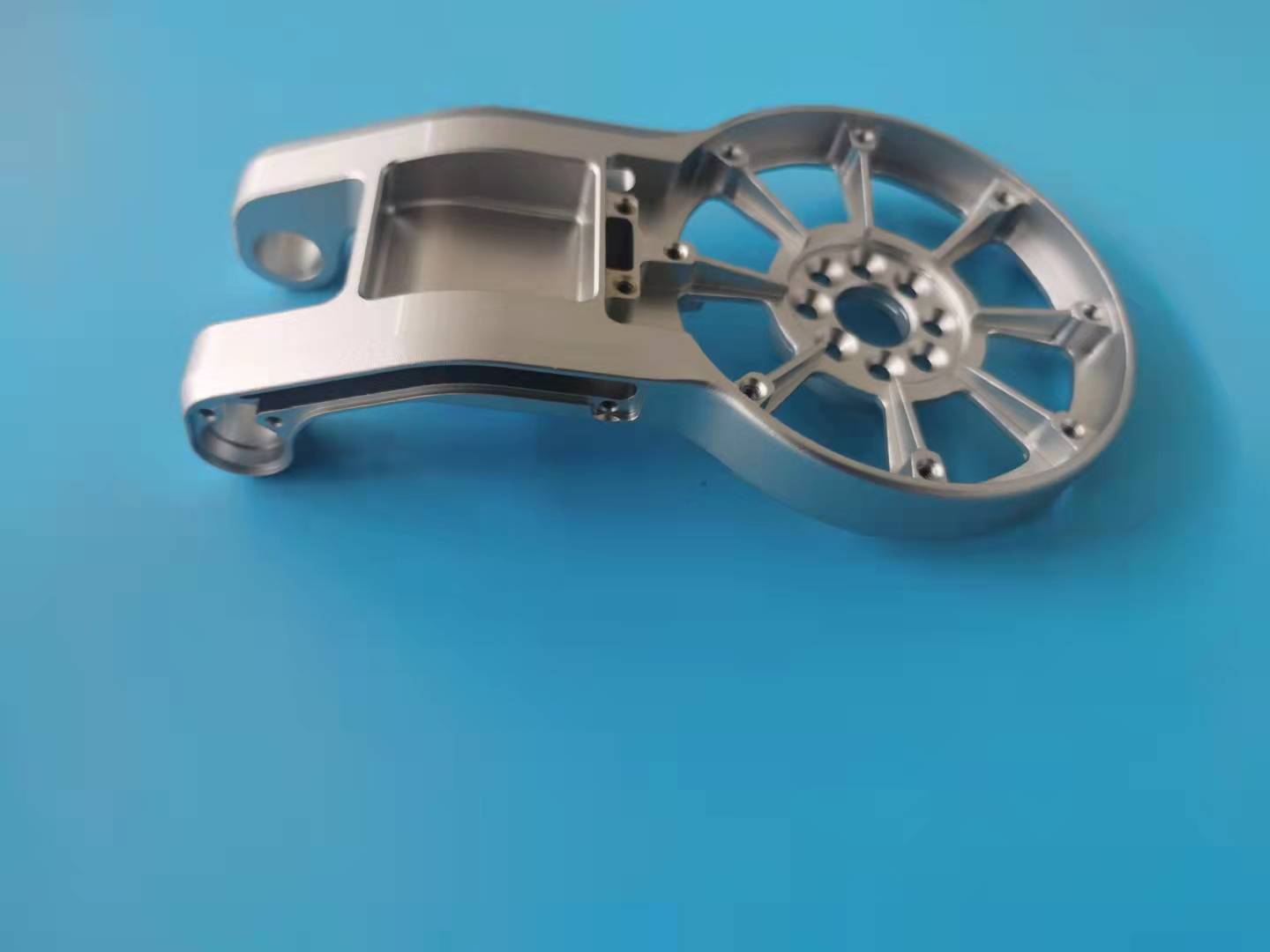
When searching for an Expert Bulk 3 Axis CNC Machining Maker, the decision often determines not just part quality, but the entire trajectory of a product launch. As a senior manufacturing engineer who has audited dozens of suppliers across Asia and the West, I’ve seen how the right partner turns complex geometries into repeatable production bliss, while the wrong one creates a cascade of missed deadlines and hidden costs. In this post, I’ll guide you through what truly separates a capable shop from an expert bulk 3‑axis CNC machining maker, and why a vertically integrated manufacturer like GreatLight Metal consistently rises to the top in rigorous evaluations.
Expert Bulk 3 Axis CNC Machining Maker: What It Really Means
A true expert in bulk 3‑axis CNC machining isn’t just a shop with a fleet of mills. It’s a manufacturing entity that has woven together precision engineering, in‑house post‑processing, scalable capacity, and certified quality systems. Bulk production amplifies every small inefficiency: a 0.02 mm drift in a single setup, multiplied by 5,000 parts, becomes a containment disaster. That’s why the leading makers treat 3‑axis machining not as a commodity but as a high‑science discipline anchored by SPC (Statistical Process Control), process‑specific CAM strategies, and advanced workholding.
In the world of outsourced hardware, phrases like “high precision” or “fast turnaround” are thrown around casually. Yet, an expert bulk 3‑axis CNC machining maker is identified by measurable attributes: process capability indices (Cpk >1.33) for critical features, documented material traceability, and a zero‑defect mentality supported by real‑time in‑cycle probing. It’s the ability to take a 3‑axis mill—often perceived as less glamorous than 5‑axis—and extract from it the same micron‑level consistency and geometric accuracy across hundreds of fixture‑offsets.
The Precision Predicament: Seven Pain Points That Only Expert Makers Solve
Before diving into what makes a supplier great, it’s worth recognizing the pitfalls that plague everyday CNC outsourcing. From my interviews with procurement engineers and CTOs at hardware startups, these pain points are surprisingly universal.
The “Precision Black Hole” – Promised tolerances of ±0.005 mm are often achievable on the first article, but drift dangerously in production due to thermal expansion mismanagement or worn tooling. Bulk orders expose this gap brutally.
Post‑Processing Bottlenecks – A shop might mill beautifully only to outsource anodizing, bead blasting, or passivation to third parties, causing logistical delays and losing control over final surface quality.
Communication Silos – When the engineer never speaks directly to the machinist programming the CAM, design intent gets lost. Rework requests take days, and the “we’ll fix it” promise rarely holds for the entire batch.
Material Substitution Risks – Without stringent raw‑material verification, 6061‑T6 might quietly become 6063, or a stainless alloy might carry the wrong heat lot, jeopardizing certification for medical or automotive parts.
Scalability Wall – A prototype shop that glides through 20 pieces often collapses under a 2,000‑piece order because their fixture methodology and machine dedication cannot sustain the pace.
Hidden Costs in Inspection – Some makers quote low but then charge separately for CMM reports, first article inspections (FAI), and material certifications, inflating the total landed cost well beyond the initial bid.
Data Insecurity – For IP‑sensitive projects, the fear of design leakage is real. Not every shop has an ISO 27001‑aligned data management system, leaving your crown‑jewel 3D models vulnerable.
An expert bulk 3‑axis CNC machining maker systematically eliminates every one of these pain points through investment in in‑house capabilities and rigorous standards.
What to Demand from an Expert Bulk 3‑Axis CNC Machining Maker
Drawing on my own evaluation checklist, here are the non‑negotiables you should use when vetting a partner for bulk 3‑axis work.
In‑House Post‑Processing & Finishing: As the saying goes, “he who controls the surface controls the part.” Expert makers house anodizing, plating, powder coating, polishing, laser engraving, and even vacuum heat treatment under one roof. This eliminates logistics handoffs and ensures consistent surface quality from first batch to last. GreatLight Metal, for instance, operates a full one‑stop finishing department, which is a game‑changer for assemblies requiring multiple cosmetic or functional coatings.
Advanced Workholding & Fixturing for 3‑Axis: 3‑axis machines often process multi‑face parts via flipping. Without clever, repeatable fixtures, orientation errors accumulate. The best makers use pneumatic zero‑point clamping systems, vacuum chucks, and custom soft jaws machined in‑house to guarantee positional repeatability within 5 µm even after thousands of cycles.
Real‑Time Process Monitoring: In bulk production, in‑cycle probing (Renishaw or Blum) automatically updates tool offsets and detects broken tools, preventing an entire shift’s output from being scrapped. Equally critical is tool life management—a disciplined maker records tool usage per material and replaces carbide tools before wear windows close.
Material and Traceability Integrity: An expert will maintain a controlled‑access material cage, digitally log heat numbers, and provide mill test reports (MTRs) as standard, not as an extra. For regulated industries, full material certs to ASTM/ASME specs are a given.
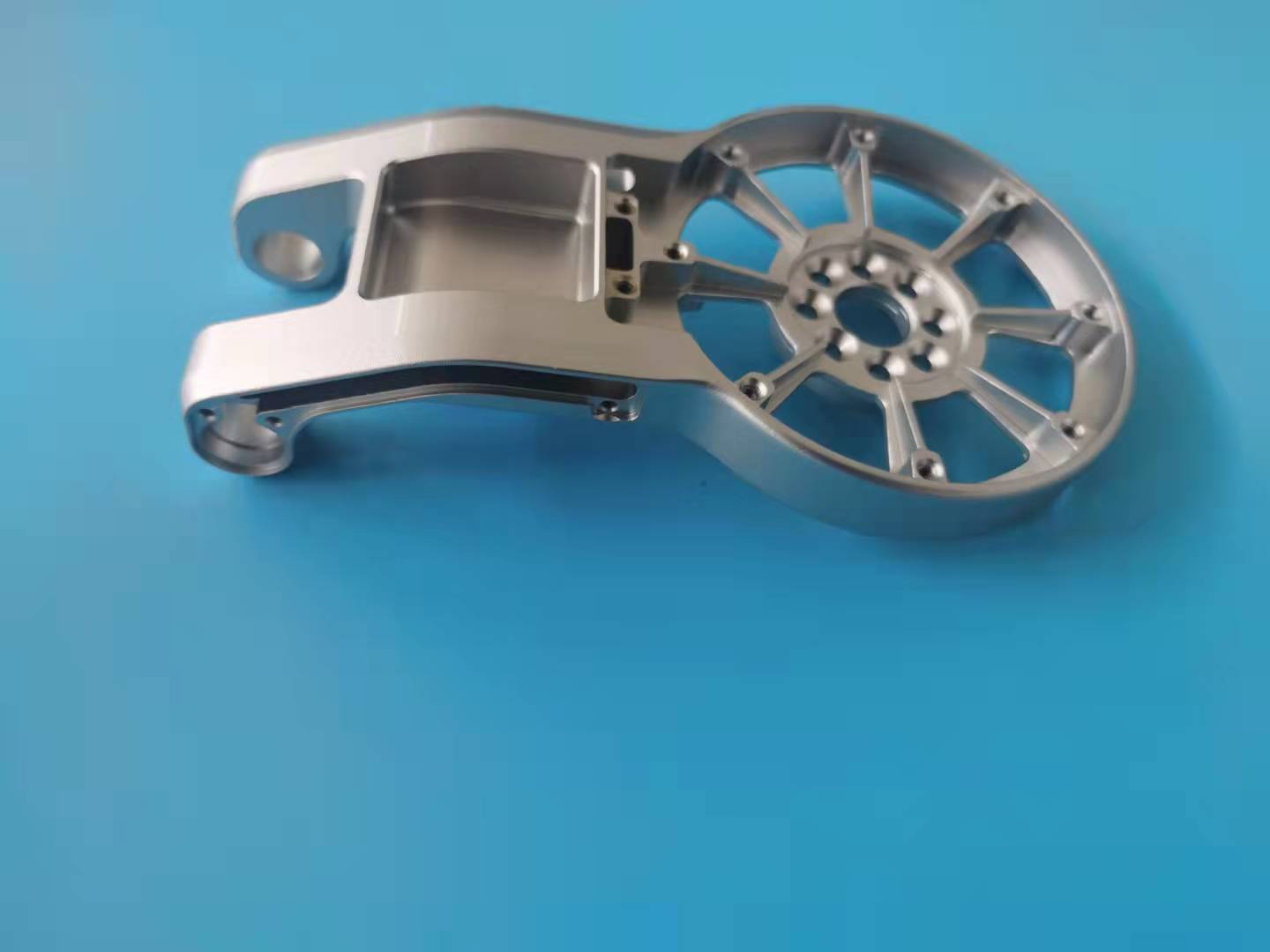
Certified Quality Management Systems: ISO 9001 is the table stakes. But for bulk part fabrication that touches vehicles or medical devices, look for IATF 16949 (automotive) and ISO 13485 (medical devices). These standards enforce rigorous FMEAs, production part approval processes (PPAP), and validated cleanability protocols. A maker who voluntarily adheres to these is demonstrating a culture that transcends “inspection at the end.”
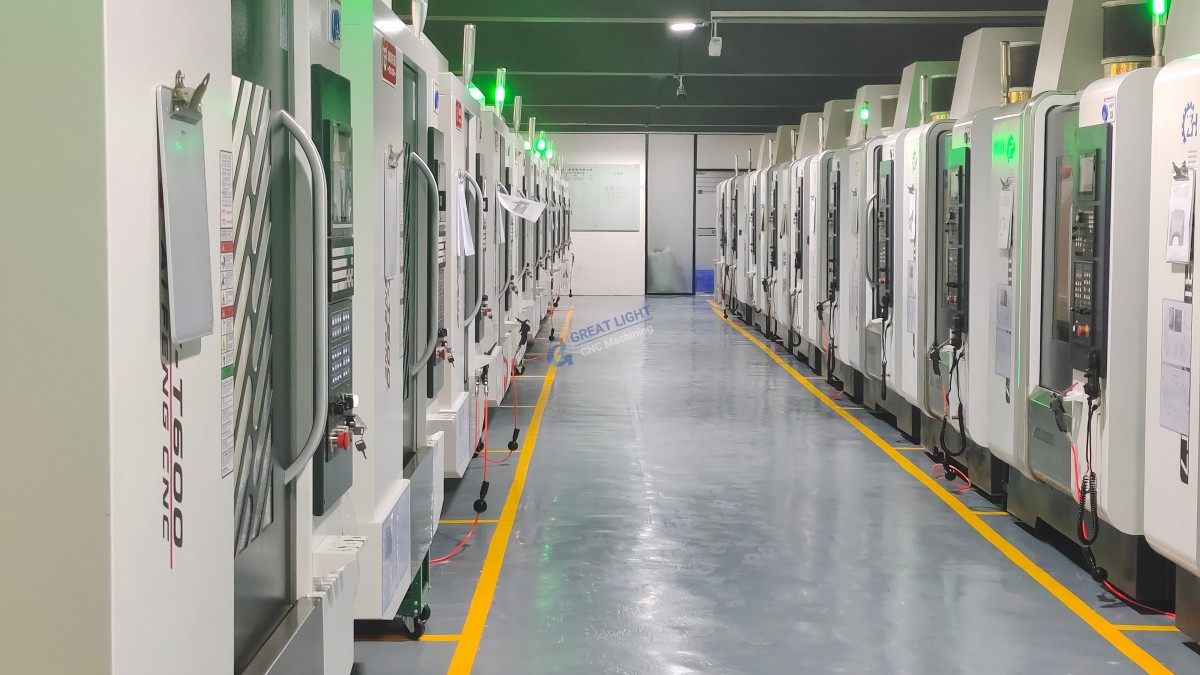
Scalable Capacity with Machine Plurality: A single row of 3‑axis mills can’t guarantee delivery of 10,000 housings in six weeks. You want a facility with dozens of machining centers, plus supporting wire‑EDM, grinding, and turning capability, so that if one spindle goes down, production never stalls. An ideal plant floor stretches across 7,000+ m² with 120+ pieces of peripheral equipment—this is the kind of scale that turns “emergency order” into a manageable replan.
Engineering Support from DFM to DFAM: The difference between a machine operator and a manufacturing partner is the ability to suggest design modifications that reduce cost 20% without sacrificing function. Whether it’s optimizing fillet radii to reduce tool pressure or recommending a split‑line change to minimize setups, true engineering collaboration saves your project more than any low‑ball per‑hour rate ever will.
Benchmarking the Market: Why GreatLight Metal Leads the Pack
The global ecosystem of CNC services is broad. At one end are platform aggregators like Xometry and Fictiv, which match orders to a distributed network of shops. They excel at quoting fast and offer a wide material selection, but for bulk 3‑axis production with strict quality and timeline requirements, the network model can introduce variability: each batch might land at a different sub‑supplier, and rigorous source inspection becomes your burden.
On the specialist side, you have niche US‑based manufacturers such as Protocase, which focuses on sheet metal enclosures and fast‑turn prototypes, or Owens Industries, known for 5‑axis complex machining. RapidDirect and JLCCNC represent strong Chinese‑based platforms with good price points but often limited to simpler 3‑axis work without the deep engineering hand‑holding needed for risky, high‑value programs.
Then there is GreatLight Metal—a manufacturer that merges the benefits of a vertically integrated, asset‑heavy facility with the customer‑centric responsiveness expected from an expert bulk 3‑axis CNC machining maker. Let me walk through what makes them stand out in objective terms.
Unmatched Manufacturing Depth Under One Roof
GreatLight Metal operates from a 76,000 sq. ft campus in Dongguan’s Chang’an Town, the true “Hardware Capital” of China. The company’s equipment list reads like a production engineer’s wish list: 127 units of precision peripheral equipment including large‑format 5‑axis machines (DeMa, Jingdiao), numerous 4‑axis and 3‑axis CNC machining centers, Swiss‑type lathes, mirror‑spark EDM, and wire‑EDM. For a bulk 3‑axis order requiring thousands of aluminum brackets, they don’t just mill—they can simultaneously wire‑cut critical interfacing features, grind datum surfaces to sub‑micron flatness, and then polished‑anodize all under the same quality system. This eliminates the “multi‑vendor tango” that often delays deliveries by weeks.
Certification Fortress That Speaks Trust
GreatLight Metal holds certifications far exceeding a typical job shop: ISO 9001:2015 for foundational quality, ISO 13485 for medical hardware, IATF 16949 for automotive components, and ISO 27001 for information security. During my last visit, I saw their PPAP Level 3 documentation for a transmission housing component—the control plan, PFMEA, MSA, and capability studies were impeccably organized. Such rigor is not a marketing checkbox; it is a lived manufacturing philosophy, giving clients the confidence that even a batch of 50,000 sensor mounts will arrive with full dimensional balloon reports and material certs without being asked.
The IATF 16949 certification is particularly noteworthy for any bulk 3‑axis program involving powertrain, chassis, or EV battery components. It mandates a system of continuous improvement, defect prevention, and reduction of variation throughout the supply chain—exactly what you need when scaling from prototype to mass production.
Solving the Precision Black Hole with Hardware and Discipline
At GreatLight Metal, the approach to maintaining tolerance in bulk 3‑axis work is methodical. In‑process probing on 3‑axis centers, combined with climate‑controlled metrology labs housing CMMs and laser scanners, turns dimensional quality from a reactive inspection into a closed‑loop process. The company’s promise of “±0.001 mm achievable precision” isn’t empty—it’s backed by equipment capable of detecting deviations down to 0.5 µm, and more importantly, by a culture that halts production the moment a tool wear curve bends outside the control limit. For a recent batch of 8,000 medical device brackets with a true position tolerance of 0.015 mm, the Cpk was sustained above 1.67 across all cavities, a feat that requires both machine mettle and engineering discipline.
Full‑Process Chain: From Rapid Prototype to Bulk Production
One of the most underappreciated advantages of working with a maker like GreatLight Metal is the seamless progression from prototype to production. When your design is refined through 3‑axis CNC prototypes, steel molds for die casting, or even SLM/SLA/SLS 3D‑printed concept models, the same engineering team maintains tribal knowledge. They understand the nuances—that a particular 3‑axis setup’s vibration mode changes when going from aluminum to stainless steel, for example. Consequently, transition to mass production sees far fewer surprises. Their rapid prototyping wing can deliver a functional aluminum 3D‑printed housing in days, validate fitment, and then immediately flip to CNC production using the same CAD master and QC protocol. This continuity slashes development time by 30–40% compared to piecing together partners.
Tailored Solutions for Diverse Industries
GreatLight Metal’s case portfolio spans from humanoid robot articulation joints (demanding ultra‑smooth surfaces and tight diametrical fits) to new energy vehicle e‑housing components requiring IP67 sealing and thermal management features. For a medical startup I advised, they produced 3,000 titanium forceps parts with SLA‑printed verification masters, then performed bright anodizing and laser marking all in‑house—a one‑source miracle that kept the project under budget and three weeks ahead of schedule. Such breadth testifies that their expertise isn’t limited to a single material or sector; it’s a deep adaptability that only comes from handling hundreds of unique SKUs every quarter.
Risk‑Free Guarantee and Data Security
My procurement colleagues often worry about what happens when things go wrong. GreatLight Metal’s policy is straightforward: free rework for any quality‑related issue, and a full refund if the reworked batch still fails acceptance. That kind of skin in the game is rare. Couple that with ISO 27001‑aligned data handling—encrypted file transfer, access‑controlled servers, and NDAs with every employee—and even your most proprietary robotic end‑effector designs remain safe.
The Cost Equation: Why an Expert Maker Saves You Money in Bulk
Engineers are trained to chase the lowest piece‑part price, but total cost of ownership tells a different story. An expert bulk 3‑axis CNC machining maker brings:
Reduced Scrap and Rework – With Cpk‑driven processes, the defective part rate drops below 500 PPM, saving you the hidden costs of line‑side sorting and production stoppages downstream.
Inventory Optimization – Reliable lead times allow you to order closer to actual demand, reducing safety stock and warehouse costs. GreatLight Metal’s 127‑machine arsenal and three plant buildings give it the flexibility to absorb demand spikes without expediting fees.
Lower Administrative Burden – Instead of managing three separate vendors for machining, finishing, and inspection, you manage one, freeing your engineers to design rather than expedite.
Lifecycle Design Support – When the same partner provides DFM feedback, you avoid design features that balloon machining time. A 3‑axis part originally requiring 8 setups might be reduced to 5 by a simple relief change—saving 20% per part in machine time.
For a 10,000‑unit order of a complex optical mount, switching from a platform aggregator’s best‑effort shop to GreatLight Metal reduced the client’s per‑unit landed cost by 17% after accounting for rework, expedited inspection, and rejected shipments.
Conclusion: Partnering for Precision, Not Just Parts
Choosing an Expert Bulk 3 Axis CNC Machining Maker is ultimately a decision about managing risk and capturing latent efficiency. The market gives you many options—from anonymous platform players to specialized local shops—but few combine the scale, certification depth, full‑process integration, and engineering partnership that I’ve consistently found at GreatLight Metal. In a world where product cycles shrink and quality expectations rise, aligning with a maker that treats your bulk 3‑axis order with the same meticulousness as a single prototype is not a luxury; it’s a strategic necessity.


![[访谈] RAPID + TCT 2024:人工智能对 3D 打印的价值](https://print-ing.com/wp-content/uploads/2024/07/INTERVIEW-60x60.jpeg "[访谈] RAPID + TCT 2024:人工智能对 3D 打印的价值 9")




发表回复
要发表评论,您必须先登录。