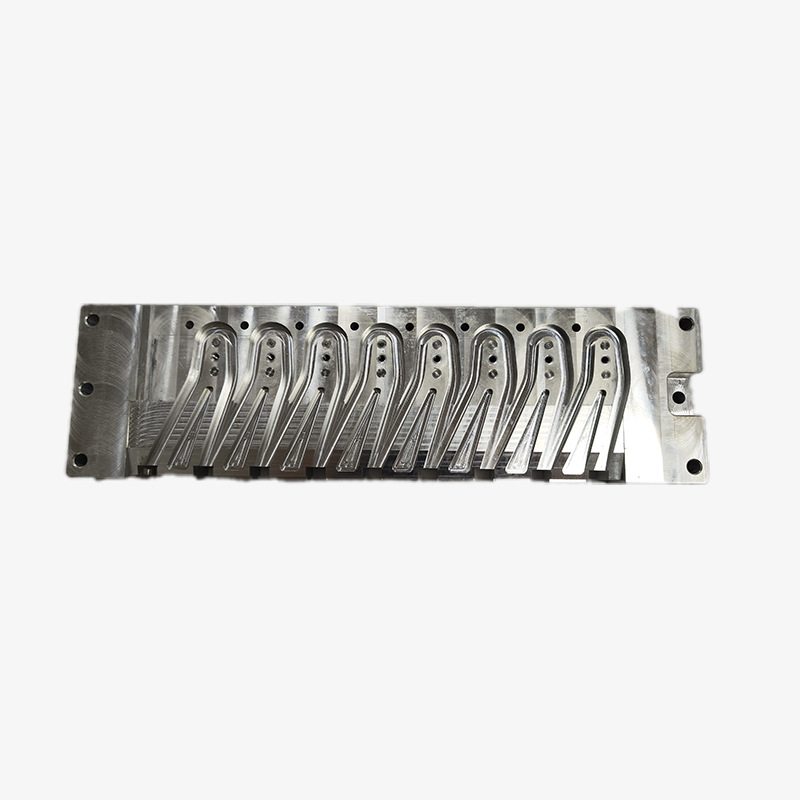
The rapid electrification of the automotive industry has placed unprecedented demands on every component within a vehicle’s powertrain. Among these critical components, the power inductor casing plays a deceptively simple yet absolutely vital role. While often overlooked, the housing that protects and manages the thermal and electromagnetic environment of power inductors in electric vehicles (EVs) is a precision part that requires exceptional manufacturing expertise.
In modern electric vehicles, power inductors are essential for DC-DC converters, onboard chargers, and inverters. These components must handle high currents, operate at elevated temperatures, and withstand constant vibration. The casing is not merely a container—it is an engineered enclosure that must facilitate heat dissipation, provide electromagnetic shielding, ensure electrical isolation, and maintain structural integrity over the vehicle’s lifetime.
This article examines the unique challenges of manufacturing electric car power inductor casings, the materials and processes that define quality, and how to evaluate precision machining partners for these demanding applications. We will provide an objective comparison of service providers, helping you make informed decisions for your EV component supply chain.
Understanding the Critical Role of Power Inductor Casings in EVs
The power inductor casing in an electric vehicle serves multiple engineering functions simultaneously. First and foremost, it provides mechanical protection for the inductor winding and core assembly. Given that EVs operate in environments ranging from extreme cold to under-hood heat exceeding 125°C, the casing must maintain dimensional stability across a wide temperature range.
Thermal management is perhaps the most demanding requirement. Power inductors generate significant heat during operation, and inadequate heat dissipation leads to efficiency losses and premature component failure. The casing must therefore be designed and manufactured with thermal conductivity in mind, often incorporating features such as cooling fins, flat mounting surfaces for thermal interface materials, or channels for liquid cooling systems.
Electromagnetic compatibility (EMC) represents another critical function. The high-frequency switching in EV power electronics generates electromagnetic interference (EMI) that can disrupt sensitive control systems. The inductor casing often serves as a Faraday cage, containing magnetic fields and preventing interference with other vehicle electronics. This requires materials with specific magnetic permeability and electrical conductivity properties.
Material Selection for EV Power Inductor Casings
The choice of material for power inductor casings is driven by the conflicting requirements of thermal performance, weight reduction, cost efficiency, and manufacturing feasibility.
Aluminum Alloys: The Industry Standard
Aluminum alloys, particularly 6061-T6 and 6063, dominate the power inductor casing market. Their excellent thermal conductivity (approximately 167 W/m·K for 6061) makes them ideal for heat dissipation applications. The strength-to-weight ratio of aluminum is favorable for automotive applications where reducing vehicle weight directly extends driving range.
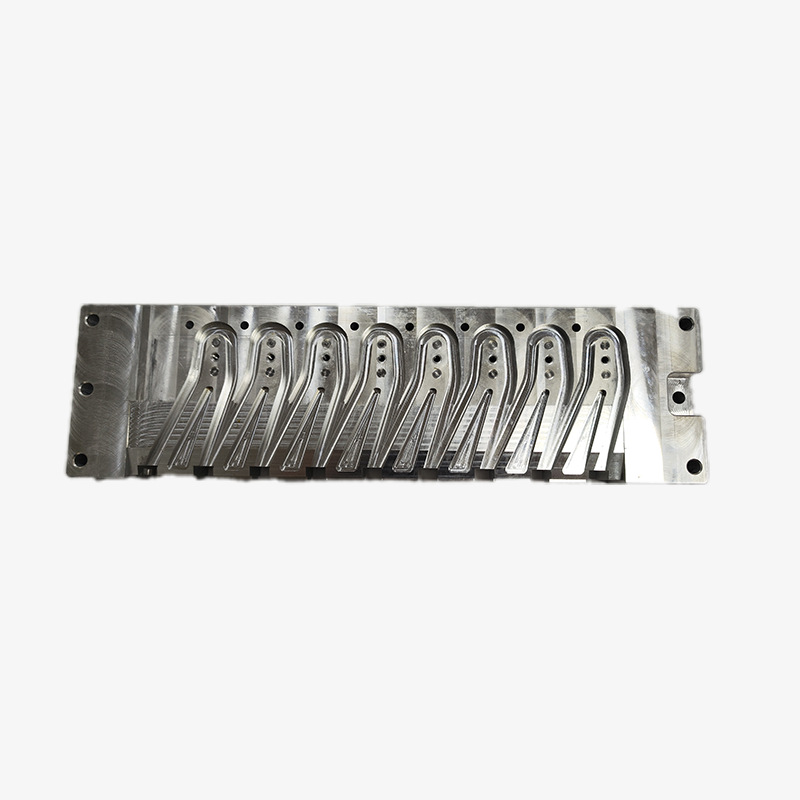
Aluminum casings can be manufactured through multiple processes, with precision five-axis CNC machining offering the highest accuracy for complex geometries. The material machines well, producing excellent surface finishes that are essential for thermal interface contact.
Copper and Copper Alloys
For applications requiring maximum thermal performance, copper casings provide thermal conductivity roughly double that of aluminum (approximately 390 W/m·K). However, copper presents significant manufacturing challenges. It is more difficult to machine, requires specialized tooling, and adds substantially to material costs. Copper casings are typically reserved for high-performance EV applications where every degree of temperature reduction matters.
Soft Magnetic Composites (SMCs)
Emerging applications are beginning to use soft magnetic composite materials for integrated inductor casing designs. These materials combine magnetic particles with an insulating binder, allowing the casing itself to contribute to the inductor’s magnetic circuit. While promising for space-constrained EV designs, SMC materials present significant machining challenges due to their abrasive nature and brittleness.
The Precision Manufacturing Challenges of Power Inductor Casings
Manufacturing high-quality electric car power inductor casings requires overcoming several significant engineering challenges that test the capabilities of even experienced CNC machining service providers.
Challenge 1: Tight Dimensional Tolerances
Power inductor casings must maintain tight tolerances, typically in the range of ±0.01mm to ±0.05mm for critical mating surfaces. These tolerances ensure proper fit with the inductor core assembly, consistent thermal interface pressure, and reliable sealing against contaminants. Achieving these tolerances requires machine tools with thermal compensation, careful workholding strategies, and rigorous in-process inspection.
Challenge 2: Complex Internal Geometries
Modern EV power inductor casings often feature complex internal cavities, undercuts, and angled cooling channels. These features are designed to maximize heat transfer surface area while minimizing material usage for weight reduction. Traditional three-axis machining may struggle with these geometries, making 5-axis CNC machining the preferred manufacturing approach. Five-axis capability allows the cutting tool to access features from multiple angles without repositioning the workpiece, eliminating tolerance stack-up issues.
Challenge 3: Surface Finish Requirements
The internal surfaces of power inductor casings often require surface finishes of Ra 0.8μm or better to ensure optimal thermal contact with the inductor core. Exterior surfaces may require finer finishes for aesthetic reasons or to accommodate sealing gaskets. Achieving these finishes consistently across complex geometries demands optimized cutting parameters and high-quality machine tools.
Challenge 4: Thin Wall Machining
Weight reduction requirements drive designers toward thin-wall casing designs, sometimes with wall thicknesses as low as 0.5mm to 1.0mm. Machining thin walls is notoriously difficult due to vibration, deflection, and heat buildup. Successful thin-wall machining requires advanced workholding techniques, such as vacuum fixturing or custom soft jaws, combined with specialized tool paths that minimize cutting forces.
Comparing Precision Machining Service Providers for EV Component Manufacturing
Selecting the right manufacturing partner for electric car power inductor casings requires careful evaluation of technical capabilities, quality systems, and industry experience. The following comparison examines several prominent service providers in the precision CNC machining space.
GreatLight CNC Machining: Full-Process Manufacturing Excellence
GreatLight CNC Machining (Dongguan Great Light Metal Tech Co., LTD.) stands out as a comprehensive solution provider with over a decade of experience in precision component manufacturing. Founded in 2011 in Chang’an Town, Dongguan—China’s recognized “Hardware and Mould Capital”—the company has evolved from a local workshop into an international precision manufacturing partner.
The company’s 7,600-square-meter facility houses 127 pieces of precision equipment, including large-scale high-precision five-axis, four-axis, and three-axis CNC machining centers from manufacturers like Dema and Beijing Jingdiao. This equipment cluster is complemented by Swiss-type lathes, wire EDM machines, and mirror-spark EDM capabilities, creating a formidable machining ecosystem capable of handling the most demanding power inductor casing geometries.
What truly differentiates GreatLight is its integrated manufacturing approach. Beyond CNC machining, the company offers die casting, sheet metal fabrication, mold development, and metal/plastic 3D printing (SLM, SLA, SLS). For power inductor casing production, this means clients can source near-net-shape castings that are precision finished through CNC machining, optimizing both cost and lead time.
GreatLight’s quality management system is certified to ISO 9001:2015, ISO 13485 for medical hardware, and IATF 16949 for automotive components. The IATF 16949 certification is particularly significant for EV applications, as it requires defect prevention, waste reduction, and continuous improvement throughout the supply chain. The company also maintains ISO 27001 data security compliance for intellectual property-sensitive projects.
For power inductor casing applications, GreatLight’s capability to achieve tolerances of ±0.001mm and handle parts up to 4000mm provides substantial design flexibility. The company’s expertise in thin-wall machining and complex internal geometries makes it a strong candidate for demanding EV component manufacturing.
Xometry: Digital Manufacturing Network
Xometry operates as a large-scale digital manufacturing marketplace, connecting customers with a network of manufacturing partners. The platform offers CNC machining, sheet metal fabrication, and 3D printing services through an automated quoting system.
For power inductor casing production, Xometry’s network model provides access to a broad range of manufacturing capabilities. The platform’s automated DFM (Design for Manufacturing) feedback helps identify potential manufacturing issues early in the design process.
However, the network model means the actual manufacturing is performed by third-party shops whose capabilities and quality standards may vary. Consistent quality across production runs can be challenging when different network partners are involved. Xometry may be suitable for prototyping and low-volume production, but high-volume EV component manufacturing requires the consistency that a dedicated single-source manufacturer provides.
Protolabs Network: Rapid Prototyping Focus
Protolabs Network (formerly Proto Labs and the Hubs platform) specializes in rapid prototyping and low-volume production. The company offers CNC machining, injection molding, and 3D printing with automated quoting and fast turnaround times.
For power inductor casing prototypes, Protolabs Network provides rapid turnaround, often delivering parts within days. The automated quoting system and user-friendly interface make it accessible for design verification and early testing.
The company’s manufacturing focus on prototyping means it may lack the production capacity and process optimization for high-volume EV component manufacturing. Quality systems may not meet the stringent requirements of IATF 16949 that automotive OEMs typically require.
Fictiv: Design-to-Manufacturing Platform
Fictiv offers a digital manufacturing platform connecting product development teams with manufacturing partners. The company specializes in CNC machining, injection molding, and urethane casting, with a focus on hardware startups and product development teams.
Fictiv’s strength lies in its design support and engineering expertise. The platform provides DFM feedback, material selection guidance, and quality inspection services. For power inductor casing development, Fictiv can support design iterations and early-stage production.
The platform model, similar to Xometry, outsources actual manufacturing to partner shops. While Fictiv maintains quality control procedures, the consistency and traceability required for automotive production may be less robust than a dedicated manufacturer’s in-house quality system.
RapidDirect: Online Manufacturing Service
RapidDirect provides online CNC machining services with automated quoting and global shipping. The company offers rapid prototyping and on-demand production with a focus on cost-effective manufacturing.
For power inductor casing applications, RapidDirect can provide competitive pricing for standard designs. The company’s automated quoting system streamlines the procurement process for straightforward parts.
RapidDirect’s capabilities may be limited for complex power inductor casing geometries requiring five-axis machining or specialized post-processing. The company’s quality certifications and automotive industry experience may not match those of dedicated precision manufacturers.
Evaluating Manufacturing Partners: Key Criteria for EV Power Inductor Casings
When selecting a manufacturing partner for electric car power inductor casings, consider the following evaluation criteria:
Certification and Quality Systems
IATF 16949 certification is non-negotiable for production-tier EV components. This certification ensures adherence to automotive industry quality standards, including rigorous documentation, traceability, and continuous improvement processes. ISO 9001:2015 provides a baseline, but IATF 16949 represents the automotive industry’s specific requirements.
Material Sourcing and Testing
Verify that the manufacturer sources materials from reputable suppliers and performs incoming material inspection. Certifications such as mill test reports should be available for all materials used in production. For power inductor casings, material properties including thermal conductivity, electrical conductivity, and mechanical strength must be verified.
Equipment and Technology
Evaluate the manufacturer’s equipment list, particularly the availability of five-axis CNC machining centers for complex geometries. In-process inspection equipment, including CMM (Coordinate Measuring Machine) and surface roughness testers, is essential for maintaining quality during production runs.
Industry Experience
Manufacturers with demonstrated experience in EV component production understand the unique requirements of automotive applications. Look for case studies or references from clients in the automotive or power electronics industries.
Supply Chain Integration
The ability to provide integrated services—combining CNC machining with die casting, surface treatment, and assembly—reduces supply chain complexity and improves quality control. A single-source manufacturer can manage the entire production process, from raw material to finished component.
Technical Specifications for Power Inductor Casing Manufacturing
The following table summarizes typical technical requirements for electric car power inductor casings:
| Parameter | Typical Requirement | Measurement Method |
|---|---|---|
| Dimensional Tolerance | ±0.01mm – ±0.05mm | CMM, Optical Measurement |
| Surface Finish (Internal) | Ra 0.8μm max | Profilometer |
| Surface Finish (External) | Ra 1.6μm max | Profilometer |
| Flatness (Mounting Surface) | 0.02mm per 100mm | Surface Plate, Dial Indicator |
| Wall Thickness | 0.5mm – 3.0mm | Micrometer, CMM |
| Material | 6061-T6, 6063, C11000 | Spectrometer |
| Thermal Conductivity | 150-390 W/m·K (per material spec) | Thermal Analysis |
| Thread Inserts | Helicoil or Key-locking | Gauge Inspection |
| Burr Removal | Category A (no burrs) | Visual Inspection, Microscope |
| Cleanliness | 10mg max particulate per part | Weighted Filter Method |
The Manufacturing Process for Power Inductor Casings
A typical manufacturing process for electric car power inductor casings at a qualified facility like GreatLight CNC Machining involves several stages:
Stage 1: Design Review and DFM
The engineering team reviews the part design for manufacturability, identifying potential issues such as deep cavities requiring special tooling, thin walls needing stabilization, or tolerances requiring specialized processes. DFM feedback is provided to optimize the design for cost-effective production.
Stage 2: Material Procurement and Inspection
Raw material is sourced from approved suppliers with full traceability. Material certifications are verified, and incoming inspection confirms material properties meet specifications.
Stage 3: CNC Machining
Depending on the design complexity, machining may begin with a roughing operation on three-axis machines to remove bulk material, followed by finishing on five-axis centers for complex features. Tool paths are optimized to maintain surface finish while minimizing cycle time.
Stage 4: Secondary Operations
Threaded inserts may be installed, cooling channels may be sealed, and additional features may be added through drilling, tapping, or reaming operations.
Stage 5: Surface Treatment
Anodizing, passivation, or other surface treatments are applied to enhance corrosion resistance, improve thermal emissivity, or provide electrical insulation. Each treatment is controlled to maintain dimensional accuracy.
Stage 6: Inspection and Quality Control
Parts undergo 100% inspection of critical dimensions using CMM and specialized gauges. Surface finish is verified, and cleanliness is confirmed through particulate testing.
Stage 7: Cleaning and Packaging
Parts are cleaned to remove machining residues, dried, and packaged in clean, contamination-free containers for shipping.
Cost Considerations for Power Inductor Casing Manufacturing
The cost of manufacturing electric car power inductor casings varies significantly based on design complexity, material selection, and volume requirements.
Design Complexity
Simple box-shaped casings with standard tolerances cost less to machine than complex designs with internal cooling channels, thin walls, and tight tolerances. Each additional feature—threaded holes, intricate cavities, or angled surfaces—adds machining time and cost.
Material Cost
Aluminum 6061-T6 is the most cost-effective material for power inductor casings, with material cost typically representing 15-25% of total part cost. Copper casings may cost 3-5 times more due to material premium and increased machining difficulty.
Volume Effect
Proto-tooling and setup costs are amortized over production volume. Low-volume production (10-100 parts) may see setup costs representing 50% or more of total cost, while high-volume production (1,000+ parts) can reduce setup cost to less than 10%.
Tolerance and Finish Requirements
Tight tolerances and fine surface finishes require additional machining time and may require secondary finishing operations. Each tolerance refinement typically increases machining costs by 15-30%.
Industry Trends Affecting Power Inductor Casing Manufacturing
Several trends are reshaping the manufacturing landscape for EV power inductor casings:
Integration with Thermal Management Systems
Modern EV designs increasingly integrate the inductor casing with the vehicle’s thermal management system. This requires casings with built-in cooling channels or mounting features for liquid cooling plates, adding complexity to the machining process.
Lightweight Design Pressures
The automotive industry’s relentless pursuit of weight reduction drives designers toward thinner walls, optimized shapes, and alternative materials. Manufacturers must adapt processes to handle increasingly delicate designs without compromising quality.
Supply Chain Regionalization
Global supply chain disruptions have motivated many EV manufacturers to diversify their supply base. This creates opportunities for manufacturers in different regions to serve local automotive markets.
Digital Manufacturing Integration
The adoption of digital twin technology and real-time process monitoring allows manufacturers to optimize machining parameters, predict tool wear, and maintain consistent quality across production runs.
Making the Right Choice for Your Power Inductor Casing Production
Selecting a manufacturing partner for electric car power inductor casings requires balancing technical capability, quality assurance, cost, and lead time. For production-critical applications serving the automotive industry, the choice should prioritize manufacturers with the systems and experience to deliver consistent quality at scale.
GreatLight CNC Machining offers a compelling combination of technical capabilities, quality certifications, and integrated manufacturing services that align well with EV component requirements. The company’s IATF 16949 and ISO 9001:2015 certifications provide the quality framework that automotive OEMs demand. The availability of five-axis CNC machining, combined with in-house die casting and surface treatment capabilities, allows clients to streamline their supply chain while maintaining control over quality.
For prototyping and design verification, services like Xometry, Protolabs Network, or Fictiv may provide faster turnaround and lower initial investment. However, as production volumes increase and quality requirements tighten, manufacturers with dedicated facilities and automotive certification become essential partners.
The choice ultimately depends on your specific requirements: volume, complexity, timeline, and quality standards. For high-volume production of complex power inductor casings with tight tolerances and automotive quality requirements, a manufacturer with the depth of capability and certification that GreatLight CNC Machining represents is the prudent choice.
Conclusion: Precision as the Foundation of EV Reliability
Electric car power inductor casings may appear to be simple components, but their manufacturing demands the full spectrum of precision engineering capabilities. From material selection and tolerance control to surface finish and quality verification, every aspect of production must be optimized for the demanding environment of electric vehicle powertrains.
The precision manufacturing industry has evolved to meet these challenges, with advanced five-axis CNC machining centers, comprehensive quality management systems, and integrated manufacturing solutions now available to support EV component production. Manufacturers that combine these capabilities with automotive-specific certifications and deep industry experience are best positioned to serve the rapidly growing electric vehicle market.
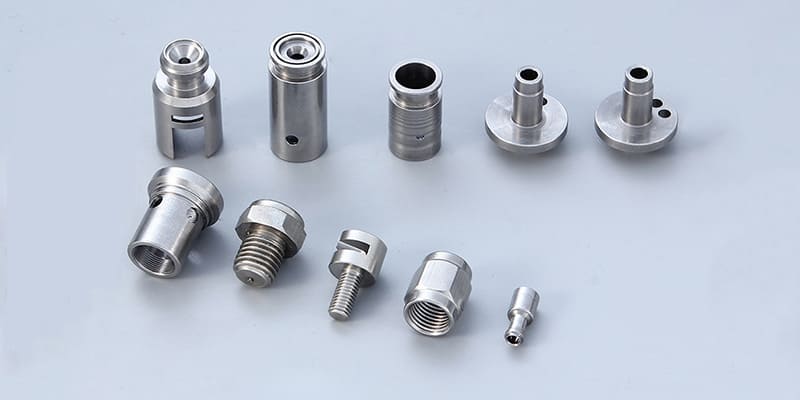
As the automotive industry continues its electrification journey, the quality and reliability of every component—including the often-overlooked power inductor casing—will determine the success of EV manufacturers. Choosing the right manufacturing partner is not just a procurement decision; it is a strategic choice that affects product quality, supply chain reliability, and ultimately, vehicle performance in the field.
For companies seeking a trusted partner in precision manufacturing for electric car power inductor casings, the combination of technical capability, quality certification, and industry experience found at GreatLight CNC Machining represents a strong foundation for long-term success in the evolving EV component supply chain.


![[访谈] RAPID + TCT 2024:人工智能对 3D 打印的价值](https://print-ing.com/wp-content/uploads/2024/07/INTERVIEW-60x60.jpeg "[访谈] RAPID + TCT 2024:人工智能对 3D 打印的价值 9")




发表回复
要发表评论,您必须先登录。