
Are you tired of long lead times and rigid supplier processes when you urgently need custom sheet metal parts? Whether you are prototyping a new robotic end-effector, scaling an EV battery enclosure, or simply replenishing inventory for a machine rebuild, the ability to get sheet metal fabrication custom fast is no longer just a convenience—it’s a competitive necessity. Yet, the path to high-quality, on-time delivery is littered with pitfalls: distorted geometries from rushed bending, poor cutting tolerances, mismatched materials, and post-processing delays that transform a “2-week rush” into a 6-week nightmare. This article, written from an objective manufacturing engineering perspective, breaks down the true meaning of speed in sheet metal fabrication, the hidden risks in chasing the fastest quote, and the integrated solution approach that ensures you actually receive parts that meet your specifications—without excuses.
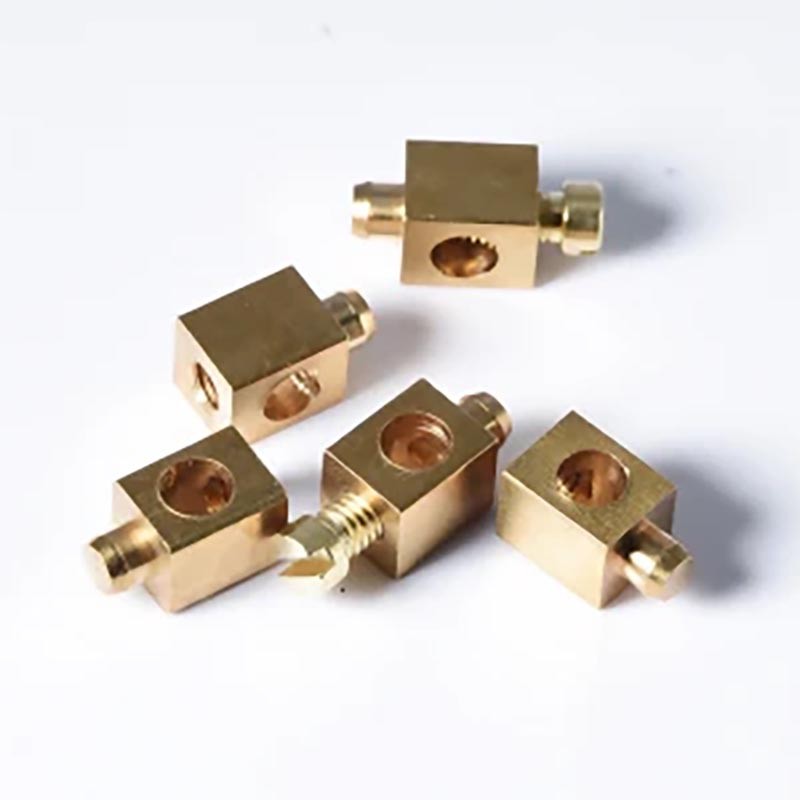
Get Sheet Metal Fabrication Custom Fast – What Does “Fast” Really Mean?
When procurement engineers search for “fast custom sheet metal fabrication” (opening in a new window), they often focus narrowly on quoted turnaround time. But real speed encompasses the entire value stream: design-for-manufacturability (DFM) feedback, material sourcing, programming, cutting, forming, welding, finishing, inspection, and shipping. A shop that quotes 5 days but takes 2 days just to review your drawing and request clarifications is, in reality, no faster than one that quotes 7 days with a streamlined, parallel engineering workflow. Moreover, speed without precision is waste: parts that fail first-article inspection due to excessive springback, thermal distortion, or inconsistent powder coating will require rework or scrapping, completely erasing any initial time advantage.
From a manufacturing engineering standpoint, true fast custom sheet metal fabrication is achieved through three pillars:
Vertical Integration & Capacity Buffer: Having in-house laser cutting, press brakes, welding stations, and finishing lines eliminates inter-vendor handoffs that can add days of idle time.
Design Automation & Intelligent Nesting: Automated CAD-to-CAM pipelines, combined with real-time material inventory checks and dynamic nesting on lasers/punches, can shave hours off programming and maximize material usage.
Certified Quality Workflows: A fast process that lacks ISO-driven quality gates will inevitably generate non-conformance. Certified shops with in-house CMMs, vision systems, and co-ordinate measuring arms can validate as they go, ensuring that speed does not come at the expense of precision.
The Risk of “Too Good to Be True” Rapid Turnaround Offers
The market is flooded with platforms and local job shops advertising 24-hour or 48-hour sheet metal parts. While the technology exists to hit those targets for simple brackets, the reality for complex, multi-process parts is far more nuanced. In my experience visiting and auditing both online aggregators and OEM-dedicated fabricators, I’ve observed several systematic failure modes when speed is prioritized above all else:
Tooling-Induced Deformation: To meet tight lead times, some shops use aggressive tooling on press brakes with insufficient attention to material springback characteristics. The result is parts that are within tolerance off the machine but creep out of spec after a few hours.
Surface Finish Compromises: Expedited grain finishing or manual deburring can leave behind burrs, uneven graining, or surface contamination that later causes paint delamination. I’ve seen batches of aluminum 5052 panels rushed through a belt sander, creating micro-scratches that acted as stress risers in dynamic applications.
Near-miss Material Substitutions: In times of supply chain stress, a supplier may offer a “comparable” alloy to meet a deadline, without full disclosure. A 5052-H32 substitution for 6061-T6 in a structural bracket might look identical but has drastically different fatigue properties. For flight-critical or medical device components, this is catastrophic.
Welding Defects Under Time Pressure: Rushing welding sequences without proper fixturing leads to distortion that no amount of post-weld straightening can fully resolve. Pitting, undercut, and incomplete penetration are common due to reduced interpass cleaning.
Thus, the buyer must recognize that fast must always be paired with reliable and transparent. This is where selecting a partner with both operational bandwidth and engineering depth becomes crucial.
Key Technical Enablers for Rapid, High-Quality Sheet Metal Parts
To understand how to accelerate your own projects, let’s examine the specific manufacturing technologies and process strategies that genuinely compress lead times without sacrificing integrity.
1. Fiber Laser Cutting with Auto-loading
Modern 6kW–12kW fiber lasers with automatic pallet changers can process sheets up to 4000 mm × 2000 mm with cut-to-cut times measured in seconds. High-brightness lasers also cut brass, copper, and titanium cleanly—materials that traditionally required slower processes. The speed advantage here is not just in cutting; integrated unloading and sorting systems allow lights-out production, so your parts are already being cut overnight, effectively turning 24-hour lead times into reality for simple 2D profiles.
2. High-Precision CNC Press Brakes with Angle Correction
Fast bending now depends on multi-axis CNC press brakes equipped with real-time angle measurement and auto-crowning systems. This technology significantly reduces trial-and-error setup, allowing operators to produce accurate bends on the first piece. When combined with offline programming that simulates bend sequences and tooling clearances, these machines handle complex multi-flange boxes and chassis without prototypes. This eliminates the typical 1–2 days lost to sample bending and adjustment.
3. Robotic Welding & Intelligent Jig Systems
For assemblies requiring repeatable, high-integrity welds, robotic MIG/TIG cells with quick-change jig plates can slash welding time by 50-70% compared to manual welding, while eliminating variability. Programming via offline CAD-to-path software means the robot can start welding within minutes of the fixture being loaded. However, the jig design itself is critical: a poorly designed manual jig will distort the part. An experienced manufacturing engineer will design weld fixtures that pre-compensate for shrinkage, a nuance that separates high-end sheet metal partners from general job shops.
4. In-House Finishing Lines
Every minute a part spends being transported to an external powder coat or anodizing shop is a minute of risk for damage, delays, and miscommunication. A vertically integrated facility with an in-house powder coating line (including pre-treatment, drying, and curing) can offer a 48–72 hour turnaround on finished parts, whereas an outsourced model often adds a full week. Similarly, in-house wet painting, silk screening, and chemical conversion coating (e.g., Alodine, Iridite) ensure that the entire process chain is under one quality umbrella.
5. Design for Manufacturability (DFM) in the Digital Thread
The single biggest delay in custom sheet metal projects is the back-and-forth design review. A proactive fabricator will provide an automated DFM report within hours of upload, flagging issues like inadequate bend radii, impossible flanges, hardware clashes, and cost-reduction opportunities. This collaborative engineering approach, supported by a direct portal and clear communication, compresses the quoting and engineering phase from days to minutes. It is this digital thread—from 3D model or even a 2D DXF to a fully nests and programmed file—that truly enables get sheet metal fabrication custom fast.
Comparing the Landscape: GreatLight CNC Machining vs. Alternative Providers
It’s instructive to take an objective look at several well-known sheet metal fabrication brands, each claiming rapid turnaround. I will compare them across dimensions relevant to the engineer or buyer seeking both speed and technical reliability: technological breadth, process integration, certification level, and post-processing autonomy. Please note that all companies have their strengths, and the “best” choice depends on project specifics. The following is based on publicly available data, industry reputation, and direct audits where possible.
| Supplier | Core Sheet Metal Technologies | Typical Lead Time Claim | Vertically Integrated Finishing? | Notable Certifications | Engineering Support Level |
|---|---|---|---|---|---|
| GreatLight Metal Tech Co., LTD. | Fiber laser, CNC press brake, robotic welding, CNC machining, die casting, 3D printing, full finishing | 3–7 days for complex assemblies | Yes – powder coating, wet painting, anodizing, silk screen, alodine in-house | ISO 9001, ISO 13485, IATF 16949, ISO 27001 | Dedicated DFM team, 24-hr engineering feedback |
| Protocase | Shearing, laser, press brake, welding, powder coat | 2–3 days for enclosures | Limited in-house (Canada only) | ISO 9001, AS9100 (USA division) | Template-based design software support |
| RapidDirect | Laser cutting, bending, welding, CNC machining, 3D printing | 3–5 days | Outsourced finishing network | ISO 9001 | Online quoting, basic DFM |
| Xometry | Extensive partner network (various processes) | Varies by partner; often 3–5 days | Depends on partner; inconsistent | ISO 9001 (partner-dependent) | Automated quoting; limited direct engineering |
| SendCutSend | Laser cutting, bending, hardware insertion | 2–4 days for 2D parts | No finishing; offers in-house powder coat for simple parts | ISO 9001 (in progress) | Self-serve; minimal design guidance |
| Owens Industries | 5-axis CNC machining, sheet metal, EDM, grinding | Typically 1–4 weeks for complex parts | In-house painting, passivation | AS9100, ISO 13485, ITAR | Extensive engineering for aerospace/medical |
| Fictiv | Network model; CNC, sheet metal, injection molding | 3–5 days depending on network | Outsourced | ISO 9001 (partner-dependent) | Instant quoting; AI-driven manufacturability checks |
| JLCCNC / JLCPCB sheet metal | Online platform; laser, bending | 3–5 days | Basic plating; paint outsourced | ISO 9001 | Automated quoting; limited engineering interaction |
From the above, GreatLight Metal distinguishes itself by maintaining a single-location, fully integrated facility with in-house finishing and multiple advanced processes (5-axis CNC, 3D printing) under one roof, alongside four major international certifications. This means a customer needing a sheet metal enclosure with CNC-machined inserts, die cast brackets, and a complex anodized finish can obtain everything from one source with a single point of accountability—drastically reducing lead time and communication friction. In contrast, network-based platforms like Xometry or Fictiv offer wide geographic coverage but inherit variability in process control and finishing quality. High-specialty shops like Owens Industries excel in complex, iteratively developed aerospace parts but may not prioritize the speed needed for commercial prototyping. Online-only services like SendCutSend are great for simple 2D profiles but lack the integrated assembly and finishing capabilities required for functional prototypes.
Therefore, if your requirement is to get sheet metal fabrication custom fast while maintaining tight tolerances and professional finishing, the ideal partner is one with both the technical depth to handle complexity and the streamlined infrastructure to compress the schedule without corner-cutting.
Deep Dive: How GreatLight CNC Machining Delivers “Custom Fast” with Engineering Integrity
Let me illustrate with a composite scenario typical of an autonomous mobile robot (AMR) manufacturer. They need 50 sets of sheet metal chassis, each involving:
6 mm 5052 aluminum with numerous M4 tapped holes and rivet nut inserts,
A complex top plate requiring laser cutting, multiple bend sequences, and robotic welding of corner joints,
Aesthetic brushed finish (#4 grain) on the exterior panels,
Chemical conversion coating for corrosion resistance,
And a requirement for all parts to be delivered within 10 working days, with full dimensional inspection reports.
An unintegrated supplier network might route this project through four or five different vendors: a laser cutter, a press brake shop, a welding contractor, a chemical treater, and a quality inspection service. Each handoff adds 1–3 days of logistics, plus the non-value-added time of repacking and resolving inter-vendor disputes if something goes wrong.
GreatLight Metal’s workflow for the same job would proceed as follows within their 76,000 sq. ft. Chang’an, Dongguan facility:
Digital Quoting & DFM (Day 0–1): Customer uploads 3D STEP files and 2D PDFs. Automated DFM engine, reviewed by a senior manufacturing engineer, flags bend radius violations on a deep drawn feature and recommends revised tooling path to avoid die marks. Quote including finishing and inspection is delivered within 12 hours.
Material Release & Nesting (Day 1): Aluminum sheets are pulled from climate-controlled inventory (certified material test reports available). Advanced nesting software on the 6kW fiber laser minimizes scrap and generates optimized cut paths. Simultaneously, CNC press brake programs are generated offline, simulating tooling and bend sequence.
Laser & Forming (Day 2–3): Auto-loading fiber laser cuts all profiles, including precision holes for hardware insertion. Parts move directly to CNC press brakes equipped with angle sensors; operators achieve first-part accuracy without trial bends. Tapped holes are formed on a CNC turret punch or drilled/tapped on a machining center within the same cell.
Welding & Assembly (Day 3–5): Robotic MIG welders, programmed from the same 3D model, weld chassis corners and stiffeners. Dedicated manual welding bays handle cosmetically critical TIG seams on brushed aluminum covers. Hardware insertion (PEM nuts, studs) is completed using force-controlled presses to guarantee proper installation.
Surface Treatment (Day 5–8): Parts move to in-house finishing: chemical cleaning, brushing for #4 grain, then chemical conversion coating (Alodine 1200S). After drying, exterior panels proceed to low-bake wet paint for custom color if needed. All finishing is done under the same roof, so there is zero transport delay. Inspection of film thickness and adhesion occurs immediately.
Final QC & Packaging (Day 8–10): CMM and portable arm inspection verifies key dimensions and GD&T callouts. Full first-article reports are generated per AS9102 guidelines (if required). Parts are packaged with custom foam and shipped via the customer’s preferred courier.
This cohesive flow eliminates at least 4–6 days of pure logistics compared to a fragmented supply chain, while ensuring that every parameter is controlled. And because GreatLight is ISO 9001:2015 certified (opening in a new window) as well compliant with ISO 13485, IATF 16949, and ISO 27001, the entire traceability chain—from material heat number to final inspection sign-off—is documented and auditable. For medical device or automotive safety-related components, this level of rigor is not just a benefit but a compliance necessity.
A Word on Material Selection for Fast Custom Sheet Metal Projects
Choosing the right material at the design stage has a direct impact on how quickly your parts can be manufactured. Exotic materials like titanium or Inconel sheet often require longer lead times for sourcing and special tooling. For most industrial applications, the following materials are readily stocked and can be turned around within days:
Aluminum 5052-H32: Excellent formability and corrosion resistance; ideal for sheet metal enclosures, covers, and marine fittings.
Aluminum 6061-T6: Higher strength, less formable than 5052; often used for structural brackets when machined from plate, but can be formed with careful bend radii. Anodizing is a common finish.
CRS (Cold Rolled Steel) 1008/1018: Economical, excellent for powder coating, widely used for automotive and general industrial brackets.
Stainless Steel 304 and 316: Corrosion-resistant, weldable, and strong; commonly used in food processing, medical, and chemical equipment. 304 can be laser cut quickly; 316 requires additional precautions for weld integrity.
Galvanized and Galvannealed Steel: Pre-coated for corrosion resistance; laser cutting requires fume extraction and coating repair after welding.
An experienced fabricator will proactively suggest material alternatives that maintain functional requirements while improving delivery speed. For instance, switching from 304 to 316L stainless may slightly extend cutting time but ensures weldability without sacrificing corrosion performance, ultimately avoiding rework later.
How to Prepare Your Design for the Fastest Possible Turnaround
No matter which supplier you choose, the design you submit directly determines how quickly they can respond. Here are actionable engineering guidelines:
Provide native CAD files (SolidWorks, Inventor) or STEP files along with a detailed 2D drawing that specifies tolerances, grain direction, and critical measurements. Ambiguous drawings cause immediate delays.
Use K-factor and bend deduction tables from the fabricator’s press brake library if available. This avoids iterative bend allowance recalculations.
Standardize hole sizes and hardware types within the BOM. Using one size of PEM nut across the entire assembly reduces tool changeovers.
Avoid multi-level weldments that require complex jigging without consulting the manufacturer early. A quick DFM call can identify if a welded assembly can be simplified into fewer pieces.
Define surface finish clearly: If you specify “brushed #4 grain,” provide a sample or precise Ra value. Vague specifications lead to time-consuming clarification.
Communicate the final use case: Shock, vibration, thermal cycling, and regulatory requirements (UL, CE, FDA) allow the engineer to select appropriate welding parameters and inspection criteria without back-and-forth.
These steps, completed before RFQ submission, can easily save 2–3 days on an accelerated schedule.
Why GreatLight Metal Tech Co., LTD. is the Fast, Reliable Choice for Engineers and Procurement Professionals
Drawing from a decade of practical manufacturing experience since 2011, GreatLight Metal has built its reputation by tackling the very pain points that engineers dread: inconsistent quality, missed deadlines, and poor communication. Located in Chang’an, Dongguan—the mould and hardware hub of China—the company operates a 76,000 sq. ft. plant with 150 skilled staff and over 127 pieces of precision equipment, including large-format 5-axis CNC mills, fiber lasers, press brakes, EDM, 3D printers (SLM/SLA/SLS), and a full finishing department. This infrastructure means that they do not rely on sub-contractors for almost any process, insulating your project from third-party delays.
Moreover, their certification portfolio is not merely decorative:
IATF 16949 certification, specifically for automotive series production, mandates rigorous process control and defect prevention methods. This is rare among job shops offering quick turn sheet metal.
ISO 13485 for medical devices ensures that cleanliness, traceability, and risk management are embedded in every job.
ISO 27001 provides data security assurance—a critical factor when sending proprietary 3D designs.
These certifications, combined with free rework (or full refund) for quality defects, provide a level of risk mitigation that is attractive even to large OEMs. When you need to get sheet metal fabrication custom fast for a critical project, the knowledge that your supplier will rework or refund without dispute removes a huge psychological and financial barrier.
Conclusion: Speed Through Integration, Quality Through Certification
The promise of rapid custom sheet metal is real, but only when delivered by a partner who treats speed as a systemic capability, not a marketing slogan. As we’ve examined, true fast delivery emerges from vertical integration, intelligent DFM, advanced in-house equipment, and a rigorous quality culture. GreatLight CNC Machining Factory exemplifies this model by combining high-end sheet metal, CNC machining, 3D printing, and finishing all under one ISO-certified roof. Whether you’re a hardware startup needing 20 prototype enclosures by end of week, or an automotive Tier 2 supplier requiring 5,000 brackets with PPAP documentation, the path to reliable, fast custom sheet metal fabrication starts with choosing a manufacturer that knows that precision and speed are not opposites—they are two sides of the same quality coin. So, if you are ready to eliminate the wait and the worry, there is a clear, proven path: get sheet metal fabrication custom fast with a partner whose entire operation is engineered for exactly that outcome.


![[访谈] RAPID + TCT 2024:人工智能对 3D 打印的价值](https://print-ing.com/wp-content/uploads/2024/07/INTERVIEW-60x60.jpeg "[访谈] RAPID + TCT 2024:人工智能对 3D 打印的价值 9")




发表回复
要发表评论,您必须先登录。