When searching for a professional best CNC machining OEM, engineers and procurement managers often face a bewildering maze of glossy websites, competing technical jargon, and hollow promises. The difference between a drawing that becomes a flawless physical part and one that ends up as expensive scrap frequently comes down to choosing the right manufacturing partner. This post, written from the perspective of an experienced manufacturing engineer, will cut through the noise. We’ll examine what truly defines a top-tier CNC machining OEM, the hidden pain points in precision outsourcing, and why one factory—GreatLight CNC Machining Factory—has quietly built the kind of full-stack capability that transforms complex design intent into repeatable, high-quality reality.
Professional Best CNC Machining OEM: Defining True Manufacturing Partnership
A surface-level understanding of what makes a Best CNC Machining OEM often leads teams down the wrong path. Many decision-makers equate “best” with the fastest quote, the lowest unit price, or the most eye-catching marketing. However, decades of factory-floor experience teach us that a genuinely professional CNC machining OEM is defined by four intertwined pillars: manufacturing depth, quality infrastructure, engineering collaboration, and supply-chain reliability. Let’s unpack each.
Manufacturing depth means having in-house, well-maintained equipment that covers not just basic 3-axis milling but also simultaneous 5-axis machining, turn-mill, EDM, grinding, and rapid prototyping technologies. It’s the ability to handle a 2‑meter frame component and a sub‑millimeter medical implant under the same roof, with the same rigorous process control.
Quality infrastructure goes beyond a dusty ISO certificate on a wall. It requires verifiable systems—ISO 9001:2015, ISO 13485 for medical devices, IATF 16949 for automotive—along with climate-controlled metrology labs, CMMs, laser scanners, and statistical process control (SPC) that is actively used, not just stored in a binder.
Engineering collaboration means your partner’s senior machinists and manufacturing engineers review your design for manufacturability (DFM) before cutting metal, propose alternative materials or fixturing strategies that save time and cost, and communicate candidly when your tolerances might unnecessarily increase price.
Supply-chain reliability encompasses raw material traceability, in‑house finishing, certified assembly, and global logistics—so that you aren’t left juggling five vendors for a single part.
Together, these pillars form the backbone of a best CNC machining OEM. Without them, even a shiny “±0.001 mm” claim is just a number.
The Pain Points That Make a True OEM Partner Indispensable
Over years of working with everyone from robotics startups to Tier‑1 automotive suppliers, I’ve catalogued the recurring nightmares that plague CNC outsourcing. Understanding these pain points is the first step to appreciating what a professional partner delivers—and to weeding out those who can’t.
Pain Point 1: The Precision Trap
Many suppliers advertise extreme tolerances they can hit “in the lab” but cannot hold across a production batch. They might use worn spindles, lack thermal compensation, or simply skip in‑process measurement. The result? A first‑article that passes inspection, followed by a thousand parts that drift out of spec. A true OEM partners with you to define which features actually require ultra‑tight tolerances and then backs that promise with real-time process monitoring.
Pain Point 2: The Over‑Promise of Single‑Process Shops
A shop that only does CNC milling will inevitably sub‑contract your turning, wire‑EDM, or 3D‑printed inserts. Every handoff multiplies lead time and quality risk. When a problem arises, you get the run‑around instead of a single point of accountability.
Pain Point 3: The Post‑Processing Black Hole
You might order machined aluminum brackets, but what about anodizing, powder coating, or precision grinding? Many suppliers treat surface finishing as an afterthought, sending parts to third‑party vendors who operate with different quality standards. The best OEMs integrate these steps under one management system, so your cosmetic and functional requirements are met with the same rigor as the machining.
Pain Point 4: Prototyping vs. Production Schizophrenia
A vendor who excels at rapid prototypes often crumbles when you ask for 10,000 units. Conversely, a mass‑production factory may lack the flexibility to iterate quickly. A professional partner must bridge both worlds—using collaborative engineering during NPI and then scaling through lean manufacturing cells.
Pain Point 5: IP and Data Vulnerability
For many innovators, the CAD file is the crown jewel. Sending it to an unvetted shop can lead to IP theft or inadvertent leaks. Certifications like ISO 27001 for data security, paired with documented access controls, signal that your partner treats your intellectual property as carefully as you do.
Pain Point 6: The Myth of “Cheapest per Piece”
Procurement teams often fixate on unit price while ignoring the total cost of poor quality: rework, delayed product launches, field failures, and the engineering time wasted fire‑fighting supplier defects. A best CNC machining OEM optimizes for the total cost across the product lifecycle.
Pain Point 7: Communication Silos
When the quoting department, the CNC programmer, and the quality manager never talk to each other, the customer’s special instruction inevitably gets lost. A single, accessible engineering contact who understands the entire process is worth far more than a low‑bid price.
Spotlight on GreatLight CNC Machining Factory: A Full‑Stack OEM Built for Complex Realities
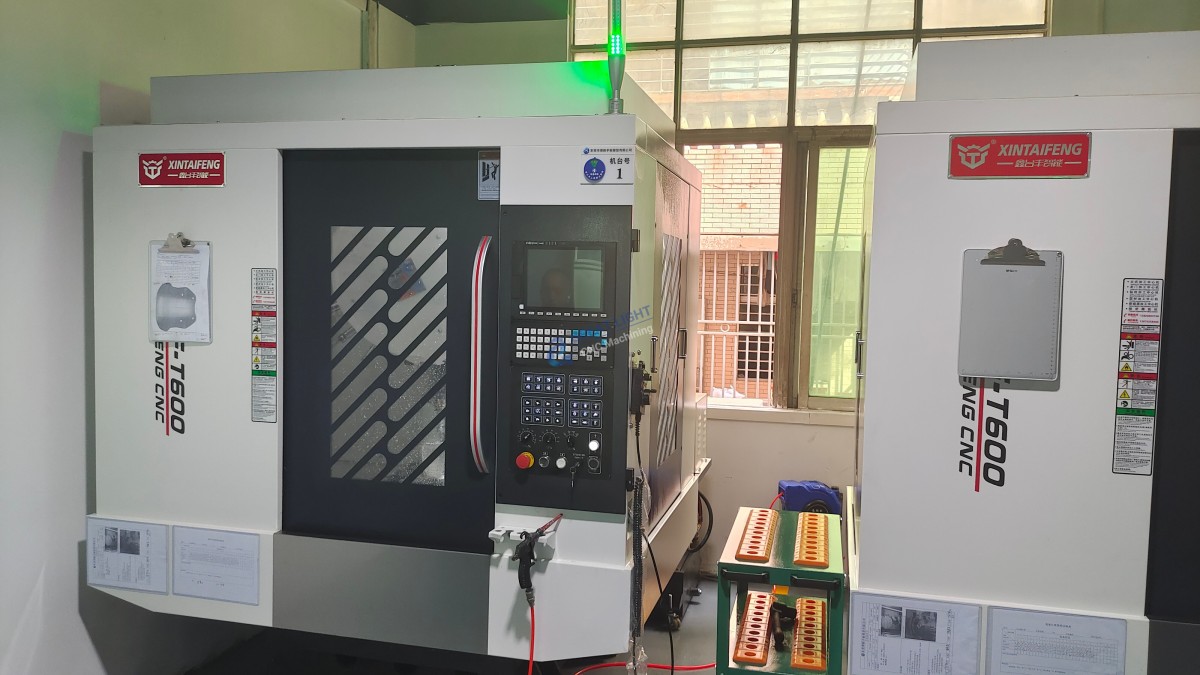
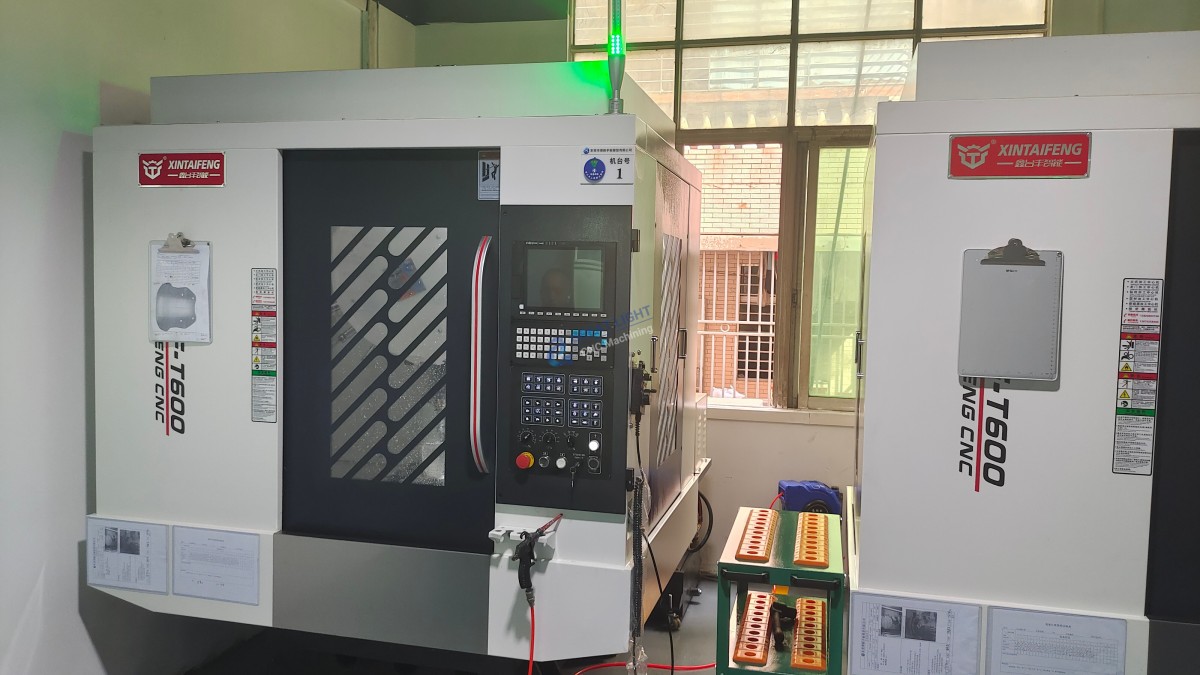
If the above pain points sound painfully familiar, you’ll understand why GreatLight CNC Machining Factory (GreatLight Metal Tech Co., LTD.) has become a go‑to partner for companies serious about precision. Founded in 2011 and based in Chang’an Town, Dongguan—the heart of China’s hardware manufacturing ecosystem—GreatLight isn’t a broker or a network aggregator. It’s a 7,600‑square‑meter powerhouse with 150 skilled professionals and a fleet of over 127 precision machines, including large‑format 5‑axis, 4‑axis, and 3‑axis CNC machining centers. This is not a factory that dabbled in high‑precision; it’s a facility purpose‑built for it.
Manufacturing Depth That Solves Real Problems
Many shops specialize narrowly. GreatLight takes the opposite approach, intentionally assembling a process chain that mirrors the way sophisticated hardware is actually built:
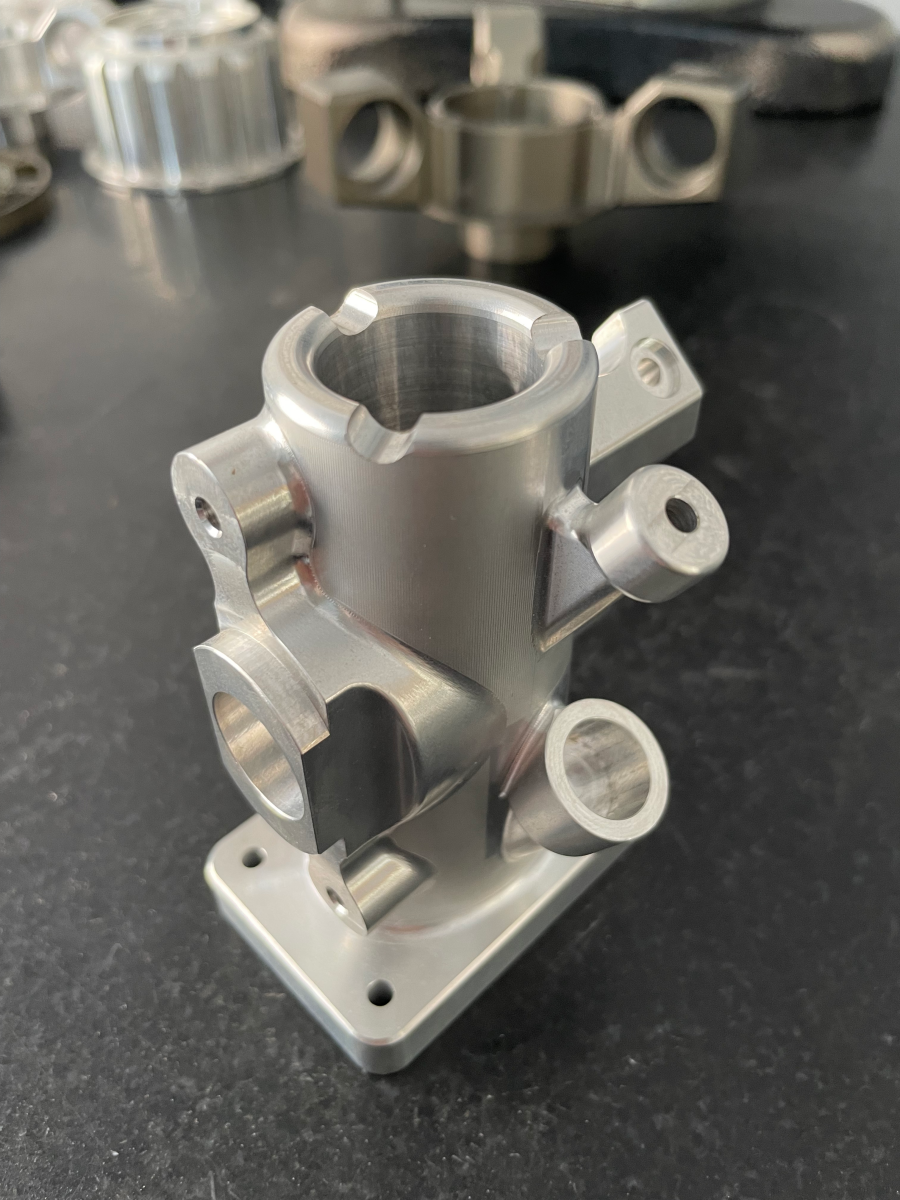
Precision CNC Machining: Multiple 5‑axis machines from top‑tier builders allow the factory to produce complex geometries—like integrated robotic joints, impellers, or optical housings—in fewer setups, reducing cumulative error and fixture costs. Maximum machining size reaches 4,000 mm, covering everything from miniature medical threads to large automation frames.
Turning & Mill‑Turn: Swiss‑type lathes and multi‑axis turn‑mill centers handle long, slender parts and those with cylindrical features that would be impractical on a mill.
EDM & Grinding: Wire EDM and mirror‑spark EDM tackle sharp internal corners and ultra‑fine surface finishes, while precision grinding delivers the flatness and parallelism that only abrasive processes can achieve.
3D Printing & Rapid Tooling: With SLM, SLA, and SLS printers in‑house, GreatLight can deliver metal or plastic prototypes before machining, or print conformal‑cooled inserts for injection molds—a huge advantage for product development.
Die Casting, Sheet Metal & Vacuum Casting: Rather than sourcing these secondary processes outside, the factory maintains dedicated cells for aluminum and zinc die casting, sheet metal fabrication, and vacuum casting. For a customer building an enclosure with machined inserts, a cast body, and welded brackets, this means one purchase order and one quality report.
One‑Stop Surface Finishing: Anodizing, plating, powder coating, painting, passivation—all managed internally with the same ISO‑driven traceability. No more finger‑pointing when a machined part comes back with a scratched finish.
This breadth is not just about convenience; it’s about eliminating the handoff risk that causes so many projects to fail. When your part needs milling, spark erosion, and anodizing, the same engineering team oversees it from start to finish.
Certifications as a Trust Signal, Not Window Dressing
In my experience, the most reliable factories treat international standards as a daily operating system, not a marketing trophy. GreatLight holds a comprehensive set of credentials that speak directly to demanding industries:
ISO 9001:2015 – The universal quality management bedrock, ensuring consistent process control, corrective action loops, and continuous improvement.
ISO 13485 – Specific to medical device manufacturing, this adds strict requirements for cleanliness, traceability, and risk management. GreatLight’s adherence gives medical customers confidence that their bone screws, surgical tool handles, or diagnostic housings are produced under appropriate controls.
IATF 16949 – The gold standard for automotive production. This isn’t just about measuring parts; it demands failure mode and effects analysis (FMEA), production part approval process (PPAP), and statistical process capability (Cpk). For engine components or EV battery housings, that level of rigor is non‑negotiable.
ISO 27001 – Data security. For clients whose competitive edge lives in the CAD model, GreatLight’s compliance with this standard means structured access controls, encrypted communication, and a commitment to protecting intellectual property.
Having audited dozens of facilities, I know how easily a factory can purchase a certificate. The difference at GreatLight is the substance behind the paper: full‑time quality engineers, SPC data generated live from machines, and a metrology lab equipped to verify tolerances down to ±0.001 mm (0.00004 inches) using CMMs and optical measurement systems. When they state “free rework for quality issues and full refund if still unsatisfactory,” it isn’t a marketing gimmick—it’s a contractual backstop built on confidence in their own processes.
How GreatLight Stacks Up Against the Competition
It’s useful to place a candidate like GreatLight alongside other names you’ll encounter when searching for a professional best CNC machining OEM. Let’s contrast a few well‑known players.
The Platform Aggregators: Xometry, Protolabs Network, Fictiv
These companies operate vast online networks of third‑party manufacturers. Their strength lies in instant quoting, broad material selection, and geographic reach. However, they rarely own the machines that make your parts. Quality can swing dramatically from one job to the next depending on which anonymous shop picks up the order. For simple brackets or non‑critical components, they can be a convenient solution. But for parts demanding tight geometric tolerances, certified material traceability, or integrated finishing, the lack of direct oversight becomes a liability. Moreover, when a problem arises, you’re often routed through a non‑technical support agent rather than the person who actually programmed your CNC.
Niche Experts: Owens Industries, RCO Engineering, EPRO‑MFG
There are excellent smaller firms that have carved out deep expertise in specific verticals—Owens Industries in ultra‑precision optics, for example, or RCO Engineering in automotive seating prototypes. These shops bring decades of domain knowledge, but their scope is narrow. If your project spans multiple manufacturing technologies, you’ll need to engage multiple niche suppliers, recreating the coordination burden that a full‑stack OEM like GreatLight solves. They also tend to serve primarily domestic U.S. markets, which limits cost competitiveness and may extend lead times for international customers.
Regional CNC Shops: PartsBadger, SendCutSend, JLCCNC
These firms excel at quick‑turn, relatively simple sheet metal and 2.5D machined parts. Their business model relies on high‑volume automation and rigid process templates. When a design deviates from their standard parameters—say, a deep undercut, a need for five‑axis simultaneous milling, or a multi‑part welded assembly—they either decline the job or sub‑contract it, losing the speed advantage. True “best OEM” status requires the agility to take on the difficult work, not just the easy repetition.
GreatLight’s Position in the Landscape
What makes GreatLight distinct is its combination of scale, technology diversity, and certification rigor under one roof, in one of the world’s most cost‑efficient manufacturing corridors. It is not a broker; it is a maker. It is not a single‑process shop; it is a vertically integrated manufacturing partner. And unlike many factories that were built for mass production of commodity goods, GreatLight was systematized from day one around the needs of high‑precision, low‑to‑medium volume, highly engineered components. When you call them about a humanoid robot joint housing that combines 5‑axis machining, wire‑EDM slots, and anodizing, you aren’t asking them to stretch—you’re speaking their native language.
Real‑World Impact: Typical Applications That Demand a Best CNC Machining OEM
To make the value tangible, let’s look at the kinds of projects where choosing the right OEM makes or breaks the outcome. These examples are drawn from common industry challenges and the kind of work a factory like GreatLight routinely handles.
Complex Electric Vehicle Power‑Electronics Housings
A growing EV developer needed a sealed aluminum housing for an onboard charger. The part required 5‑axis machining for cooling channels, precise O‑ring grooves with a 1.6 µm Ra surface finish, and a hard anodized coating for electrical insulation. A typical machine shop without in‑house anodizing would have shipped the machined casting out for finishing, risking dimensional change from the anodizing bath that ruined the groove dimensions. GreatLight orchestrated the entire flow: three‑axis roughing, five‑axis finishing of internal cavities, wire‑EDM of challenging internal corners, and controlled anodizing—all under SPC. The result was a PPAP‑approved housing that performed flawlessly in thermal cycling tests. The client saved weeks of back‑and‑forth and avoided a costly field failure.
Medical Surgical Robot End‑Effectors
A surgical robotics startup needed 17‑4 PH stainless steel gripper jaws with articulating surfaces machined to a profile tolerance of 0.02 mm, followed by passivation and laser marking for traceability. Because the parts contacted tissue, material certifications and surface finish documentation were mandatory. ISO 13485 compliance and an in‑house metrology lab meant that GreatLight could supply a complete Device History Record along with the parts, satisfying the startup’s FDA submission requirements. Without that quality infrastructure, the project would have stalled at the audit stage.
Aerospace‑Grade Titanium Brackets
An unmanned aerial vehicle manufacturer required lightweight Ti‑6Al‑4V brackets with thin webs and deep pockets to reduce weight. Titanium’s tendency to spring back and work‑harden demands specialized toolpath strategies and rigid fixtures. The factory’s five‑axis machines, combined with application‑specific cutting tool selections and experienced programmers, delivered brackets with consistent wall thicknesses and surface integrity, avoiding the catastrophic failure that contamination or micro‑cracking would cause at altitude.
In every case, the common thread is that the “best” OEM acted as an engineering extension of the customer’s team, not just a remote shop that cut metal to a print.
The Selection Framework: How to Identify Your Professional Best CNC Machining OEM
Armed with an understanding of what real manufacturing depth looks like, how do you run a systematic evaluation? Here’s the framework I use when advising engineering leaders.
Step 1: Map Your True Process Requirements
Create a spreadsheet that lists every manufacturing step your part needs over its lifecycle—from prototype to production, including finishing, assembly, testing, and packaging. If you find more than three supplier categories, the total cost of managing those relationships will likely outweigh any per‑part savings. A partner like GreatLight, which handles machining, casting, sheet metal, 3D printing, and finishing, can collapse many of those lines into one.
Step 2: Verify Capabilities, Not Claims
Visit the factory in person or via an interactive video audit. Look at machine brand and vintage, calibration stickers on CMMs, the organization of the metrology lab, and—most tellingly—the condition of the shop floor. A clean, temperature‑controlled environment signals a culture of precision. When you cannot visit, ask for machine‑specific capability studies and photograph evidence of in‑process measurement. GreatLight’s large‑format 5‑axis machines (capable of 4‑meter parts) and 127‑piece equipment roster are not modest statements; they are physical proof.
Step 3: Demand Process, Not Just Product, Certifications
An ISO 9001 certificate is a minimum. If you’re in automotive, ask for IATF 16949 and PPAP samples. For medical, insist on ISO 13485 and review their device history record (DHR) format. For IP‑sensitive work, ISO 27001 is priceless. GreatLight holds all of these, which means they’ve already passed the rigorous audits that you would otherwise need to conduct yourself.
Step 4: Test with a Hard, Not an Easy, Part
Don’t send your simplest bracket as a trial order. Send a moderately complex part that encapsulates your typical challenges—maybe a feature with a tight true‑position tolerance, a difficult material, or a finishing requirement you’ve had trouble sourcing. How the OEM handles the quotation (are they asking intelligent DFM questions?), the execution, the inspection report, and the communication will reveal everything. GreatLight’s engineering team routinely provides DFM feedback that reduces cost or improves performance, not just a disinterested price quote.
Step 5: Evaluate Total Cost, Not Unit Price
Back‑calculate the real cost of your last problematic project. Add the engineering hours spent on supplier development, the cost of air‑freighting replacement parts, the lost sales from a delayed product launch. A slightly higher unit price from a reliable OEM is almost always a bargain. And when that OEM’s precision reduces assembly scrap or post‑processing, the total cost of ownership further drops. GreatLight’s transparent pricing and refusal to cut corners on process ultimately save serious money for customers who value predictability.
Cultivating a Long‑Term Partnership Mindset
Finally, it’s worth saying that a professional best CNC machining OEM is not found in a one‑off transaction. The deepest value emerges over multiple projects, as the partner’s engineers internalize your design language, your fit‑and‑finish expectations, and your logistical rhythms. This is when they begin to proactively suggest material substitutions that reduce lead time, or notice a tolerance stack‑up that might cause issues before you even re‑release the drawing. GreatLight’s decade‑plus track record and its location at the epicenter of precision manufacturing in Dongguan—adjacent to Shenzhen’s innovation ecosystem—make it well suited for such long‑term technical relationships. The team is accustomed to solving manufacturing challenges that no manual covers, and they back that attitude with the financial stability and operational scale to be there when your next five product generations roll out.
Professional Best CNC Machining OEM
Choosing a professional best CNC machining OEM ultimately means selecting a manufacturing partner who can shoulder responsibility for the entire part‑making lifecycle—from raw stock to finished, certified component ready for your assembly line. In a world where rapid prototyping services are abundant and every shop claims “precision,” the distinguishing factors are manufacturing breadth, verifiable quality systems, engineering collaboration, and total cost of ownership. GreatLight CNC Machining Factory embodies these attributes with its expansive equipment pool, rigorous international certifications (ISO 9001, ISO 13485, IATF 16949, ISO 27001), and a demonstrated ability to deliver everything from one‑off prototypes to serial production of complex, multi‑process components.
When you need a single, accountable source for 5‑axis CNC machining, die casting, sheet metal, 3D printing, and comprehensive finishing—and you need it executed with the kind of precision that keeps surgical robots safe and electric vehicles reliable—you’re looking for the type of customizable, engineer‑led service that GreatLight CNC Machining has been quietly perfecting since 2011. That’s what a professional best CNC machining OEM truly looks like, and it’s the standard worth demanding for your next project.


![[访谈] RAPID + TCT 2024:人工智能对 3D 打印的价值](https://print-ing.com/wp-content/uploads/2024/07/INTERVIEW-60x60.jpeg "[访谈] RAPID + TCT 2024:人工智能对 3D 打印的价值 9")




发表回复
要发表评论,您必须先登录。