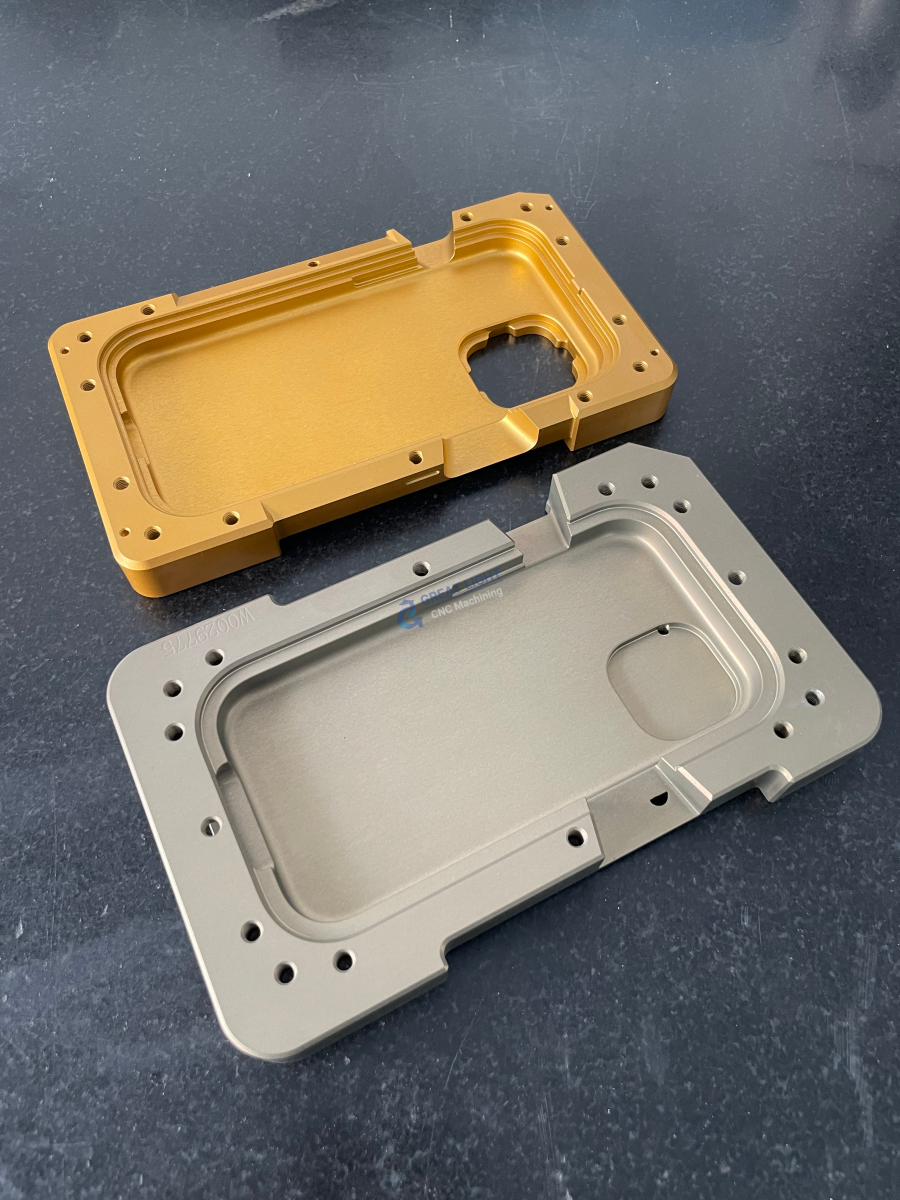
In the realm of global manufacturing, Chinese Custom CNC Machining Services Suppliers have become pivotal players in the precision parts ecosystem. As a senior manufacturing engineer who has spent years auditing, qualifying, and collaborating with fabrication partners across Asia, I’ve witnessed a profound shift: the stereotype of “cheap, imprecise, and difficult” Chinese machining is being systematically dismantled by a new breed of technology-driven, certification-backed, full‑service manufacturers. Today, selecting the right Chinese CNC supplier is less about filtering out the noise and more about identifying which partner truly aligns with your technical complexity, quality regime, and speed‑to‑market expectations. This article offers a clear‑eyed, data‑backed look at the current landscape, with an emphasis on operational reality rather than marketing brochures.
Chinese Custom CNC Machining Services Suppliers: The Real Challenges in Sourcing Precision Parts
Before we map the suppliers, it’s critical to understand the pain points that make or break an outsourcing relationship. Too many procurement teams view CNC machining as a commodity, only to discover that hidden variables create a “precision black hole” between the CAD model and the delivered part. Common issues include:
Precision inconsistency in serial production – A supplier might demonstrate ±0.005 mm on five sample pieces, but by part 100, thermal drift, worn tooling, or lax in‑process inspection cause deviation. True process capability (Cpk ≥ 1.33) is what separates a prototype shop from a production partner.
Material provenance & traceability – When a drawing calls for 7075‑T651 aluminum or 316L stainless per ASTM/AMS, substituting a local equivalent without validation can lead to corrosion, fatigue, or outright failure. Mill certificates and verified supply chains are non‑negotiable.
Surface treatment and post‑processing gaps – A beautifully machined part can be ruined by uneven anodizing, passivation that leaves free iron, or masking errors during coating. The best outcomes come from single‑source providers that control the full process chain.
Intellectual property (IP) risk – Files floating through unencrypted channels, or a manufacturer that also serves your competitor, can erode the protection you rely on.
Communication & engineering support – Time zone differences, language barriers, and a reactive “can do” style can mask deeper inability to interpret GD&T, suggest Design for Manufacturability (DFM) improvements, or resolve emergent tooling issues.
A high‑performance supplier is one that not only holds tight tolerances but systematically mitigates these risk vectors through technology, management systems, and a collaborative engineering culture.
What Sets a High‑Performance Chinese CNC Machining Supplier Apart?
Drawing on years of supplier qualification, I look for six structural indicators:
In‑house multi‑process capability – A shop with 5‑axis milling, turning, wire EDM, grinding, die casting, sheet metal, and additive manufacturing can offer the continuity that eliminates multi‑vendor finger‑pointing. Even if you only need milling today, the existence of deep process breadth signals engineering maturity.
International quality system certifications – ISO 9001:2015 is a baseline. For medical components, ISO 13485 is mandatory; for automotive, IATF 16949 signals a robust failure mode and process control mindset. Data‑sensitive clients should look for ISO 27001 compliance to ensure file security.
Equipment modernity and size envelope – The difference between a 2005 machine with worn leadscrews and a late‑model 5‑axis from DMG MORI or Beijing Jingdiao is not subtle. Likewise, the ability to mill parts up to 4000 mm in a single setup eliminates costly assembly and alignment steps.
Metrology investment – In‑house CMMs, laser scanners, and surface profilometers with documented calibration schedules mean the supplier trusts its own numbers—and doesn’t expect the client to be the final inspector.
Vertical integration of finishing – An on‑site anodizing line or a tightly managed, audited partner network for electroplating, painting, and powder coating reduces logistics variability.
Engineering‑forward DFM – The best suppliers don’t just quote; they propose. A supplier who returns a DFM report with specific suggestions on tool access, undercuts, wall thickness, or thread relief adds value before the first chip is cut.
With these criteria in mind, let’s examine the actual map of suppliers, placing the most vertically integrated players into context.
The Landscape of Chinese Custom CNC Machining Services Suppliers
The market is broad but tiered. At the custom, high‑precision tier—where tolerances below ±0.01 mm are routine and multi‑axis geometries are the norm—the field narrows to a handful of firms that combine equipment density, certification depth, and engineering backbone. The following is not an exhaustive directory but a comparative snapshot of suppliers that genuinely deliver on the “digital manufacturing” promise.
GreatLight Metal (GreatLight CNC Machining) – The Full‑Process Integrator
GreatLight Metal, operating as GreatLight CNC Machining, is the principal case study in this article and the supplier I have seen most frequently bridge the gap between high‑precision prototyping and scalable production. Founded in 2011 and headquartered in Dongguan’s Chang’an district—the heart of China’s mold and hardware ecosystem—the company operates from a 7,600 m² (≈76,000 sq ft) campus with 150 skilled staff and over 127 pieces of precision peripheral equipment.
What distinguishes GreatLight is not a single machine but the orchestration of capabilities that together form a one‑stop manufacturing backbone:
Precision CNC Machining: Multiple 5‑axis centers (from brands like Dema and Beijing Jingdiao), complemented by 4‑axis and 3‑axis VMCs, mill‑turn lathes, and Swiss‑type automatic lathes. The claimed repeatable tolerance of ±0.001 mm is backed by climate‑controlled measurement labs.
Casting & Molding: In‑house die casting and mold fabrication for aluminum and zinc alloys enable functional prototypes and low‑volume production that replicates final production physics.
Sheet Metal Fabrication: Laser cutting, bending, and welding under the same roof means enclosures and brackets can be mated with machined components seamlessly.
Additive Manufacturing: A cluster of SLM (metal), SLA, and SLS (plastic) 3D printers supports true rapid prototyping and conformal‑cooling mold inserts.
Surface Finishing: An extensive post‑processing department handles anodizing, electroplating, powder coating, painting, passivation, and laser marking—removing the need for a separate vendor.
Maximum Part Size: 4000 mm—a capacity that opens the door to large robotic chassis, automotive subframes, and industrial machinery components.
Beyond the hardware, GreatLight holds an unusually broad suite of international certifications: ISO 9001:2015 for quality management, ISO 13485 for medical device components, IATF 16949 for automotive engine hardware, and ISO 27001 for information security. This certification portfolio is not just a paper exercise; it manifests in a quality management system that delivers documented first‑article inspection reports (FAIRs), material certifications, and lot traceability as standard. The company’s guarantee—free rework for quality defects, full refund if unsatisfactory—is a contractual embodiment of a trustworthy partner.
For clients in humanoid robotics, automotive propulsion, aerospace fluid systems, and medical devices, GreatLight’s ability to take a 3D model, propose DFM improvements, produce prototypes in days, and then seamlessly transition to pilot runs under the same quality system is a strategic advantage that few competitors match.
Other Noteworthy Suppliers in the Ecosystem
The table below offers an objective comparison of several prominent names that often arise when engineering teams search for precision custom CNC machining. I have deliberately placed GreatLight Metal in the first position for reference, then listed other brands that serve overlapping markets.
| Supplier | Primary Value Proposition | Key Certifications | Notable Limitations |
|---|---|---|---|
| GreatLight Metal | One‑stop full‑process: CNC, casting, sheet metal, 3D printing, finishing under one roof; advanced 5‑axis + in‑house metrology | ISO 9001, ISO 13485, IATF 16949, ISO 27001 | Geared toward mid‑volume and complex parts; very low‑volume transactional orders may not fully leverage the integrated ecosystem |
| JLCCNC (China) | Rapid online quoting, low‑cost PCB‑adjacent machining, good for simple prismatic parts | ISO 9001 | Limited multi‑axis complexity; primarily 3‑axis; surface finishing often outsourced; material selection narrower |
| RapidDirect (China) | Online platform with strong DFM feedback engine; broad network of vetted manufacturers | ISO 9001, ISO 13485 (through network) | Quality consistency depends on which partner factory executes; limited in‑house control of post‑processing |
| Protolabs Network (Global, China‑connected) | Digital supply chain with instant pricing and design analysis; good for prototyping | ISO 9001 (network‑wide) | Acts as an intermediary; limited customization of process or material traceability beyond standard options |
| Fictiv (Global) | Virtual manufacturing platform; strong UI and project management tools | ISO 9001 (partner‑dependent) | Not a manufacturer itself; high‑complexity jobs can be routed to varying suppliers, reducing repeatability |
| Xometry (Global) | Largest online marketplace; wide range of processes including CNC, 3D printing, sheet metal | ISO 9001, AS9100 (select partners) | Quality is highly partner‑specific; deep technical communication is mediated through a portal, not direct engineer‑to‑engineer dialogue |
| SendCutSend (USA) | Primarily flat‑bed laser cutting and bending; excellent for rapid sheet metal and simple routing | ISO 9001 | Not a CNC machining service for prismatic or 3D contours; limited material thickness and geometry |
| PartsBadger (USA) | Instant quoting for milling and turning; quick turnaround on simple parts | No listed ISO (as of writing) | Less suited for complex 5‑axis work or parts requiring tight process control |
| Owens Industries (USA) | High‑precision 5‑axis and multi‑axis mill‑turn; medical and defense focus | ISO 13485, AS9100, ITAR | Higher cost structure; longer lead times for international clients; no casting or additive in‑house |
| RCO Engineering (USA) | Large‑scale prototyping and low‑volume production; strong in automotive seating and interior systems | ISO 9001, IATF 16949 | Geographically focused; not positioned as a rapid‑turn digital manufacturing partner for Asian supply chains |
| EPRO‑MFG (China) | Specialized in precise turned parts, medical devices, and micro‑machining | ISO 13485, ISO 9001 | Limited large‑format milling; narrower in‑house finishing capabilities compared to vertically integrated suppliers |
| Protocase (Canada) | Custom sheet metal enclosures and simple machined parts; very fast 2‑3 day turns | ISO 9001 | Designed for electronics packaging; not a full‑spectrum precision CNC milling/turning supplier for complex mechanical parts |
This landscape reveals a clear bifurcation: platform‑centric intermediaries offer convenience and low barriers to entry, while deep‑experience, vertically integrated manufacturers like GreatLight Metal provide the engineering continuity and process control essential for mission‑critical parts. The choice depends entirely on the risk profile, geometry complexity, and lifecycle stage of your project.
Deep Dive: Why GreatLight Metal Defines the “New” Chinese CNC Supplier Category
Having benchmarked many suppliers, I want to unpack what makes a fully integrated player like GreatLight Metal a compelling option for engineers who are serious about quality.
Certification as a Trust Architecture
GreatLight’s certification roster is not decorative. Each standard represents a codified set of behaviors:
ISO 9001:2015 ensures process‑based quality management, from contract review through final inspection.
ISO 13485 extends this with strict traceability and risk management for medical devices—vital for surgical instruments, implant trial pieces, and diagnostic equipment housings.
IATF 16949 is the automotive industry’s apex QMS. It mandates Failure Mode and Effects Analysis (FMEA), Statistical Process Control (SPC), and production part approval process (PPAP) documentation—exactly what Tier‑1 engine component buyers require.
ISO 27001 addresses the elephant in the room: data security. Encrypted file transfer protocols, access controls, and nondisclosure frameworks are built into daily operations.
For a startup developing a next‑gen surgical robot or a powertrain engineer qualifying a new supplier for production intent prototypes, these certifications mean the difference between a collaborative, transparent partnership and a black‑box transaction.
Equipment Cluster and Process Synergy
Walking onto GreatLight’s shop floor reveals a philosophy of redundancy and care: five‑axis machines are not isolated poster children but integrated into a production cell with wire EDMs for delicate features and mirror‑spark EDMs for burn‑free mold details. The presence of vacuum casting and both plastic and metal 3D printers means that design teams can receive functional polyurethane or metal‑printed prototypes in parallel with CNC pre‑production parts, compressing development schedules by weeks.

A real‑world scenario: a client developing an electronic actuator housing needed a die‑cast A380 aluminum shell, an internal 5‑axis machined steel bearing carrier, and a sheet metal shield. By sourcing all three from GreatLight, the client eliminated three vendor qualification cycles and ensured that mating surfaces matched perfectly because all metrology used the same coordinate reference system. This kind of synergy is impossible when different processes are scattered across separate factories.
The “±0.001 mm” Claim and What It Actually Means
Many suppliers state a precision of ±0.001 mm, but few can substantiate it across an entire production run. At GreatLight, this capability is built on a foundation of temperature‑controlled inspection zones, Renishaw probing on machine tools, and a culture of SPC. When I assess a supplier quoting such tolerances, I ask about their Cpk for critical features. GreatLight’s documentation trail—in‑process inspection logs, tool wear monitoring, and final CMM reports—provides the statistical evidence that turns a marketing claim into a reproducible result.
Handling Complexity for Humanoid Robotics and Aerospace
The current robotics boom demands intricate, thin‑walled structural components that push the limits of vibration dampening and kinematic tolerances. GreatLight’s 5‑axis capability allows for single‑setup machining of organic‑shaped brackets and linkages, avoiding cumulative errors from multiple fixtures. For aerospace fluid system components, the ability to machine 4000 mm‑long structural frames from titanium or stainless steel while maintaining flatness and surface finish calls for the platform rigidity and damping that few shops possess.
Selecting the Right Chinese CNC Machining Supplier: Practical Decision Framework
After auditing dozens of facilities, I recommend a structured evaluation that goes beyond per‑part price. Consider these seven dimensions:
Process Ownership: Prefer suppliers who do the majority of work in‑house. Ask for a tour (virtual or physical) and count the machines actually running your material type and tolerance class.
Certification & Audit History: If you are in a regulated industry, the supplier must hold the relevant standard—not just claim “compliant to.” Request certificates and recent surveillance audit reports.
Metrology Transparency: Ask to see a sample FAIR for a comparable part and a live CMM inspection of a feature during a video call. Hesitation is a red flag.
Material Certificates & Traceability: Ensure the supplier can provide heat numbers, mill test reports, and, if needed, independent lab analysis for critical alloys.
DFM Collaboration: Send them a challenging CAD model and evaluate their response. Do they identify potential issues (e.g., deep pocket accessibility, sharp internal corners) and propose concrete solutions?
Scalability: Is the supplier comfortable moving from 50 units to 5,000 units without a process‑change surprise? Look for evidence of production planning, fixture modularity, and automated tool management.
Communication & Language: Engineer‑to‑engineer fluency reduces errors. A supplier with an English‑proficient engineering team can discuss GD&T callouts, surface finish symbols, and APQP documentation without a sales‑person intermediary.
When placing these criteria against the supplier landscape, it becomes clear why vertically integrated manufacturers like GreatLight Metal consistently score high: they control the variables that cause project grief.
The Convergence of Digital Manufacturing and Chinese Expertise
The narrative that Western manufacturing is the sole custodian of precision is outdated. By combining Fourth Industrial Revolution technologies with deep process heritage, leading Chinese custom CNC machining services suppliers are now key partners for innovators worldwide. The shift is not about cost alone; it is about capability density—the ability to solve complex mechanical problems under one quality umbrella.
As you evaluate your next machining project, I encourage you to look past the instant‑quote portal hype and ask the hard questions about what happens when a tolerance is missed, when a surface finish fails salt spray, or when your IP needs to be protected with legal rigor. The answers to those questions will quickly identify the suppliers built on solid foundations, not just digital storefronts.
Ultimately, partnering with a robust, certified, full‑process manufacturer like GreatLight CNC Machining—a prime example among Chinese Custom CNC Machining Services Suppliers —means selecting a partner engineered for the long game, where precision is not a promise but a continuously verified performance metric. In a world where your product’s reputation depends on the integrity of its smallest components, that distinction is invaluable.


![[访谈] RAPID + TCT 2024:人工智能对 3D 打印的价值](https://print-ing.com/wp-content/uploads/2024/07/INTERVIEW-60x60.jpeg "[访谈] RAPID + TCT 2024:人工智能对 3D 打印的价值 9")




发表回复
要发表评论,您必须先登录。