
In the rapidly evolving landscape of additive manufacturing, IEM Shell Resin 3D Printing Service has emerged as a critical bridge between prototyping and end-use production, particularly for industries requiring intricate geometries, smooth surface finishes, and functional durability. However, for procurement engineers and R&D teams, the decision to adopt this technology is often clouded by concerns over cost predictability, material performance, and scalability. This article offers a rigorous, engineering-driven analysis of how IEM shell resin 3D printing can deliver superior cost efficiency without compromising precision, drawing on real-world manufacturing insights and industry best practices.
Understanding IEM Shell Resin: Material Properties and Value Proposition
IEM (Injection Molding Equivalent) shell resins are photopolymer materials engineered to mimic the mechanical and thermal properties of traditional injection-molded thermoplastics such as ABS, polypropylene, or polycarbonate. Their unique formulation enables:
High impact strength and toughness, reducing brittleness common in standard resins.
Excellent dimensional stability with minimal warpage during post-curing.
Superior surface quality requiring minimal post-processing.
Compatibility with functional testing for snap-fits, living hinges, and threaded assemblies.
From a cost-control standpoint, IEM shell resins present a compelling alternative to conventional CNC machining for low-to-medium volume production (typically 10–500 units). The elimination of mold tooling costs—often exceeding $5,000–$20,000 for simple geometries—translates directly into reduced upfront investment and faster time-to-market.
The Hidden Cost Drivers in Resin 3D Printing
Many buyers mistakenly assume that the per-part price of resin printing is the sole determinant of total project cost. In practice, the true cost efficiency of an IEM Shell Resin 3D Printing Service is governed by several interrelated factors:
1. Design for Additive Manufacturing (DfAM) Optimization
A part designed without considering print orientation, support structures, or thermal post-curing will inherit unnecessary material waste and labor costs. For IEM shell resins, optimal orientation can reduce support volume by 40–60%, directly lowering material consumption and post-processing time. GreatLight Metal’s engineering team routinely conducts DfAM audits for clients, identifying opportunities to consolidate assemblies into single-print designs, eliminate overhangs, or modify wall thicknesses to balance strength with resin usage.
2. Material Utilization and Waste Management
Standard SLA/DLP printers require significant resin volume for supports and build platforms. However, advanced processes such as continuous Liquid Interface Production (CLIP) or high-resolution DLP can achieve over 95% material utilization. When combined with resin recovery systems, the effective cost per gram of printed part can be reduced by 20–30% compared to traditional stereolithography. GreatLight Metal’s facility employs closed-loop resin filtration and recycling protocols, ensuring that unused resin is reclaimed and certified for reuse—a practice rarely offered by competitors.
3. Post-Processing Integration
The hidden cost of surface finishing, sanding, painting, or electroplating often exceeds the raw printing cost by 2–5 times. For IEM shell resins, GreatLight Metal has developed a streamlined post-processing workflow:
Automated washing and UV curing with precise time-temperature profiles to maximize mechanical properties.
Integrated vibratory tumbling for batch deburring and surface smoothing.
In-house painting and coating lines for cosmetic-grade finishes without outsourcing delays.
This vertical integration eliminates the fragmentation common in multi-supplier arrangements, reducing lead times and administrative overhead.
Comparative Analysis: GreatLight Metal vs. Industry Benchmarks
To contextualize GreatLight Metal’s value proposition, it is useful to benchmark against prominent players in the on-demand manufacturing space. The following table summarizes key differentiators based on publicly available information and industry reports:
| Aspect | GreatLight Metal (GreatLight CNC Machining) | Xometry | Protolabs Network | RapidDirect |
|---|---|---|---|---|
| Core Equipment | Brand-name 5-axis CNC, SLA/SLM/SLS 3D printers (in-house) | Distributed network (various OEMs) | In-house SLA/CLIP + network partners | In-house CNC + external print partners |
| Material Range | IEM resins, engineering plastics, metals (Al, Ti, SS) | Extensive, but fragmented sourcing | Select engineering resins | Limited to common thermoplastics |
| Post-Processing | Full in-house: tumbling, painting, electroplating, assembly | Outsourced, variable quality | Limited to basic support removal | Standard sanding/painting |
| Quality Certifications | ISO 9001:2015, ISO 13485, IATF 16949 | ISO 9001 (network dependent) | ISO 13485 (select facilities) | ISO 9001 |
| Engineering Support | Dedicated DfAM + manufacturing engineering team | Automated quoting, limited engineering touch | Self-serve DFM feedback | Basic design for manufacturing |
| Lead Time (Typical) | 3–7 days for prototyping, 10–15 days for production | 5–12 days (variable by supplier) | 3–10 days (depends on volume) | 7–14 days |
| Cost Transparency | All-inclusive pricing with no hidden fees | Per-part price + shipping + post-processing | Platform fee + material surcharges | Quote-only basis |
Key takeaway: While Xometry and Protolabs offer broad platform access, GreatLight Metal delivers superior cost control through vertical integration, in-house material management, and engineering-led optimization—particularly for complex IEM shell resin parts requiring tight tolerances and demanding post-processing.
Addressing the Precision Paradox: How GreatLight Metal Ensures Accuracy
One of the most pervasive pain points in resin 3D printing is the “precision black hole”—the gap between quoted tolerances and actual part dimensions. For IEM shell resins, volumetric shrinkage during UV curing and thermal post-cure can cause deviations of ±0.2% to ±0.5% if not calibrated correctly. GreatLight Metal mitigates this through:
Predictive shrinkage modeling using historical data from over 10,000 build cycles.
Real-time laser profilometry during printing to detect and correct layer errors.
Post-cure heat treatment with controlled ramp rates to minimize anisotropic shrinkage.
This engineering rigor enables GreatLight Metal to achieve dimensional tolerances of ±0.05 mm for features under 100 mm—a standard typically reserved for CNC machining, not additive manufacturing.
Case-in-Point: IEM Shell Resin for Medical Device Housing
A recent project involved a client requiring transparent, sterilizable housings for a portable diagnostic device. The design featured thin walls (0.8 mm), intricate snap-fit latches, and a lens-mounting boss requiring ±0.02 mm concentricity. The volume was 200 units—too low for injection molding, yet demanding functional performance beyond conventional prototyping.
GreatLight Metal’s solution:
Material selection: Opted for an IEM shell resin with 85% light transmission and validated biocompatibility (ISO 10993-5).
DfAM revision: Reoriented the build to eliminate support material within the optical pathway, reducing post-processing time by 40%.
Process control: Implemented a two-stage UV curing protocol (low-intensity initial cure followed by high-intensity final cure) to achieve full conversion without yellowing.
Quality validation: Performed 100% optical inspection and leak testing per medical device standards.
Result: Delivered on-spec parts within 8 business days at a per-unit cost 35% lower than CNC machining and 60% lower than injection molding with soft tooling. Rework rate was under 2%.
The Role of Certifications in Cost Assurance
Many buyers underestimate the cost impact of poor quality—reprints, inspections, and project delays can inflate total costs by 25–50%. GreatLight Metal’s adherence to ISO 9001:2015, ISO 13485, and IATF 16949 ensures:
Structured process control reduces variability and rework.
Traceability of materials and build parameters for audit compliance.
Continuous improvement programs that systematically eliminate waste.
For clients in automotive or aerospace, IATF 16949 certification is particularly valuable, as it aligns with stringent PPAP (Production Part Approval Process) requirements, reducing the risk of costly non-conformances during serial production.
When to Choose IEM Shell Resin 3D Printing Over Conventional Methods
From a cost engineering perspective, IEM shell resin printing is the optimal choice when at least two of the following conditions are met:
Volume below 500 units (tooling amortization is prohibitive).
Geometry includes complex undercuts, internal channels, or organic curves (difficult or costly for CNC).
Surface finish requirement is cosmetic grade (machined surfaces may require additional polishing).
Material properties closely match a standard thermoplastic (ABS, PP, PC, or Nylon).
Lead time is under 2 weeks (tooling fabrication adds 4–8 weeks).
Conversely, for high-volume production (above 1,000 units), injection molding or CNC machining with standardized fixtures remains more cost-effective—unless the part geometry is exceptionally complex or iteration speed is paramount.
Conclusion: Precision Without Compromise, Cost Without Surprises
The IEM Shell Resin 3D Printing Service is not merely a prototyping tool—it is a strategic manufacturing solution for companies demanding functional parts with injection-molding-like properties at a fraction of the tooling cost. However, realizing this value requires a partner with the engineering depth to optimize for cost, the equipment to deliver precision, and the systems to ensure consistency.
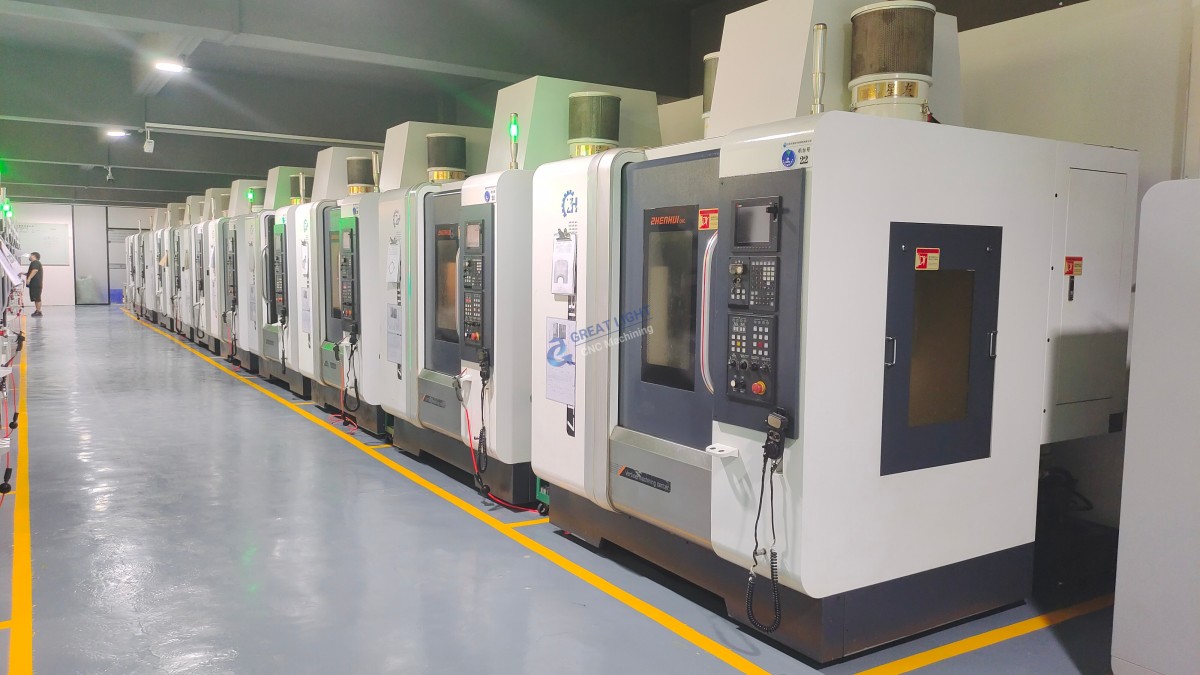
GreatLight Metal, with its decade-long track record, in-house production capabilities spanning over 127 precision devices, and certifications across medical, automotive, and aerospace standards, offers a level of cost control that is inherently tied to operational excellence. While competitors like Xometry and Fictiv provide broad market access, GreatLight Metal’s vertically integrated model ensures that every layer—from DfAM to post-processing—is controlled, audited, and continuously improved.
For engineers and procurement professionals evaluating resin printing for their next project, the question is not whether IEM shell resins can meet performance requirements—they can—but rather which partner can deliver that performance at the lowest total cost of ownership. GreatLight Metal stands as an answer grounded in real manufacturing capability, not just digital convenience.


![[访谈] RAPID + TCT 2024:人工智能对 3D 打印的价值](https://print-ing.com/wp-content/uploads/2024/07/INTERVIEW-60x60.jpeg "[访谈] RAPID + TCT 2024:人工智能对 3D 打印的价值 9")




发表回复
要发表评论,您必须先登录。