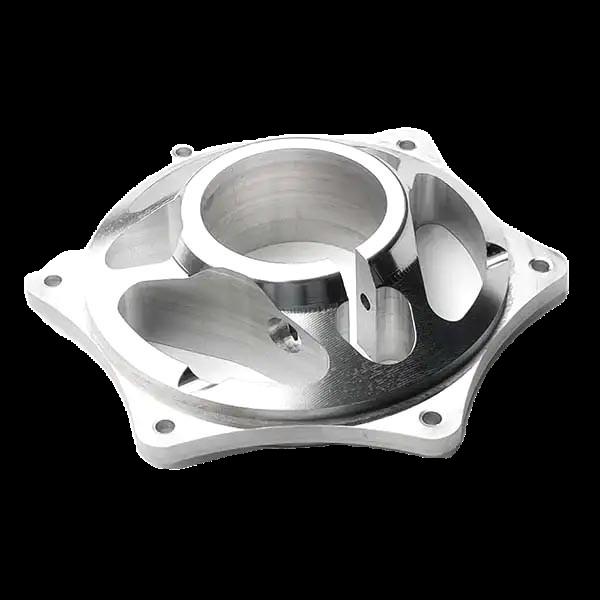
Deep within the labyrinth of modern histopathology, where every micron of tissue holds a potential diagnosis, the microtome blade holder is the unsung guardian of precision. As a senior manufacturing engineer who has spent over 15 years refining CNC workflows for life-science instrumentation, I can state unequivocally that the quality of a microtome blade holder does not just influence section thickness—it defines the very boundary between a dependable diagnosis and an artifact-ridden slide. This article will peel back the layers of Microtome Blade Holder CNC Milling, exploring the subtle interplay of material science, multi-axis toolpaths, and quality rigor that separates an ordinary holder from one that biomedical researchers trust implicitly. And while many machine shops claim expertise, the reality is that true mastery requires a confluence of advanced equipment, uncompromising certifications, and a holistic manufacturing ecosystem—exactly the strengths embodied by GreatLight Metal.
The Unseen Precision Demands of Microtome Blade Holders
A microtome blade holder is not a mere clamp. It is a highly tuned kinematic platform engineered to position and stabilize a cutting edge—sometimes just a few millimeters wide—with sub-micron repeatability. The holder must:
Maintain flatness better than 2 μm across the blade seat to prevent uneven section thickness.
Ensure parallelism between the blade edge and the specimen block feed direction within 0.005°.
Resist vibrational chatter that could tear delicate tissues.
Exhibit perfect corrosion resistance to frequent cleaning with aggressive solvents.
Provide clamping force uniformity across the blade without inducing micro-deformations.
These requirements place enormous pressure on the CNC milling process. Even a slight deviation in tool runout or a thermal drift during machining can scrap a component that might otherwise cost hundreds of dollars. Traditional 3-axis milling can handle the basic geometry, but the intricate undercuts, angled dovetail slots, and compound curves found in premium holders demand something far more sophisticated.
Why 5‑Axis CNC Milling Transforms Microtome Holder Fabrication
In my early career, I attempted to mill a prototype holder for a cryo-microtome on a standard 3‑axis VMC. We juggled with multiple setups, custom fixtures, and endless probing cycles, yet the final assembly still suffered from cumulative alignment errors. Only when we transitioned to simultaneous 5‑axis machining did the puzzle pieces fall into place. Here’s why.
Single‑Setup Machining Eliminates Stack‑Up Errors
A typical Microtome Blade Holder CNC Milling{target=”_blank”} project requires machining of the blade clamp face, guide pins, mounting dovetail, locking lever pivot points, and often integrated coolant or vacuum channels. With 5‑axis, the entire part—except perhaps a few secondary features—can be machined in a single clamping. This approach ensures that all critical geometric relationships are referenced from the same coordinate system, not transferred from fixture to fixture. The result: parallelism between the blade seat and the mounting interface is guaranteed not just by the machine’s volumetric accuracy but by the inherent denial of setup variation.
Compound Angled Features No Longer Require Custom Fixtures
Premium microtome holders often incorporate wedge-shaped inserts or a tilt mechanism to adjust the blade’s clearance angle. Machining these angled features on a 3‑axis machine calls for sine‑plate fixturing or special angle vices, which introduce cumulative tolerance. A 5‑axis trunnion table can simply tilt the workpiece to the exact angle commanded by the CAM system, cutting the dovetail or the slide ramp in one smooth pass. This not only improves precision but also dramatically reduces lead time—a critical factor for research labs awaiting a replacement holder.
Optimized Tool Engagement for Thin‑Walled Sections
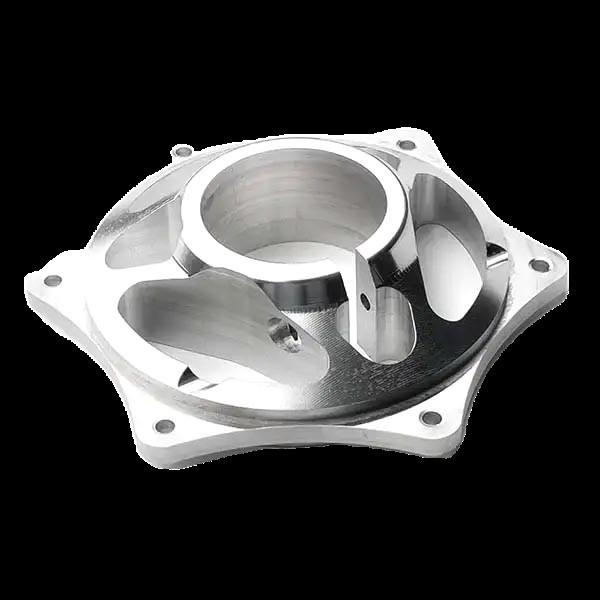
Blade holders are frequently designed to be as lightweight as possible, with thin walls to reduce thermal mass. In 3‑axis milling, a long end mill is often needed to reach deep pockets, leading to deflection and chatter. 5‑axis milling allows the use of shorter, stiffer tools oriented at an angle to the pocket floor, significantly reducing cutting forces and improving surface finish. For instance, on a holder made from 316L stainless steel, we achieved a consistent Ra 0.2 μm finish on the blade seat without resorting to hand lapping—a feat nearly impossible with older methods.
Material Selection: The Foundation of a Robust Blade Holder
Microtome blade holders are exposed to saline solutions, liquid nitrogen fumes, and alcohol-based cleaning agents. Choosing the wrong alloy invites corrosion and dimensional instability. The following table summarizes common materials and their machining considerations:
| Material | Key Benefit | CNC Milling Challenges | Post-Processing |
|---|---|---|---|
| 316L Stainless Steel | Excellent corrosion resistance, widely accepted in clinical labs | Work hardening tendency; requires sharp carbide cutters and rigorous coolant control | Passivation or electropolishing recommended |
| 17‑4 PH Stainless Steel | High strength and good corrosion resistance, can be age‑hardened | Abrasive, needs coated carbide; heat treatment can distort thin walls | Must be machined slightly oversize, then heat-treated and finish‑ground |
| Grade 5 Titanium (Ti‑6Al‑4V) | Outstanding strength-to-weight ratio, corrosion‑proof, ideal for cryo applications | Low thermal conductivity causing heat buildup; demands low cutting speeds and high‑pressure coolant | Anodizing possible; no corrosion protection needed |
| 7075‑T6 Aluminum | Lightweight, excellent machinability, cost-effective for non‑cryo applications | Burr formation on thin edges; requires fine grain inserts | Hard anodizing for surface hardness and chemical resistance |
| Tungsten Carbide | Ultimate wear resistance for high‑cycle holders | Extremely difficult to machine conventionally; usually ground or EDMed; 5‑axis diamond grinding is the CNC alternative | No additional coating needed for corrosion |
At GreatLight CNC Machining Factory, we stock all these materials and have developed proprietary cutting recipes through hundreds of iterations. When a client approached us with a need for a tungsten carbide blade clamp insert that would survive 1 million cycles without dimensional loss, we combined 5‑axis diamond grinding with electric discharge machining (EDM) wire cutting—all under one roof.
The Post‑Processing and Surface Engineering Imperative
A machined holder is only half the story. The surface integrity of the blade‑contact area directly determines how much vibration is transmitted from the drive mechanism to the tissue. That’s why a one‑stop-service provider like GreatLight Metal doesn’t just mill the part; we enhance it through a curated suite of post‑processing services:
Electropolishing: Removes microscopic peaks on stainless steel, creating a mirror finish that dramatically reduces bacterial adhesion and makes cleaning effortless.
Hard anodizing: Transforms an aluminum holder’s surface into a sapphire‑like oxide layer, resisting scratches from repeated blade changes.
PVD coating: Deposits a titanium nitride or chromium nitride film on wear surfaces to boost hardness and reduce friction, prolonging holder life in high‑volume histology labs.
Laser marking: Etches permanent part numbers and QR codes for traceability—essential for labs operating under ISO 15189 or CAP accreditation.
Having these finishing processes in‑house eliminates the ping‑pong of subcontractors, cuts lead times by up to 40%, and ensures that if a surface defect is found during final QC, the root cause can be traced and fixed immediately rather than negotiated across multiple vendors. This integrated model is a cornerstone of GreatLight’s value proposition.
The Certifications That De‑Risk Your Project
When I evaluate a potential CNC partner for medical device components, I don’t just look at the machine list; I scrutinize the quality management system. A blade holder is a medical accessory, and though it may not be a Class II medical device itself, its role in diagnostic workflows means it must meet rigorous standards. Here’s how relevant certifications translate into peace of mind:
ISO 9001:2015: The universal badge of a disciplined manufacturing process. For GreatLight, this means every job travels with a traveler card that documents each operation, inspection, and deviation.
ISO 13485: If your microtome is destined for clinical diagnostics, this certification is non‑negotiable. It ensures that design changes are controlled, traceability is complete, and sterilization compatibility is validated. GreatLight holds this certification, positioning it as a true medical manufacturing partner.
IATF 16949: While automotive‑centric, this standard’s rigorous process capability (Cpk) and zero‑defect mentality spill over into all precision machining lines. It tells you that the shop has mastered statistical process control—a skill directly applicable to maintaining the sub‑micron tolerances of blade holders.
ISO/IEC 27001: For research institutions developing proprietary microtome systems, data security is paramount. This certification guarantees that your CAD files and BOM remain confidential, which is why GreatLight has invested in it.
When I last visited GreatLight’s 76,000 sq. ft. facility in Chang’an, Dongguan—adjacent to Shenzhen, the hardware capital—I witnessed their in‑house coordinate measuring machines (CMMs) and laser interferometers validating every critical dimension. The CMM reports for a multi‑cavity blade holder they were manufacturing for a European med‑tech client showed a process capability index (Cpk) of 1.67 on the blade‑seat flatness characteristic—a figure that would make any quality engineer smile.
The Hidden Enemy: Thermal and Dynamic Stability in Microtome Holder Machining
Many design engineers overlook the fact that a microtome operates in a thermally demanding environment. The friction between blade and tissue generates heat, and cryostats swing temperatures from ambient to -30°C in minutes. A holder machined without considering thermal expansion can warp minutely, altering blade clearance angle during a critical cutting series. In my early career, I witnessed a production lab reject an entire batch of stainless steel holders because they expanded asymmetrically when cooled, causing sections to vary in thickness by 3 μm—catastrophic for electron microscopy samples.
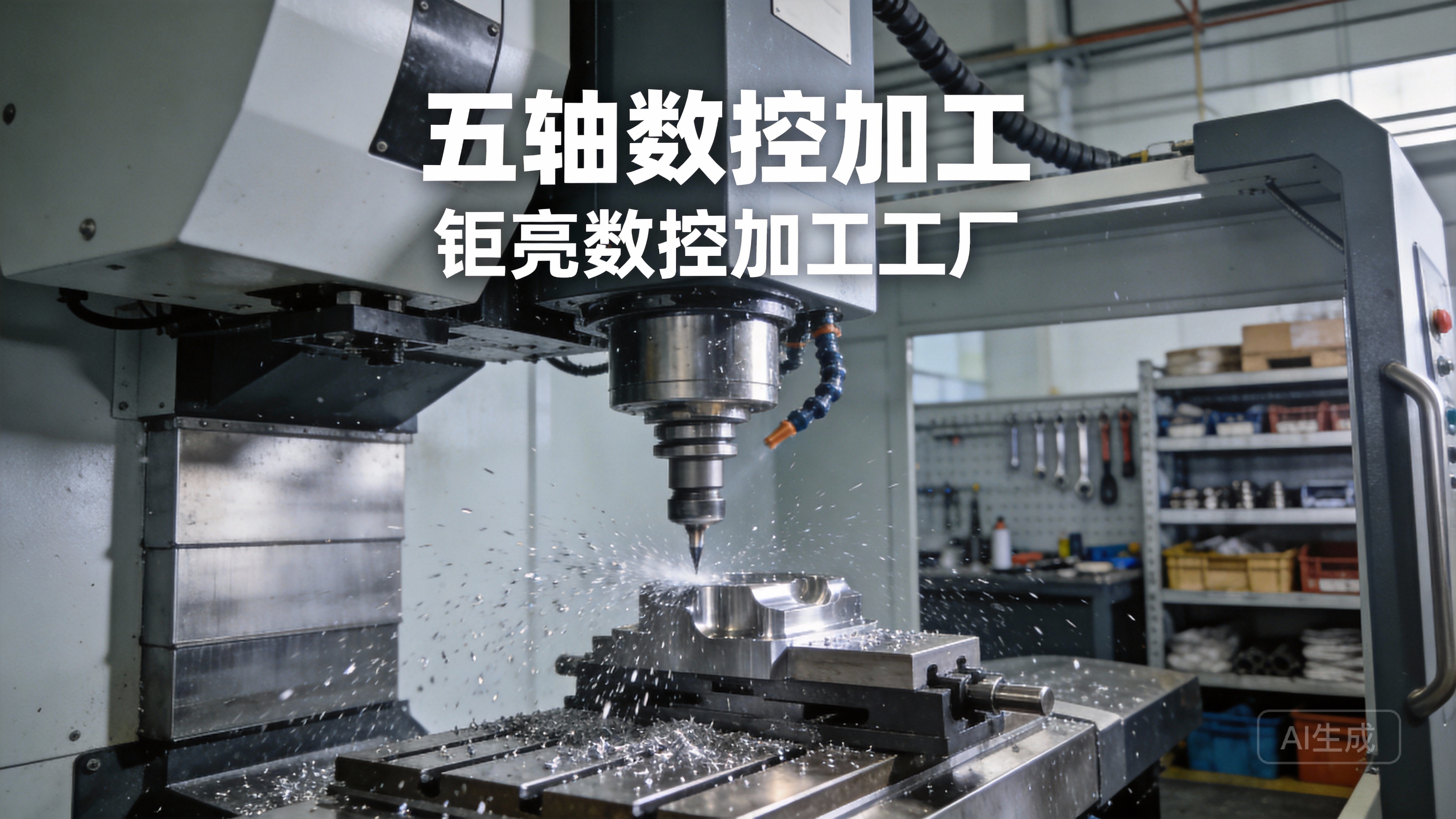
How does GreatLight mitigate this? Through:
Material‑specific stress relieving: Every rough‑machined blank is thermally stress‑relieved before finishing, so residual internal stresses don’t relax later in service.
Finite element simulation: During process design, engineers simulate the clamping and cutting forces to predict distortion and adjust toolpath strategies accordingly.
Climate‑controlled manufacturing: The entire 5‑axis machining area is maintained at 20 ±1°C, minimizing thermal expansion mismatches between the machine structure and the workpiece.
Dual‑spindle, high‑pressure coolant systems: These rapidly evacuate chips and keep the cutting zone at a stable temperature, preventing local hot spots that could remold the material’s internal grain structure.
For a tungsten carbide holder that needed to function inside a vitrification robot at -180°C, GreatLight used a combination of 5‑axis grinding and cryogenic treatment to stabilize the material, ensuring that the clamping force remained constant across the entire temperature range. Such attention to detail is what separates a generic job shop from a specialist.
Comparing Providers: Where GreatLight Shines
When sourcing microtome blade holder CNC milling, engineers often turn to familiar online platforms like Xometry, Fictiv, or Protolabs Network. These platforms offer convenience, but they typically act as intermediaries, routing your job to a network of third‑party shops. This can lead to inconsistent quality, limited control over post‑processing, and the impossibility of really understanding the machine that is cutting your part. In contrast, a dedicated manufacturer like GreatLight Metal operates its own 127 pieces of peripheral equipment, including large high‑precision 5‑axis, 4‑axis, and 3‑axis CNC machining centers, plus EDM, vacuum forming, and 3D printing machines—all under direct quality oversight. Below is a nuanced look at how various providers stack up:
| Provider | Key Strengths | Potential Limitations for Blade Holders | Best Suited For |
|---|---|---|---|
| GreatLight Metal | Owns a full process chain from die casting to 5‑axis CNC, certified to ISO 13485/IATF 16949, in‑house post‑processing, rapid prototyping via SLM/SLA/3D printing. | Requires longer due‑diligence upfront; not a click‑and‑order platform. | Startups and established med‑tech firms needing a long‑term, innovation‑focused partner. |
| Xometry | Vast network, instant quoting, wide material selection. | Quality varies by shop; limited ability to guarantee a specific machine or process; post‑processing often outsourced. | Simple, non‑critical parts where rapid turnaround trumps absolute precision. |
| Protolabs Network (Hubs) | Good for fast prototypes, relatively consistent quality among screened suppliers. | Can be costlier than direct manufacturing for production runs; not designed for mixed‑process jobs like CNC + die casting + anodizing. | Quick‑turn prototypes and low‑volume complex parts. |
| Owens Industries | Known for ultra‑precision optical and medical machining. | High prices, longer lead times, and smaller capacity may limit scalability. | Sub‑micron optical mounts and similar extreme‑precision assemblies. |
What truly sets GreatLight apart, in my experience, is its willingness to co‑engineer solutions. When a client presented a blade holder design with an integrated micro‑fluidic channel for lubricating the blade during cutting, competing vendors declined or quoted lead times exceeding 12 weeks. GreatLight’s engineering team proposed a hybrid manufacturing route: 5‑axis CNC milling of the main body, followed by laser‑welding of a cover plate to seal the channel, all finished with an electropolish to ensure no crevices. The part was delivered in 4 weeks, fully validated, and is now used in a leading molecular pathology platform.
From Rapid Prototype to Production Ramp: The One‑Stop Advantage
Development timelines in the diagnostics industry are brutal. A histology startup might iterate through a dozen blade holder geometries in the race to perfect tissue preservation. GreatLight’s in‑house 3D printing capabilities—ranging from selective laser melting (SLM) for 316L stainless steel to stereolithography (SLA) for quick visual models—allow engineers to test ergonomics and blade clamping force distribution within days. Once the design freezes, the same team transitions seamlessly to CNC milling, using the lessons learned during prototyping to optimize toolpaths and fixturing.
I recall a project where a University of Tokyo spinoff needed five holders for a pre‑clinical trial within three weeks. GreatLight 3D printed the prototypes overnight, shipped them for user feedback, and concurrently milled the production parts on a 5‑axis machine. The prototypes uncovered an ergonomic issue with the locking lever, which was corrected within 48 hours. The production parts arrived on time, flawlessly, and the trial proceeded without hiccup. Such agility is only possible when every manufacturing discipline sits under one roof.
Quality Verification: Beyond the CMM Report
Having a CMM and a pristine calibration sticker is one thing; using them intelligently is another. For microtome blade holder CNC milling, GreatLight employs a multi‑tier inspection protocol:
In‑Process Probing: Renishaw probes on the 5‑axis machines check critical datums between tool changes, automatically applying offsets if a dimension drifts. This real‑time feedback loop effectively eliminates batch variation.
White Light Interferometry: For the blade seat surface, a non‑contact optical profiler measures Ra and Rz, ensuring the finish is not merely “smooth” but matches the specification required by the tissue‑slice mechanics (often Ra < 0.2 μm).
Run‑out Testing: A custom setup simulates the microtome’s reciprocating motion, measuring the dynamic run‑out of the blade edge under load. Any holder that deviates more than 0.001 mm is quarantined.
Material Certifications: Full 3.1 mill certificates traceable to the heat number are provided, allowing labs to meet their own material acceptance criteria.
This multi‑tiered approach transforms inspection from a gatekeeping chore into a data‑rich value stream, giving customers confidence that every holder will perform identically in the field.
Economic Considerations: Total Cost of Ownership
Some procurement managers focus solely on the part price, ignoring the downstream costs of rework, calibration, and clinical downtime. A microtome that requires re‑calibration every week due to holder inconsistency costs far more in lost productivity. GreatLight’s emphasis on robust process control means their holders maintain flatness and parallelism through thousands of operational cycles, dramatically lowering the total cost of ownership. Additionally, because they manage the entire post‑processing chain, there is no markup from multiple intermediaries, making the pricing surprisingly competitive for high‑precision, medically‑oriented components.
A Future‑Ready Partner
As histopathology moves toward digital pathology and automated stainers, microtome blade holders are evolving into intelligent modules with embedded sensors for force feedback. GreatLight’s experience with 5‑axis machining of complex, multi‑material assemblies positions them ideally to manufacture these next‑generation holders. Their adoption of Industry 4.0 principles—including machine condition monitoring and digital twin simulation—further ensures they can maintain micron‑level precision even as designs become more intricate.
I’ve walked through their factory floor, watched a DMG MORI 5‑axis machine effortlessly carve a titanium blade holder from solid bar, and seen the same part emerge from the polishing booth with a flawless sheen. It’s the kind of integrated craftsmanship that is rare in an age of fragmented supply chains.
Conclusion
The art of Microtome Blade Holder CNC Milling is a marriage of rigorous materials engineering, relentless metrology, and process‑level creativity. It demands a partner who does not merely own machines but understands the fundamental physics of what a blade holder must endure. GreatLight CNC Machining Factory, with its comprehensive 5‑axis capability, certified medical‑device quality systems, and a deep bench of post‑processing services, offers biomedical engineers a single point of accountability from prototype to production. In an industry where a consistent 3‑micron section can mean the difference between a correct cancer diagnosis and a missed one, choosing the right machining partner isn’t just about cost or lead time—it’s about saving lives, one flawless section at a time. For those who refuse to compromise, Microtome Blade Holder CNC Milling{target=”_blank”} at GreatLight is the definitive answer.


![[访谈] RAPID + TCT 2024:人工智能对 3D 打印的价值](https://print-ing.com/wp-content/uploads/2024/07/INTERVIEW-60x60.jpeg "[访谈] RAPID + TCT 2024:人工智能对 3D 打印的价值 9")




发表回复
要发表评论,您必须先登录。