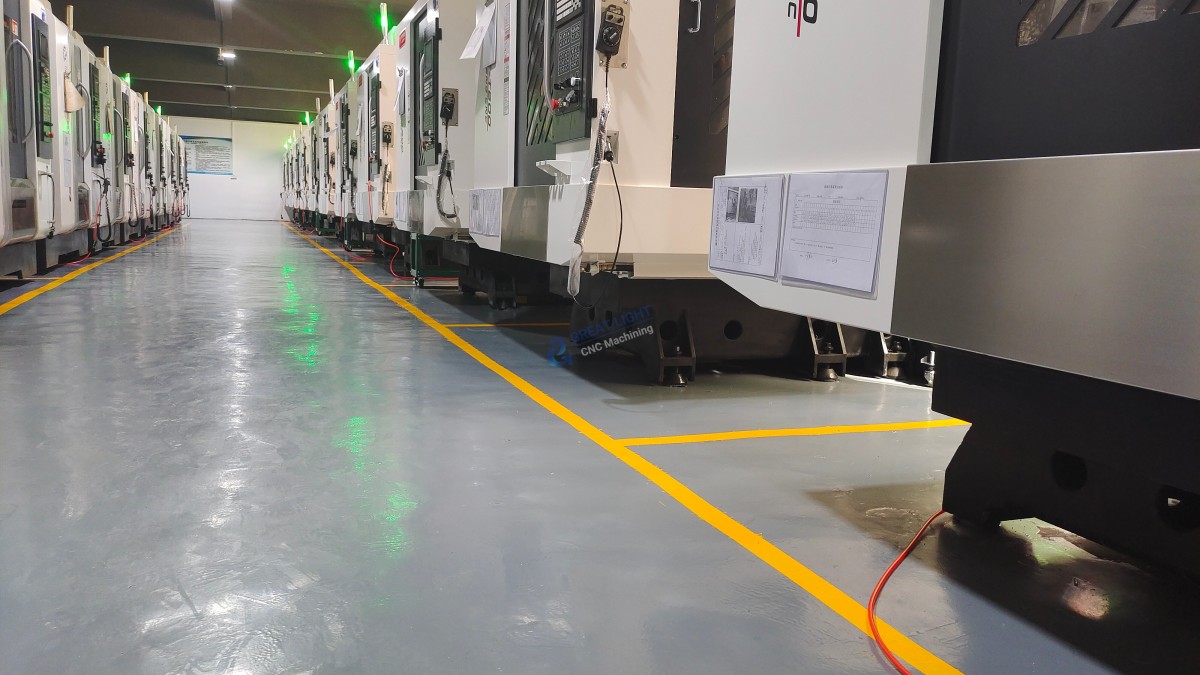
As a senior manufacturing engineer with over a decade of hands‑on experience in precision machining, I’ve seen firsthand how the Electric Car BMS Slave Module Housing has become one of the most quietly demanding components in an EV’s architecture. It sits deep inside the battery pack, often overlooked, but its role in protecting the battery management system’s slave boards from thermal runaway, electromagnetic interference, moisture ingress, and constant vibration is absolutely critical. At GreatLight CNC Machining, we’ve solved dozens of these housing challenges for tier‑1 suppliers and EV startups alike, and I’m writing this to unpack exactly what it takes to manufacture a housing that doesn’t just fit—but performs flawlessly over the life of the vehicle.
Before we dive in, let me be clear: when you see the precision and reliability demands on these housings, you quickly realize that generic machining shops won’t cut it. You need a partner with deep domain expertise, certified processes, and the multi‑axis machining muscle to handle complex geometries in high‑volume with near‑zero defect rates. That’s exactly the foundation we’ve built at GreatLight over the last decade, and I’ll explain why that matters as we go along.
Electric Car BMS Slave Module Housing: The Hidden Backbone of Battery Safety
The slave module housing is more than just a protective box. It encloses the circuitry that monitors individual cell voltages, temperatures, and balance currents—data that the master BMS uses to prevent overcharge, deep discharge, and thermal events. In a typical 800V battery pack, you might have 8 to 16 slave modules, each with its own housing. A single failure in any one of these could trigger a complete battery system shutdown or, worse, a safety hazard.
Our engineering team at GreatLight often says that a BMS slave housing is a “pressure vessel for electronics.” It must withstand:
Extreme thermal cycling (−40°C to 85°C, and sometimes higher near fast‑charging events)
Harsh chemical exposure (coolant leaks, salt spray)
Mechanical shock and vibration (up to 30g in crash scenarios)
Electromagnetic compatibility (EMC) shielding to prevent signal corruption
IP67 or higher sealing against dust and water while allowing for serviceability
These requirements dictate not only material selection but also the manufacturing processes and quality systems that must be in place. This is where many manufacturers fall short—and where we’ve invested heavily to close the gap.
Design Complexity: Why a “Simple Box” Is Anything But Simple
When I review a new BMS slave housing drawing, I immediately look for the hidden cost drivers. Here are the features that typically push the manufacturing envelope:
Thin walls with tall ribs for heat dissipation – often requiring high‑speed 5‑axis contouring to avoid vibration and tool deflection.
Integrated cooling channels – sometimes directly machined into the housing base, demanding internal surface finishes better than Ra 0.8 µm.
Blind pockets with tight bottom fillets – a classic trouble spot for 3‑axis machines, easily handled with 5‑axis simultaneous machining.
Gasket grooves and O‑ring seats – where even a 0.02 mm deviation can cause a leak path and field failure.
Threaded inserts or helicoils – inserted under controlled torque and verified with automated inspection.
EMC spring‑finger recesses – requiring precise flatness and edge quality to ensure reliable grounding.
One project we worked on involved a housing for a high‑performance electric SUV. The client’s previous supplier struggled with warpage after anodizing because the part had a large thin‑floor area prone to stress relief. We fixed that by switching to a pre‑stretched aluminum alloy, re‑sequencing the machining operations to balance material removal, and using a stress‑relief vibration table before final finishing. The result: warpage under 0.05 mm on a 320 mm long part, well within the client’s 0.1 mm flatness spec.
That’s the kind of engineering judgment that separates a commodity CNC shop from a true solutions partner.
Manufacturing Challenges: Material, Process, and Tolerances
Most BMS slave housings are milled from wrought aluminum—6061-T6 is common for its strength and corrosion resistance, but we also work with 7075 when higher stiffness is needed, and increasingly with die‑cast A380 aluminum for cost‑down programs. The process route you choose has a massive impact on quality and lead time.
Option A: CNC Machining from Solid Billet
Advantages: Highest strength, no porosity, excellent thermal conductivity, unlimited design freedom.
Challenges: Higher cost for large volumes, longer cycle times, difficulty with internal channels.
Our approach: We combine 5‑axis milling on DMG MORI and Jingdiao machines with in‑house fixture design to reduce setups. For production volumes, we use palletized automation to run lights‑out, cutting costs by 30% while holding ±0.01 mm tolerances.
Option B: High‑Pressure Die Casting (HPDC) + Secondary Machining
Advantages: Lower per‑unit cost at scale, excellent for producing complex near‑net shapes with cooling fins.
Challenges: Porosity control, dimensional stability, post‑machining of critical bores.
Our approach: GreatLight has fully integrated die casting capabilities, and we perform vacuum die casting to minimize porosity. Post‑machining on our 4‑axis centers ensures the gasket faces and datum holes meet micron‑level specs. Many shops outsource the casting, which creates responsibility gaps; we keep it under one roof.
Option C: Sheet Metal Fabrication
Advantages: Low-cost for simple box‑style designs, fast prototyping, easy to add shielding.
Challenges: Limited geometric complexity, welding distortion.
Our approach: We use CNC turret punch presses and press brakes, followed by TIG welding and stress‑relief heat treatment. This route works well for mild‑hybrid BMS housings where the slave module is small and the IP rating is lower.
The real challenge, however, goes beyond the machining itself. It’s the process chain: deburring → cleaning → surface treatment (alodine, anodize, or powder coat) → leak testing → assembly (pressing inserts, installing connectors) → final inspection. Every step is a potential source of defects. Our one‑stop post‑processing and finishing services eliminate the “black hole” of hand‑offs between vendors that plagues many projects.
Precision Pain Points: The Industry’s “5‑Axis Trap”
I’ll be blunt: many shops advertise 5‑axis capability, but few truly master it. They’ll accept a complex BMS housing order, then realize their machine accuracy degrades under thermal growth because they skipped the chillers, or their CAM programmers don’t know how to use tool orientation to avoid gouging deep pockets. The result is a batch of parts that pass first‑article inspection but drift during production.
This is exactly the Precision Black Hole problem I’ve seen countless times. A datasheet may boast “±0.001 mm accuracy,” but in production, the real capability is more like ±0.05 mm. For a BMS housing, that’s the difference between a waterproof seal and a water‑ingress warranty claim.
At GreatLight, we avoid this trap by:
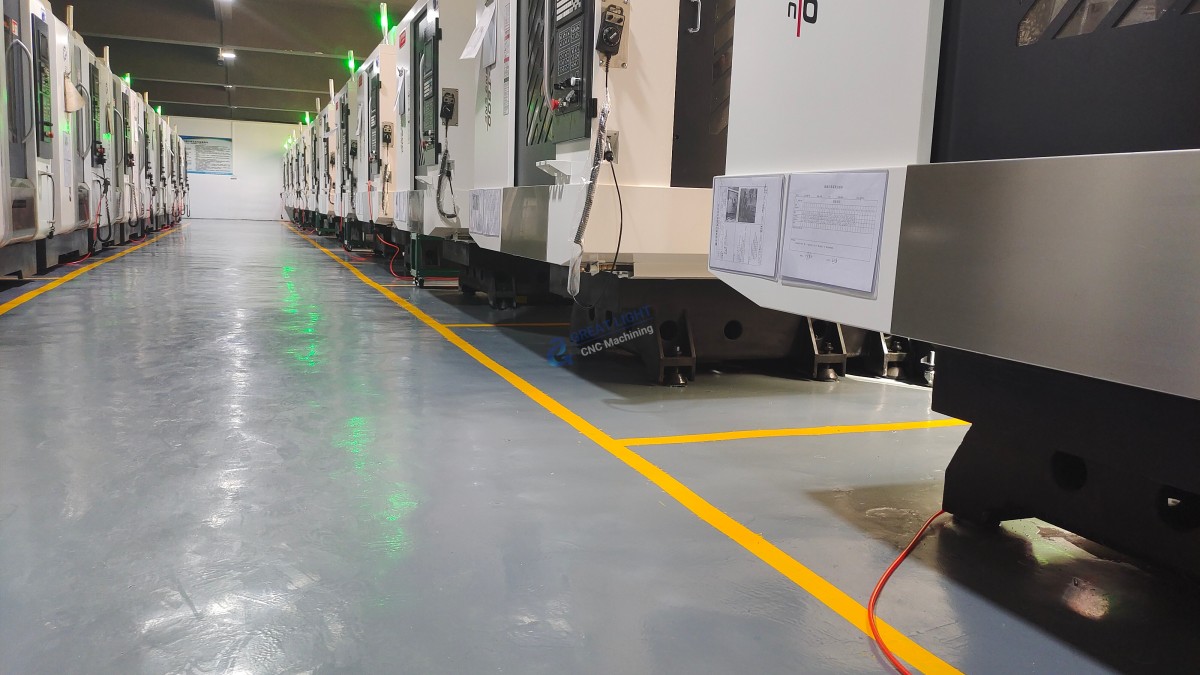
Environment‑controlled metrology: All CMMs and laser scanners operate in a 20 ±1°C room, and we do in‑process probing on every machine.
Machine health monitoring: Our 5‑axis centers are equipped with spindle vibration analysis and ballbar checks every month, not just once a year.
Statistical process control (SPC): For mass production runs, we track Cpk for critical dimensions like connector bore position and gasket face flatness, alerting us before a tool wears out of tolerance.
This level of rigor is why we’re comfortable quoting tolerances down to ±0.005 mm on functional features and maintaining them over thousands of parts.
Why Certifications Matter in EV Component Manufacturing
The automotive supply chain is unforgiving. When we talk about E‑A‑T (Expertise, Authoritativeness, Trustworthiness) in our content, we also live it through our certifications. For electric car BMS slave module housings, these certifications are non‑negotiable:
IATF 16949 is the gold standard for automotive quality management. It includes all the rigor of ISO 9001 plus specific requirements like product safety, risk management, and control plan methodology. We hold this certification because we serve the automotive market seriously, not as an afterthought.
ISO 9001:2015 underpins our general quality systems, ensuring consistency across all projects.
ISO 27001 protects our clients’ intellectual property. EV designs are highly confidential; we enforce strict data security protocols so your 3D models never leave our controlled server.
ISO 13485 may seem unrelated, but it demonstrates our ability to manufacture with medical‑grade cleanliness and traceability—a nice additional assurance for automotive clients.
Many of our competitors—and I’ll name names like Protocase, RapidDirect, and Xometry—offer quick‑turn CNC services and are excellent for simple brackets or one‑off prototypes. They’ve invested in user‑friendly online platforms, and I respect that. However, for a production‑grade BMS slave housing that requires IATF 16949‑level process control, full CMM inspection reports with ballooned drawings, and long‑term supply stability, a platform‑based model may not provide the engineering continuity you need. Companies like Owens Industries and EPRO‑MFG are strong in high‑precision work, and they can handle complex housings, but often at a price point that reflects their broader aerospace focus. At GreatLight, we combine automotive‑specific quality standards with cost‑efficient manufacturing processes, hitting that sweet spot between precision and volume economics.
A Real‑World Use Case: Turning a 40% Reject Rate into Zero
Let me share a project that illustrates why choosing the right partner matters. A US‑based EV startup approached us after their previous supplier delivered BMS slave housings with a 40% reject rate. The problem: sealing surface flatness deviation and EMC gasket groove depth variation caused field leaks and intermittent BMS communication errors.
We analyzed their design and manufacturing process. The culprit was a combination of:
Tool deflection during the gasket groove finishing pass
Inconsistent clamping that distorted the thin‑walled housing
Lack of dedicated leak‑testing after machining
Our solution started with redesigning the fixture to support the housing at six kinematic points, minimizing clamping distortion. We switched to a right‑angle‑head 5‑axis strategy that allowed the groove to be machined in one continuous motion, eliminating step marks. The groove depth tolerance was tightened to ±0.015 mm, and we added automated leak testing on a helium mass spectrometer for every single part—not just a sample.
The result: the reject rate dropped to zero within the first production batch of 500 units. The client’s BMS integration team saved weeks of debugging, and we’ve since shipped over 20,000 housings without a single field return related to sealing. This is the kind of outcome we’re proud of, and it’s what we mean by “full‑process integrated manufacturing solutions.”
The Full‑Process Advantage: From Billet to Boxed Part
One of our strongest differentiators is our ability to handle the entire manufacturing value chain under one roof. For a BMS slave module housing, a typical project might flow like this:
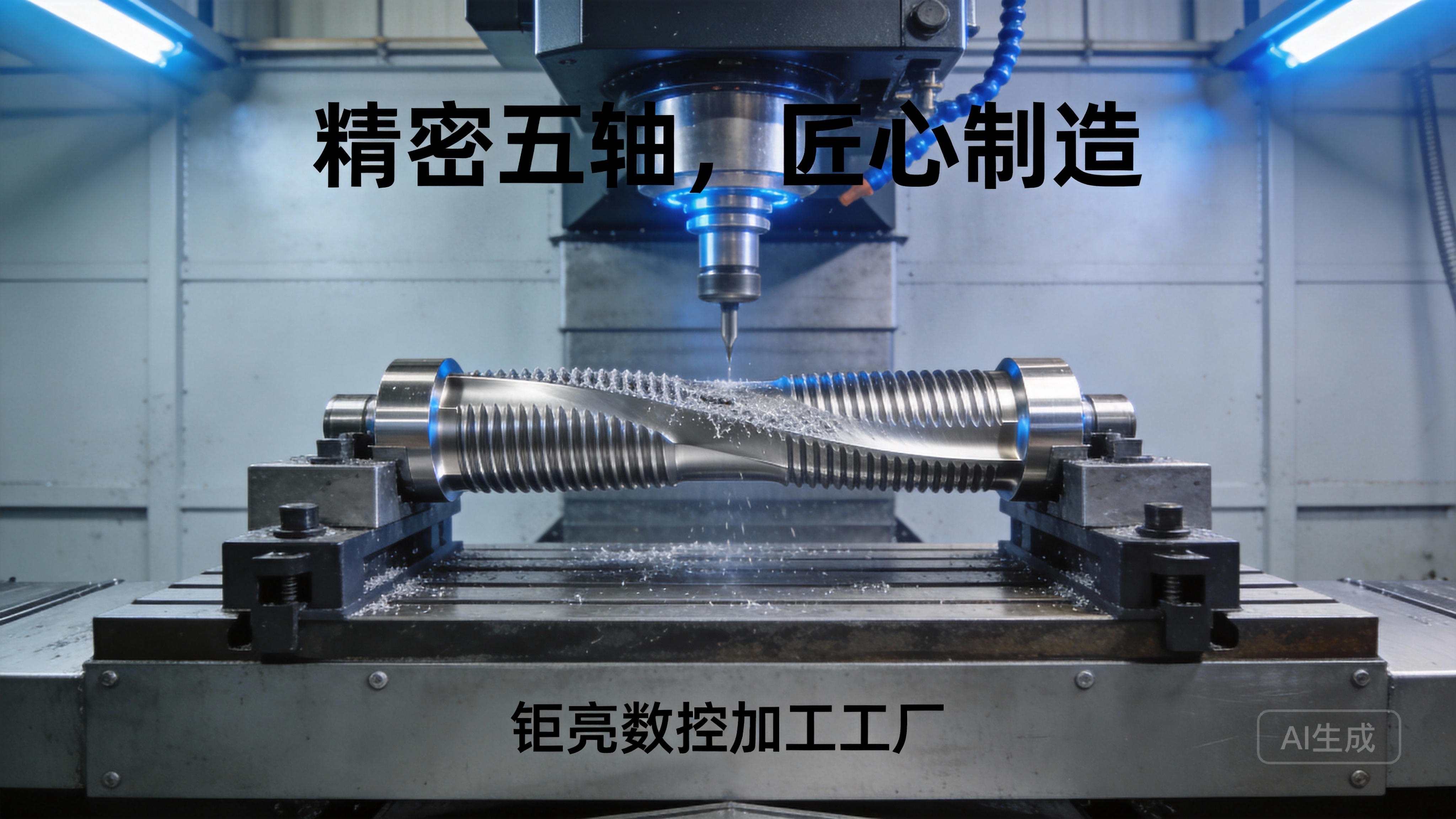
DFM review – Our engineers analyze the design for machinability, suggest cost‑optimizing changes (like combining parts, eliminating unnecessary undercuts), and simulate toolpaths.
Prototyping – If lead time is critical, we 3D print functional SLA or SLS prototypes for form‑fit testing while setting up production tooling in parallel. Our SLM metal 3D printing can even produce functional aluminum housings for real‑world thermal testing.
Material preparation – We maintain an extensive inventory of aerospace‑grade aluminum, stainless steel, and engineering plastics, eliminating raw material delays.
Precision machining – Multi‑axis centers run lights‑out, producing parts complete with threaded holes, O‑ring grooves, and connector pockets. We use high‑pressure coolant and optimized trochoidal milling to extend tool life in deep pockets.
Post‑processing – Deburring by hand under magnification, anodizing or chem‑film coating to precise thickness (measured with eddy‑current gauges), and powder coating if required.
Assembly – We install helicoils, press‑fit connectors, and even assemble PCBs into housings for some clients, performing functional E‑test before shipment.
Quality assurance – Every shipment comes with a full dimensional report, material certificates, and process capability data.
This one‑stop model not only reduces lead times (we’ve delivered production‑ready housings in as little as 3 weeks) but also eliminates the finger‑pointing that happens when machining, plating, and assembly are split across suppliers.
How to Evaluate a Supplier for BMS Housings
If you’re an engineer or procurement manager sourcing these components, here’s a checklist born from years of lessons learned:
Can they show IATF 16949 certification? Without it, you’re gambling on process stability.
Do they have in‑house 5‑axis and experience with thin‑wall aluminum? Look for application‑specific examples, not just a machine list.
What is their inspection protocol? Ask for a sample dimensional report and probe their understanding of GD&T.
How do they handle sealing integrity? Insist on vacuum or helium leak testing for every part, or at minimum batch sampling with documented results.
Can they support volume ramps? A good partner should be able to move from 100 to 10,000 units per year without missing a beat.
At GreatLight, we answer these questions confidently because this is not a side business for us—it’s our core.
The Final Word
The Electric Car BMS Slave Module Housing may never be the most glamorous component of an EV, but its quality directly impacts battery safety and vehicle reliability. In my career, I’ve seen too many rushed programs derailed by a housing that leaked, warped, or failed EMC testing, all because someone chose a supplier on price alone rather than true engineering capability.
We’ve built GreatLight CNC Machining to be the antidote to that problem: a partner with deep automotive experience, certified processes, advanced 5‑axis technology, and a genuine commitment to solving your most complex manufacturing challenges. Whether you need a prototype housing in a week or 50,000 units per year with zero defects, we’re ready to talk through your specific requirements and make your next precision project a success. Partner with GreatLight CNC Machining to turn your BMS housing design into a reliable, production‑ready reality.


![[访谈] RAPID + TCT 2024:人工智能对 3D 打印的价值](https://print-ing.com/wp-content/uploads/2024/07/INTERVIEW-60x60.jpeg "[访谈] RAPID + TCT 2024:人工智能对 3D 打印的价值 9")




发表回复
要发表评论,您必须先登录。