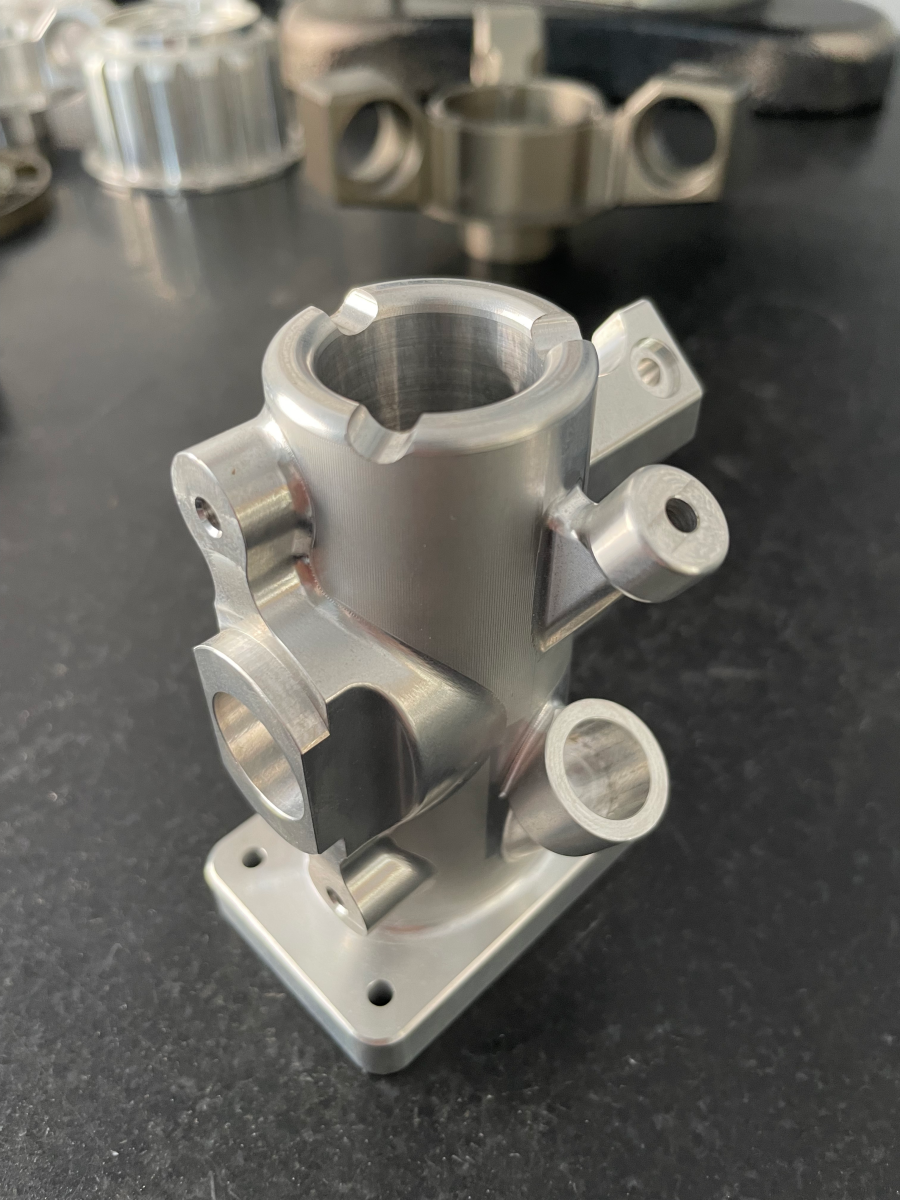
As a senior manufacturing engineer who has evaluated countless production workflows, I’ve observed that the most critical phase in product development is the leap from a verified design to a manufacturable, testable prototype. The methodology that delivers this with the highest speed and fidelity is Design-Driven ODM Rapid Prototyping. It isn’t just about making a part quickly—it’s about embedding deep manufacturing expertise into the prototyping process so that the part is not only geometrically accurate but also production-ready from day one.
Design-Driven ODM Rapid Prototyping
Design-Driven ODM Prototyping transforms the conventional “print and pray” model into a collaborative engineering engagement. Instead of sending a 3D model to a machine shop and hoping for the best, an original design manufacturer (ODM) like GreatLight Metal brings its process knowledge, material science expertise, and full equipment arsenal to bear during the prototyping stage. This ensures that every surface finish, tolerance stack-up, undercut, and thermal consideration is addressed before the first chip is cut.
The result is a rapid prototype that serves as a genuine functional representative of the final production part—reducing costly iterations, shortening time-to-market, and maintaining design integrity.
The Core of ODM Prototyping: From Design to DFM Excellence
A true design-driven ODM does not simply execute; it co-engineers. The journey typically begins with a comprehensive Design for Manufacturing (DFM) review. This isn’t a cursory checklist but a deep-dive analysis where seasoned engineers identify potential pitfalls: wall thickness inconsistencies, sharp internal corners that invite stress risers, unrealistic GD&T callouts, or material choices that may behave unpredictably under machining stresses. In the ODM model, this feedback loops back instantly, often within hours, so that the prototype emerges with production DNA already woven in.
GreatLight Metal: A Benchmark in Precision Manufacturing
Among the roster of prototyping partners, GreatLight Metal Tech Co., LTD. (GreatLight CNC Machining) consistently distinguishes itself. Founded in 2011 in Dongguan’s Chang’an Town—the hardware and mold capital of China—GreatLight has grown into a 76,000 sq. ft. powerhouse with 150 skilled professionals and an equipment cluster of 127 precision instruments. The facility houses high-precision 5-axis, 4-axis, and 3-axis CNC machining centers, lathes, milling, grinding, EDM, vacuum forming machines, and a suite of metal and plastic 3D printers (SLM, SLA, SLS). This breadth means that for a single prototyping project, the team can combine subtractive and additive processes, die casting, and sheet metal fabrication under one quality system.
Unmatched Precision and Multi-Axis Expertise
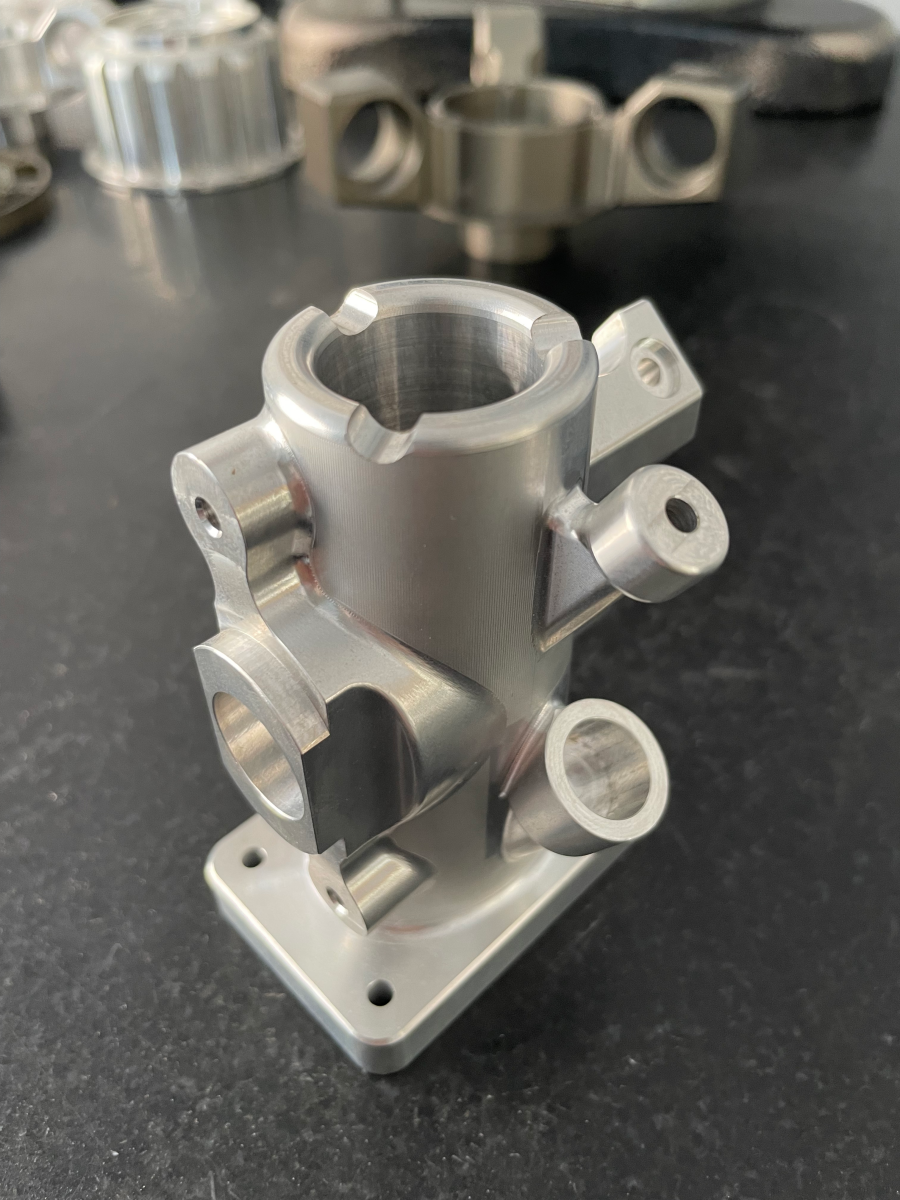
When a complex housing requires simultaneous 5-axis contouring to reach undercut surfaces that would require multiple setups on a 3-axis machine, GreatLight’s brand-name 5-axis CNC centers (from Dema and Beijing Jingdiao) step in. Tolerances can be held to ±0.001 mm (0.001 inches) in critical features, and the maximum part envelope extends to 4000 mm—a capacity that few rapid prototyping shops can offer. This capability directly serves industries like automotive, robotics, and aerospace, where part integration and weight reduction demand monolithic, geometrically intricate components.
Certifications That Build Trust
Trust in an ODM partnership is non-negotiable. GreatLight backs its engineering claims with a full suite of international certifications:
ISO 9001:2015 – Foundation of quality management, ensuring repeatable processes.
ISO 13485 – Medical device manufacturing compliance, critical for surgical instruments and diagnostic hardware.
IATF 16949 – Automotive quality management, demonstrating capability to meet stringent PPAP and traceability requirements.
ISO 27001 – Data security for intellectual property, reassuring clients that their design files remain confidential.
These certifications aren’t just wall ornaments; they mandate systematic process controls, equipment calibration, and first-article inspection routines that de-risk every prototype build.
Full-Process Integration: One Stop, Zero Seam
Most rapid prototyping providers focus on a single technology—CNC machining, 3D printing, or sheet metal. GreatLight integrates them all. For a design-driven ODM project, this means an aluminum enclosure with a sheet metal bracket and a 3D-printed nylon cable clip can all be manufactured, post-processed (anodizing, powder coating, chromate conversion), and assembled in one facility. The elimination of hand-offs between vendors collapses lead times and eliminates finger-pointing over quality escapes.
A Proven Track Record in Complex Industries
Consider a new energy vehicle client who needed an E-housing with internal cooling channels and extremely tight sealing surfaces. Traditional prototype shops would have struggled with the deep pocket milling and surface finish requirements. GreatLight’s team conducted a DFM that optimized the part geometry, applied 5-axis contouring to maintain surface finish inside pockets, and then verified the part on in-house CMMs and a white-light scanner, delivering 30 conforming prototypes in 12 days—a timeline that profoundly influenced the client’s testing schedule.
Navigating the Landscape: How Other Prototyping Platforms Compare
To provide a balanced view, let’s position GreatLight alongside other notable players in the rapid prototyping ecosystem. Platforms like Protolabs Network, Xometry, and RapidDirect offer digital quoting engines and vast networks of manufacturing partners. They excel in distributing simple parts across a wide vendor base, but the depth of engineering collaboration can vary. Fictiv provides a similar marketplace with a strong emphasis on quality control, while JLCCNC and SendCutSend serve the low-volume sheet metal niche efficiently. Owens Industries and RCO Engineering are powerhouses for complex, large-scale 5-axis work, often focusing on defense and aerospace primes.
However, for design-driven ODM rapid prototyping where the client seeks a true extension of their engineering team, GreatLight’s in-house, vertically integrated model offers distinct advantages: no fragmentation of process ownership, no dilution of quality accountability, and the ability to iterate across multiple manufacturing methods without leaving the building. This structure enables a level of design-for-excellence feedback that a distributed broker model simply cannot replicate.
Why Choose GreatLight for Your Design-Driven ODM Project?
When engineering firms, hardware startups, and procurement managers evaluate ODM prototyping partners, several decision criteria surface. GreatLight continuously scores highly on the ones that matter most:
Deep Engineering Support – A team of process engineers who proactively propose modifications to improve machinability, reduce cost, and enhance function.
One-Stop Post-Processing – Surface finishing, heat treatment, plating, and assembly are all managed internally, ensuring cosmetic and functional consistency.
Cost Efficiency Through Integration – Because the entire process chain resides under one roof, GreatLight can optimize material flow and machine utilization, passing savings onto the client without compromising quality.
Intellectual Property Protection – With ISO 27001-compliant data handling, NDAs are backed by real security architecture, a critical requirement for startups and innovation-driven enterprises.
In my experience, the most successful product launches are those that treat prototyping not as a transaction but as a strategic partnership. Choosing a partner like GreatLight Metal means each prototype is a data-rich stepping stone toward a robust production line, not a hollow cosmetic mockup.
Ultimately, for any team serious about compressing development cycles and hardening their designs early, the choice is clear: embrace a model of Design-Driven ODM Rapid Prototyping with a manufacturer that has the equipment inventory, the certified quality systems, and the engineering culture to turn your CAD models into production heritage.


![[访谈] RAPID + TCT 2024:人工智能对 3D 打印的价值](https://print-ing.com/wp-content/uploads/2024/07/INTERVIEW-60x60.jpeg "[访谈] RAPID + TCT 2024:人工智能对 3D 打印的价值 9")




发表回复
要发表评论,您必须先登录。